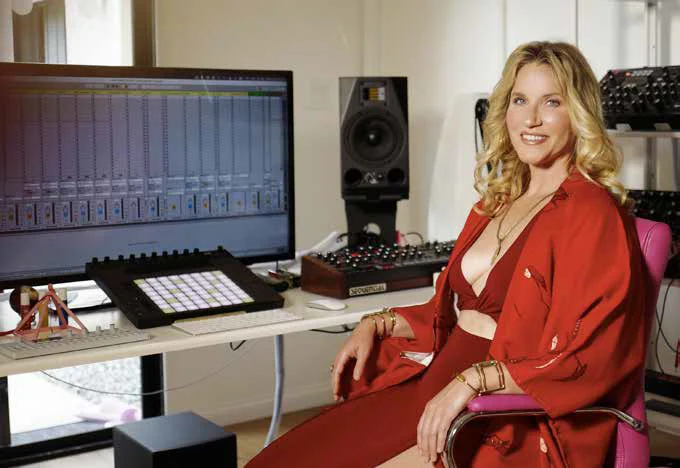
In the modern music industry, the difference between a seamless, world-class stadium production and a technical disaster often comes down to one person: the playback engineer. Laura Escudé, a luminary in this specialized field, has spent the last two decades transforming how live shows are engineered, performed, and experienced. With a client list that reads like a who’s-who of global icons—including Kanye West, Bon Iver, Herbie Hancock, and the gravity-defying spectacles of Cirque du Soleil—Escudé has carved out a career that balances extreme technical precision with the volatile, creative demands of live artistry.
As the founder of Electronic Creatives, a consultancy dedicated to playback engineering and live show design, and PlayLab, a mentorship platform focused on creative liberation, Escudé is more than just a technician; she is an educator and a pioneer. Her journey from a classical violinist to a trailblazing engineer offers a masterclass in resilience, technical evolution, and the art of staying invisible while ensuring the show goes on.
The Path to the Stage: A Chronology of Innovation
Escudé’s trajectory into the industry was defined by a defiance of early skepticism. Trained as a classical violinist, she found herself captivated by the burgeoning electronic music scene in the early 2000s. When she sought to learn the technical craft of production, she was met with a dismissive gatekeeper who told her the "learning curve was too high" and that she would never grasp it.
"That just lit a fire under my butt," Escudé recalls. What followed was a rigorous, self-taught evolution.
- 2004: Relocating to Los Angeles, Escudé secured a role at M-Audio, which provided her first formal exposure to the industry’s technical backbone.
- 2007: Her expertise caught the attention of Ableton, where she became the company’s first West Coast product specialist.
- 2008: She solidified her authority by becoming the first-ever Ableton Certified Trainer. However, the economic crash of 2008 led to a layoff—a pivotal moment that forced her to pivot from employee to entrepreneur.
- 2009: She launched EvoTech Audio, a consultancy that acted as a fractional product specialist for various MIDI and audio brands. That same year, she received a call from Cirque du Soleil for the show Viva Elvis, a baptism by fire into the world of complex, high-stakes music playback.
- 2009–2016: Her reputation as a problem-solver led her to a seven-year tenure touring with Kanye West’s team, where she simultaneously built Electronic Creatives into a global agency for playback design.
The Technical Evolution: From Analog Fragility to Digital Precision
The landscape of playback engineering has shifted dramatically over the past two decades. According to Escudé, the early days were defined by hardware limitations and the constant threat of system failure.

"Back when I first started, everything was analog outputs," she explains. "We dealt with slower computers, limited track counts, and constant anxiety about system stability."
Today, the infrastructure of a professional live show is fundamentally more robust. Modern playback systems utilize dedicated interfaces—such as those from DirectOut—that allow for seamless digital routing. The current industry standard involves a dual-computer setup (A and B machines) with an automatic failover system. If the primary computer encounters an error, the system detects a loss of signal and instantly switches to the backup without the audience or the performer noticing.
"That is the art of playback engineering," Escudé says. "It’s supposed to be invisible. If the system fails and the audience doesn’t know, you’ve succeeded."
Beyond hardware, software advancements have revolutionized the workflow. Applications like AbleSet and Setlist allow engineers to manage dynamic setlists in real-time. Where Escudé once relied on physical stickers on a Novation launch pad—often subject to change five minutes before showtime—she now utilizes sophisticated software that adapts to the fluid, high-pressure nature of live performance.
The Role of the Playback Engineer: A "Unicorn" Skillset
While some outsiders view playback engineering as purely technical "tech work," Escudé argues that the role requires a unique intersection of disparate skills. A successful engineer must be a musician capable of understanding song structure, a producer skilled in editing, and a diplomat capable of managing high-stress environments.

"You need to be able to own the room, communicate clearly, and keep calm under pressure," she notes. "You have people yelling at you and demanding immediate changes. It’s a unicorn-type of person that can do this job well."
The Creative Collaboration
The process of designing a show is highly collaborative. Working alongside musical directors, Escudé takes raw stems—the individual components of a track—and crafts them into a live performance experience. This often involves:
- Arrangement: Stripping away instruments played by the live band while retaining necessary textures or synth layers.
- Timecode Integration: Syncing audio output with lighting and video elements to ensure that a chorus drop perfectly aligns with a visual explosion on stage.
- Dynamic Remixing: For artists who have performed the same hit for a decade and are "bored" with the original, Escudé often helps remix and re-engineer the track to provide a fresh, compelling experience for the artist to perform.
Breaking Barriers: The Human Element of Education
A central pillar of Escudé’s legacy is her commitment to mentorship, specifically for women. Entering the industry in the early 2000s, she was frequently the only woman in technical touring roles, often facing cold receptions and a culture of exclusion.
"I’m really proud of the fact that I’ve helped hundreds of people get a foot in the door," Escudé states. "It’s important to me to break down that gatekeeping. I’ve been especially focused on training women because I know exactly how challenging it is when you’re not made to feel welcome."
Her advice for aspiring engineers is pragmatic: shadowing is non-negotiable. She warns that the job is often glamorized, but the reality is one of long hours, intense pressure, and the need for extreme "meticulousness." She encourages newcomers to observe the reality of the touring lifestyle before committing to the career path, emphasizing that there is no substitute for "reps"—the experience of handling real-world, unpredictable scenarios.

Implications: The Shift Toward Creative Freedom
After years of managing the touring division of Electronic Creatives—which she has since transitioned to the team at SYNCRONICITY—Escudé is shifting her focus toward PlayLab. This transition reflects a broader trend in her career: moving from the technical "behind-the-scenes" to the human "front-and-center."
PlayLab operates at the intersection of music, technology, and mental well-being. Having observed the creative constraints and "limiting beliefs" that often plague even the most successful artists, Escudé is now dedicated to helping musicians move past fear.
"I’ve spent decades helping artists bring their visions to life, and I’ve realized that many carry deep-seated fears about their own creativity," she explains. "Helping someone step into their voice and realize what’s possible for them is one of the most rewarding parts of my work."
Conclusion: The Enduring Legacy of Meticulousness
Laura Escudé’s career serves as a roadmap for the modern technical professional. She has successfully navigated the shift from the analog age to the era of hyper-connected, digital stadium spectacles. Yet, despite the complexity of the technology she uses, her philosophy remains rooted in simplicity: be prepared, be calm, and be meticulous.
As the industry continues to evolve, the demand for high-level playback engineers will only grow. Through her educational initiatives and her ongoing work in PlayLab, Escudé is ensuring that the next generation of engineers is not only technically proficient but also artistically empowered. Her story is a testament to the idea that being an "engineer" is not about limiting one’s self to machines, but about using those machines to unlock the full potential of human expression.