The dust has settled on the pitch at New Jersey’s MetLife Stadium, but the reverberations of the 2026 FIFA World Cup continue to echo across the global music industry. Following Spain’s historic victory over Argentina on Sunday, July 19, the world of music finds itself in the grip of an unprecedented "fútbol fever." This phenomenon is not merely confined to stadiums; it is being meticulously documented by the Billboard Global 200 and Global Excl. U.S. charts, which reflect a world captivated by the intersection of high-stakes sports and pop culture.
At the epicenter of this cultural convergence is the official tournament anthem, "Dai Dai," performed by global superstars Shakira and Burna Boy. For the second consecutive week, the track has reigned supreme on the Billboard Global 200, while securing an impressive four-week tenure at the summit of the Global Excl. U.S. chart. This achievement marks a watershed moment in music history: "Dai Dai" is the first official FIFA World Cup anthem to reach the pinnacle of these charts since their inception in 2020.
Chronology of a Global Hit
The success of "Dai Dai" was not accidental; it was the result of a carefully orchestrated campaign that bridged the gap between sporting intensity and musical spectacle.
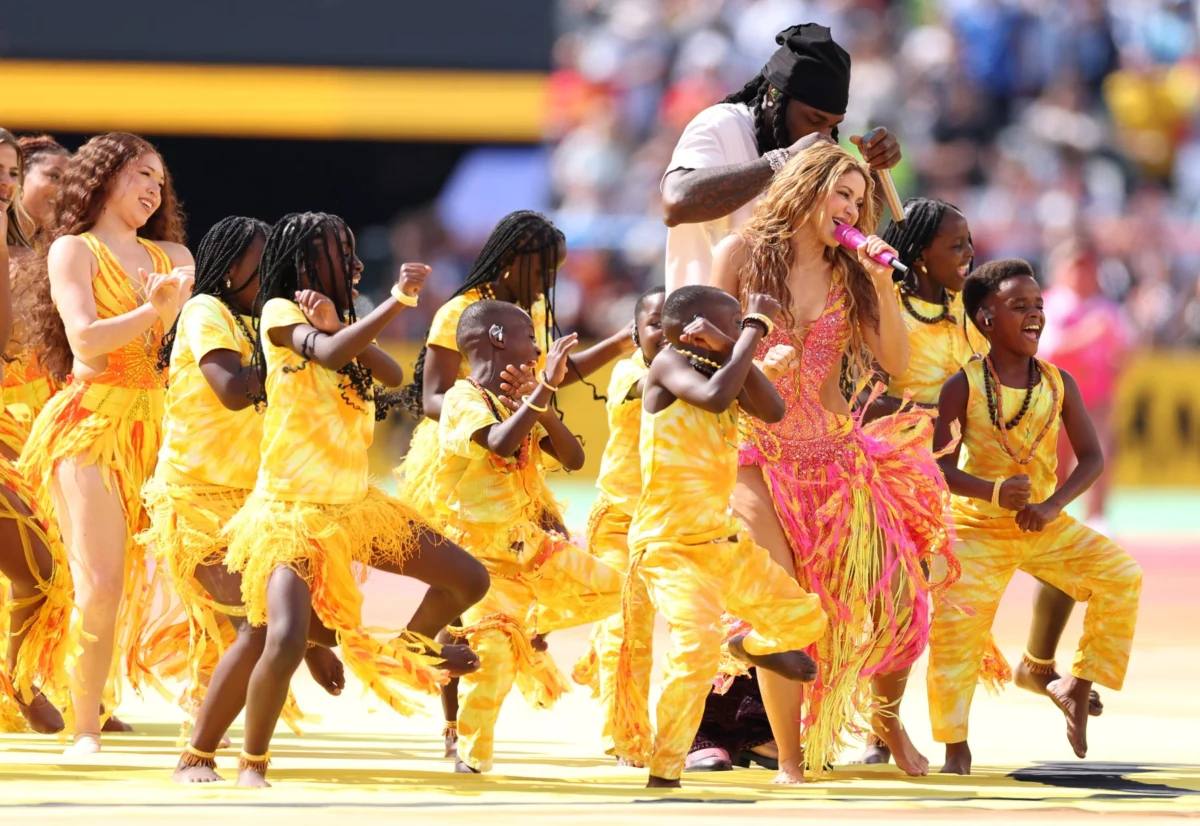
June 11, 2026 – The Kickoff: The momentum began at Mexico City’s iconic Estadio Azteca. Before an electric crowd of over 80,000, Shakira and Burna Boy delivered a high-octane performance that served as the tournament’s official opening ceremony. This performance acted as a catalyst, planting the song firmly in the collective consciousness of fans worldwide.
July 10–16, 2026 – The Peak: During the most intense week of the tournament, Luminate reported that "Dai Dai" achieved 43 million global streams—a 4% increase over the previous week. Even as the tournament approached its final stages, the song remained the undisputed soundtrack of the competition, proving its staying power.
July 19, 2026 – The Grand Finale: The tournament concluded with a spectacle that will likely be discussed for years to come. The first-ever World Cup final halftime show at MetLife Stadium featured a dream-team lineup: Shakira, Justin Bieber, BTS, and Madonna. The 11-minute performance, which prominently featured "Dai Dai," served as the ultimate promotional vehicle, thrusting the track back into the global spotlight during the final hours of the event.
Supporting Data: The Numbers Behind the Music
The data provided by Luminate highlights the immense scale of the "Dai Dai" phenomenon. For the tracking week of July 10–16, the song tallied 43 million streams and 5,000 sales globally. Outside of the United States, the performance remained similarly robust, with 36.7 million streams and 4,000 sales.
However, the charts also reveal the "World Cup Effect" on legacy tracks. Oasis’s 1996 classic, "Wonderwall," experienced a meteoric rise, jumping from No. 26 to No. 4 on the Global 200. This revival was driven by English supporters who adopted the track as their unofficial team anthem throughout the tournament. The surge was statistically significant: a 64% increase in streams (reaching 35 million) and a staggering 78% increase in sales (4,000 units).
This resurgence of a nearly 30-year-old song illustrates how global sporting events can act as a bridge between generations, introducing legacy anthems to younger listeners while cementing their status as cultural touchstones.
The Competitive Landscape
While "Dai Dai" and "Wonderwall" dominated the conversation, the remainder of the Billboard Global 200 top five remains highly competitive.

- Ariana Grande: Her track "Hate That I Made You Love Me" continues to demonstrate remarkable endurance, holding steady at No. 2 following its June debut.
- Ella Langley: Her breakout hit, "Choosin’ Texas," maintains its position at No. 3, marking a high point for the emerging artist.
- Michael Jackson: The perennial classic "Billie Jean" continues to cycle through the top five, falling slightly from No. 4 to No. 5, yet proving that even decades later, the King of Pop remains a fixture of the global streaming landscape.
On the Global Excl. U.S. chart, the landscape is similarly stable, with BTS’s "Swim" holding at No. 2, Ariana Grande’s "Hate That I Made You Love Me" at No. 3, and Justin Bieber’s "Beauty and a Beat" (featuring Nicki Minaj) rounding out the top five.
Official Responses and Industry Impact
The unprecedented success of the 2026 World Cup halftime show has sparked a larger industry conversation about the integration of live performance and streaming data. Industry analysts note that the "halftime show" model, previously perfected by the NFL’s Super Bowl, has now been successfully exported to the global stage of soccer.
The strategy of "bookending" the tournament—using a high-profile opening ceremony followed by a star-studded halftime finale—created a closed loop of engagement that was highly effective in driving consumption. According to Luminate, the thorough review process for these charts ensures that this data is authentic, weeding out suspicious or non-verifiable streams to maintain the integrity of the rankings.
Billboard’s chart methodology, which incorporates a weighted formula of official streams and verified digital sales across 200 territories, has provided a clear map of how the world consumed music during the month-long tournament. By excluding direct-to-consumer (D2C) site sales, Billboard ensures that the chart reflects genuine listener intent rather than fan-based bulk purchasing.
Implications: The Future of Global Anthems
What does the success of "Dai Dai" mean for the future of global music?
First, it suggests that the "Official Song" model is undergoing a renaissance. By leveraging multi-lingual artists like Shakira and cross-genre stars like Burna Boy, the tournament was able to appeal to a broader demographic than in previous years.
Second, the revival of "Wonderwall" demonstrates that the power of fan-driven culture is perhaps the most potent marketing tool in existence. When a crowd adopts a song, it transcends the artist’s own promotion. The "serenading" of the English team by their fans provided an authentic, grassroots endorsement that translated directly into streaming millions.
Looking ahead, the industry is already watching to see if "Dai Dai" can sustain its momentum. The tracking week of July 17–23 will be the final test; while the halftime show provided a massive boost, the final four days of that week occurred after the tournament concluded. The industry will be looking to see if the "World Cup hangover" causes a dip in performance or if the song has become an independent hit, detached from the soccer pitch.
As the charts update this coming Monday, July 27, the results will provide a definitive answer on whether "Dai Dai" has truly secured its place in the pantheon of global pop hits or if its success was inextricably linked to the tournament itself. Regardless of the outcome, one thing is certain: the 2026 World Cup has proven that in an era of fragmented media, the world still gathers around music just as fervently as it does around a ball.
For those interested in the full data breakdown, the top 100 titles are available on Billboard.com, while deeper insights and the full 200-title rankings can be found via Billboard Pro. Follow @billboardcharts on X and Instagram for real-time updates as the industry digests these historic results.