COLORADO SPRINGS, CO – In the shadow of Pikes Peak, the Charis Christian Center has long served as a spiritual beacon for the Colorado Springs community. However, for years, the ministry faced a persistent earthly challenge: its sanctuary, a 1,500-seat auditorium that once served as a massive industrial warehouse, possessed an acoustic profile that was more suited for storage than for sermons.
The transition from a utilitarian warehouse to a high-capacity house of worship is a common narrative in modern American ministry, but it is one fraught with technical hurdles. At Charis Christian Center, these hurdles manifested as excessive "slapback" echoes, uneven sound distribution, and significant stage bleed that hindered both the live experience and the church’s burgeoning digital outreach. To solve these deep-seated issues, the church partnered with manufacturer DAS Audio, distributor Sound Productions, and systems integrator Luxe AVL to design and deploy a state-of-the-art audio ecosystem tailored specifically to the building’s unique—and difficult—architecture.
Main Facts: The Scope of the Transformation
The project at Charis Christian Center represents a comprehensive overhaul of the facility’s auditory infrastructure. The primary goal was to move away from a "point-and-shoot" audio approach toward a sophisticated, phased-array system capable of delivering "studio-quality" sound to every seat in the 1,500-person capacity room.
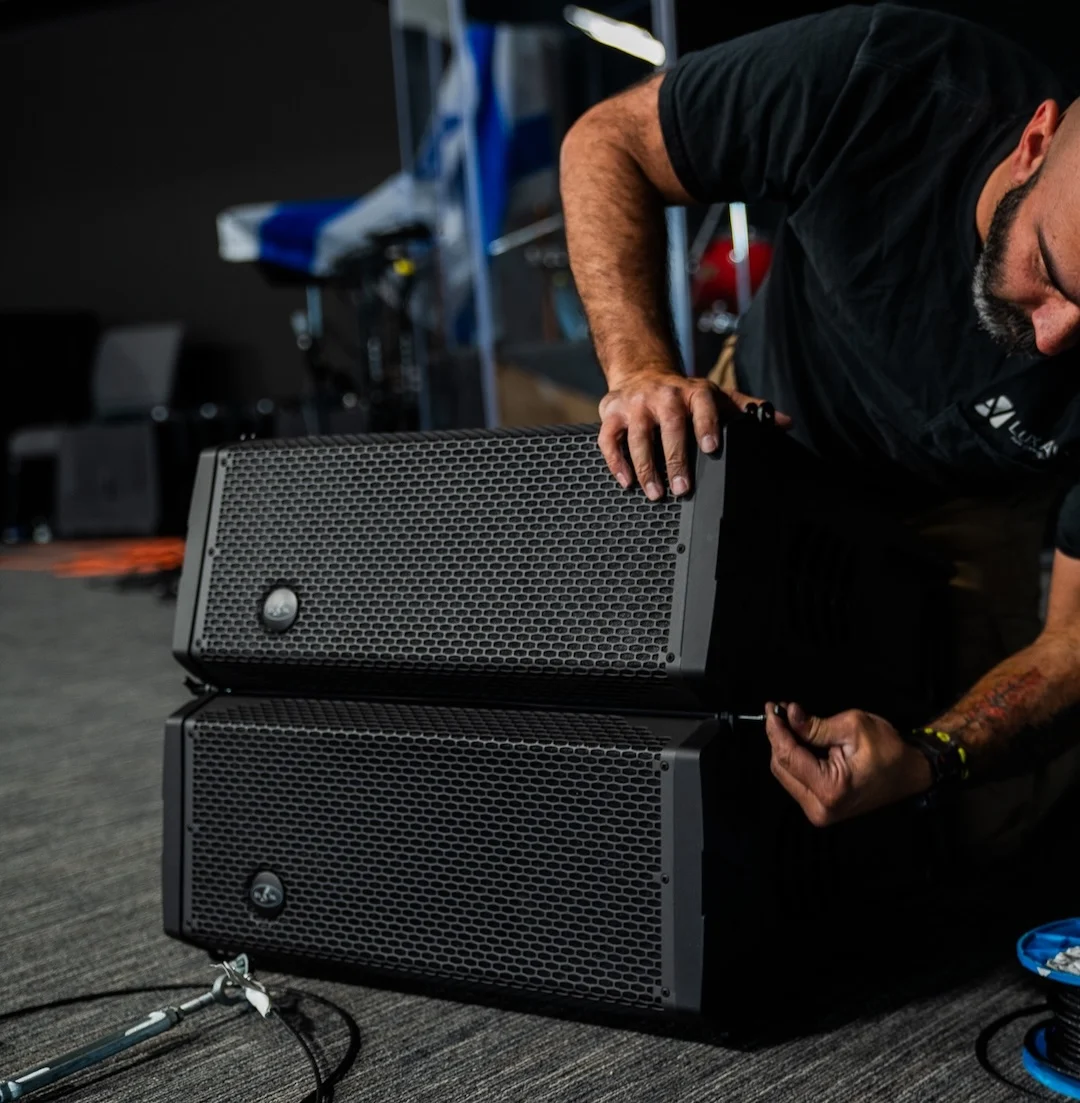
The centerpiece of this renovation is the DAS Audio Event Series, a line of powered line arrays and subwoofers known for their balance of high-pressure output and refined clarity. The installation includes:
- Main L/R System: 16 Event-28A dual 8-inch powered line array speakers.
- Outfills: 8 Event-26A compact dual 6-inch line array speakers.
- Flown Low-End: 4 Event-118A single 18-inch subwoofers in a center end-fire configuration.
- Ground Reinforcement: 2 Event-218A dual 18-inch subwoofers.
- System Brain: An Integral-M88 processor utilizing Dante networking and DAS Audio’s ALMA Control software.
By integrating these components, the design team sought to eliminate the "dead zones" and "hot spots" that had plagued the sanctuary, while simultaneously providing the production team with the headroom needed to manage a full worship band and a sensitive choir microphone setup.
Chronology: From Warehouse Echoes to Acoustic Precision
The journey to the new system began with a realization by the church leadership that their existing audio setup had reached its ceiling. As the congregation grew and the production value of the services increased, the limitations of the warehouse architecture became impossible to ignore.
The Legacy of the Warehouse
Originally designed for logistics and storage, the building featured vast expanses of hard, reflective surfaces, parallel walls, and high ceilings. In the world of acoustics, this is a recipe for "slapback"—a phenomenon where sound waves bounce off the rear wall and return to the stage with enough delay to disorient performers and muddy the message for the audience. For years, the production team struggled to find a balance between volume and clarity.
The Consultation Phase
In early 2026, Charis Christian Center engaged Luxe AVL to conduct a thorough site survey. Recognizing the complexity of the space, Luxe AVL brought in Sound Productions and DAS Audio to provide a tripartite solution. The planning phase lasted several months, involving detailed acoustic mapping and a deep dive into the church’s specific workflow requirements.
Digital Modeling and Implementation
Before a single cable was pulled, the team utilized advanced laser scanning technology to create a "digital twin" of the sanctuary. This virtual model allowed engineers to simulate how different speaker configurations would interact with the room’s surfaces. By the time the physical installation began in the summer of 2026, the team already knew exactly where every bracket would be bolted and how every degree of splay in the line array would affect the final result.
Supporting Data: The Physics of the Event Series
The selection of the DAS Audio Event Series was a strategic decision based on the specific physics of the Charis sanctuary. Each component of the system was chosen to address a particular acoustic deficiency.
The Event-28A and Mid-Range Clarity
The Event-28A is a three-way powered line array. In a large room like Charis, the dual 8-inch transducers are critical because they provide a "tight" mid-range. This is essential for "intelligibility"—the technical term for how easily a listener can distinguish individual words in a spoken sermon. By utilizing 16 of these units in a Left/Right configuration, the system achieves a consistent "throw" that reaches the back rows without having to be excessively loud in the front.

The End-Fire Subwoofer Array
One of the most innovative aspects of the install is the flown center end-fire configuration of the Event-118A subwoofers. In traditional setups, low-frequency energy radiates in all directions, often "washing" back onto the stage and muddying the monitors for the musicians. An end-fire array uses precise timing delays to ensure that the sound waves from the subwoofers cancel each other out behind the speakers while reinforcing each other in front. This keeps the stage quiet and the "punch" focused on the congregation.
ALMA Control and Dante Integration
The entire system runs on a Dante digital backbone, controlled by the Integral-M88 processor. Using DAS Audio’s ALMA software, the church’s production team can monitor the health of every single driver in the array in real-time. This digital control also allows for "shading"—the ability to subtly adjust the volume of specific speakers within the array to ensure the front row isn’t overwhelmed while the back row still hears every whisper.
Official Responses: Voices from the Project
The success of the project is perhaps best measured by the feedback from those who live with the system every week.
Caleb Kanneberg, Production Manager at Charis Christian Center, noted that the transformation was immediate and profound. "Our worship team is incredible, but the sound just wasn’t filling the room in a way that created the immersive experience we wanted," Kanneberg explained. "Now you can walk anywhere in the space, and the sound is clear, controlled, and impactful. It completely changed the room."
Kanneberg further highlighted the resolution of long-standing technical headaches. "The increased headroom provided by the DAS system helped solve challenges we’ve had for years with choir microphones and pastor intelligibility. We no longer have to fight the room to get the sound we need."
Representatives from Luxe AVL emphasized the importance of the pre-installation modeling. "When you’re dealing with a warehouse-style architecture, you can’t guess," said a lead engineer for the project. "The laser scanning allowed us to see the slapback before we even turned the system on. We were able to aim the energy away from the reflective surfaces and directly onto the ‘seated’ plane, which is the only way to truly conquer a room with this much reverb."
Implications: The Future of House of Worship Audio
The Charis Christian Center project serves as a case study for a broader trend in the House of Worship (HoW) market. As churches move toward high-definition livestreams and concert-level worship experiences, the demand for professional-grade touring equipment in a permanent install environment has skyrocketed.
The "Experience Economy" in Ministry
Modern parishioners have grown accustomed to high-fidelity audio in their daily lives—from high-end car stereos to noise-canceling headphones. When they enter a sanctuary, their expectations remain high. For a ministry like Charis, which relies on the clarity of its message, an investment in audio is an investment in the "product" of the church itself.
The Hybrid Model
Furthermore, the improvements at Charis have significant implications for their digital presence. A clean, well-managed room sound translates to a better "front-of-house" mix, which in turn provides a cleaner feed for the livestream. By reducing stage bleed and controlling the room’s acoustics, the church has effectively improved its broadcast quality without changing its cameras or streaming software.
Conclusion
The collaboration between DAS Audio, Sound Productions, and Luxe AVL has turned a challenging industrial shell into a world-class auditorium. By combining the "brute force" of high-output line arrays with the "finesse" of digital modeling and Dante networking, Charis Christian Center has ensured that its message will be heard—clearly, powerfully, and without the echoes of its warehouse past. For other ministries facing similar architectural ghosts, the Charis project stands as a blueprint for how to bridge the gap between historic buildings and futuristic sound.