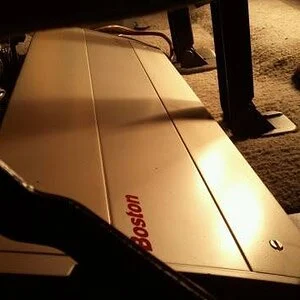
In the world of automotive audio, the quest for the "perfect" sound is often a journey of balancing budget, power, and personal sonic preference. For many enthusiasts, the entry-level component market serves as the gateway to high-fidelity audio. Recently, a debate has ignited among the enthusiast community regarding two titans of the industry: the Focal Auditor ASE 165 and the Infinity Reference REF6530CX. Both sets occupy a similar price bracket, yet they represent two distinct philosophies in acoustic engineering.
For the average driver looking to upgrade from factory-installed paper cones, the choice between these two can be daunting. With a 50W RMS Class AB amplifier powering the system and a commitment to proper door sound deadening, the hardware foundation is set. However, the final output rests on the inherent design characteristics of the drivers themselves.
Main Facts: Comparing the Contenders
At their core, these two component sets are designed to solve the same problem: replacing lackluster factory audio with a system that provides clarity, impact, and a wider soundstage.
The Focal Auditor ASE 165
Focal, a French manufacturer renowned for its precision, positions the Auditor line as their accessible, high-performance solution. The ASE 165 is characterized by a "lively" sound signature. Its engineering focus is on accuracy and transient response. The tweeter is often described as energetic, which aids in imaging, while the mid-bass driver is built for punchiness and agility.
The Infinity Reference REF6530CX
Infinity, under the Harman umbrella, has long been a staple in the North American car audio market. The Reference series is engineered with a philosophy of "balanced neutrality." These speakers are frequently praised for their smoother, more forgiving high-end response and a fuller, more extended low-end presence. For those who listen for extended periods, the Infinity approach often feels less fatiguing than the more aggressive, analytical nature of European rivals.
Chronology: The Evolution of Entry-Level Component Sets
The landscape of car audio has shifted dramatically over the last decade. Historically, component sets were expensive, bulky, and difficult to install without professional help.
- 2015–2018: The rise of "OEM Integration." Brands began focusing on high-sensitivity speakers that could run off factory head units. Infinity led this charge with their "True 4-Ohm" technology, allowing for easier integration.
- 2019–2022: The emergence of the "Audiophile-on-a-Budget" trend. Focal expanded its Auditor line to capitalize on consumers who wanted the brand cachet of their high-end Utopia series but at a fraction of the cost.
- 2023–2026: The current era. Enthusiasts now prioritize sound deadening (CLD tiles and closed-cell foam) as much as the speakers themselves. The modern discourse—as seen in recent enthusiast forums—no longer asks "which speaker is louder," but rather "which speaker provides the best distortion-free output when installed correctly."
Supporting Data: Technical Performance Metrics
To understand why these speakers behave differently, we must look at the technical specifications and the physics of their construction.
Power Handling and Sensitivity
Both sets are rated for approximately 50W–60W RMS, making them ideal for the user’s specific 50W AB amplifier.
- Focal ASE 165: Utilizes a Mylar tweeter and a polypropylene cone. The sensitivity is generally high, meaning it doesn’t require massive power to reach loud volumes, though it benefits from the "warmth" provided by a Class AB amplifier.
- Infinity REF6530CX: Features an edge-driven textile dome tweeter. Textile tweeters are generally smoother than Mylar or metallic ones, which explains why many users find the Infinity set "less fatiguing" over long sessions.
Sound Deadening and Enclosure Physics
The user’s decision to include sound deadening is the most critical factor in this installation. A speaker is only as good as the baffle it is mounted in.
- Vibration Mitigation: By applying Butyl rubber-based deadening to the door skin, you increase the "mass" of the door, lowering its resonant frequency. This allows the mid-bass driver to operate in a more rigid environment, preventing "muddy" bass.
- Back-Wave Control: Properly applying foam behind the speaker prevents back-wave interference, which is the primary cause of cancellation in the lower-mid frequencies.
Official Perspectives: The Philosophy of Sound
When examining the manufacturer design briefs, a clear divide emerges between Focal’s "Studio Monitor" approach and Infinity’s "Refined Listening" approach.
Focal’s Engineering Goal
Focal’s design team aims to keep the signal path as transparent as possible. Their goal is to reveal the details in a track. If a recording is bright, a Focal speaker will sound bright. This is an asset for listeners who want to hear the "air" and the "snap" of a drum kit. In a car environment, which is naturally noisy, this detail can help the audio cut through road noise without needing to crank the volume to distortion levels.
Infinity’s Engineering Goal
Infinity focuses on the "Power Response" of the speaker. They design their crossovers and tweeter-to-midwoofer transition points to ensure that the sound remains consistent even if you aren’t sitting in the exact "sweet spot." This is crucial in a car, where the listener is almost always off-axis to the drivers. Their signature sound is designed to be pleasing to the widest variety of music genres, from pop and hip-hop to classical.
Implications: Making the Final Choice
Choosing between these two sets is not a question of which is objectively "better," but rather which is the better match for the user’s ears and music library.
Case for Focal:
- If you listen to: Jazz, classical, acoustic, or highly produced EDM.
- If you want: High-definition clarity, sharp imaging, and a "forward" soundstage.
- The trade-off: If your amplifier is not properly tuned, the bright high-end can become fatiguing on poorly mastered tracks.
Case for Infinity:
- If you listen to: Rock, rap, R&B, or radio pop.
- If you want: A fuller, deeper bass response, a smoother high-end that doesn’t "bite," and a more forgiving sound that makes lower-quality streaming audio sound acceptable.
- The trade-off: You may lose some of the micro-detail and the "crisp" transient response that Focal excels at.
The Role of the Amplifier
Since the user is utilizing a 50W RMS Class AB amplifier, they are in a great position. Class AB amps are known for their musicality and smooth power delivery, which will help mitigate some of the harshness that might occur with a cheaper Class D amplifier. Both speakers will thrive with this power, provided the gain structure is set correctly to avoid clipping.
Conclusion: Final Recommendations for the Enthusiast
The debate between Focal and Infinity is a classic conflict of sonic philosophies. However, for the user in question, the inclusion of sound deadening is the "great equalizer."
Final Verdict:
- For the analytical listener: Go with the Focal Auditor ASE 165. Its ability to articulate detail will provide a professional, studio-like soundscape that is incredibly rewarding for critical listening.
- For the long-distance commuter: Choose the Infinity Reference REF6530CX. Its balanced, warm, and forgiving nature will provide hours of non-fatiguing enjoyment, particularly when combined with the lower-end extension that the Infinity drivers provide.
Regardless of the choice, the installation of sound deadening will provide a greater audible improvement than the difference between the two speaker sets themselves. By creating a stable, dampened environment, you allow either driver to perform at its peak potential. Ensure your installation includes a rigid mounting baffle—either custom-made from MDF or high-quality plastic—to ensure the mid-bass energy is directed into the cabin rather than lost into the door cavity.
As you move forward with your upgrade, remember that the "best" sound is the one that makes you want to drive a little longer just to finish the song. Happy listening.