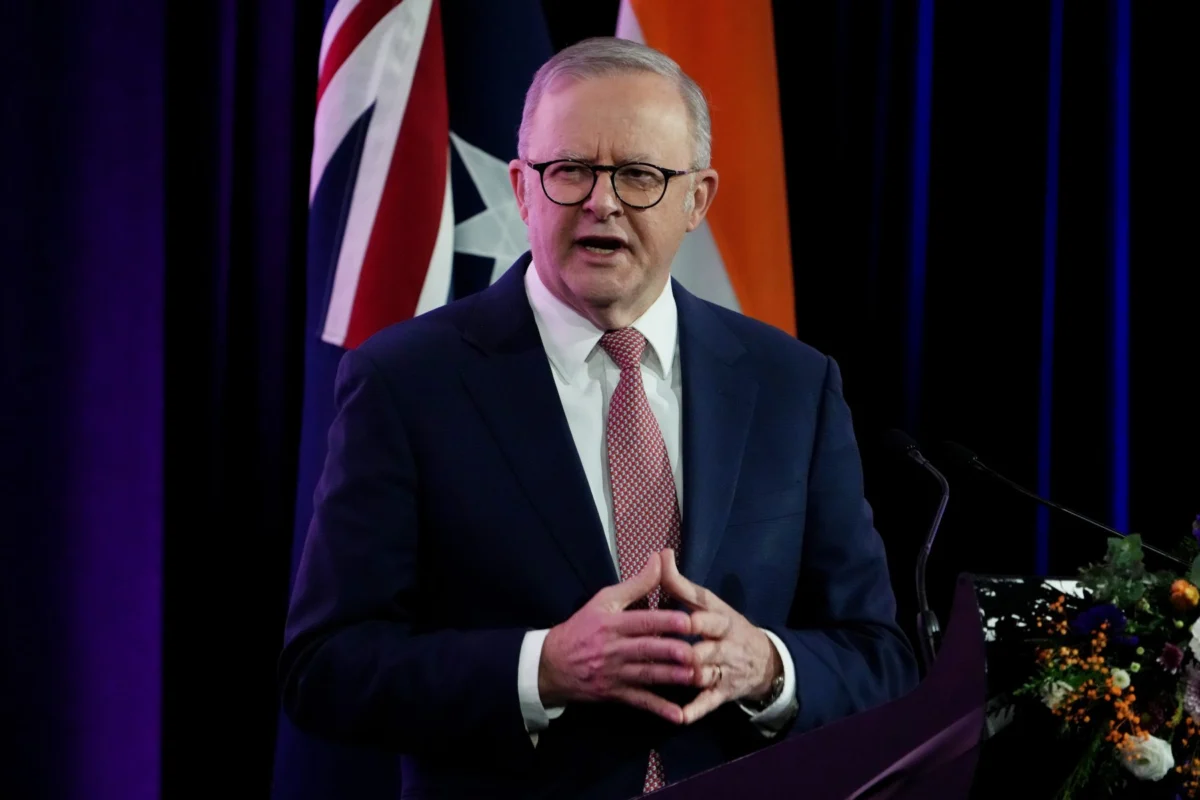
SYDNEY, Australia — In a landmark policy shift that has sent ripples through the global technology and creative sectors, Australian Prime Minister Anthony Albanese has delivered a definitive mandate: the era of "wild west" artificial intelligence training is over. Speaking at the University of Sydney on Wednesday, July 15, the Prime Minister declared that Australian creators will maintain absolute control over their intellectual property, effectively slamming the door on tech giants seeking to scrape copyrighted music, literature, and journalism to fuel generative AI models without consent or compensation.
The address, titled "AI in Australia’s Interests," marks a decisive pivot for the nation. By prioritizing the rights of artists over the unfettered expansion of AI, Albanese has positioned Australia as a potential global leader in ethical technology regulation, setting the stage for a new licensing framework built entirely on the principles of permission and fair payment.
The Core Mandate: Ownership is Non-Negotiable
The heart of the Prime Minister’s address centered on the sanctity of creative labor. Addressing a nervous industry that has spent months lobbying against the threat of AI-driven displacement, Albanese was unambiguous.
"Australian writers, musicians, artists, and journalists must retain ownership and control of their work," Albanese stated. "Our laws will spell that out plain as day. An artist’s creative endeavor is their work and their property."
For the creative community, these words served as the long-awaited signal that the government would not facilitate a "value gap" where tech companies generate billions in revenue while devaluing the very content that makes their systems functional. The Prime Minister underscored that the control extends beyond mere ownership; it includes the fundamental right to dictate the price and value of one’s creative output.
"No company should use Australian books, music, art, or news to build or train AI without the artist’s control," he asserted, adding a stinging rebuke to current industry practices: "Anything less is theft."
A Chronology of Policy Evolution
The path to this moment has been characterized by intense debate and administrative caution.
- Late 2024: The Australian Attorney-General’s department signaled a departure from international trends by confirming that the government would not pursue a "copyright exception" for AI training. This was a critical victory for rights holders, as it prevented the creation of a legal loophole that would have allowed AI firms to bypass licensing.
- December 2024: The Productivity Commission published its final report, Harnessing data and digital technology. While the report was initially viewed as cautious—arguing it might be "premature" to overhaul copyright laws—it ultimately provided the evidence base for the government to understand the scale of the digital economy.
- July 15, 2025: Prime Minister Albanese formalized the government’s stance. Beyond rhetoric, he announced the immediate establishment of a new Office of AI. This body is tasked with the rapid development of Australian standards for AI training, focusing on a robust, functional licensing framework that mandates transparency, consent, and compensation.
The Economic Stakes: Why Licensing Matters
The urgency of this policy shift is rooted in hard data. The music and publishing industries have long argued that the absence of a regulated market would lead to an existential financial crisis for the arts.
According to a comprehensive AI and Music Report published by APRA AMCOS, the financial implications of inaction are staggering. The report concluded that without a mandatory, enforced licensing framework, Australian and New Zealand songwriters and composers face a 23% reduction in their total revenue. In real-world terms, this represents a loss of more than A$500 million ($350 million USD) over a four-year period.

These figures illustrate that the AI debate is not merely an intellectual or philosophical struggle over the nature of "creativity"—it is a fight for the viability of the professional creative class. By mandating that AI firms enter the commercial marketplace, the government is effectively ensuring that the creative economy can share in the prosperity generated by AI innovation.
Industry Responses: A Collective Sigh of Relief
The reaction from Australia’s peak creative bodies has been one of overwhelming support, with leaders characterizing the Prime Minister’s speech as a watershed moment for the nation’s cultural sector.
ARIA and the Commercial Licensing Market
Annabelle Herd, CEO of the Australian Recording Industry Association (ARIA), praised the clarity of the Prime Minister’s position. "The prime minister could not have been clearer: Australian writers and musicians keep ownership and control of their work. Artists control what that work is worth, not the government and not a technology company," Herd remarked.
She further emphasized that the goal is not to stop AI, but to integrate it into a functioning commercial market. "Control of price, value, and terms of use are what underpin a commercial licensing market. The artist decides what their work is worth and who may use it. That is how licensing works everywhere else in the world, and it is how it should work here."
APRA AMCOS and the Future of Innovation
Dean Ormston, CEO of APRA AMCOS, lauded the government for its "unequivocal support." He noted that the future of AI development in Australia is now tethered to the rights of the creators. "Permission and payment must be sought, and crucially, the creative economy must benefit from AI innovation and development in Australia," Ormston said.
The Perspective of Publishers and Managers
The sentiment was echoed across the spectrum of the industry. Damian Rinaldi, CEO of the Music Publishers’ Association (AMPAL), highlighted the moral weight of the Prime Minister’s words. "The declaration that ‘anything less is theft’ sends a powerful and unambiguous message," Rinaldi stated. "Permission must come first."
Maggie Collins, executive director of the Association of Artist Managers (AAM), reflected on the months of anxiety that preceded this announcement. For her, the speech was a validation of the value of Australian culture. "Australia knows its worth," she noted. "Today’s speech… made that crystal clear, when he articulated without a shadow of a doubt, that in embracing this new age, Australian writers, musicians, artists, and journalists must retain ownership and control of their work."
Implications: A New Global Standard?
By establishing the Office of AI and signaling the development of mandatory licensing standards, Australia is moving from a defensive posture to a proactive regulatory one. The implications of this are significant:
- For AI Corporations: The era of "ask for forgiveness, not permission" is ending in the Australian market. Global tech firms must now pivot to negotiations with rights-holders if they wish to operate legally within the country. This mirrors the trajectory of the music streaming industry in the early 2000s, where initial resistance eventually gave way to a massive, regulated licensing market.
- For the Global Regulatory Landscape: Australia’s move adds to a growing global patchwork of copyright protection. As other nations grapple with the same issues, Australia’s decision to prioritize "consent and payment" could become a blueprint for smaller and mid-sized economies, potentially forcing the hand of global AI developers who are currently seeking to avoid licensing costs.
- For the Future of Creative Labor: The policy recognizes that AI, while a powerful tool, should not be an extractive one. By ensuring that creators retain the ability to price their work, the Australian government is effectively incentivizing a sustainable ecosystem where human artists can co-exist with, and perhaps even profit from, the very technology that once threatened to render them obsolete.
As the new Office of AI begins its work, the eyes of the global creative community will remain fixed on Canberra. While the legal technicalities of the new standards are yet to be fully drafted, the political intent is set. Australia has decided that it will not be the testing ground for a future where creativity is a free resource for the machines; instead, it has chosen to build a future where the human creator remains at the center of the value chain.