"We wouldn’t teach reading in a classroom without lights. Why then do we teach in acoustical darkness?" — John Erdreich, PhD
In the modern educational landscape, we pour billions into digital infrastructure, ergonomic seating, and updated curricula. Yet, we frequently ignore the fundamental environment through which all learning occurs: sound. For millions of students worldwide, the classroom is an environment of "acoustical darkness." While school administrators focus on visual aesthetics and technological integration, they often overlook the "invisible architecture" of sound—a factor that dictates whether a lesson is absorbed or lost to the chaos of echo and ambient noise.
The Core Crisis: Understanding the Acoustic Deficit
To understand the scope of the problem, one must first recognize the physical reality of the modern classroom. Most learning spaces are designed with efficiency and durability in mind—materials like concrete, glass, metal, and plasterboard are standard. Unfortunately, these hard surfaces are highly reflective. When a teacher speaks, sound waves bounce off these surfaces, creating a cacophony of overlapping echoes known as reverberation.
The result is a phenomenon where students miss up to one in four words spoken during a lecture. For a student, this isn’t merely a nuisance; it is a cognitive hurdle. When a child has to work overtime just to parse the sounds of the alphabet or the nuances of a complex sentence, the mental energy required for higher-order thinking—critical analysis, creative problem-solving, and information retention—is severely diminished.
A Century of Ignored Science
The issue is not a new discovery. Researchers have documented the detrimental effects of poor classroom acoustics for over a century. Despite this, many schools remain "unfit for purpose." The Acoustical Society of America (ANSI) has established rigorous standards, yet the gap between these guidelines and the reality of the average school remains cavernous. Data shows that in untreated classrooms, reverberation times often hover around 1.9 seconds—nearly triple the recommended standard of 0.7 seconds.
Chronology of a Failed Solution: The Amplification Myth
As the impact of poor acoustics became more apparent in the late 20th and early 21st centuries, many school districts turned to technology to solve the problem. The rise of classroom amplification systems—microphones paired with ceiling-mounted loudspeakers—was initially hailed as a panacea.
The logic seemed sound: if students cannot hear the teacher, simply increase the volume. However, this approach failed to account for the physics of the room. Amplification, when introduced into a highly reverberant space, does not clarify speech; it merely amplifies the noise. By increasing the volume of the teacher’s voice, these systems also increased the volume of the reflections and, crucially, the ambient noise picked up by the microphone, such as HVAC hums, outside traffic, and student chatter.
The consensus among modern acoustic experts is clear: you cannot fix a room’s architecture with more sound. Instead of improving intelligibility, poorly implemented amplification often exacerbates the "muddied" auditory environment, leaving students more fatigued and teachers more prone to vocal strain.
Supporting Data: The Cost of Noise
The implications of poor acoustic design are quantifiable, manifesting in both human and academic costs.
The Student Toll
- Cognitive Fatigue: When the signal-to-noise ratio is poor, the brain must perform "auditory closure"—the process of guessing the missing parts of a sentence based on context. This is exhausting for any student, but it is catastrophic for those with Auditory Processing Disorder (APD), non-native language learners, or students with hearing impairments.
- Academic Performance: Studies consistently link high noise levels to lower standardized test scores. The constant bombardment of background noise forces students to disengage, leading to shorter attention spans and reduced long-term retention.
- Behavioral Impact: Research indicates that quiet, controlled environments lead to better behavior. Conversely, noisy rooms often result in a feedback loop where students talk louder to be heard, leading to a spike in the overall decibel level of the classroom.
The Teacher’s Burden
The teaching profession is among the most demanding in terms of vocal usage. Teachers are estimated to be 32 times more likely to suffer from vocal strain or chronic voice disorders than the general population. When a teacher is forced to compete with a noisy, reverberant room, they adopt a "Lombard Effect"—a subconscious vocal reflex to increase volume and pitch to overcome background noise. This leads to long-term physical damage, professional burnout, and, in many cases, forced absenteeism.

The Path Forward: Acoustic Treatment as a Foundational Strategy
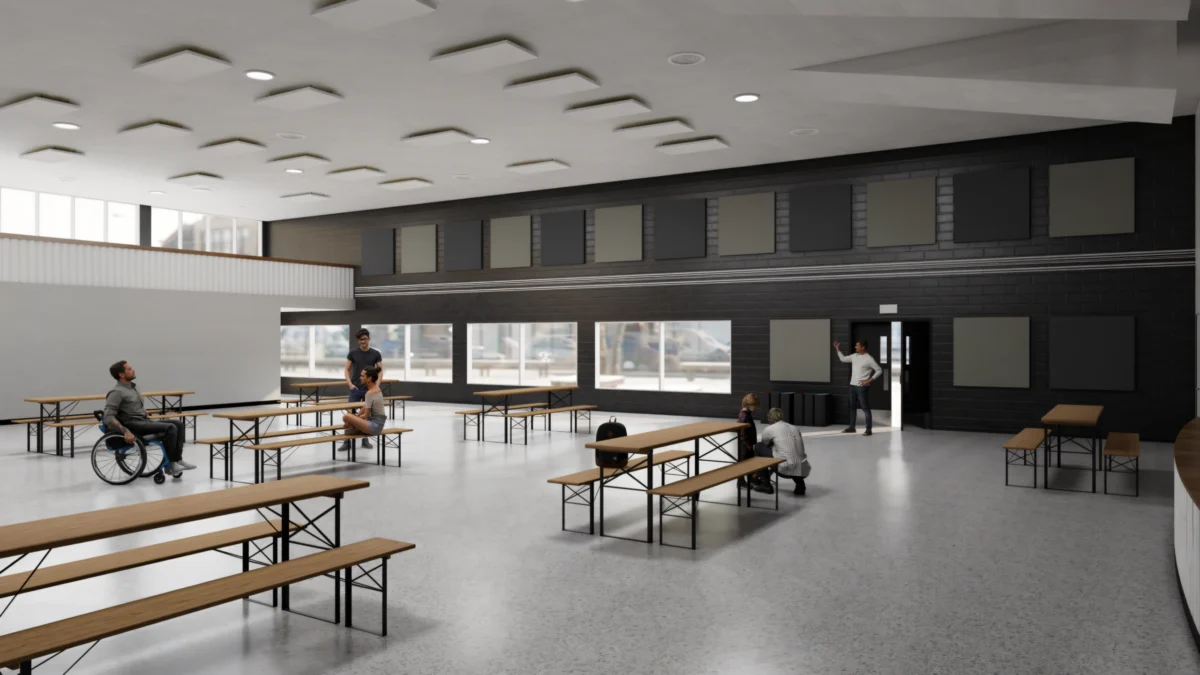
If amplification is a faulty crutch, acoustic treatment is the structural remedy. By strategically placing sound-absorbing panels on walls and ceilings, schools can effectively "dampen" the room. These panels act as a sponge for sound waves, preventing them from bouncing off hard surfaces and returning to the listener as distorted echoes.
The efficacy of this approach is backed by significant case studies, such as the "Essex Study," which demonstrated that even minor improvements in reverberation times led to marked increases in student comprehension and teacher satisfaction. Remarkably, transforming a room does not require a total renovation. Covering just 17% to 25% of the wall surface area is often sufficient to bring a classroom within the gold-standard 0.7-second reverberation threshold.
Flexibility and Aesthetic Integration
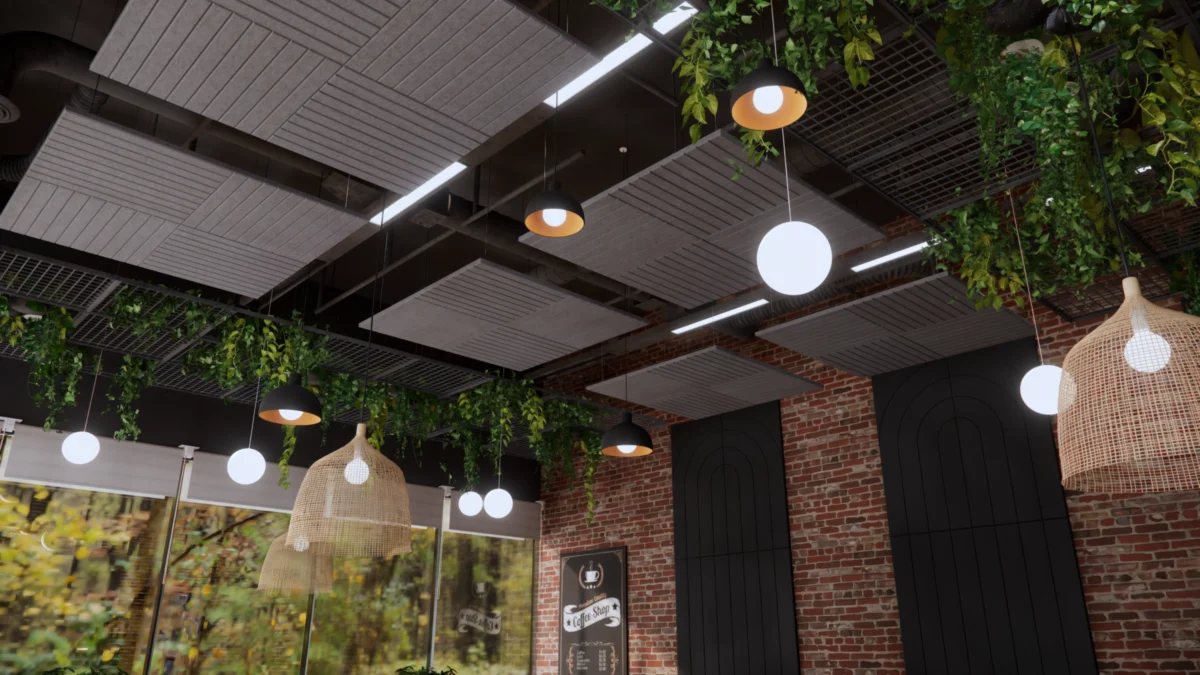
Modern acoustic solutions, such as those offered by Primacoustic, have moved far beyond the industrial "egg-crate" foam of the past. Today, treatments are designed to be integrated into the school environment seamlessly:
- Customization: Panels can be color-matched to school branding, printed with educational graphics, or finished in wood-grain textures to look like standard architectural features.
- Durability: Unlike electronic systems that require software updates and hardware repairs, passive acoustic panels are a "set-and-forget" solution that can last for decades with minimal maintenance.
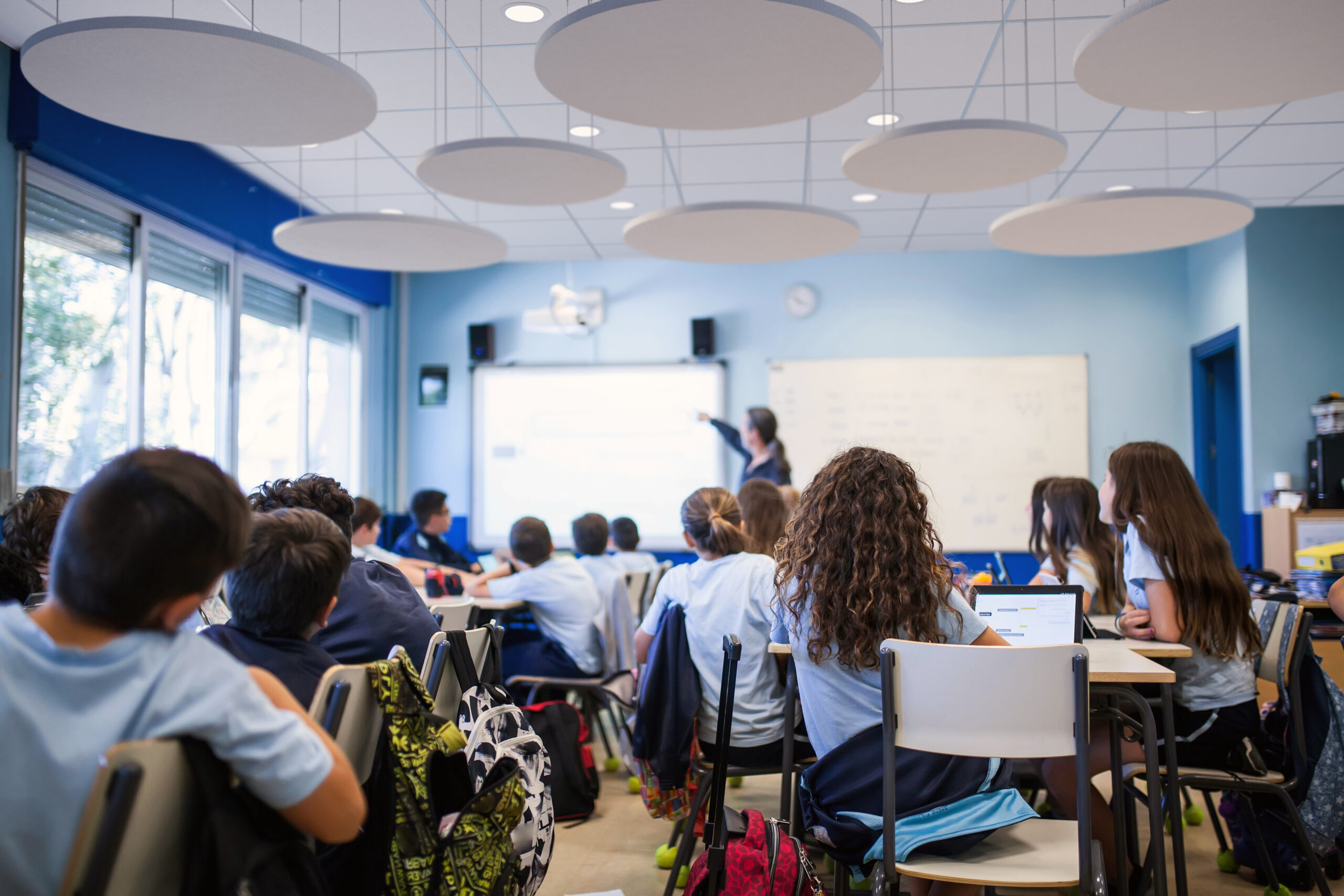
- Versatility: For schools with limited wall space, ceiling-mounted "clouds" or T-bar tiles offer an unobtrusive way to achieve professional-grade sound control without sacrificing valuable wall real estate for teaching materials.
Official Perspectives and Industry Response
Educational authorities and acoustic engineers are increasingly aligned on the necessity of acoustic design in new school builds and renovations. The goal is no longer to treat acoustics as an "extra" or a luxury, but as a fundamental requirement for a healthy learning environment.
"We have to stop thinking about a classroom as just a container for students," says an industry expert from the acoustic sector. "It is a performance space. Whether it is a science lab, a kindergarten reading corner, or a high school lecture hall, the environment should serve the communication, not hinder it."

The industry response has shifted toward turnkey solutions that guide schools through the process—from the initial acoustic analysis of the room to the final installation. By providing technical support and, where necessary, connecting schools with local installers, providers are ensuring that the barrier to entry for better acoustics is lowered significantly.
Implications for the Future of Education
As we look toward the future of education, the integration of physical environment design with pedagogical goals is essential. We are entering an era where equity in education includes the right to a healthy, supportive sensory environment.
If we truly want to improve student outcomes, we must address the "invisible architecture" that dictates the success of our classrooms. It is time to treat sound with the same level of concern we give to light, air quality, and safety. By implementing acoustic treatments, schools can create a sanctuary for learning—a space where students are not fighting the room, but are free to listen, engage, and thrive.
The message is clear: The technology exists, the science is settled, and the solution is as permanent as the architecture itself. It is time for every school to ensure their classrooms are designed to be heard.
For more information on how to assess and improve your learning environment, visit Primacoustic.com.

References for Further Study: