In the rapidly evolving landscape of the Internet of Things (IoT), the ability to track, manage, and verify physical assets has transitioned from a logistical necessity to a strategic corporate imperative. This week on Amelia’s Weekly Fish Fry (Episode 688), host Amelia Dalton sat down with Matt Branda, Vice President at Impinj, to unpack the transformative power of RAIN RFID technology. As industries move toward increasingly autonomous, data-driven operations, RAIN RFID is emerging not merely as a replacement for manual scanning, but as the foundational "physical intelligence layer" that fuels the next generation of AI and IoT systems.
Main Facts: What is RAIN RFID?
For the uninitiated, the term "RAIN RFID" often creates confusion, frequently being conflated with standard barcode scanning or proximity-based NFC payments. However, as Matt Branda explains, RAIN RFID represents a quantum leap in wireless technology.
At its core, RAIN RFID is a passive, battery-less wireless technology that enables item-level visibility and traceability. Unlike traditional RFID systems used for building access or payment cards, RAIN RFID can discover, track, and locate hundreds of items per second at distances of up to 10 meters, all without requiring a direct line of sight.
The technology utilizes integrated circuits—often no larger than a grain of sand—attached to small antennas. These "tags" are applied to products as labels, sewn into garment care tags, or embedded directly into items ranging from consumer electronics to automotive tires. Because these tags require no internal power source, they are cost-effective to deploy at a massive scale, allowing enterprises to connect the trillions of consumable items manufactured and sold globally each year.
Chronology: The Evolution of Item-Level Connectivity
The journey of RAIN RFID has been one of consistent, incremental innovation over the past three decades.
- The Early Years (Pre-2000s): The industry spent years laying the groundwork for IoT, but the focus was largely on the "Internet of Devices"—smartphones, wearables, and home automation. Physical goods remained largely "dark" to digital systems, relying on manual labor for tracking.
- The Barcode Era (Transition Period): For years, the industry relied on manual barcode scanning. This process was notoriously slow, labor-intensive, and prone to human error, providing only a snapshot of inventory rather than real-time data.
- The Rise of RAIN (2010s): As costs plummeted and read reliability increased, retail apparel became the first major proving ground for RAIN RFID. Large-scale deployments in retail environments demonstrated that cycle counts could be performed up to 25 times faster than manual scanning.
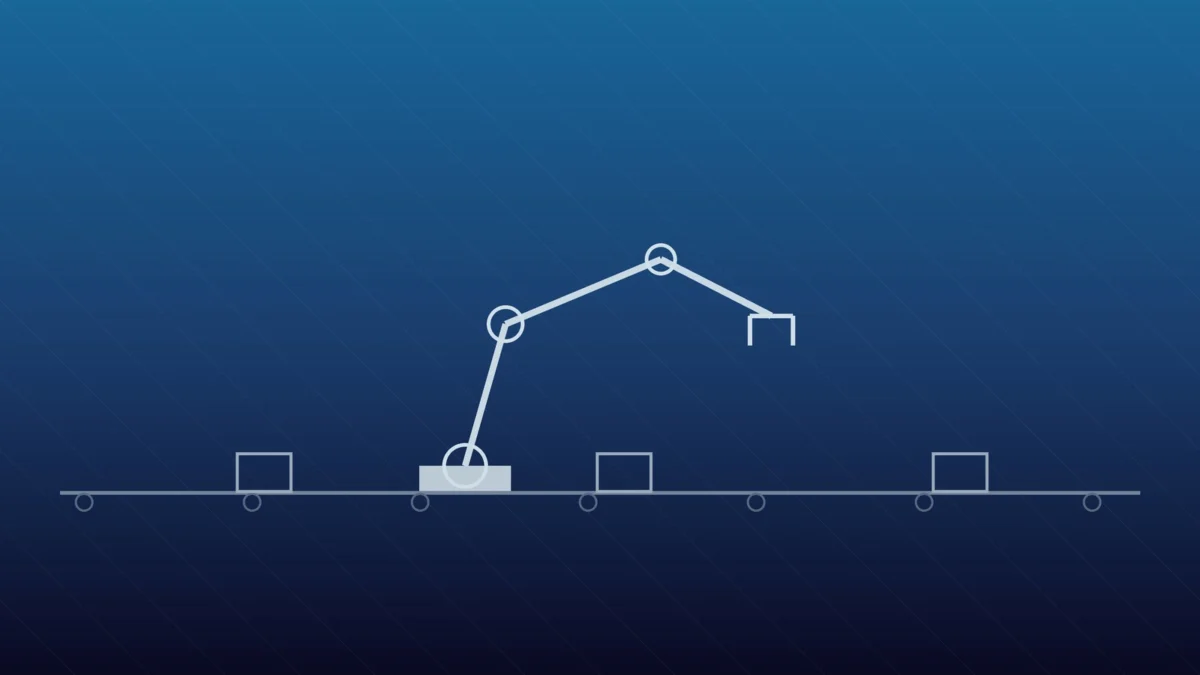
- The AI and Autonomy Era (2020s–Present): Today, the industry is shifting from manual, handheld scanning to permanent, autonomous infrastructure. Systems are now installed at loading docks, conveyor belts, and retail exits, creating a continuous stream of real-time data that feeds into AI-driven decision-making platforms.
Supporting Data: Impinj’s Contribution and Gen2X
Impinj has served as a primary architect of this ecosystem for over two decades. The company’s contributions span the entire spectrum of the technology, from the silicon integrated circuits embedded in products to the hardware infrastructure that processes the data.
The Gen2X Innovation
One of the most significant recent developments is the introduction of Gen2X. As companies began pushing the limits of existing standards, Impinj realized that off-the-shelf solutions could no longer solve the most complex enterprise challenges. Gen2X serves as a specialized "toolbox" of technical innovations that remain fully compatible with the existing RAIN RFID standard.
By pushing performance, security, and link protection beyond what was previously possible, Gen2X allows companies to implement sophisticated applications—such as verifying the authenticity of high-value items or preventing gray-market diversion—without abandoning their existing infrastructure investments. This, according to Branda, is the result of Impinj’s unique "end-to-end" understanding of the technology, covering the entire chain from the tag chip to the enterprise software interface.
Official Perspectives: The Three Pillars of Innovation
During the discussion, Branda highlighted three specific areas of innovation that are currently driving widespread industrial adoption:
1. The Expansion of Connectivity
The scope of what can be tagged has grown exponentially. In the past, liquids and metals—the "nemeses" of RF technology—were virtually impossible to track. Advances in tag performance and antenna design have overcome these physical barriers. Furthermore, the reduction in cost means that it is now economically viable to tag low-cost items, such as a $1.50 pack of crayons, in addition to high-value goods.
2. Autonomous Infrastructure
The shift away from handheld readers toward "always-on" infrastructure is a game-changer. By installing readers at every touchpoint of the supply chain, companies no longer need to wait for a human to perform an inventory count. The system is constantly "aware," providing a live feed of inventory movement that enables proactive stock replenishment and immediate identification of losses.
3. Security and Authenticity
Beyond location, the technology now serves as a guardian of brand integrity. With advanced security features, companies can cryptographically verify that an item is authentic, thereby protecting against counterfeit goods and unauthorized returns. This shift from "Where is my item?" to "Is this item authentic?" has expanded the ROI for companies significantly.
Implications for the AI and IoT Landscape
Perhaps the most compelling argument presented by Branda is the role of RAIN RFID as the "physical intelligence layer" for the era of agentic AI.
Fueling the AI Engine
Modern AI systems, particularly those that are autonomous or "agentic," require high-fidelity, real-time data to function. If an AI is tasked with optimizing a supply chain or managing retail inventory, it cannot make accurate decisions based on stale or manual data. RAIN RFID fills this gap by turning every physical item into a data-generating node. It provides the "ground truth" for the digital twin of a company’s operations.
Strategic Imperative for Engineers
For engineers and developers building the next generation of IoT, the implications are clear: RAIN RFID is no longer a "niche" technology. It is a fundamental sensing layer. Those who fail to integrate RAIN RFID into their product or platform strategies are effectively designing systems that remain disconnected from the physical world.
As the technology continues to mature, we are moving toward a future of "full lifecycle visibility." From the moment a product is manufactured, through the complexities of global distribution, into the consumer’s hands, and finally into recycling or sustainability programs, RAIN RFID provides the thread of connectivity that makes circular economies possible.
Conclusion
The conversation between Amelia Dalton and Matt Branda underscores a pivotal shift in industrial engineering. We are moving away from the era where we guess where our inventory is, toward an era where our physical world is digitally transparent.
As Impinj continues to refine its technology, and as enterprises continue to adopt these autonomous, AI-fed systems, the gap between the digital and physical worlds will continue to shrink. For the engineer of 2026, the challenge is no longer about how to connect devices to the internet—it is about how to connect the entire physical world to the intelligence that governs it.
For those interested in exploring the technical specifications or learning more about how these solutions are implemented in enterprise environments, further resources and documentation are available via the Impinj official website. To hear the full interview, listeners can access the archive of "Amelia’s Weekly Fish Fry" on the EE Journal podcast portal.