The podcasting landscape continues to undergo a period of rapid evolution, defined by international expansion, the professionalization of niche content, and the integration of traditional media figures into the digital audio space. As the industry moves past the "gold rush" era, the current market is characterized by high-production value, cross-platform promotion, and an increasing reliance on data-driven discovery. This report breaks down the latest shifts, from major sporting event broadcasts to the vital role of mental health advocacy in audio.
Main Facts: A Diverse Media Landscape
The contemporary podcast market is no longer a monolith. While chart-topping giants like The Daily and The Joe Rogan Experience continue to command the US market on Apple Podcasts and Spotify respectively, a vibrant ecosystem of specialized content is flourishing beneath them.
The current trends point toward a consolidation of "prestige" content. Broadcasters and high-profile journalists are migrating to the medium, bringing with them established audiences and refined production standards. Simultaneously, independent creators are utilizing grassroots marketing—ranging from stickers in local record shops to targeted social media campaigns—to break through the noise. The core takeaway from recent performance data is that success is increasingly found at the intersection of cultural relevance and consistent, high-quality delivery.
Chronology: The Evolution of Recent Content
The last quarter has seen a flurry of activity that illustrates the industry’s direction:

- 2006 – Present: My History Can Beat Up Your Politics has served as a benchmark for political analysis, proving that long-form educational content can maintain relevance over nearly two decades. Its longevity underscores the enduring value of "evergreen" podcasts.
- The World Cup Lead-up: As global attention shifts toward major sporting events, productions like Stick to Football have taken proactive steps to capture international interest. By relocating operations to New York for the duration of the World Cup, the production team, featuring legends like Gary Neville and Roy Keane, signals a shift toward "eventized" podcasting.
- The Rise of Niche Mental Health: Shows like So Glad You Asked, featuring Dr. Ruta Nonacs and Allie Hales, have successfully pivoted to a refreshed format. By pairing clinicians with expert guest voices to answer specific, listener-submitted questions, the show has tapped into a growing demand for stigma-free, evidence-based mental health resources.
- Pop Culture Analysis: The entry of Clara Amfo and Munroe Bergdorf with Clara & Munroe Are Into It highlights the power of talent-led audio, where the charisma and access of the hosts serve as the primary product, bridging the gap between celebrity culture and critical analysis.
Supporting Data: Charting the Audio Giants
Data from top-tier platforms reveals a bifurcated market where established heavyweights hold top positions, but new entrants are making significant waves in specialized categories.
Top Performers (United States)
- Apple Podcasts: The Daily remains the quintessential news-briefing podcast, consistently holding the top spot in the US.
- Spotify: The Joe Rogan Experience continues to demonstrate the platform’s dominance in long-form, unscripted content.
Emerging Growth and Trends
- Ireland (Natural Sciences): The Al & Juddy Show has demonstrated significant upward momentum, highlighting the potential for growth in niche scientific categories outside the major US-UK axes.
- Canada (Business & Courses): The Diary of a CEO remains a titan of the business category, while The Rest Is World Cup has set a new standard for high-profile debuts, capturing the #1 spot in the "Courses" category almost immediately upon entry.
- United Kingdom (Religion & Spirituality): Life Wisdom – By Words of Taoism has secured the top spot, indicating a robust audience appetite for philosophical and spiritual content that provides calm in a chaotic media environment.
Official Responses: The Strategy Behind the Shift
Industry insiders and production houses are increasingly vocal about the "why" behind their recent pivots. For instance, the transition of So Glad You Asked to a more interactive, listener-focused format was a direct response to the community’s desire for clinical guidance rather than mere commentary.

"The goal is not just to reach a mass audience, but to provide actionable value," says a representative from the production side of the show. "When we pair an expert like Emily Oster with a real-world dilemma submitted by a mom, we move from being a ‘show’ to being a ‘resource.’ That is where the future of retention lies."
Similarly, the move of Stick to Football to New York for the World Cup is framed as an investment in proximity. "Being on the ground where the energy is, even if the broadcast is audio-first, creates a tangible connection with the audience that can’t be replicated in a studio," the production team noted in their official release. This "on-the-ground" philosophy is becoming a hallmark of high-budget sports and culture podcasts looking to differentiate themselves from the hundreds of thousands of desk-bound competitors.

Implications: Where the Industry Goes Next
The data and recent launches point to three clear implications for the future of podcasting:
1. The Death of the "Garage Hobbyist" Era
While the barrier to entry remains low, the barrier to success has never been higher. With professional entities like The Overlap and high-profile talent entering the space, the production quality, marketing spend, and guest caliber of top-tier podcasts have shifted. Producers can no longer rely on enthusiasm alone; they must now compete with the production standards of network television.

2. The Importance of "Real-World" Presence
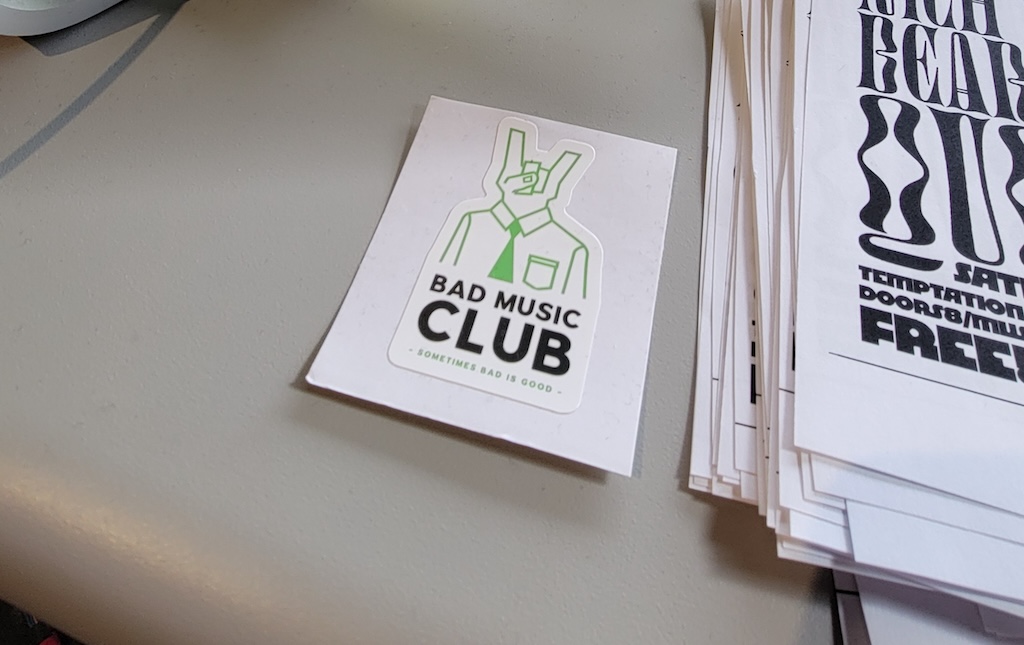
The discovery of the Bad Music Club sticker in a Brantford, Ontario record shop is a humble but potent reminder of the importance of "Podcasts in the Wild." Digital discovery is becoming increasingly difficult due to algorithm saturation. Creators who bridge the gap between physical spaces (live events, local businesses, real-world community building) and digital listening platforms are finding that physical marketing acts as a force multiplier for digital growth.
3. Niche Authority as a Monetization Strategy
The success of So Glad You Asked and Life Wisdom – By Words of Taoism suggests that deep, vertical-specific authority is a winning strategy. Advertisers are increasingly looking for audiences that are not just "large," but "intent-driven." When a podcast provides specific answers to specific life challenges, the resulting listener trust creates an environment where sponsorship and brand integration are naturally more effective.
4. Global Mobility
Podcasts are becoming increasingly borderless. The fact that a British broadcaster like Clara Amfo can reach a global audience, or that a Canadian show like The Rest Is World Cup can top the charts, demonstrates that language and culture are no longer the silos they once were. The industry is moving toward a global marketplace where quality and personality are the only currencies that matter.
Conclusion: A Maturing Ecosystem
The podcasting industry is transitioning from a period of experimental growth to one of institutional stability. The focus is shifting from "how do we get more listeners" to "how do we provide more value to the listeners we have." Whether through the migration of television-level production to the digital airwaves, the rise of evidence-based educational content, or the strategic use of global events to anchor programming, the industry is proving its resilience.

For creators and investors alike, the message is clear: the era of "throwing content at the wall" is over. In its place is a sophisticated, data-backed, and highly competitive landscape that rewards those who treat podcasting not just as a medium, but as a professionalized, essential pillar of modern media. As we look toward the next quarter, expect to see further consolidation of top-tier talent, a continued rise in specialized educational content, and a renewed emphasis on connecting with audiences in the physical world.