The podcasting landscape continues to evolve at a breakneck pace. From the shifting dominance of major distribution platforms to the creative resurgence of niche storytelling, the medium remains a cornerstone of modern digital media consumption. As we examine the latest industry developments, it is clear that data-driven decision-making and strategic content placement are more vital than ever for creators and networks alike.
Main Facts: The Current Landscape
The industry is currently navigating a maturation phase. While the "gold rush" of speculative investment has leveled off, the sector is seeing a flight to quality and discoverability. Major players such as Apple Podcasts and Spotify remain the primary gatekeepers of audience attention, yet their algorithms and discovery tools are increasingly influenced by high-production value and consistent, community-driven content.
A recurring theme in recent industry discussions—such as those highlighted in the New Media Show—is the intersection of artificial intelligence and human-led production. Industry experts like Jeanine Wright of Inception Point AI and tech commentator Robert Scoble emphasize that while AI tools are becoming indispensable for post-production and transcription, the "human element"—authenticity, personality, and community engagement—remains the true currency of the podcasting world.
Chronology: A Week in Review
The past week has provided a snapshot of the diversity within the medium. The following developments highlight the breadth of the current podcasting ecosystem:

- Content Diversification: The Box of Oddities continues to push the boundaries of niche storytelling. By focusing on the macabre and the mysterious—ranging from bizarre medical anomalies to the historical trauma of social isolation—the show highlights the persistent audience demand for long-form, deep-dive narratives that traditional broadcast media often ignores.
- Strategic Collaboration: The New Media Show hosted a critical dialogue on the future of media tech, bridging the gap between legacy podcasting infrastructure and the burgeoning AI landscape.
- The Nostalgia Play: The return of ALFsplaining serves as a case study in the power of thematic subcultures. By focusing on the final episodes of the 80s hit ALF, creators Ben Baker and John Matthews have successfully leveraged a "nostalgia-plus" model, combining episode-by-episode breakdowns with exclusive interviews from original cast members.
- Professional Development: Buzzcast recently featured a masterclass with Alex Sanfilippo of PodMatch, focusing on the tactical side of podcast guesting. This reflects a broader trend where creators are treating "podcast guesting" as a professionalized marketing discipline rather than an incidental hobby.
Supporting Data: The Battle for the Top of the Charts
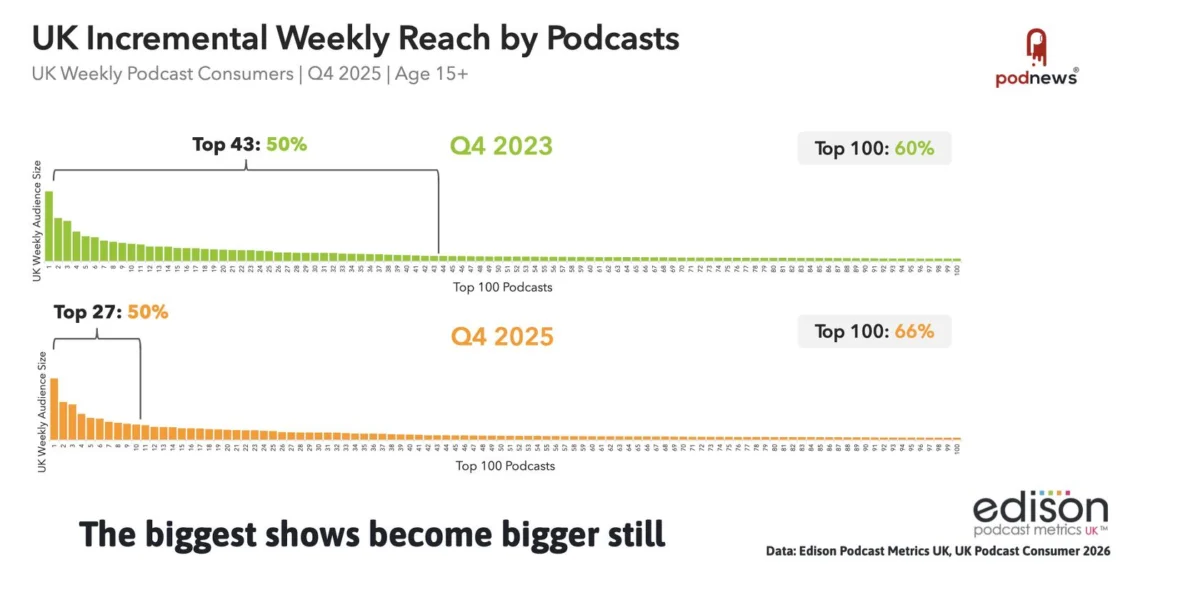
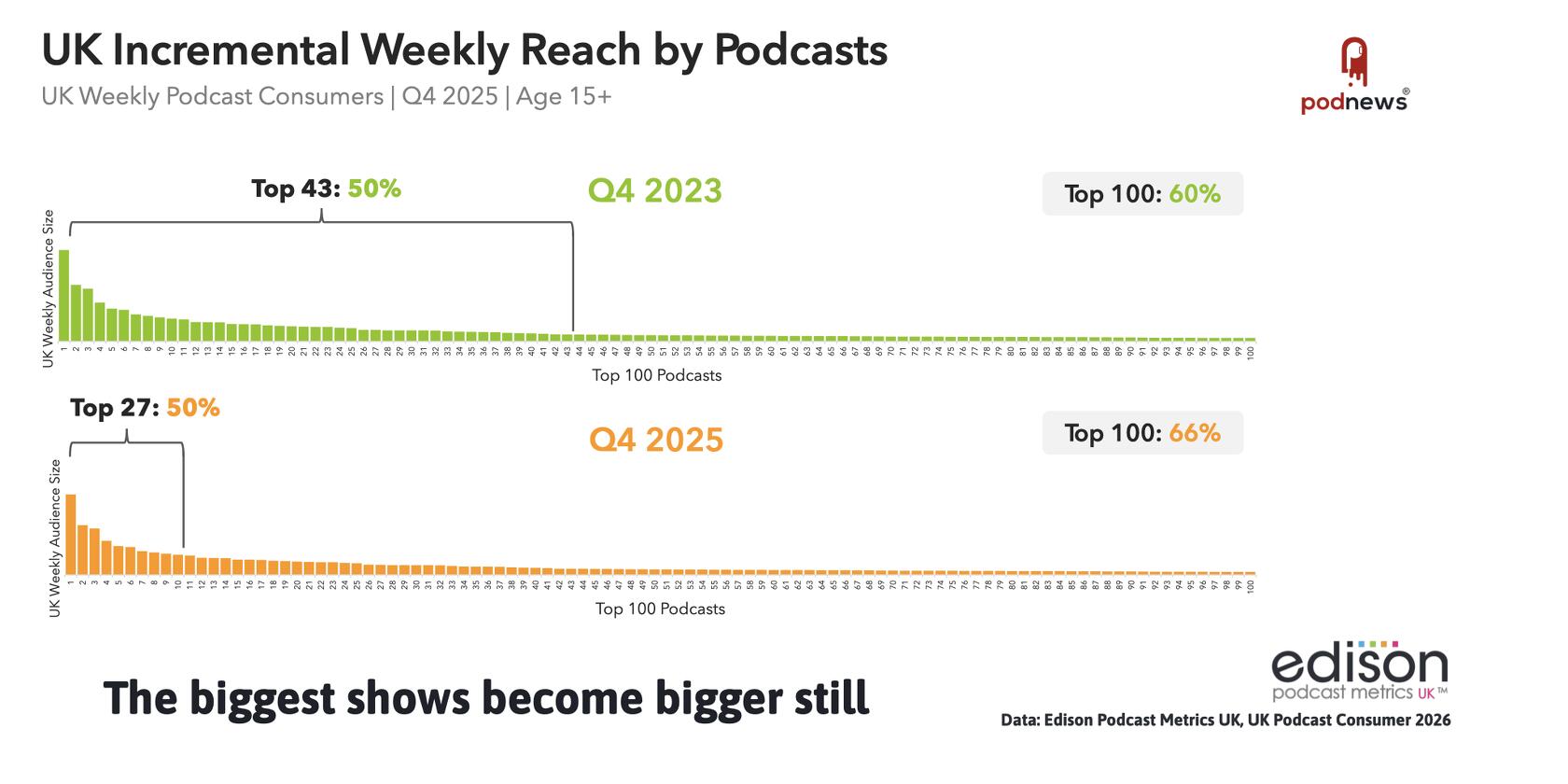
Data remains the primary indicator of market health. Despite the proliferation of platforms, the US charts remain dominated by a handful of heavy hitters, while specific categories see surprising volatility.
Apple Podcasts (United States)
- The Daily: The New York Times powerhouse maintains its #1 position, reinforcing the continued dominance of high-budget, news-cycle-driven audio journalism.
- Art History: Modern and Contemporary: This series has seen a remarkable surge in Ireland, holding the "Biggest Gain" title. This demonstrates that educational content, particularly in the humanities, can achieve viral success when targeted correctly within specific demographics.
- Abroad in Japan: As the leader in the "Places & Travel" category in the UK, this show exemplifies the success of personality-driven travelogues that blend cultural immersion with authentic, individual perspective.
Spotify (United States)
- The Joe Rogan Experience: Despite the changing landscape of exclusive deals and broader distribution strategies, The Joe Rogan Experience retains the top spot, illustrating the sheer scale of the "super-creator" model that still commands the largest share of the Spotify ecosystem.
Official Responses and Industry Insights
The industry is currently grappling with a shift in focus from "growth at all costs" to "sustainability." In conversations regarding the technical infrastructure of the medium, leaders at organizations like RSS.com—a platform whose advisory board includes key figures in podcasting news—suggest that the next phase of growth will be driven by RSS decentralization.

The philosophy here is clear: for podcasting to maintain its lead over walled-garden platforms like TikTok or YouTube, it must remain interoperable. By prioritizing open RSS feeds, creators ensure that they "own" their audience data, rather than being beholden to the fluctuating algorithms of a single tech giant.
Furthermore, the rise of "Podcasting in the Wild"—seen in physical marketing campaigns like the Acast cup—shows that even digital-first mediums recognize the value of physical, real-world presence in building brand recognition.

Implications for the Future
What does this mean for the independent creator and the burgeoning network?
1. The Professionalization of Guesting
The advice shared on Buzzcast regarding pitch craft and profile optimization is not merely about landing an interview; it is about search engine optimization (SEO) and discoverability. As the number of podcasts grows, being a "good guest" is becoming a standard marketing requirement for authors, experts, and entrepreneurs.

2. The AI-Human Hybrid Model
As discussed on the New Media Show, the industry is moving away from the fear of AI replacing creators toward a model of "augmented creativity." The implications are clear: creators who utilize AI to handle tedious tasks (transcription, chapter markers, show notes) are freeing up more time to focus on the unique storytelling that algorithms cannot replicate.
3. Niche is the New Scale
The success of ALFsplaining and The Box of Oddities highlights a shift in how success is measured. It is no longer just about mass-market reach; it is about high-intensity engagement. Advertisers are increasingly finding that a smaller, hyper-engaged audience—such as those listening to a deep-dive podcast about 80s television—offers a higher return on investment than a broad, disinterested audience.

4. Data-Led Discovery
The data from Apple and Spotify indicates that listeners are increasingly using podcasts for specific, intent-driven purposes: news, travel planning, and education. For creators, the implication is that categorization and metadata are no longer "optional" backend tasks; they are critical components of the audience acquisition funnel.
Conclusion
The podcasting industry is far from stagnant. It is undergoing a necessary evolution that favors technical proficiency, community engagement, and strategic positioning. As we look toward the remainder of the year, the winners in this space will likely be those who treat their podcasts not just as audio files, but as multifaceted brands that live at the intersection of open-web accessibility and high-quality, human-centric production.

The data confirms the trend: while the giants of the industry hold their ground, the space for specialized, passionate, and well-marketed content has never been more vibrant. Whether it is through the revival of 80s sitcom lore or the deep exploration of the human condition, the medium remains the most intimate way for creators to reach, engage, and ultimately retain an audience.