The intersection of a cinematic orchestral arrangement and the visceral roar of industrial rock presents one of the most daunting challenges in modern live sound reinforcement. When that intersection occurs on the sun-scorched, wind-swept stages of a Las Vegas festival, the technical stakes are elevated to an almost impossible degree. For Danny Elfman—the legendary composer behind Batman, The Nightmare Before Christmas, and the frontman of Oingo Boingo—the transition back to the live stage has been nothing short of a maximalist revolution.
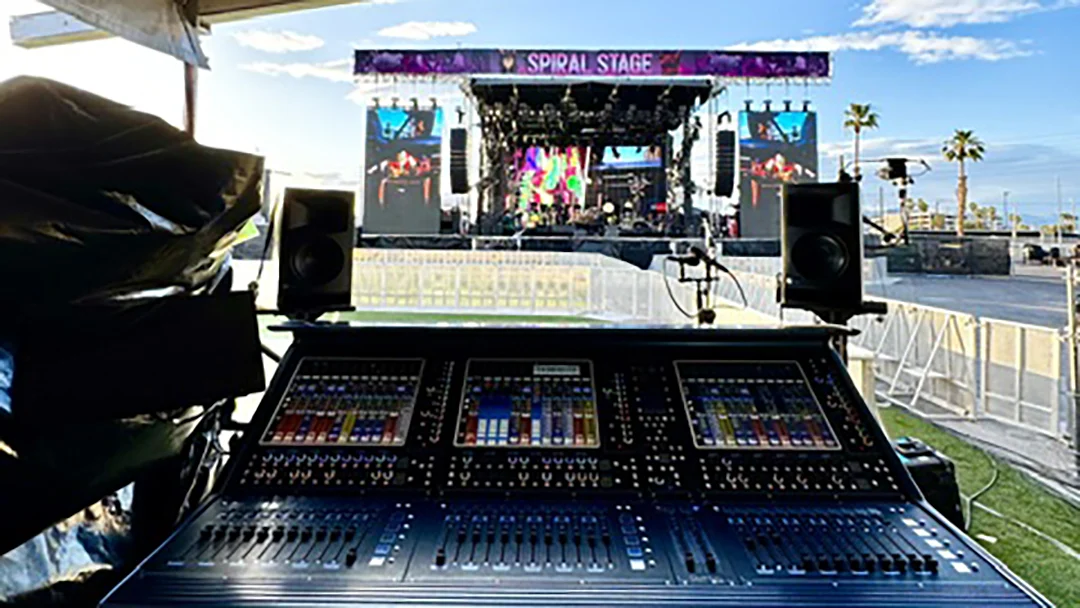
At the recent Sick New World Festival in Las Vegas, Elfman’s production team faced the monumental task of managing a 121-input show in a high-pressure festival environment. The solution to this logistical and sonic puzzle lay in a strategic partnership with Neumann and the widespread deployment of their Miniature Clip Mic (MCM) system. Led by Front of House (FOH) Engineer Ryan John, the team successfully bridged the gap between delicate symphonic textures and the crushing volume of a metal band, proving that studio-grade fidelity can indeed survive the rigors of the world’s loudest stages.
Main Facts: The Scale of a 121-Input Masterpiece
Danny Elfman’s current live iteration is a sprawling, multi-genre odyssey. It is not merely a "greatest hits" set; it is a meticulously curated sonic journey that weaves together his iconic film scores, his 80s New Wave roots, and the abrasive, industrial textures of his 2021 solo album, Big Mess.
To bring this vision to life at the Sick New World Festival, the production required:
- Total Input Count: 121 independent signals.
- Microphone Deployment: Over 80 Neumann MCM 114 microphone systems.
- The Goal: Total isolation of orchestral elements in an environment dominated by high-gain guitars and heavy percussion.
- The Timeline: A grueling 17-minute line check to verify every single input before the performance.
The primary challenge was the "noise floor" of the stage itself. In a typical festival setting, bleed is the enemy. When an orchestra sits just feet away from a rock drummer and a wall of amplifiers, the delicate sound of violins and cellos is often drowned out or muddied by the surrounding cacophony. By utilizing the Neumann MCM 114, Ryan John was able to close-mic every individual instrument, effectively turning a 121-input "mess" into a controlled, high-definition audio landscape.
Chronology: From the Studio to the Las Vegas Festival Grounds
The evolution of Danny Elfman’s live sound has been years in the making. For decades, Elfman was primarily known as a recluse of the studio, crafting the sounds of Gotham City and the Simpson’s neighborhood from behind a console. His return to the stage began in earnest with the Danny Elfman’s Music from the Films of Tim Burton concerts, which were traditional orchestral affairs held in acoustically treated symphonic halls.
However, the 2021 release of Big Mess changed the trajectory. Elfman wanted to perform live again, but this time, he wanted the orchestra to fight for its life alongside a heavy rock band. This hybrid format debuted at Coachella in 2022, setting a new standard for what a "film composer’s live show" could look like.
The move to the Sick New World Festival in 2024 (and into the 2026 season) represented the next stage of this evolution. Unlike Coachella, which offers relatively long setup times, Sick New World is a high-density "industrial/alternative" festival where transitions between acts are rapid. The chronology of the performance day was a masterclass in efficiency:
- Pre-Production: Mapping the 121 inputs to ensure the Neumann MCM clips were pre-fitted to the orchestral instruments.
- The Changeover: As the previous act cleared the stage, Elfman’s massive ensemble moved into position.
- The 17-Minute Line Check: Using a streamlined verification process, the crew checked 121 inputs in under 20 minutes—a feat that would be impossible with traditional, finicky miking setups.
- The Performance: A seamless transition from the dark, brooding themes of Batman to the frantic energy of Oingo Boingo’s "Dead Man’s Party," ending in a wall-of-sound finale where every input was active simultaneously.
Supporting Data: The Technical Edge of the Neumann MCM 114
The success of the show relied heavily on the technical specifications of the Neumann MCM 114. In the world of live sound, "clip-on" microphones have often been criticized for lack of low-end response or for having a "plastic" tonality. Neumann sought to rectify this with the MCM series, which utilizes a KK 14 electret capsule.
Isolation and Polar Patterns
The MCM 114 features a tight cardioid polar pattern. This is critical for Elfman’s show because it minimizes the "leakage" of the rock band into the string section’s microphones. When Ryan John mixes the violins, he isn’t just hearing the violins; in a traditional setup, he would be hearing a muddy version of the drums as well. The MCM’s superior side-rejection ensures that the strings remain "tight and together," even when the industrial metal elements are at peak volume.
Universal Consistency
One of the most significant data points for the crew was the use of a "universal capsule." Rather than having specific, different microphones for the violas, cellos, and woodwinds, the team used the MCM 114 across the board.
- Efficiency: Having one type of spare parts (the KK 14 capsule) simplified the inventory.
- Tonality: The consistent frequency response across the ensemble allowed Ryan John to apply global EQ moves that felt natural, rather than fighting the different "colors" of various microphone brands.
The "Pink Noise" Test
To manage the 121-input check, the tech crew utilized a Bluetooth speaker playing pink noise. They walked the stage, placing the speaker in front of each MCM capsule. Because the Neumann capsules are manufactured with incredibly tight tolerances, the crew didn’t need to "tune" each mic during the check. They simply needed to confirm the signal was present and noise-free. If the signal was there, they knew the tonality would be perfect.
Official Responses: Insights from FOH Engineer Ryan John
Front of House Engineer Ryan John has been the architect of Elfman’s live sound, navigating the complex requirements of a composer who refuses to compromise on fidelity. John’s philosophy centers on the idea that an orchestra should feel intimate, even in a stadium.
"It is one song straight into the next song—there is no downtime," John explained during the production. "We go from industrial metal to Batman to Oingo Boingo tracks. Because of that, I can’t get away with section mics on the orchestral elements. We have to close-mic everything."
John highlighted the specific psychological effect this has on the audience. During the final moments of the set, when the full power of the orchestra and the band are unleashed, the clarity is so high that it creates a sense of disbelief.
"In the final song of the set, every single input on stage is open," John noted. "Because of the tight polar pattern and the clarity that we’re getting, the string sound tends to blow the audience away. They often don’t believe it’s real—they think it must be a backing track because they can’t imagine getting that much detail over a band playing that loud."
For John, the choice of Neumann was about trust. "Because we trust the capsule, all we need to do is confirm signal… It’s the most efficient version of an investment we could do."
Implications: Setting a New Standard for Live Orchestral Reinforcement
The success of Danny Elfman’s Sick New World performance has broader implications for the live sound industry. For years, the "rockestration" (rock band + orchestra) format was plagued by poor audio quality, with the orchestra often relegated to a muddy background wash or, worse, replaced by pre-recorded tracks to avoid feedback issues.
The Death of the Backing Track
Elfman’s insistence on "real music and real musicianship" delivered with "absolute fidelity" challenges the industry’s reliance on backing tracks. By proving that a 121-input live ensemble can be mixed with clarity in a festival environment, the production team has set a benchmark. It proves that with the right technology—specifically high-rejection miniature microphones—the "live" element of a performance can be preserved regardless of the genre’s volume.
Festival Logistics
The 17-minute line check is perhaps the most significant takeaway for production managers. As festivals become more crowded and changeover times shrink, the ability to deploy high-end, standardized miking systems is no longer a luxury—it is a necessity. The Neumann MCM system’s ease of mounting and consistent output allows for a level of speed that was previously reserved for much simpler rock trios.
The Future of the "Cinematic" Concert
As more film composers (such as Hans Zimmer and Ramin Djawadi) take their scores on the road, the demand for studio-quality live sound will continue to grow. The Elfman model shows that the future of these performances lies in "close-miking" the entire ensemble. This approach allows the engineer to treat the orchestra not as a single instrument, but as a collection of 80+ individual voices that can be placed precisely within the stereo field, even in the midst of an industrial metal storm.
In conclusion, Danny Elfman’s performance at Sick New World was more than just a concert; it was a technical triumph. By marrying the artistry of a world-class orchestra with the rugged reliability of Neumann’s MCM technology, Ryan John and his team ensured that Elfman’s complex, multi-layered vision reached the audience with every ounce of its intended detail. It was a testament to the fact that in the modern era, even the "world’s loudest stages" are no match for precise engineering and the right tools.