In the world of home meteorology, the pursuit of the "perfect" backyard weather station is a quest for precision, reliability, and connectivity. Ambient Weather, a brand synonymous with enthusiast-grade atmospheric monitoring, has recently expanded its catalog with the WS-4000. While the station offers a sleek, modern footprint and a robust software ecosystem, it arrives at a time when the underlying sensor technology—specifically regarding rainfall measurement—is under intense scrutiny.
For many, the Ambient Weather WS-4000 represents an attractive, all-in-one solution. However, as our comprehensive evaluation reveals, this device is a tale of two halves: a high-performing anemometer and temperature suite hindered by the inherent limitations of haptic rain-sensing technology.
Main Facts: What is the Ambient Weather WS-4000?
The Ambient Weather WS-4000 is an all-in-one, sensor-integrated weather station designed for the modern smart home. Eschewing the traditional moving parts—such as mechanical tipping buckets or wind cups—the WS-4000 utilizes a sonic anemometer and a haptic rain sensor to provide real-time meteorological data.
Key Specifications:
- Sensor Suite: Integrated sonic anemometer, temperature, humidity, UV, and light sensors.
- Rain Measurement: Haptic/vibration-based sensor.
- Indoor Monitoring: Bundled with the WH32B Thermometer-Barometer-Hygrometer.
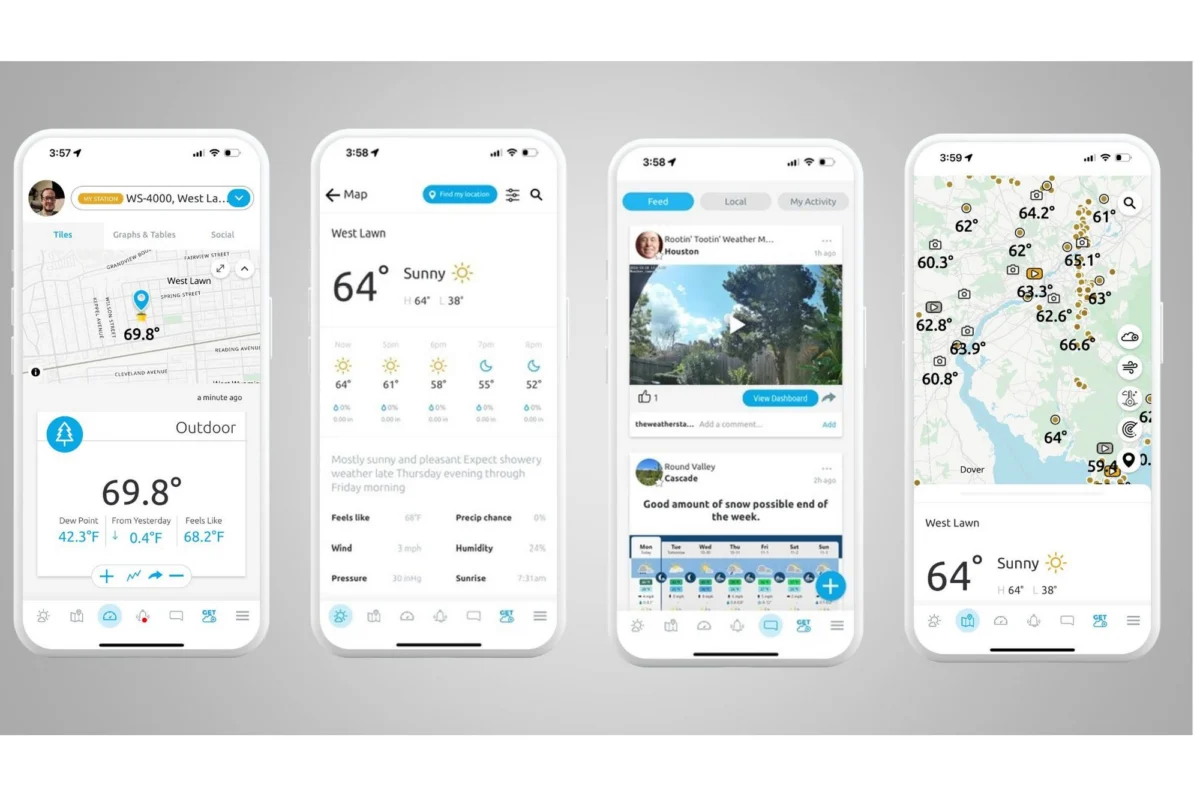
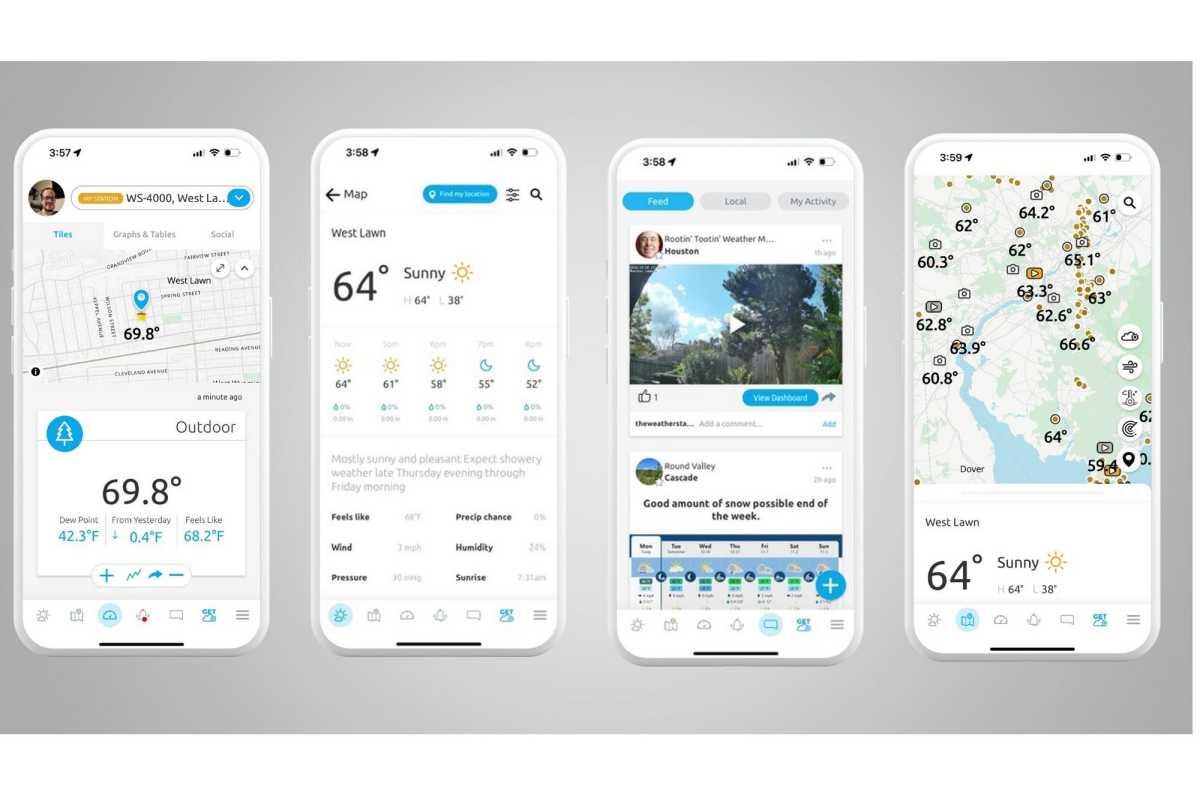
- Connectivity: Seamless integration with the Ambient Weather Network (AWN).
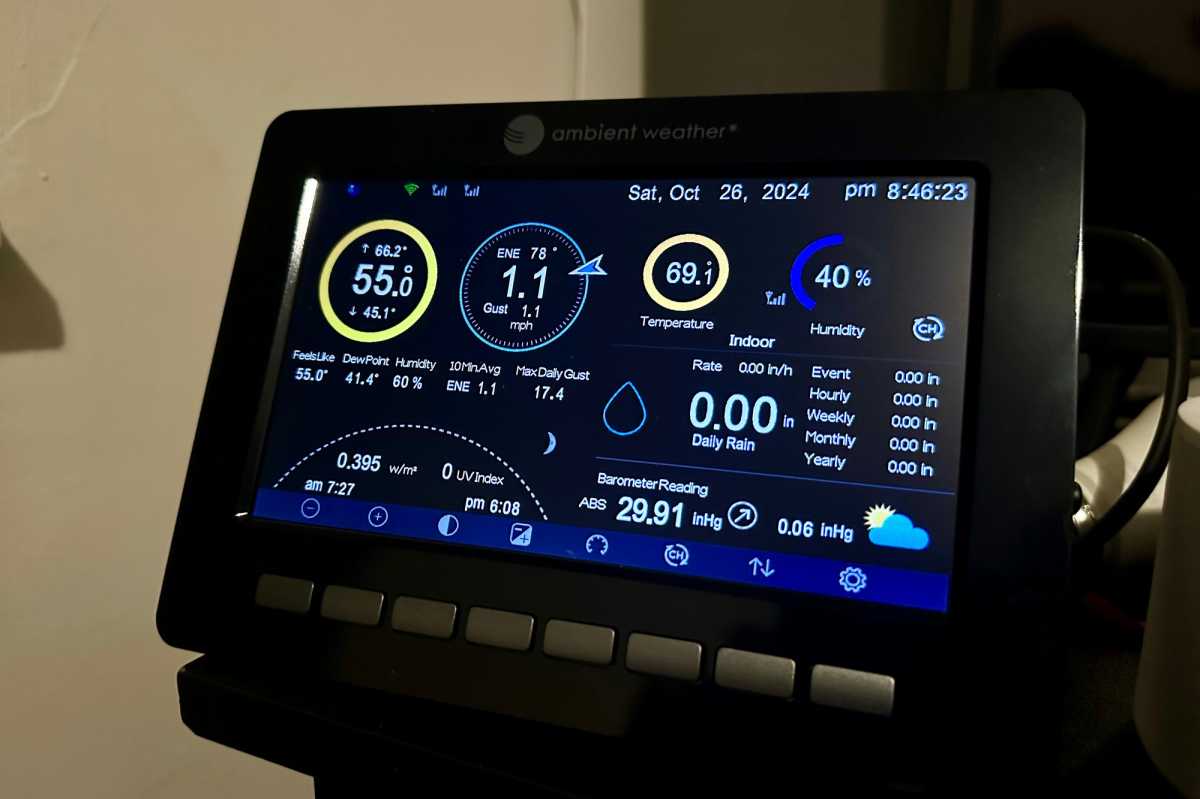
- Console: Includes a bright, high-contrast dedicated display console.
- Compatibility: Supports IFTTT and Amazon Alexa integrations.
The station distinguishes itself through its compact, unobtrusive design. Unlike traditional, bulky professional-grade stations like the KestrelMet 6000, which can dominate a backyard landscape, the WS-4000 is designed to blend into its environment while providing substantial data output.

Chronology of Development and Design
The history of the WS-4000 is inextricably linked to the broader evolution of consumer weather tech. Four years ago, the WeatherFlow Tempest set a new standard for compact, haptic-based weather monitoring. Its success prompted a wave of innovation—and imitation—within the industry.
- The Rise of the Haptic Sensor: The industry saw a shift away from mechanical parts, which are prone to wear and tear, toward solid-state sensors. Fine Offset Electronics, a major developer in this space, began incorporating these technologies into their own sensor suites.
- The Licensing Ecosystem: Ambient Weather’s parent company, Neilsen-Kellerman, has a long-standing history of licensing Fine Offset designs. This lineage is clearly visible in the WS-1965, the WS-2902, and the flagship WS-5000.
- The Birth of the WS-4000: The WS-4000 is, for all intents and purposes, a rebranded iteration of the Ecowitt Wittboy Pro. While Ambient Weather provides its own branding and support, the architecture is identical to the Fine Offset design that serves as the foundation for the Wittboy series.
- Market Launch: The unit arrived on the market in late 2024, positioned as a premium, user-friendly, and comprehensive monitoring solution for homeowners who want to avoid the complexities of multi-component arrays.
Supporting Data: Performance and Limitations
During our testing, the WS-4000 displayed a performance profile that was as impressive as it was frustrating.
Sensor Accuracy
The sonic anemometer is the standout performer. It is remarkably sensitive and provides a level of responsiveness that traditional cup-and-vane anemometers simply cannot match. In our tests, it tracked wind speeds accurately up to its design limit of approximately 85 mph. The temperature and humidity sensors also provided data consistent with high-end, professionally calibrated equipment.
The Haptic Dilemma
The Achilles’ heel of the WS-4000 is its haptic rain sensor. While haptic sensors are theoretically ideal because they lack moving parts that can clog or jam, they suffer from significant physical limitations. During our testing period, the sensor struggled to accurately distinguish between light mist, drizzle, and actual rainfall.
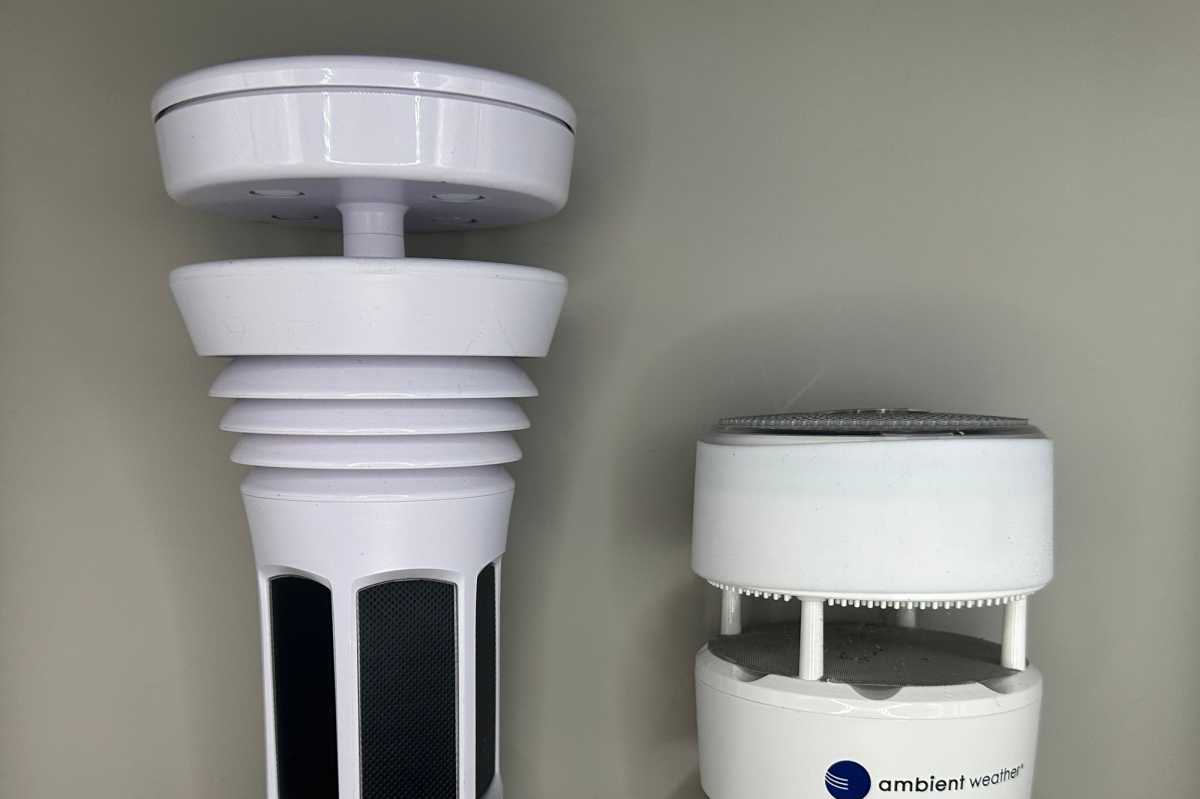
Furthermore, we confirmed that the accuracy of the rain readings is highly dependent on the mounting angle; if the sensor is not perfectly level, data variance increases exponentially. The manufacturer’s own documentation acknowledges this limitation, noting that rain drop size and wind speed can impact output. For those requiring hyper-accurate rainfall accumulation data, Ambient Weather suggests the purchase of the WH40 traditional rain gauge—a $50 accessory that, ironically, uses the older, more reliable mechanical technology the station aims to replace.
Ease of Installation
Setup is generally straightforward, but there is one critical caveat: the mounting hardware. While most competing stations are built for a standard 1.25-inch antenna mast, the WS-4000 requires a 1-inch mast. This is a significant point of friction for existing weather station owners looking to upgrade their hardware without replacing their entire mounting system.
Official Responses and Ecosystem Context
The "Ambient Weather Network" (AWN) remains one of the strongest pillars of this product. It is a robust, free service that allows for seamless data sharing and historical tracking. However, it is important to note the current limitations regarding smart home integration.
Ambient Weather has confirmed that it does not currently support Google Home, citing changes to the Google API that would necessitate a complete rewrite of their software platform. While IFTTT and Amazon Alexa remain viable options for home automation enthusiasts, the lack of Google support is a notable absence for a "smart" home product in 2024.
Regarding the "identical" nature of the product to the Ecowitt Wittboy Pro, the market reality is that consumers are often paying a premium for the Ambient Weather brand, its localized support, and the specific software ecosystem. While the hardware is effectively the same, the user experience differs based on the app and the support network provided by the manufacturer.
Implications: Is the WS-4000 Worth It?
The decision to purchase the Ambient Weather WS-4000 depends entirely on your priorities as a user.
For Existing Ambient Weather Users
If you are already embedded in the Ambient Weather ecosystem and own an older, less efficient station, the WS-4000 is a logical, low-friction upgrade. You keep your data continuity, your existing app familiarity, and your console integration while moving to a more modern, compact sensor array.
For First-Time Buyers
If you are starting from scratch, the landscape is more complicated. The Ecowitt Wittboy Pro, which is essentially the same hardware, is available for roughly $70 less. Additionally, for users who demand absolute precision in rainfall reporting, the reliance on a haptic sensor might be a dealbreaker.
Long-Term Considerations
We are currently subjecting the WS-4000 to long-term field testing on the West Coast, a region that provides an excellent environment for evaluating its performance in heavy, consistent rainfall. The goal of this ongoing research is to determine if the haptic sensor’s limitations are a deal-breaker for the average homeowner or merely a quirk that can be mitigated through software calibration.
Final Verdict
The Ambient Weather WS-4000 is a beautifully designed, highly functional piece of hardware that unfortunately inherits the known flaws of its lineage. Its sonic anemometer is excellent, and the included indoor console is a welcome addition that many competitors lack. However, the haptic rain sensor remains a compromise that users must be willing to accept. If your primary goal is to track wind and temperature with a small, attractive footprint, the WS-4000 is an easy recommendation. If your primary interest is agricultural-grade rainfall data, you would be better served by opting for a station that incorporates a traditional, tipping-bucket style rain gauge.
As the industry moves forward, it is clear that while sonic anemometry has matured, the haptic rain gauge still has a long way to go before it can truly replace the mechanical reliability of the past. Until then, the WS-4000 sits in a precarious middle ground: it is a modern, high-tech station that is occasionally held back by the very innovations that were supposed to improve it.