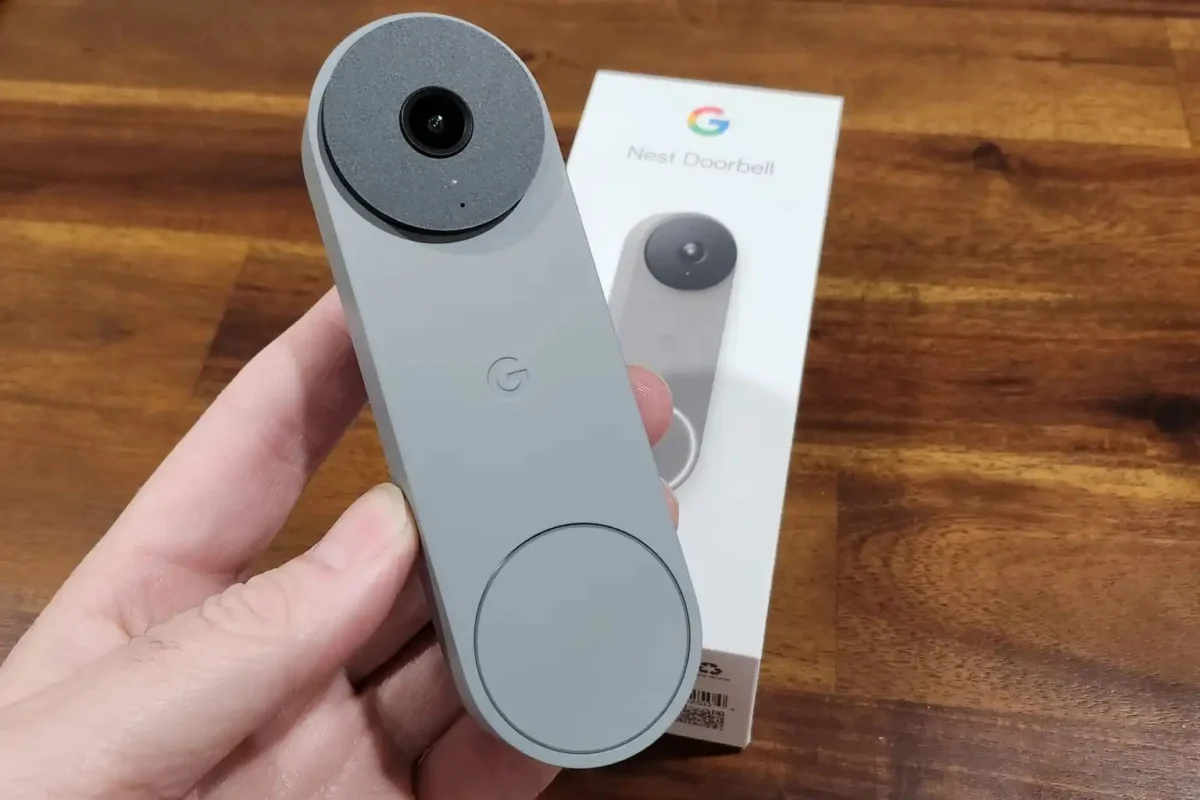
As the holiday season approaches, the quest for the perfect smart home upgrade often leads to one essential device: the video doorbell. For those looking to bolster their home security without breaking the bank, this year’s Black Friday sales have delivered a standout offer. The Google Nest Doorbell (wired) has seen a significant price reduction, dropping to just $98—a 46% discount from its standard $179.99 retail price.
This deal, currently live on platforms like Amazon, represents one of the most compelling value propositions for homeowners looking to integrate advanced surveillance, artificial intelligence, and seamless smart home connectivity into their front porch monitoring.
Main Facts: What the Nest Doorbell Brings to the Table
The Nest Doorbell (wired) is designed for users who prioritize reliability and constant monitoring. Unlike battery-powered alternatives that require periodic recharging, this wired model ensures that your camera is perpetually powered and ready to capture every interaction.
Key Technical Specifications
- Video Quality: High-definition 1080p video recording with HDR, ensuring clarity even in challenging lighting conditions.
- Field of View: A generous 145-degree vertical field of view, specifically engineered to provide a "head-to-toe" look at visitors and package deliveries placed on the ground.
- On-Device Intelligence: Rather than relying entirely on cloud processing, the doorbell uses local machine learning to identify people, packages, animals, and vehicles. This minimizes false notifications—such as wind blowing tree branches—and ensures you are only alerted to what truly matters.
- Night Vision: Integrated infrared sensors provide high-contrast monitoring after the sun goes down, ensuring your porch remains secure throughout the night.
- Gemini AI Integration: The most recent firmware updates have brought Google’s advanced Gemini AI to the Nest ecosystem. This allows for intelligent video summarization and natural-language search queries (e.g., "Show me when the delivery person dropped off the package"), transforming hours of footage into actionable information.
Chronology: The Evolution of the Nest Doorbell
To understand why this current model is so significant, it is important to look at the lineage of Google’s home security efforts.
The Early Days (2017–2019): Google’s acquisition of Nest Labs pushed the company into the smart home market. Early iterations of the "Hello" doorbell set the industry standard for cloud-based video storage and crisp image quality. However, these devices were often expensive and required a subscription for even basic functionality.
The Pivot to On-Device Processing (2021–2022): In response to consumer demand for privacy and faster performance, Google redesigned the Nest Doorbell architecture. The shift to on-device processing meant that the doorbell could perform object detection locally, reducing latency and reliance on a constant internet handshake for simple motion events.
The AI Era (2023–Present): The integration of large language models and advanced AI, specifically Gemini, marks the current phase. By allowing users to interact with their video history using conversational language, Google has moved beyond the "dumb" security camera, creating a proactive, smart assistant for the front door.
Supporting Data: Why Wired Connectivity Matters
In the world of smart home security, the debate between battery-powered and wired doorbells is settled by one metric: uptime.
Data from consumer research indicates that users with wired doorbells report significantly higher satisfaction rates regarding the "time to live" for event notifications. Battery-powered devices often have a "wake-up" lag, where the camera must transition from a low-power sleep state to an active recording state upon detecting motion. By contrast, the Nest Doorbell (wired) remains in an active state, meaning it can capture the moments before a person reaches the button—often the most crucial seconds for identifying a visitor or a porch pirate.
Furthermore, the integration with the Nest Aware ecosystem provides a clear path for users who need more than the standard three hours of event-based video history. With subscriptions starting at $8 per month, users can expand their archives to 30 or 60 days, gain "familiar face" detection, and even receive alerts for specific audio triggers, such as glass breaking or smoke alarms.

Official Perspectives and User Experience
Google has positioned the Nest Doorbell as the "eyes and ears" of the smart home. According to company literature, the primary goal of the current generation of Nest hardware is to reduce "notification fatigue." By using the aforementioned on-device intelligence, the system filters out the "noise" of everyday life, ensuring that when your phone pings, it is for a legitimate reason.
Industry analysts have noted that while the subscription model for advanced features is a point of contention for some, the core hardware—especially at the $98 price point—is virtually unbeatable. The ability to integrate with Google Home and display feeds on smart displays like the Nest Hub makes it a cornerstone of the Google smart home ecosystem.
Implications for the Future of Home Security
The aggressive pricing of the Nest Doorbell this Black Friday has profound implications for the smart home market.
1. The Democratization of AI
By bringing Gemini AI features to a sub-$100 device, Google is forcing competitors to accelerate their own AI roadmaps. No longer is high-end video analysis a luxury feature reserved for commercial security systems; it is now becoming a commodity for the average homeowner.
2. Privacy and Local Processing
The shift toward on-device processing has been a direct response to growing consumer concerns about privacy. By keeping the object detection "on the chip," Google is signaling a commitment to keeping sensitive video analysis closer to the user, a trend that is likely to continue as data privacy regulations tighten globally.
3. The "Platform Trap"
While the deal is incredibly enticing, it also highlights the "walled garden" nature of modern smart homes. The Nest Doorbell is optimized for the Google Home ecosystem. While it offers unparalleled functionality for Android users and those invested in Google’s ecosystem, those who prefer Apple HomeKit or Amazon Alexa may find the setup less cohesive. However, at $98, the value is high enough that many may consider it a worthy addition regardless of their primary ecosystem.
Conclusion: Is the Deal Worth It?
If you are looking to secure your front porch, the $98 price point for the Nest Doorbell (wired) is, in a word, aggressive. It is a rare opportunity to acquire a high-end, AI-powered security device for the price of an entry-level, "no-name" generic camera.
The combination of 1080p HDR video, sophisticated object detection, and the cutting-edge capabilities of Gemini AI makes this an essential purchase for any smart home enthusiast. Whether you are worried about package security, want to keep an eye on visitors, or simply want to integrate your doorbell with your existing Google smart home devices, this offer provides a level of utility that is hard to ignore.
However, keep in mind that Black Friday deals of this caliber are fleeting. As the inventory begins to shift, the window to save $82 on this premium device will likely close quickly. For those who have been waiting for the right moment to make the leap into smart home security, that moment has arrived.
Disclaimer: This article contains affiliate links. TechHive may earn a commission on purchases made through these links, which supports our ongoing efforts to review and test the latest in consumer technology. Always ensure your doorbell location is compatible with existing wiring before purchasing.