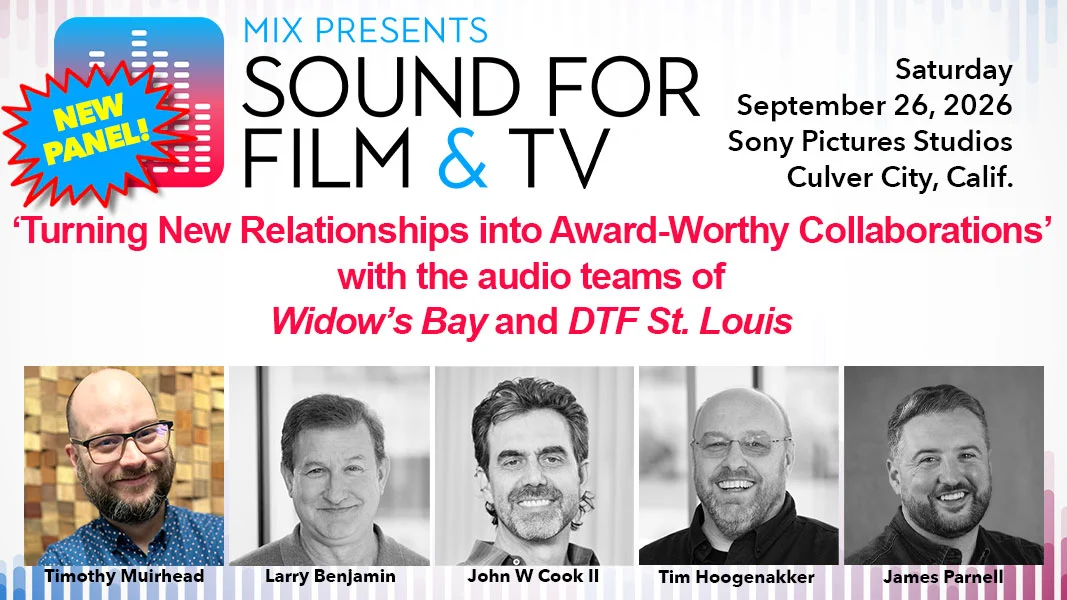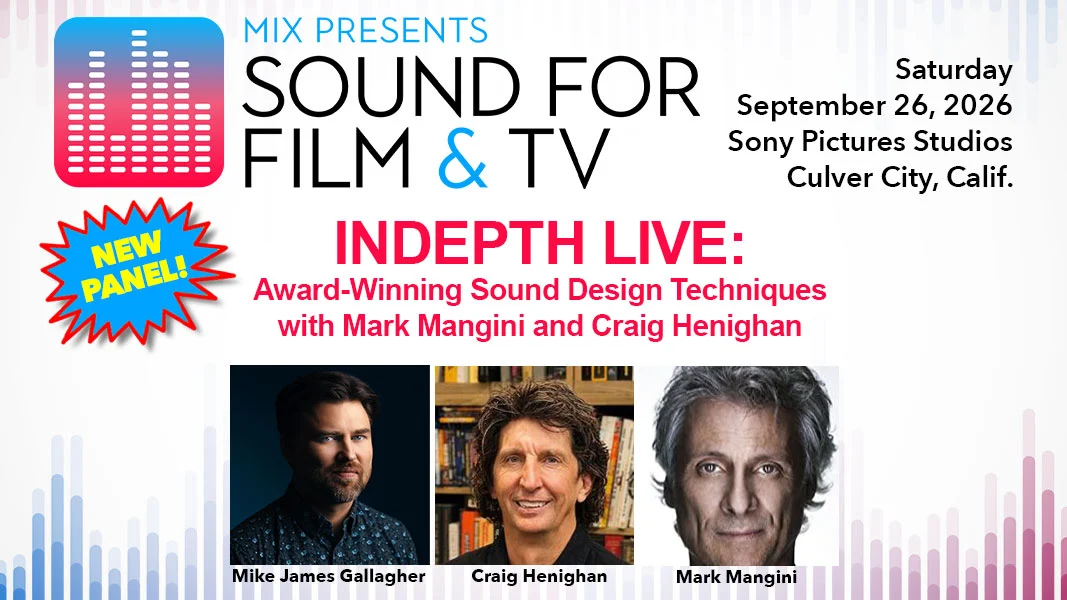
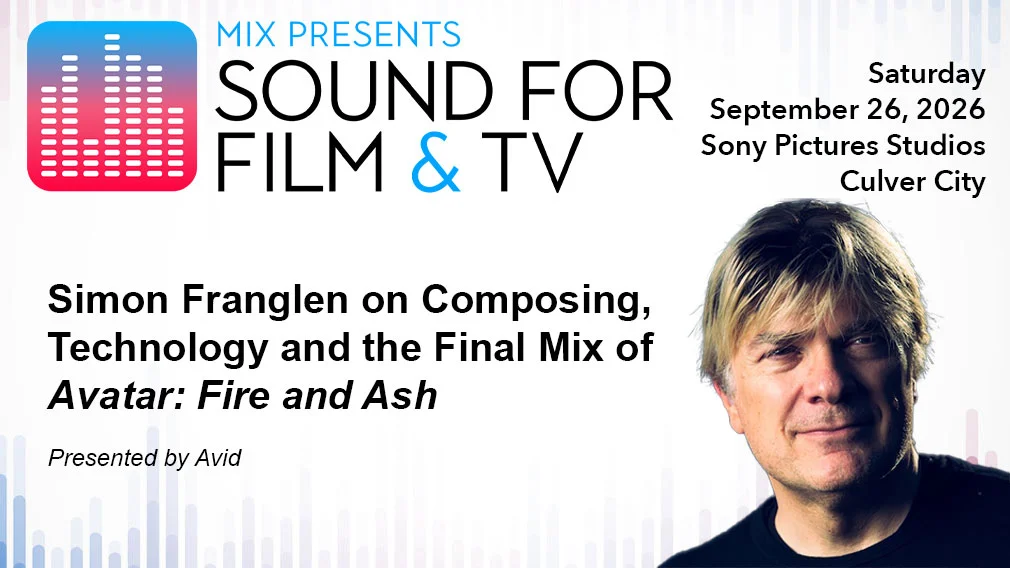
CULVER CITY, CA — As the cinematic landscape continues to push the boundaries of immersion and sensory storytelling, the technical backbone of these experiences—the audio post-production—has never been more critical. On Saturday, September 26, 2026, the industry’s brightest minds will converge at the legendary Sony Pictures Studio Lot in Culver City for the 13th annual Mix Presents Sound for Film & Television event.
The highlight of this year’s programming is a deep-dive masterclass featuring renowned composer Simon Franglen, who will pull back the curtain on the complex, multi-layered musical architecture of James Cameron’s latest blockbuster, Avatar: Fire and Ash.
The Main Event: Crafting the Sound of Pandora
The Mix Presents Sound for Film & TV event has long served as the premier summit for audio professionals, sound designers, and composers. This year, the spotlight falls on Franglen, whose work on the Avatar franchise has defined the sound of an entire generation of science-fiction cinema.
In a session titled "Simon Franglen on Composing, Technology, and the Final Mix of Avatar: Fire and Ash," presented by Avid, attendees will receive a rare, granular look at the journey from initial composition to final delivery. Franglen is expected to discuss the creative and technical workflows that define his process, specifically highlighting how industry-standard tools like Avid Pro Tools and Sibelius have been pushed to their limits to manage the massive, immersive soundscapes required for the world of Pandora.
For those involved in film scoring and sound engineering, this session offers more than just anecdotes; it provides a roadmap for managing high-stakes, high-budget productions that demand both artistic innovation and flawless technical execution.
A Chronology of Audio Innovation
The evolution of the Avatar soundscape is a case study in technological progression. To understand the significance of Franglen’s upcoming presentation, one must look back at the trajectory of the franchise’s audio development.
- 2009: The release of the original Avatar film set a new standard for spatial audio and orchestral integration. James Horner’s legendary score established the musical language of the Na’vi, creating a sonic blueprint that favored organic, terrestrial sounds blended with avant-garde electronic textures.
- 2022: With the release of Avatar: The Way of Water, the franchise shifted its focus to the aquatic environments of Pandora. Simon Franglen, having worked closely with the production team for years, stepped into the role of composer, inheriting the responsibility of expanding the musical vocabulary of the franchise while maintaining continuity with the original.
- 2026 (Present): With the arrival of Avatar: Fire and Ash, the technical requirements have ballooned. The industry has moved toward increasingly complex Dolby Atmos workflows, object-based mixing, and real-time remote collaboration—all of which have become essential to the production of this third installment.
Franglen’s presentation at the Mix event serves as the culmination of this timeline, demonstrating how the software and hardware utilized in post-production have matured alongside the narrative scale of the films themselves.
Supporting Data: The Technical Backbone
The technical requirements for a project of the magnitude of Avatar are staggering. In the world of modern post-production, the sheer volume of data—thousands of tracks, intricate stems for immersive playback, and the constant need for revisions—requires a robust, reliable infrastructure.
The Role of Software Ecosystems
Franglen’s reliance on the Avid ecosystem—specifically the synergy between Sibelius for notation and Pro Tools for the final mix—highlights a broader trend in Hollywood. As film production cycles shorten despite the increasing complexity of visual effects, the integration between composing and mixing environments is no longer a luxury; it is a necessity.
Key technical aspects expected to be covered include:
- Immersive Mixing Workflow: How Franglen manages the distribution of sound objects within an Atmos environment to ensure clarity amidst the chaos of high-action sequences.
- Remote Collaboration: The utilization of cloud-based workflows to coordinate between the scoring stage, the editing suite, and the mixing theater, bridging the geographical divide between global production hubs.
- Data Management: Managing thousands of samples and orchestral tracks while maintaining the high-fidelity standard required for large-format cinema exhibition.
Perspectives from the Industry
The Mix Presents Sound for Film & TV event is not merely a lecture series; it is a vital networking hub. By gathering sound editors, re-recording mixers, and industry executives, the event facilitates a cross-pollination of ideas that influences the standard of excellence across the industry.
"The goal of this year’s event is to bridge the gap between artistic vision and the technical reality of the current landscape," says a spokesperson for the event organizers. "By bringing in someone of Simon Franglen’s caliber, we are providing our attendees with a masterclass in how to maintain an artistic ‘soul’ in an increasingly digital and automated production environment."
The programming, bolstered by the support of industry giant Avid, underscores the importance of standardized tools. As audio formats continue to evolve—from stereo to 5.1, and now to fully immersive object-based spatial audio—the ability for a composer to understand the entire signal chain from the MIDI keyboard to the final theatrical print has become a hallmark of the modern elite composer.
Implications for the Future of Post-Production
The implications of the techniques Franglen will discuss extend far beyond the Avatar franchise. As the "Prosumer" market begins to adopt technologies previously reserved for AAA studio productions, the workflows pioneered on films like Fire and Ash will inevitably trickle down to television production, independent films, and even streaming content.
The Shift Toward Virtual Production and Audio
As visual production shifts toward virtual sets and real-time rendering, the audio industry is following suit. The ability to "pre-visualize" the sound mix, or to use game engines to test acoustic environments, is the next frontier. Franglen’s insights into the Avatar workflow offer a preview of a future where audio is baked into the production process from day one, rather than being treated as a final "post" step.
Addressing the Industry Talent Gap
Furthermore, the Mix event addresses a pressing need for education. As the industry faces a shift in workforce demographics and a rapid influx of new technologies, the mentorship provided by established pros is essential. The event’s focus on "invaluable insights" ensures that emerging talent is not just learning how to use a plugin, but how to think like a professional who understands the narrative weight of sound.
Conclusion: A Must-Attend Milestone
The 13th annual Mix Presents Sound for Film & Television event is positioned to be a cornerstone moment for the professional audio community in 2026. With the registration window currently open, the anticipated turnout reflects the high level of interest in the Avatar production process and the state of the art in film sound.
Whether you are a seasoned re-recording mixer looking to optimize your workflow, a budding composer hoping to break into blockbuster scoring, or an audio engineer interested in the latest in immersive audio, the programming curated for this year’s event offers something of profound value.
To secure your place at the Sony Pictures Studio Lot and to gain firsthand access to the expertise of Simon Franglen and his team, interested parties are encouraged to visit the official Mix Presents Sound for Film & Television website. As the industry gears up for a busy awards season and the continued evolution of cinematic storytelling, this event remains the gold standard for those who define the sound of our moving images.
Join the conversation in Culver City on September 26, 2026, and witness the future of sound in motion.