By: Audio Equipment Review Desk
Published: August 2026
Main Facts
The high-end audio landscape has long been defined by the pursuit of absolute sonic purity through specialization. For decades, audiophiles seeking reference-grade performance were expected to assemble an ecosystem of discrete components: a dedicated line-stage preamplifier, a hefty power amplifier, an external digital-to-analog converter (DAC), a network streamer, a phono preamplifier, and an assortment of analog and digital tuners. Each component required its own dedicated chassis, power supply, and—critically—interconnecting cables. While this traditional modular approach remains the gold standard for many purists, it comes with significant drawbacks: sprawling rack footprints, complex cable management, potential component mismatch, and a financial investment that can easily scale into the tens or hundreds of thousands of dollars.
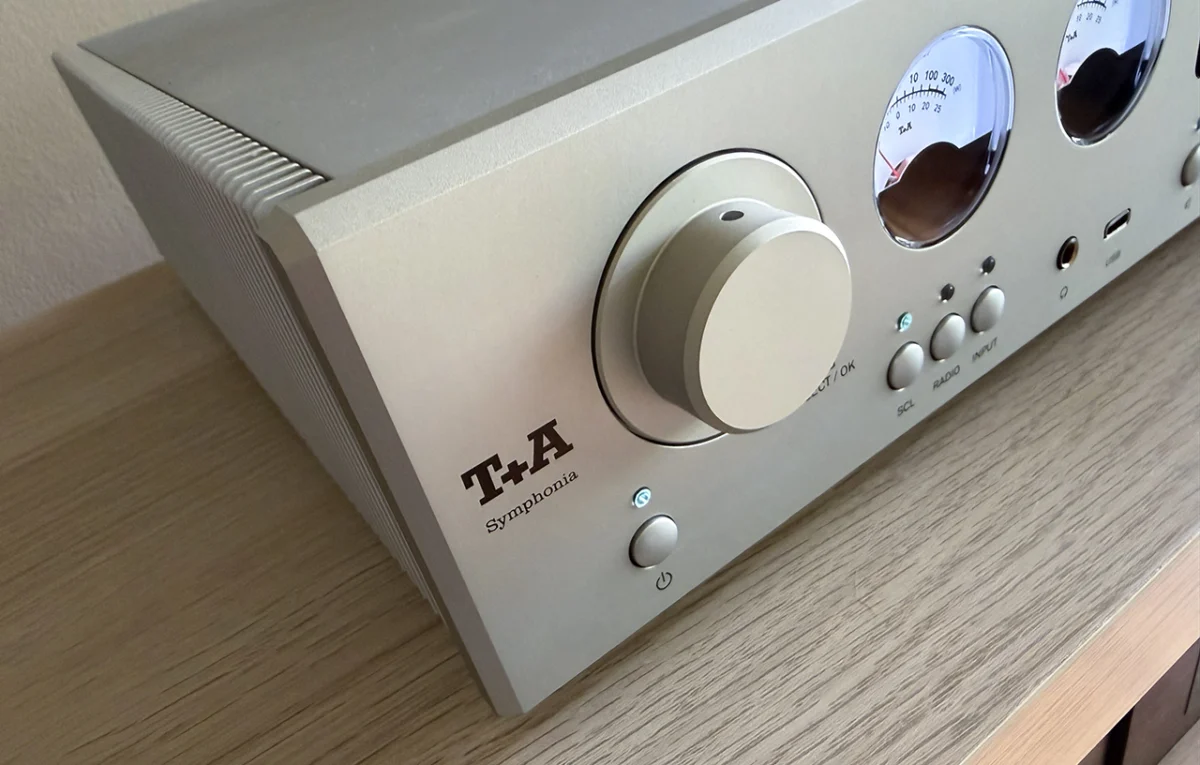
Enter the T+A Symphonia, a component that challenges this paradigm directly. Priced at $10,995, the Symphonia is positioned firmly in the high-end tier rather than the budget or entry-level segments. However, German manufacturer T+A elektroakustik argues that its comprehensive feature set, proprietary engineering, and exceptional sonic execution deliver unprecedented value.
At its core, the Symphonia is a masterclass in modern acoustic and digital engineering. It combines a high-performance amplifier section built around a custom-engineered Eigentakt chipset with an exhaustive array of source components. Users gain access to a state-of-the-art streaming engine, a high-resolution USB DAC, a built-in Moving Magnet (MM) phono stage, traditional line-level inputs, digital coaxial and optical inputs, and even legacy FM and DAB radio tuners. Capable of delivering 125 watts per channel into 8 ohms—and doubling that output gracefully into 4 ohms—the Symphonia is designed to drive demanding reference-level loudspeakers without breaking a sweat, all housed within a sleek, minimalist chassis.
Chronology
To understand how the T+A Symphonia came to be one of the most anticipated releases of the 2026 audio calendar, it is necessary to examine the trajectory of high-end audio integration over the past decade.
- The Early 2010s (The Shift Toward Convenience): As digital audio transitioned from physical silver discs to network streaming, audiophiles demanded high-resolution file playback without the clutter of a dedicated computer audio setup. Early all-in-one systems prioritized convenience at the expense of serious acoustic performance, relegating them to secondary listening rooms or casual lifestyle applications.
- The Mid-to-Late 2010s (The Rise of Class D and Modular Integration): High-end manufacturers began realizing that modern amplification topologies, particularly Class D advancements, allowed for massive power scaling in compact footprints. Simultaneously, streaming platforms reached uncompressed CD and high-res audio parity. Brands like T+A began experimenting with high-end streaming receivers, merging their legendary DAC designs with network boards.
- The Eigentakt Revolution: Purifi Audio introduced the Eigentakt amplifier technology, changing the industry’s perception of Class D amplification. Offering vanishingly low distortion, immense load stability, and pristine transparency, it quickly became the benchmark for modern amplifier design.
- Late 2024 to 2025 (Development and Engineering): T+A’s engineering team in Herford, Germany, recognized the potential of combining the Eigentakt architecture with their proprietary high-voltage power supply topologies and wide-bandwidth throughput capabilities. Rather than utilizing a stock implementation, T+A spent months developing a custom circuit board to merge Purifi’s topology with their own analog heritage.
- August 2026 (Global Announcement and Early Critical Reception): T+A officially unveiled the Symphonia to the high-end audio press. Early evaluations from reference listening rooms—such as those utilizing YG Acoustics Summit loudspeakers—confirmed that the Symphonia was not merely a lifestyle product with good specifications, but a true reference-grade instrument capable of driving world-class transducers with authority, nuance, and musicality.
Supporting Data and Technical Architecture
A thorough analysis of the T+A Symphonia reveals that its substantial price tag is backed by uncompromising hardware choices across both the analog and digital domains.
1. Amplification and Power Delivery
While the industry-standard Eigentakt chipset provides an incredible foundation, T+A’s engineering ethos demanded a bespoke approach. Instead of a generic OEM implementation, T+A engineers designed a custom board that integrates their renowned high-voltage (HV) power supply technology and wide-bandwidth throughput architecture.
- Power Output: 125 watts per channel into an 8-ohm load.
- Dynamic Scaling: The amplifier effortlessly doubles its output capability into 4-ohm loads, showcasing exceptional current delivery and load stability. This allows the Symphonia to maintain tight grip and precise control over complex speaker impedances and demanding crossover networks.
2. Digital Connectivity and Streaming Engine
In the digital realm, the Symphonia leaves no stone unturned. At its heart is a high-resolution USB DAC coupled with a robust, native streaming platform that is Roon Ready.
- Wired and Wireless Streaming: Users can stream high-resolution audio via Ethernet (recommended for optimal jitter reduction and bandwidth stability), Wi-Fi, or Bluetooth.
- Digital Inputs: Beyond network streaming and USB, the unit features traditional SPDIF coaxial and optical inputs, ensuring seamless integration with CD transports, televisions, or digital media players.
3. Analog Versatility and Phono Integration
Despite its heavily digital-centric feature set, T+A has refused to alienate the analog resurgence.
- Phono Stage: An onboard, high-quality Moving Magnet (MM) phono stage allows vinyl enthusiasts to plug a turntable directly into the system without requiring an external outboard phono preamp.
- Line-Level Connectivity: A dedicated RCA analog input is provided, ideal for components like reel-to-reel tape decks or legacy line-level sources. Furthermore, a dedicated subwoofer output is included for users wishing to integrate a powered low-frequency driver via a clean line-level connection.
- Legacy Tuners: Nodding to traditional broadcast media, the Symphonia also incorporates both FM and DAB (Digital Audio Broadcasting) terrestrial radio tuners.
Official Responses and Manufacturer Philosophy
T+A elektroakustik has long stood as a pillar of uncompromising German engineering, combining precision mechanical design with cutting-edge digital science. Speaking on the design philosophy behind the Symphonia, the company’s engineering division emphasized that the goal was never to compromise on sonic fidelity for the sake of miniaturization.
"When we set out to design the Symphonia, our objective was not to build a compromised ‘lifestyle’ system," notes a lead spokesperson for T+A. "We wanted to take the exact same acoustic philosophies, parts quality, and engineering rigor that go into our flagship separate components—our reference HV series and standalone digital players—and distill them into a single, elegant chassis. The result is a component that requires zero apologies. It performs at a level that rivals multi-box stacks costing significantly more."
Early reviewers echoing these sentiments have noted that the Symphonia’s sonic signature remains true to the house sound of T+A: dynamic, highly detailed, spatially open, and deeply musical. During initial evaluation runs pairing the Symphonia with reference YG Acoustics Summit speakers, critics observed that the system exhibited no signs of strain, delivering effortless macro-dynamics alongside micro-level textural nuances that are typically the exclusive domain of dedicated pre/power amplification combinations.
Implications for the High-End Audio Market
The introduction of the T+A Symphonia carries profound implications for the high-end audio industry, consumer buying habits, and interior design considerations.
1. The Cost-to-Performance Equation
At first glance, an $11,000 price point for an integrated unit may cause sticker shock among casual observers. However, a holistic financial analysis reveals a different narrative. To achieve an equivalent level of performance using traditional separate components, an audiophile would need to purchase:
- A high-end network streamer/DAC.
- A dedicated line-stage preamplifier.
- A robust stereo power amplifier.
- An outboard MM phono stage.
- Multiple sets of high-end interconnect cables (balanced or single-ended) to link the components.
- Multiple high-grade power cords (mains cables) for each separate chassis.
- Additional dedicated audio rack shelving and floor space.
When factoring in the cumulative cost of premium cabling and supporting furniture, a multi-box system quickly outpaces the investment required for the Symphonia. By consolidating these stages into a single chassis, T+A eliminates multiple connection points and cable-induced signal degradation while offering substantial net savings.
2. The Interior Design and "Minimal Box Count" Movement
Modern living spaces increasingly demand audio systems that integrate seamlessly into contemporary home aesthetics without dominating the room. The sprawling multi-shelf equipment rack—once a badge of honor for traditional audiophiles—is frequently met with resistance in modern architectural environments.
The Symphonia addresses this cultural shift head-on. By offering a minimal, highly attractive footprint, it allows homeowners and design-conscious music lovers to achieve reference-level sound reproduction without transforming their living areas into a laboratory of glowing tubes and metallic chassis. Whether paired with a high-end turntable or utilized purely as a digital streaming hub, the Symphonia bridges the gap between uncompromising acoustic performance and modern lifestyle integration.
3. Raising the Bar for All-in-One Systems
For years, "all-in-one" systems were viewed by purists as a compromise—convenient, yes, but sonically inferior. Devices like the T+A Symphonia signal a permanent shift in this narrative. By leveraging advanced topologies like customized Eigentakt amplification alongside world-class digital-to-analog conversion, manufacturers are proving that convenience and ultimate-fidelity audio no longer occupy mutually exclusive spheres. As full reviews drop in the coming weeks, the Symphonia is poised to set a new benchmark for what single-chassis high-end audio can—and should—achieve.