The pursuit of high-fidelity audio is often a journey of compromise, pitting the laws of physics against the constraints of domestic living spaces. For decades, the late Siegfried Linkwitz—a titan in the world of acoustic engineering—sought to reconcile the grandeur of large-scale open-baffle speaker systems with the practical realities of modern apartments and smaller listening rooms. The culmination of this research is the Linkwitz LXmini, a compact, active, two-way loudspeaker kit that defies its unassuming physical footprint to deliver a sonic performance capable of rivaling systems costing ten times its price.
Following the assembly and configuration stages detailed in the previous installments of this series, we now move into the critical evaluation phase. Having finished the build and calibrated the digital signal processing (DSP), it is time to determine if the "magic" promised by the Linkwitz design holds up under real-world scrutiny.

Main Facts: The Engineering Philosophy of the LXmini
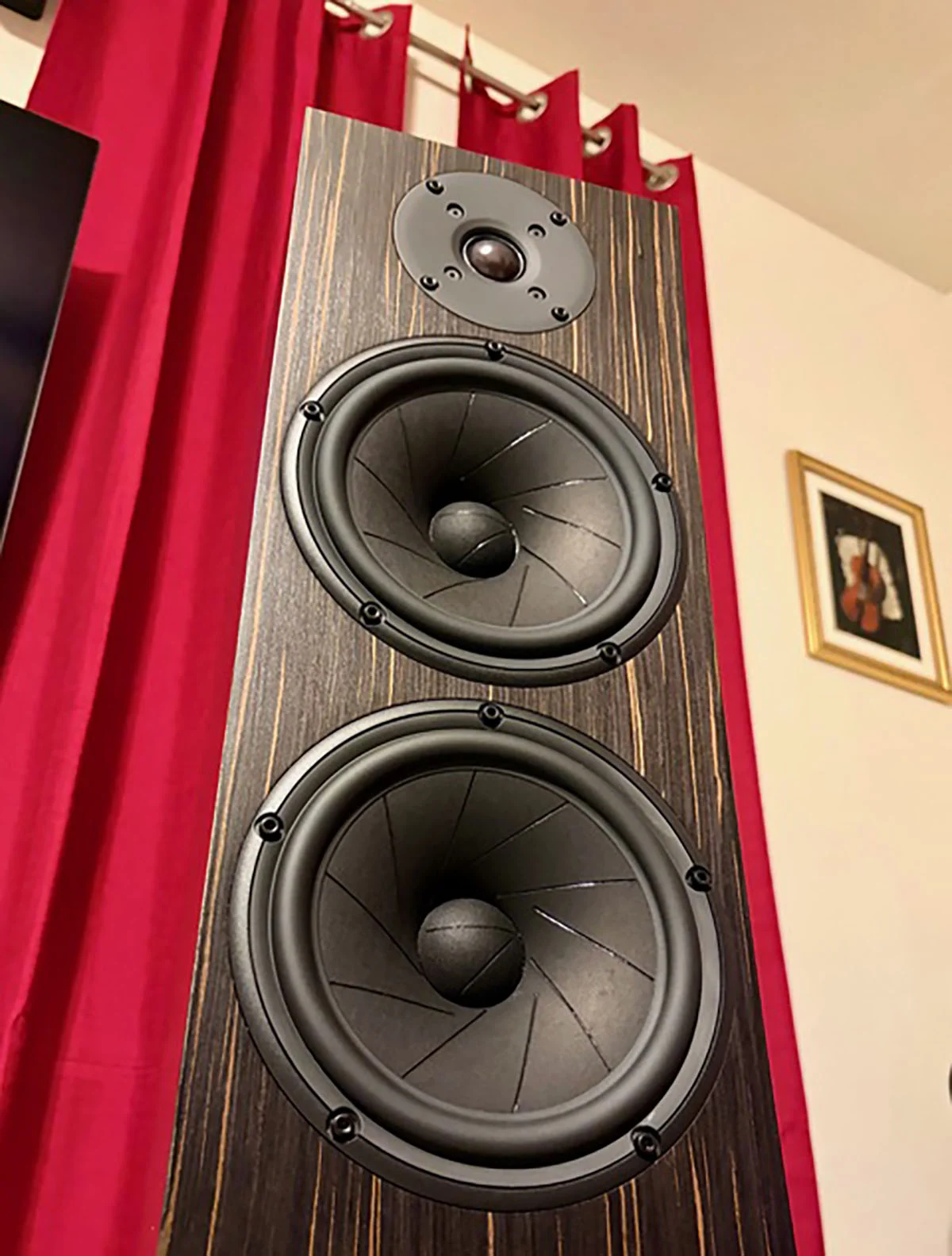
The LXmini is not a conventional box speaker. It is an active, point-source, hybrid-radiation system. The design employs a 6-inch aluminum mid-bass driver mounted in a vertical PVC tube, which serves as a transmission-line enclosure to manage backwave energy, and a 4-inch full-range driver mounted at the top in a unique, decoupled configuration.
The genius of the LXmini lies in its radiation pattern. Below the 700Hz crossover point, the speaker acts as an omnidirectional source, interacting with the room to create a natural, diffuse sound field. Above 700Hz, the system shifts to a cardioid radiation pattern. By directing sound energy toward the listener while minimizing reflections off the rear walls, the LXmini circumvents the acoustic muddiness common in smaller rooms. This allows for a level of imaging precision that is traditionally difficult to achieve in non-acoustically treated environments.

Chronology: From Assembly to Critical Evaluation
The journey to the final listening tests involved a rigorous, methodical process:
- Part 1–2 (Acquisition & Construction): Sourcing the components and assembling the enclosures. The build process, while demanding, demystifies the loudspeaker, granting the user an intimate understanding of the signal path.
- Part 3 (Configuration): Implementing the manufacturer’s suggested parametric equalization (PEQ) and crossover settings via the miniDSP platform. This stage transitioned the kit from a collection of parts to a cohesive instrument.
- Part 4 (Calibration & Testing): Initial measurements were taken using a UMIK-1 microphone and Room EQ Wizard (REW). After verifying the structural integrity and frequency response, the final tuning phase began. By adjusting the PEQ to favor personal room acoustics, the system was "dialed in" to compensate for high-frequency roll-off and low-frequency room modes.
Supporting Data: Measurement and Technical Performance
Technical measurements provide a window into the speaker’s personality. Using Room EQ Wizard, the in-room response revealed a consistent, warm character. The system exhibits a gentle 3dB tilt from the lower registers to the 13kHz region, a design choice that adds a sense of "weight" and "authority" to the sound, making it particularly forgiving and engaging for long listening sessions.

Distortion analysis shows a remarkably well-behaved transducer. Even-order harmonic distortion dominates, which is largely considered non-fatiguing and pleasant to the human ear. A minor anomaly—a second-order harmonic hump at 1,350 Hz—appears to be a slight non-linearity in the 4-inch driver’s surround, though this is effectively imperceptible during music playback.
When measuring the nearfield response, the "bass-friendly" nature of the design becomes apparent. While the listening position may show some dip in the sub-100Hz range due to room interaction, the DSP allows for precise, non-invasive boosting. This confirms the primary advantage of the active approach: the ability to force the hardware to adapt to the room, rather than struggling to adapt the room to the hardware.

Critical Listening: A Diverse Sonic Journey
To stress-test the LXmini, we curated a playlist that spanned decades and genres, ensuring the speakers were challenged by both acoustic subtlety and raw, chaotic energy.
The Dave Brubeck Quartet – Time Out
On "Take Five," the LXminis demonstrated an impressive grasp of midrange texture. While the beryllium-tweeter reference systems we compared them to offered more "air" in the upper-frequency harmonics of the cymbals, the LXminis provided a coherent, tactile presentation. After a minor tweak to boost the 17kHz region, the sense of shimmer returned, elevating the performance to a level that felt complete.

Pentangle – Pentangling
The track "The Earle of Salisbury" highlighted the speaker’s ability to render complex instrumentation. The juxtaposition of a warm, wooden-bodied guitar against the crystalline, almost clinical sharpness of a glockenspiel is a difficult test for any speaker. The LXminis handled the dynamic range with poise, preserving the decay of the percussion and maintaining a clear spatial separation between the two instruments.
The Stooges – Fun House
Raw, unpolished rock provides a different set of challenges. The LXminis proved that they are not merely "audiophile" speakers suited only for soft jazz. On "Down on the Street," the speakers managed a surprisingly large soundstage. While they lack the massive, room-shaking output of larger professional monitors, they captured the "grit" and "grunt" of the recording with an authority that defied their small size.

Tegan and Sara – Love You to Death
Modern synthetic production requires tight control over transient response. In "Dying to Know," the synthesized bass notes were punchy and controlled, with no trace of "bloat" or "boominess." The harmonies, a hallmark of the duo’s work, were rendered with openness and clarity, proving that the LXmini’s midrange-to-treble transition is remarkably smooth.
Implications: The Democratization of High-End Audio
The implications of the Linkwitz LXmini for the DIY and audiophile community are profound. For a modest investment—primarily the cost of the kit and a four-channel DSP/amplification setup—an end-user can bypass the massive markups associated with traditional high-end retail speakers.

The design is a masterclass in "calculated compromise." By acknowledging that the laws of physics impose limits on how much bass a 6-inch driver can move or how high a 4-inch driver can extend, Linkwitz created a speaker that plays to its strengths. It provides a "headphone-like" precision and imaging that is rarely found in traditional floor-standing speakers.
Furthermore, the LXmini challenges the notion that one needs a dedicated, treated acoustic chamber to enjoy reference-level sound. The cardioid radiation pattern is a direct solution to the problem of "room gain" and reflection, making it perhaps the most viable high-end solution for the urban dweller.

Conclusion
The Linkwitz LXmini is more than a kit; it is an educational tool and a sonic revelation. It requires the builder to engage with the science of sound, from the initial assembly of the PVC-tube enclosures to the final, granular adjustments of the DSP crossover.
While it is true that one could spend significantly more money to achieve greater frequency extension at the extremes or higher sound pressure levels, doing so would likely involve sacrificing the very things that make the LXmini special: its coherent, point-source imaging, its manageable footprint, and its incredible value. For those who prioritize the "truth" of the recording over the "prestige" of the brand, the LXmini represents one of the most compelling, highly recommended paths in modern audio. It is a testament to the fact that when engineering is prioritized over marketing, the results can be truly transformative.