
Main Facts: The Intersection of Performance and Customization
In the modern audiophile landscape, the barrier between consumer-grade equipment and high-end DIY audio projects is rapidly dissolving. At the center of this trend is the Fosi Audio ZA3, a compact, versatile Class D amplifier that has become a lightning rod for enthusiasts looking to explore the potential of modular audio systems.
The core of the current discourse involves a strategic approach to power delivery. Many hobbyists, such as the user "Rick," are opting to purchase the ZA3 as a "bare-bones" unit—bypassing the stock power supply in favor of industrial-grade units, specifically those manufactured by Mean Well. The objective is twofold: to establish a functional stereo system today while building a robust foundation for a multi-channel, high-end mono block configuration in the future.
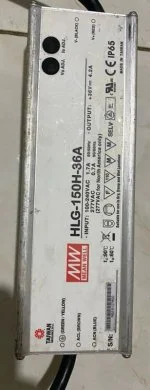
The central technical dilemma revolves around selecting the optimal Mean Well power supply unit (PSU). With the HRP series (specifically the 450-48 and 600-48 models) being the industry favorites, the debate shifts to voltage regulation. While 48V is the standard for maximizing the power output of the TPA3255 chip found in many modern Class D amps, some experts suggest that lower voltages—such as 36V—may offer a "cleaner" sonic profile, creating a friction point between raw power and signal purity.
Chronology: From Renovation Blues to Audiophile Aspirations
The journey of the modern DIY enthusiast often begins with a period of dormancy, followed by a sudden need for system reconstruction.
Phase I: The Resumption of Audio
For many, like our subject Rick, the catalyst for a new build is the completion of home renovations. After months of living without a primary audio system, the rediscovery of legacy components—in this case, older KEF line-array speakers—serves as the spark. This phase involves the immediate need to bridge the gap between "no sound" and "high-fidelity sound."
Phase II: The Initial Acquisition
The Fosi Audio ZA3 acts as the bridge. By choosing to purchase the unit without the bundled power supply, the user asserts control over the signal chain. This phase involves initial modifications: the swapping of stock op-amps for higher-performance alternatives and the integration of balanced line outputs to ensure maximum signal integrity.
Phase III: The Scaling Strategy
The long-term roadmap involves a transition from a stereo setup to a multi-channel environment. The vision is to eventually deploy at least four mono-block channels. This is not merely an exercise in volume, but an investment in architecture. By selecting a high-quality Mean Well PSU now, the user ensures that the power source is not a "sunk cost" but a reusable component that can be integrated into a future, more complex custom amplifier build.
Supporting Data: Understanding the Power Dynamics
The performance of a Class D amplifier is inextricably linked to the quality and capacity of its power supply. To understand why enthusiasts are fixated on Mean Well, one must look at the technical specifications of the power components.
The TPA3255 and Voltage Sensitivity
The TPA3255 chip, which powers the ZA3, is a high-performance Class D amplifier stage. Its efficiency is well-documented, but its output impedance and noise floor can be significantly affected by the input voltage.
- The 48V Argument: Higher voltage allows the amplifier to reach its peak power rating. For those driving inefficient speakers or seeking maximum dynamic headroom, the Mean Well HRP-600-48 is often cited as the gold standard.
- The 36V Argument: Proponents of lower voltage, such as the HRP-450-36, argue that reducing the voltage swings can lower the heat signature of the amplifier and minimize potential noise artifacts within the switching frequency. It is a trade-off between raw dynamic ceiling and harmonic purity.
Industrial vs. Consumer PSUs
Why Mean Well? The industry shift toward industrial power supplies for audio is rooted in reliability and ripple suppression. Mean Well HRP (High Reliability Power) units offer:
- Low Ripple/Noise: Crucial for audio circuits where switching noise can bleed into the audible spectrum.
- Robust Build Quality: Designed for 24/7 industrial environments, these units provide a level of longevity that exceeds standard "brick" power supplies.
- Efficiency: High power factor correction (PFC) ensures that the power drawn from the wall is translated into clean DC output without excessive heat loss.
Official Responses and Community Consensus
The audiophile community, specifically forums such as Audio Science Review and DIYAudio, serves as the "official" sounding board for these inquiries. While there is no single manufacturer response, the consensus-driven nature of these platforms provides a map of best practices.
The "Cleaner Sound" Debate
When an experienced user suggests that a 36V unit sounds "cleaner" than a 48V unit, they are often referring to the subjective experience of transient response and noise floor. In the DIY community, this has led to a split:
- The Power-First Camp: Believes that the headroom provided by 48V is non-negotiable for high-fidelity audio.
- The Precision-First Camp: Believes that the lower thermal load and stability of a 36V supply allow the op-amps to perform in a more controlled, "musical" range.
The XRK 3255 Thread Influence
The mention of the "XRK 3255 thread" refers to a specific, high-level technical discussion regarding the optimization of the TPA3255 chip. Users following these threads are typically looking for more than just a plug-and-play solution; they are looking for "end-game" DIY performance. The divergence in PSU choice among these members suggests that individual system impedance—the interaction between the specific speakers (like the KEF arrays) and the amp—dictates the final result more than a universal "best" power supply.
Implications for the Future of DIY Audio
The implications of this trend extend beyond the individual user. We are witnessing a fundamental shift in the audio market.
The Modular Ecosystem
The move toward buying amps without power supplies signals a decline in the "all-in-one" consumer philosophy. Consumers are increasingly viewing their audio systems as modular platforms. A user who starts with a ZA3 and a Mean Well PSU has effectively started a "power supply library" that can be upgraded, swapped, or repurposed as they move toward building discrete mono-blocks.
The Democratization of High-End Design
Historically, a "high-end" system required a significant financial investment in traditional Class AB amplification. Today, the combination of a $150 amplifier chip and a $100 industrial power supply can challenge legacy systems costing ten times as much. This democratization allows younger or budget-conscious audiophiles to experiment with components that were previously reserved for laboratory or high-end commercial environments.
The Challenge of Complexity
While this approach offers incredible value, it introduces the challenge of integration. Managing power supplies, chassis grounding, and heat dissipation for four mono-blocks requires a level of technical literacy that traditional consumer audio does not demand. This creates a new barrier to entry: not financial, but educational. The success of the "Rick" approach depends on the user’s willingness to research, learn, and iterate.
Final Thoughts: A Sustainable Path Forward
The path chosen by the modern enthusiast—using high-quality industrial components like the Mean Well HRP series to power consumer-grade Class D boards—is a testament to the vitality of the DIY spirit. Whether the choice is 36V for perceived cleanliness or 48V for sheer power, the primary benefit remains the same: the user is no longer a passive consumer of sound, but an active participant in its creation. As the remodeling of homes leads to the rediscovery of long-lost speakers and the desire for new sonic experiences, this modular, iterative approach ensures that the audio system remains as dynamic and evolving as the music it plays.
For those embarking on this path, the advice is clear: prioritize the reliability of your power supply, understand the technical limits of your amplifier chip, and never underestimate the impact of an upgraded op-amp in the signal path. The journey from a remodeled living room to a high-end, custom-powered audio setup is paved with these small, calculated decisions, each one bringing the listener closer to a bespoke auditory reality.


