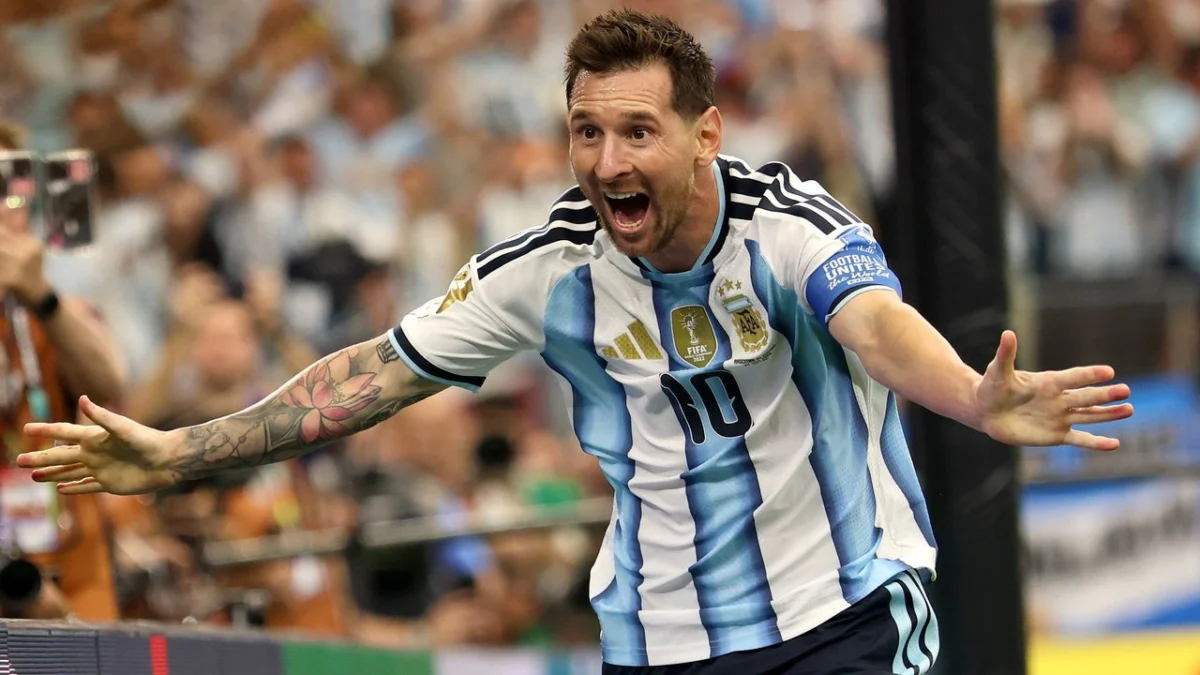
The stage is set for one of the most highly anticipated matches in modern football history. The 2026 FIFA World Cup final will bring together the reigning European champions, Spain, and the defending world champions, Argentina, in a mouthwatering fixture that transcends mere sporting competition. Billed globally as the ultimate battle between the "master" and the "apprentice," this historic final marks the first-ever on-pitch meeting between 39-year-old Lionel Messi—arguably the greatest player to ever grace the game—and Spain’s teenage prodigy, Lamine Yamal.
As billions of fans prepare to tune in, the match represents not only a battle for global supremacy but a symbolic passing of the torch. It is a collision of eras, tactical philosophies, and generation-defining talents.
1. Main Facts: The Stakes and the Narrative
The 2026 FIFA World Cup final is a collision of two footballing giants at very different points in their evolutionary cycles. Under the meticulous guidance of head coach Luis de la Fuente, Spain has taken the tournament by storm. Combining their traditional possession-based philosophy with a devastating, direct attacking edge, La Roja has looked nearly flawless.
On the other side of the pitch stands Argentina. Led by Lionel Scaloni, the Albiceleste are aiming to cement their status as an all-time great dynasty. Having captured the Copa América and the 2022 World Cup, Argentina has the chance to achieve what only two other nations have ever accomplished in the history of the sport: winning back-to-back World Cup titles. Only Italy (1934, 1938) and Brazil (1958, 1962) have successfully defended their crowns.
The individual duel between Lionel Messi and Lamine Yamal dominates the headlines. At 39, Messi is playing in what is almost certainly his final World Cup match, looking to secure his second star and further solidify his legacy. Conversely, the teenage sensation Lamine Yamal, who has lit up the tournament with his fearless dribbling and playmaker vision, represents the future of global football. This final marks their first-ever professional encounter, creating a narrative arc that scriptwriters could only dream of.
2. Chronology: The Contrasting Paths to the Final
To fully appreciate the magnitude of this final, one must examine the contrasting journeys both teams took to reach the grandest stage in sports.
SPAIN'S PATH: Dominant, structured, and historically secure.
[Group Stage & Knockouts] ──> [Only 1 Goal Conceded] ──> [6 Clean Sheets (World Cup Record)] ──> [Final]

ARGENTINA'S PATH: Dramatic, resilient, and chaotic.
[2-0 Down vs. Egypt] ──> [3 Goals in 13 Mins] ──> [85th-Min Equalizer vs. England] ──> [Extra-Time Winner] ──> [Final]
Spain’s Defensive Masterclass
Spain’s march to the final has been characterized by an unprecedented level of defensive organization and tactical control. Throughout their seven matches leading up to the final, Luis de la Fuente’s side has conceded just a single goal.
By keeping six clean sheets in seven matches, Spain has set a new FIFA World Cup record for defensive solidity. This defensive iron curtain has not come at the expense of their attacking output; rather, their ability to choke opponents out of possession and transition rapidly has made them the most balanced team in the tournament.
Argentina’s Chaotic Resilience
In stark contrast to Spain’s serene progress, Argentina’s journey has been a rollercoaster of high drama, emotional intensity, and late-game heroics. Time and again, the defending champions looked to be on the brink of elimination, only to pull off miraculous escapes.
- The Quarter-Final Comeback: Against a spirited Egypt side, Argentina found themselves staring down a 2-0 deficit late in the match. In a breathtaking display of attacking urgency, Scaloni’s men scored three goals in a blistering 13-minute window to secure an improbable victory.
- The Semi-Final Thriller: Facing England in the semi-finals, Argentina trailed for a significant portion of the match. Just as English fans began celebrating a potential final berth, the Albiceleste struck an equalizer in the 85th minute. In the ensuing extra-time period, striker Lautaro Martínez netted a dramatic winner to send the South American contingent into raptures.
Argentina’s path has proven that regardless of the scoreline or the minute on the clock, they can never be counted out.
3. Supporting Data: Lineups, Tactics, and Key Matchups
The tactical battle between Luis de la Fuente and Lionel Scaloni will dictate the flow of the game. Both managers have finalized their starting lineups, revealing key strategic decisions ahead of kickoff.
Team Lineups
| Spain XI (Unchanged) | Argentina XI (Three Changes) |
|---|---|
| Unai Simón (GK) | Emiliano Martínez (GK) |
| Marc Cucurella (DF) | Nicolás Tagliafico (DF) |
| Aymeric Laporte (DF) | Lisandro Martínez (DF) |
| Pau Cubarsí (DF) | Cristian Romero (DF) |
| Pedro Porro (DF) | Gonzalo Montiel (DF) |
| Fabián Ruiz (MF) | Nicolás González (MF) |
| Rodri (MF) | Enzo Fernández (MF) |
| Álex Baena (MF) | Alexis Mac Allister (MF) |
| Dani Olmo (MF) | Rodrigo De Paul (MF) |
| Lamine Yamal (FW) | Julián Álvarez (FW) |
| Mikel Oyarzabal (FW) | Lionel Messi (FW) |
Tactical Breakdown
Spain enters the final completely unchanged, a testament to the trust De la Fuente has in his starting unit. The midfield engine room, anchored by Rodri and flanked by Fabián Ruiz, will look to dominate possession and dictate the tempo. Up front, the creative burden falls on Dani Olmo and Lamine Yamal, who will seek to isolate Argentina’s full-backs and feed Mikel Oyarzabal in the box.
Argentina, conversely, has made three tactical adjustments to their starting XI. Scaloni has opted for a highly energetic midfield, deploying Rodrigo De Paul, Enzo Fernández, and Alexis Mac Allister to disrupt Spain’s passing rhythm. The inclusion of Gonzalo Montiel at right-back suggests a specific defensive blueprint designed to cope with the explosive pace and trickery of Spain’s left flank, while Julián Álvarez’s tireless pressing will be crucial in preventing Spain from building cleanly out from the back.
4. Official Responses and Expert Punditry
The global football community has been buzzing with anticipation, and prominent figures have weighed in on how they expect the tactical battle to unfold.
In the United Kingdom, the BBC’s coverage features an elite panel of pundits, including former England captain Wayne Rooney, former international goalkeeper Joe Hart, and defender-turned-analyst Micah Richards.
Rooney highlighted the psychological battle of the final, stating:
"Spain have played the best football in this tournament, without question. Their midfield controls games with an ease we haven’t seen since the 2010 era. However, Argentina possess an intangible quality. They have been in the trenches. When you have Lionel Messi on the pitch, backed by a team willing to run through brick walls for him, tactical blueprints can fly out the window in a second."
Richards focused heavily on the matchup of the generation:
"We are watching history. Lamine Yamal is doing things at his age that we’ve only ever seen from Messi himself. To see them go head-to-head on the biggest stage in the world is a dream come true for neutrals. I expect a tight, cagey affair early on, but once the game opens up, it will be pure theater."
5. Implications: Legacies and Global Broadcasting Guide
The outcome of this match will write the definitive closing chapter for several legendary careers while launching a new era of footballing royalty.
Legacy Implications
Should Argentina emerge victorious, Lionel Messi will secure his status as the undisputed ‘GOAT’ (Greatest of All Time) in the eyes of many, bowing out of the World Cup stage with consecutive titles. It would also place this Argentina squad alongside the legendary Pelé-led Brazil teams of the mid-20th century.
For Spain, a victory would signal the official dawn of a new golden generation. Having waited since 2010 to lift their second World Cup trophy, a win would validate the youth development systems of La Liga and solidify players like Yamal, Cubarsí, and Olmo as the new standard-bearers of European football.
How to Watch the World Cup Final Live from Anywhere
With history on the line, millions of viewers worldwide are searching for the best ways to stream the match. Below is a comprehensive guide to accessing the broadcast across major regions.
1. United Kingdom (Free-to-Air)
In the UK, the World Cup final is completely free to watch.
- Television: BBC One and ITV1.
- Streaming: BBC iPlayer and ITVX.
- Requirements: A valid UK TV license and a free account registered on the respective streaming platforms.
2. United States
US viewers have multiple options spanning traditional television and digital streaming platforms.
- English Broadcast: FOX, Fox One.
- Spanish Broadcast: Telemundo.
- Cord-Cutters / Live TV Streaming: Fubo (offers a free trial for new users) and Sling TV.
- Direct Streaming: Peacock TV (broadcasting Telemundo’s Spanish coverage).
3. Canada
Canadian soccer fans can catch the action across premium and terrestrial networks.
- Free Option: CTV (requires TV provider credentials for online streaming).
- Premium Option: TSN and the digital platform TSN+, which is available for CA$8 per month or CA$80 annually.
4. Australia (Free-to-Air)
Australian fans can watch the entire final live and free of charge.
- Television: SBS.
- Streaming: SBS On Demand (via browser or the dedicated SBS On Demand app).
Bypassing Geo-Restrictions with a VPN
If you are currently traveling outside your home country, geo-blocking technology may prevent you from accessing your local, legal streaming subscriptions. Fortunately, you can easily bypass these digital borders by using a Virtual Private Network (VPN).
A VPN works by securely routing your internet traffic through a server located in your home country, making streaming platforms recognize your device as if you were sitting on your own couch.
- Top Recommendation: Norton VPN is highly rated for streaming live sports due to its robust connection speeds, strict privacy protocols, and a industry-leading 60-day money-back guarantee if you are not entirely satisfied with the service.
How to Use a VPN to Watch the Game:
- Download and install a reputable VPN service (such as Norton VPN).
- Open the application and connect to a server in your home country (e.g., connect to a UK server for BBC iPlayer or an Australian server for SBS On Demand).
- Navigate to your preferred streaming platform, log in, and enjoy the historic 2026 World Cup final live in high definition.
Disclaimer: VPN services should be used in compliance with the terms of service of the streaming provider and local regulations. We do not endorse or condone the unauthorized access of copyrighted content.