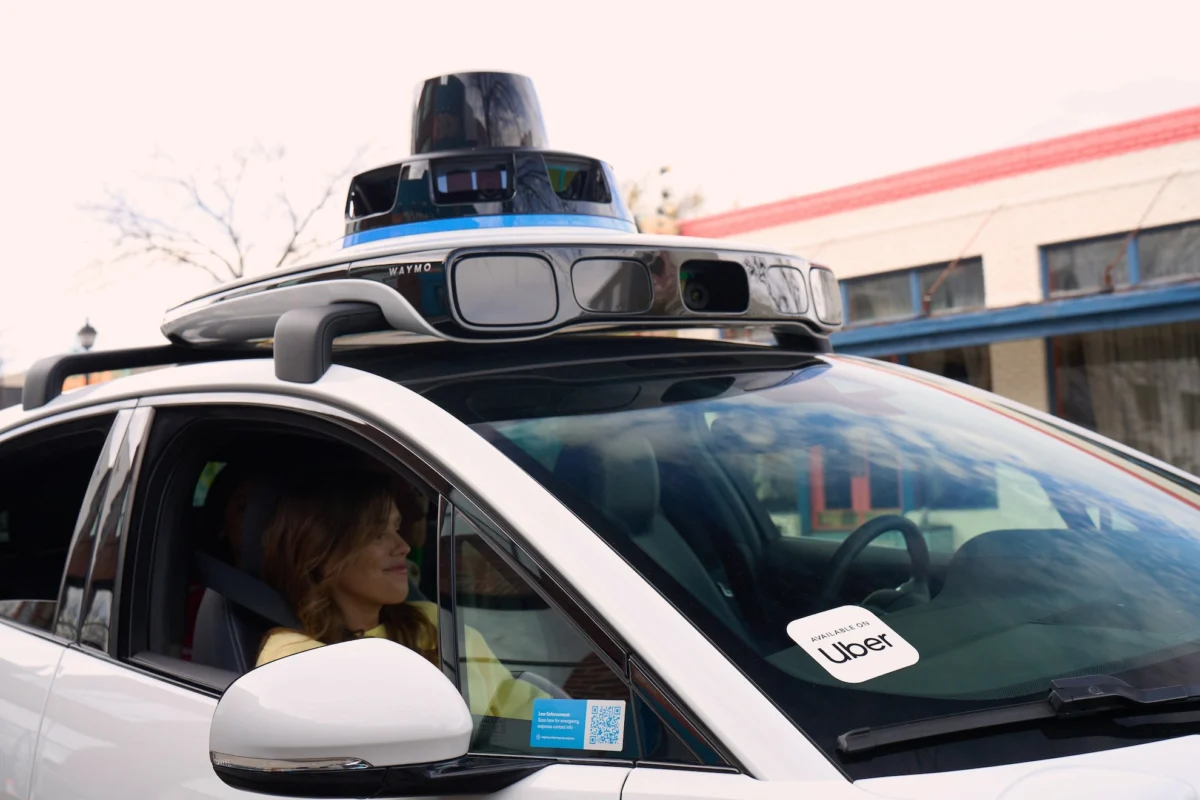
In the high-stakes arena of autonomous vehicle (AV) deployment, Washington, D.C. has become the unlikely epicenter of a legislative battle that threatens to reshape the future of transportation. A proposed bill aimed at bringing driverless technology to the nation’s capital has exposed a deepening rift between two of the industry’s biggest players: Uber, the world’s dominant ride-hailing network, and Waymo, the Alphabet-owned leader in autonomous driving.
The conflict, which is set to culminate in a day-long D.C. Council hearing, centers on the Autonomous Vehicle Act of 2012. While the legislation is intended to modernize local transit, it has transformed into a proxy war over whether the future of the city should be defined by standalone robotaxi fleets or a "hybrid" model that forces autonomous vehicles to operate within existing ride-hailing networks.
The Legislative Battlefield
The proposed bill, introduced in May by Councilmember Charles Allen, seeks to move D.C. beyond the era of supervised testing. While companies like Waymo and Zoox currently operate in the district, they are strictly required to keep a human safety operator behind the wheel at all times. The new legislation would grant the District Department of Transportation (DDOT) the authority to issue permits for fully driverless commercial operations.
However, the bill includes specific stipulations that have drawn the ire of Uber. Among them is a proposed $0.15 per mile "vehicle miles traveled" (VMT) tax on robotaxi operators. Supporters of the bill argue this tax is a necessary tool to fund public transit and support workforce development for the human drivers who face potential displacement. Critics, however, contend the fee is prohibitively expensive and could stifle innovation.
The debate has drawn a wide array of stakeholders, from labor unions like the Teamsters and the Service Employees International Union (SEIU)—which fear job losses—to disability rights advocates, environmental groups, and tech lobbyists.
A Chronology of Friction: From Courtrooms to Collaborations
The current tension is merely the latest chapter in a long, volatile history between Uber and Waymo. Their relationship has evolved from bitter legal enemies to reluctant partners, and now, to ideological rivals.

- 2017: The Trade Secret Wars: The two companies were locked in a landmark intellectual property lawsuit. Waymo accused Uber of using trade secrets stolen by a former Google engineer to jumpstart its own autonomous program. The trial captivated Silicon Valley, famously centering on the phrase "the laser is the sauce," before ending in a settlement in 2018.
- 2020: The Pivot: Uber opted to divest its in-house self-driving unit, ATG, selling it to Aurora. This move signaled a change in strategy: Uber would stop trying to build the car and instead focus on being the platform that hosts them.
- 2023: The Pilot Programs: The companies seemingly mended fences in Phoenix, where Waymo began offering rides through the Uber app. This partnership expanded to Austin and Atlanta in 2025.
- 2026: The Cooling Effect: By mid-2026, the partnership began to fray. Reports emerged that the two companies were quietly ending their collaboration in Phoenix. Simultaneously, high-level rhetoric from Uber executives, including CTO Praveen Neppalli, shifted toward public criticism of Waymo’s safety record.
The Core Argument: Hybrid vs. Standalone Models
At the heart of the D.C. debate is a fundamental disagreement over how a city should function. Uber is lobbying heavily for a "hybrid" regulatory framework. Under this model, the law would mandate that any autonomous vehicle operator must function within a broader network that includes human-driven vehicles.
"We have already seen in other jurisdictions how a flawed, first-party only regulatory approach can disrupt a city," said Javi Correoso, Uber’s lead for U.S. policy, during a recent council roundtable. Uber argues that robotaxis, when left to operate as standalone fleets, create unnecessary congestion by "cruising empty" and fail to provide the human touch necessary for elderly or disabled passengers. Uber’s data claims that for every one robotaxi deployed, roughly four human drivers are displaced.
Conversely, Waymo and other supporters of the bill argue that such mandates are merely a "cynical" attempt at regulatory capture. They contend that the goal is to prevent competition and force AV companies to pay rent to Uber.
"Mobility is already a marketplace," notes Greg Rogers, executive director of The Innovation Majority. "Any argument that you can improve consumer welfare by forcing certain business models and canceling out others does not improve people’s mobility choices. It only risks further entrenching existing interests."
Data and Disruption: The Economics of the Street
The stakes for the industry are immense. Waymo currently operates over 500,000 rides per week across 11 cities, cementing its position as the market leader in autonomous hardware. Uber, conversely, commands the largest ride-hailing and delivery network in the United States.
Uber’s recent push, supported by its new "AV Labs" division—a dedicated team focused on collecting and sharing real-world driving data—shows that the company is no longer just a passive participant in the AV space. By gathering data and lobbying for legislation that favors a hybrid system, Uber is attempting to force AV developers into a corner: either integrate with Uber or face an uphill battle to gain market entry.

The proposed VMT tax in D.C. further complicates the economic landscape. By splitting the revenue 50/50 between public transit and workforce retraining, the D.C. Council is attempting to mitigate the social impact of automation. However, the emergence of grassroots anti-robotaxi campaigns, such as the one led by the "Coalition for Accountability and Road Safety," suggests that the public sentiment toward autonomous vehicles is increasingly polarized.
Implications for the Future
The legislative outcome in Washington, D.C. will likely set a precedent for municipalities across the United States. If Uber succeeds in codifying a hybrid requirement, it could effectively end the "standalone app" model that Waymo has pioneered. If the bill passes in its current form—favoring a more open, competitive environment—it could accelerate the adoption of pure-play robotaxi services, while potentially leaving Uber to scramble for a new strategy.
The shift in Uber’s tone, from the "move fast and break things" ethos of its early days to a self-described "partner with cities" approach, reflects a hard-won maturity. Company leaders, including COO Andrew MacDonald, have admitted that their past confrontational style damaged trust. However, critics argue this new "pro-driver" stance is simply a more sophisticated form of protectionism.
As the council prepares for Monday’s hearing, the industry watches with bated breath. The clash is no longer just about the technology of self-driving cars; it is about who holds the keys to the urban transit system of the 21st century. Will the future be a fragmented ecosystem of various autonomous fleets, or will it be consolidated under a single, human-assisted umbrella?
For now, the only certainty is that the road to full autonomy in Washington, D.C. remains under heavy construction, both on the pavement and in the legislative chambers.