For the better part of a decade, industry titans from Silicon Valley to Shenzhen have promised that smart glasses would eventually replace the smartphone as our primary interface for the digital world. Yet, despite the hype, the current landscape of “smart eyewear” remains firmly tethered to the pocket-sized devices they were meant to supersede. The latest entrant into this competitive arena, the Even Realities G2, epitomizes this dichotomy: it boasts sophisticated, premium hardware, yet remains shackled by a dependency on mobile connectivity that can be as erratic as it is essential.
As Even Realities recently hit a $1 billion valuation following a $150 million funding round led by Meituan and Tencent, the pressure to prove that smart glasses have a permanent place in the modern workspace has never been higher. But do the G2s offer a glimpse into a post-smartphone future, or are they merely a high-tech accessory in search of a problem to solve?
Main Facts: The Hardware Evolution
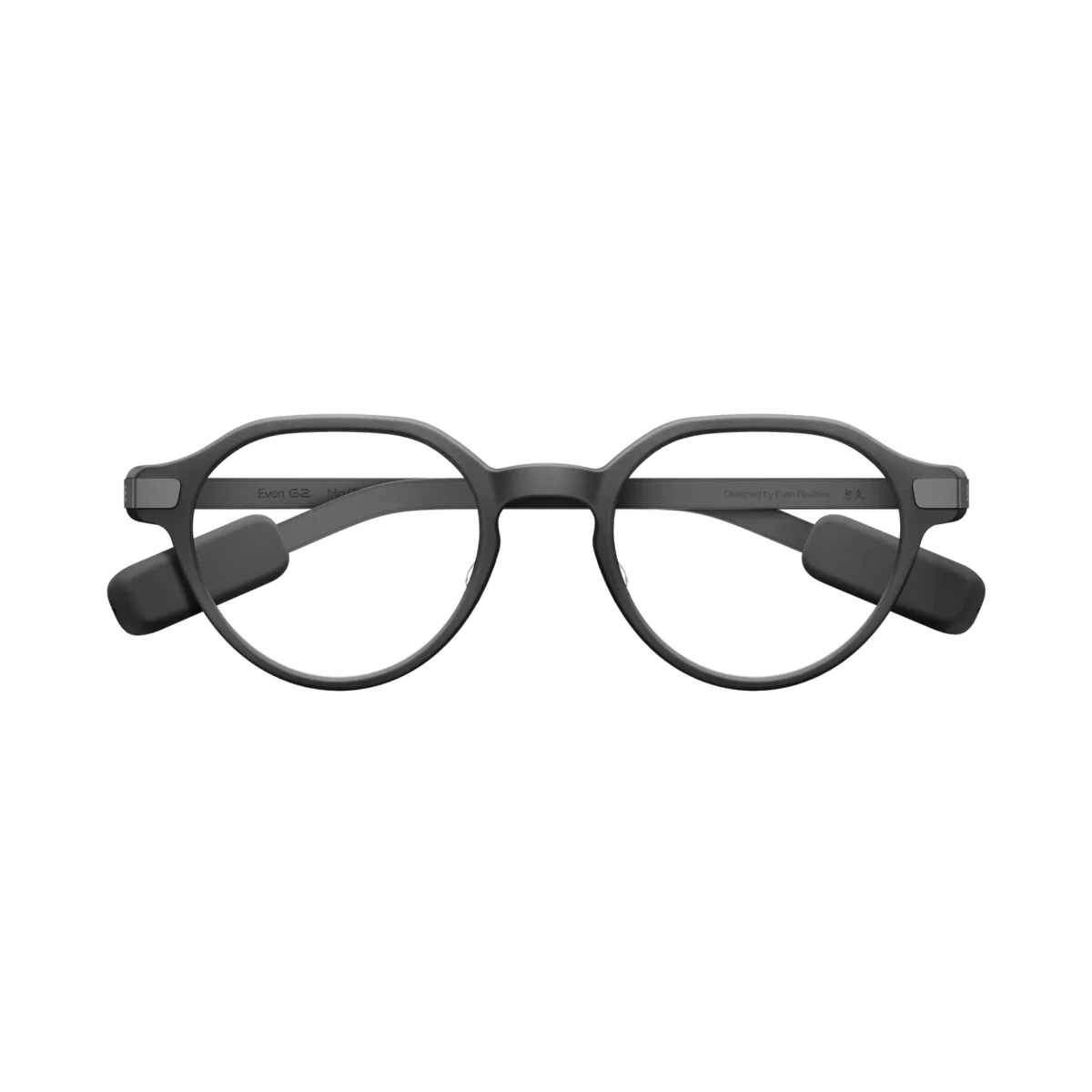
The G2 represents the second generation of Even Realities’ vision for "productivity-first" eyewear. Unlike the camera-heavy, social-media-centric approach favored by Meta’s Ray-Ban partnership, the G2 leans into a minimalist, heads-up display (HUD) philosophy. The glasses project information in a distinct, neon-style green monochrome, creating an interface that feels reminiscent of a classic cyberpunk aesthetic—crisp, legible, and entirely unobtrusive.
From a build-quality perspective, the G2 is a triumph of ergonomics. Weighing in at a featherlight 35 grams, the frame is constructed from a robust magnesium alloy, while the temples utilize titanium for both durability and comfort. This design choice ensures that the wearer doesn’t suffer from the "heavy bridge" syndrome common with bulkier augmented reality (AR) headsets.
The upgrades from the first-generation G1 are substantial. The G2 features:
- Display: A 1,200-nit brightness rating (up from 1,000 nits) and a 75% larger display area, ensuring visibility even in challenging ambient lighting.
- Refresh Rate: A significant jump to 60Hz, compared to the stuttering 20Hz found on the original model, which drastically improves the fluidity of scrolling text and interface elements.
- Audio: A four-microphone array, doubling the capacity of its predecessor to better capture voice commands and facilitate real-time translation.
Despite these advancements, the reliance on a tethered connection remains. While early firmware versions suffered from persistent, frustrating disconnections, recent software updates have stabilized the link. Nevertheless, the G2 remains an extension of the smartphone rather than an independent computing platform.

Chronology: From Concept to Unicorn
The journey of Even Realities has been a rapid climb. The company’s trajectory is a testament to the current investor appetite for AI-integrated hardware.
- The Early Days: Even Realities launched its first-generation smart glasses with the modest goal of providing a discrete, text-based notification system for professionals.
- The Mid-Cycle Refinement: Throughout the development of the G2, the company pivoted toward "productivity," intentionally stripping out cameras and speakers to avoid the privacy baggage that has plagued competitors like Meta and Snap.
- The Present: Following the launch of the G2 and the accompanying R1 ring, the company secured its unicorn status. The recent Global Connect Show (GCS) in China served as a critical proving ground, where the glasses were demoed as a professional-grade translation and teleprompting tool.
- The Future: The roadmap now focuses on expanding the third-party ecosystem and refining the "Even AI" voice assistant, which remains the company’s biggest software challenge.
Supporting Data: Performance and Limitations
In rigorous field testing, the G2 proves to be a mixed bag of innovative utility and technical friction.
The Productivity Suite
The G2’s core appeal lies in its software suite: Translate, Conversate, Teleprompt, and Navigate.
- Translation: During trials with international journalists speaking French, Spanish, and Mandarin, the Translate feature proved highly effective for following live presentations. However, it lacks a bi-directional output—the speaker remains unaware of the wearer’s responses unless they are also integrated into the ecosystem.
- Conversate: This feature has evolved from a simple live-transcription tool into a context-aware assistant. By uploading documents or notes before a meeting, the AI can surface "explainer bubbles" for complex terminology (e.g., "Green Hydrogen"). It is a genuinely useful tool for high-stakes professional environments, though it occasionally suffers from "information overload."
- Navigation: The turn-by-turn navigation is a standout concept but currently a execution failure. Because it relies on the internal Even Realities app rather than Google or Apple Maps, the address accuracy is inconsistent. It is currently a novelty for local cyclists, not a reliable tool for professional travel.
The AI Assistant
"Even AI" is intended to be the brain of the operation, but it currently struggles with basic reliability. The assistant frequently misinterprets to-do list requests, and its long-form, unskippable answers often clog the HUD, making it difficult to maintain a natural flow during a conversation. Furthermore, despite the four-microphone array, noise cancellation in loud, urban environments—such as the busy streets of India—remains suboptimal, leading to failed activations and incorrect inputs.
Official Responses and Strategic Intent
When pressed on the limitations of the hardware—specifically the lack of automatic brightness sensors and the reliance on the phone for settings—the company maintains that it is prioritizing "lean functionality" over "feature creep."
Even Realities’ leadership has publicly stated that their decision to forgo cameras is a strategic bet on privacy and professional acceptance. By positioning the G2 as a tool for the board room rather than the content creator, they aim to bypass the social friction associated with recording devices. Their successful $150 million funding round indicates that institutional investors agree with this vision, viewing the "productivity glasses" market as a blue-ocean opportunity distinct from the "smart social eyewear" sector.

Implications: The Path Toward Maturity
The G2 is, at its heart, a $599 device for the "early adopter" professional. It is not yet a product for the mass market. Its survival and eventual growth depend on three critical factors:
1. The Ecosystem Trap
Even Realities is currently trapped in the "chicken and egg" cycle of app development. The glasses are only as useful as the software running on them. While the company is opening its doors to third-party developers, the current offerings are not compelling enough to justify the daily wear of the device.
2. The Ring Controversy
The R1 ring, launched alongside the G2, illustrates the company’s confusion regarding user experience. At $249, it attempts to be a controller for the glasses and a fitness tracker. As a controller, it is redundant; the glasses already possess intuitive touch-sensitive temples. As a fitness tracker, it fails to compete with established incumbents like Oura or Ultrahuman. The implication is clear: users do not want to manage a "stack" of disparate wearables to perform simple tasks.
3. The Need for Autonomy
For smart glasses to truly "replace" the smartphone interface, they must move toward greater autonomy. Currently, the G2 is a high-end "notification ticker." To become a daily driver, it requires better power management, independent connectivity (e.g., eSIM integration), and a more sophisticated, interruptible AI that can handle complex queries without tethering the user to an app.
Conclusion
The Even Realities G2 is a bold, refined step toward a world where our screens are no longer held in our hands, but integrated into our field of vision. It succeeds in being the most professional-looking, lightweight, and unobtrusive pair of smart glasses on the market. However, until the software matures to match the premium hardware, and until the reliance on the smartphone is significantly reduced, the G2 remains a "nice-to-have" luxury for the tech-tinkerer.
As the company moves into its new chapter as a tech unicorn, the focus must shift from merely building the glasses to building the experience that makes them indispensable. For now, the G2 is a fascinating glimpse into the future—but the future is not quite ready for the mainstream.