The podcasting industry continues to demonstrate remarkable resilience and creative expansion, as evidenced by this week’s developments. From high-profile network acquisitions to a critical discourse regarding the intersection of UI design and listener behavior, the medium is currently undergoing a period of intense refinement. As creators, platforms, and listeners navigate a crowded marketplace, the push for better discoverability and more authentic connection remains the primary driver of change.

Main Facts: The Pulse of the Industry
The past week has been marked by significant movement across the podcast ecosystem. Perhaps the most notable shift involves the comedy landscape, with the award-winning Scam Goddess officially joining the iHeartMedia and Will Ferrell-backed Big Money Players Podcast Network. This move signals a continued trend of consolidation where independent successes are increasingly brought under the umbrella of major media houses to leverage broader distribution and marketing infrastructure.

Simultaneously, the industry is grappling with technical changes that affect how content is consumed. Industry analyst Rob Walch has raised a red flag regarding Spotify’s new "Skip Ahead" button. The feature, intended to help users navigate content, has sparked a debate about whether such UI elements—particularly those that prioritize video clips—might inadvertently incentivize listeners to bypass key segments of a show. Walch’s advice to creators is stark: if you are concerned about your audience skipping content, you must be hyper-aware of how your show appears within the Spotify ecosystem, especially when incorporating video.

Furthermore, the spirit of evolution is present in branding. The mental health and neurodivergence podcast Different, Not Broken has officially rebranded to You’re Not Too Much. This change, produced by Podknows Podcasting, reflects a broader trend of creators refining their mission statements to better resonate with the nuanced, human-centric experiences of their listeners.

Chronology of Recent Developments
To understand the current state of the industry, one must look at the sequence of recent strategic announcements:

- Mid-Week Pivot: The rebrand of Different, Not Broken to You’re Not Too Much occurred, marking a deliberate shift toward a more empathetic and inclusive title that better encapsulates host Lauren Howard’s exploration of the human condition.
- Expansion of Distribution: Scam Goddess solidified its transition to the Big Money Players Network, announcing a new commitment to full-length video integration for YouTube, paired with traditional audio distribution via the iHeartRadio app.
- Technical Analysis: Throughout the week, discussions intensified around the "Skip Ahead" feature on Spotify. Analysts began tracking the impact of these UI changes, highlighting a potential friction point between platform convenience and content integrity.
- The Launch Cycle: New entries into the market, such as The Nursing Good—a show dedicated to the diverse realities of nursing—and The Letterbox Podcast—a project centered on the catharsis of unsent letters—demonstrated the continued appetite for niche, high-intimacy storytelling.
- The Seasonal Return: The Rock & Roll Hall of Fame and PRX’s Radiotopia confirmed the return of Music Makes Us for August 25, hosted by the legendary Kathleen Hanna, underscoring the enduring power of institutional-partnered, high-quality audio journalism.
Supporting Data: Charting the Landscape
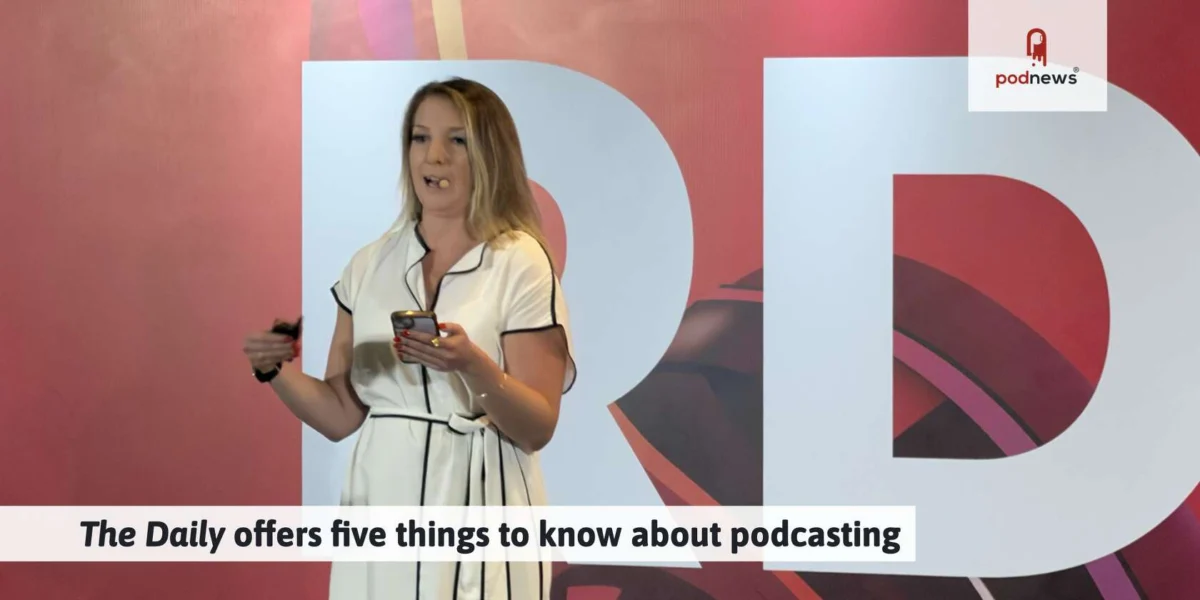
Data remains the lifeblood of the industry, providing a roadmap for where audience attention is flowing. In the United States, The Daily continues to maintain a dominant position in the Apple Podcasts charts, a testament to the persistent demand for high-production-value news daily. Spotify, meanwhile, shows strong engagement with its own unique audience dynamics, with high-charting shows reflecting a mix of lifestyle and culture-focused content.

In Australia, the data provides a fascinating look at emerging trends. AdMission has claimed the top spot in the Marketing category, suggesting a professional appetite for industry-specific audio insights. Something To Talk About has made a significant splash as a high-entry debut in the Personal Journals category, proving that individual-led, diary-style storytelling remains a powerful draw. Additionally, Shameless maintains its grip on the #1 spot in Society & Culture, showing that established brands, when managed with consistency and community-building, can hold audience loyalty over the long term.

Official Responses and Strategic Commentary
The industry’s leading voices are currently locked in a debate regarding the "Video-First" approach. While platforms like Spotify are pushing hard for video integration to compete with YouTube, creators are cautious. The consensus among many independent producers is that while video offers a new way to reach Gen Z audiences, it should not come at the expense of the audio-first experience that defined the medium’s growth.

Regarding the legal and social climate, shows like Engadget News + Next are performing the vital role of keeping listeners informed about the massive legal hurdles facing tech giants. Their coverage of the Grok lawsuit and Meta’s trillion-dollar legal challenges demonstrates that podcasting is no longer just a "companion" medium; it is a primary source for critical analysis of the tech landscape.

Host Finn Harries of The Seeds Will Grow has offered a philosophical response to the industry’s need for better storytelling. He argues that the old narratives of extraction and separation are no longer serving the public, and that podcasts have a duty to pivot toward "bold ideas for a world in transition." This perspective suggests that the next phase of podcast growth will be defined by shows that provide actionable, constructive solutions to global malaise rather than merely documenting it.

Implications for the Future of Podcasting
The trajectory of the podcasting industry over the next twelve months will likely be dictated by three primary factors:

1. The Monetization of Niche Communities
The success of shows like The Nursing Good demonstrates that "broad appeal" is no longer the only path to success. By catering to specific professions, hobbies, or identity groups, creators can build deeper, more valuable connections with their listeners. Advertisers are increasingly looking for these high-trust environments, meaning that the "long tail" of podcasting is becoming more lucrative than the "hit-driven" model.

2. UI and User Experience
The controversy surrounding Spotify’s "Skip Ahead" button is a canary in the coal mine. As platforms continue to iterate their user interfaces to maximize time-on-app, there will be a tug-of-war between platform goals and creator autonomy. Creators must prepare for a future where their content is "sliced and diced" by algorithms. Consequently, we will likely see a surge in "platform-agnostic" distribution strategies, where creators prioritize their own websites, newsletters, and direct-to-consumer RSS feeds to regain control over the listener experience.

3. The Integration of "Human" Storytelling
Finally, the rebrand of You’re Not Too Much and the focus of The Letterbox Podcast point to a massive cultural shift toward vulnerability. In an era of AI-generated content and mass-produced digital noise, listeners are gravitating toward content that feels raw, unscripted, and deeply human. Podcasts that prioritize authentic human connection will likely see the highest retention rates, as listeners seek out "the real" in an increasingly artificial landscape.

In conclusion, the industry is not merely growing; it is maturing. The transition from the "Wild West" era of independent podcasting to a more consolidated, data-driven, and platform-influenced environment brings both challenges and opportunities. For those who can navigate the technical hurdles while remaining tethered to the core promise of the medium—intimate, human-centric storytelling—the future of audio remains exceptionally bright. As we look toward the remainder of the year, the focus will undoubtedly remain on balancing innovation with the integrity of the listening experience.