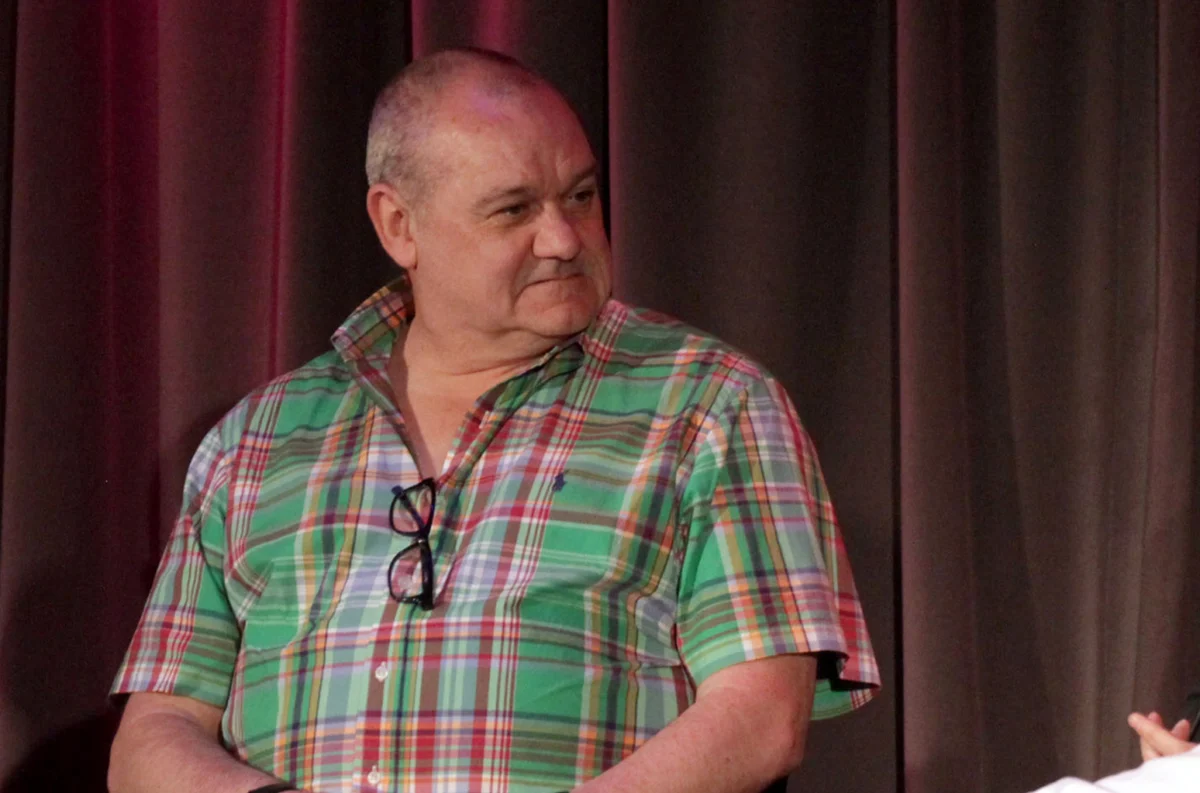
In the high-stakes world of international concert promotion, the difference between a successful tour and a cultural phenomenon often comes down to one thing: the audacity to believe in the numbers before they exist. For Hans Schafer, the 44-year-old Senior Vice President of Global Touring at Live Nation, that belief has fundamentally altered the trajectory of Latin music on the world stage.
Over the past decade, Schafer has emerged as the quiet architect behind the most explosive growth sector in the music industry. By transforming how Latin artists connect with audiences—moving them from intimate theaters to massive, sold-out stadiums—Schafer has helped shift the center of gravity in the global touring business, proving that language is no barrier to universal demand.
The Catalyst: The Los Bukis Gamble
To understand the current dominance of Latin acts, one must look back to the summer of 2021. As the live music industry gingerly emerged from the shadow of the pandemic, the legendary grupero icons Los Bukis announced a reunion after a 30-year hiatus.
At the time, the band existed outside the traditional metrics of modern fame. As Schafer recalls, "Los Bukis was not an Instagram phenomenon. There was no viral moment. There was no real, current streaming story that fully explained what was there." However, Schafer sensed an intangible "cultural currency" that transcended social media metrics.
He convinced Live Nation to book the band into the massive SoFi Stadium in Los Angeles for two nights. The result was a $13.8 million gross, a staggering figure that shattered industry expectations and proved that the appetite for Latin heritage acts had been drastically underestimated. "The scale became bigger than what people expected," Schafer says, "and it helped redefine the stadium ceiling for Spanish-language touring in the U.S."
A Career Built on Cultural Fluidity
Schafer’s rise was not accidental; it was the result of a lifetime spent at the intersection of diverse cultures. Born in Miami to Venezuelan parents, he grew up in a household steeped in the music business. His stepfather, Jesús López, is a legendary figure in the industry, currently serving as the Chairman and CEO of Universal Music Latin America and the Iberian Peninsula. His mother, meanwhile, was a label manager at BMG Latin.
"From a very early age, I was always exposed to music and the music business and seeing it from different angles," Schafer explains. His own musical palate was remarkably broad, ranging from the jazz-fusion of Paco de Lucía and Al Di Meola to the hip-hop of Dr. Dre and the ska of Desorden Público. This "omnivorous" listening habit instilled in him a foundational philosophy: if the music is good, it deserves a global stage, regardless of the language.

His professional journey saw him navigate the changing tides of the industry. After an internship at Universal Music, he cut his teeth at the NBCUniversal-owned network mun2, where he worked on programming that blended English and Spanish-language content—a precursor to the current era of "crossover" music. He later transitioned to brand partnerships at Universal Music before joining AEG’s Latin division, where he met Rebeca León, an industry powerhouse who would become his mentor.
León recalls being immediately struck by Schafer’s "fearlessness." She notes that whether it was closing a high-stakes deal with Mastercard for Juanes or conceptualizing new touring strategies, Schafer possessed a unique brand of "crazy confidence."
Chronology of a Revolution
The evolution of Schafer’s career tracks perfectly with the explosion of Latin music into the mainstream:
- 2005–2010: Schafer works at mun2, pioneering the fusion of Anglo and Latin media environments.
- 2011–2013: A return to Universal Music allows him to hone his skills in brand partnerships and artist development.
- 2013–2017: Joining the AEG team, Schafer begins to challenge the "regionalized" nature of Latin touring, arguing for a more holistic, wide-lens view of an artist’s potential.
- 2017: Schafer joins Live Nation as SVP of Global Touring, tasked with institutionalizing the company’s approach to Latin talent.
- 2021: The Los Bukis reunion tour proves that stadium-level Latin touring is not just a dream, but a massive revenue driver.
- 2022–2024: Through the work of artists like Bad Bunny, Karol G, and Peso Pluma, Latin tours begin to dominate the global box office, with 2024 marking a historic 15.8% share of total grosses on Billboard Boxscore.
Data-Driven Intuition
One of the most profound shifts Schafer has facilitated at Live Nation is the integration of high-level analytics with old-school, boots-on-the-ground intuition. While data provides the justification for a tour, the human element determines its success.
A prime example occurred during the 2023 tour of regional Mexican star Peso Pluma. While scouting locations, a colleague suggested Rogers, Arkansas—a market not typically known for hosting massive Latin acts. The result was the largest on-sale in the history of the Walmart AMP, proving that the demand for Latin music has migrated deep into the heart of the U.S. beyond the traditional coastal hubs.
"It becomes hyperlocalized, and it’s super important to always keep that in mind," Schafer says. "It’s not one-size-fits-all." By leveraging Live Nation’s vast network of promoters, he ensures that the strategy for a superstar like Bad Bunny in Sydney is informed by the same local knowledge used for an arena act in Texas.
Official Perspectives: The Artist-Promoter Partnership
The artists who work with Schafer emphasize that his value lies in his ability to see the "big picture" of their careers. Colombian superstar Karol G, who has successfully transitioned from arena tours to a massive, year-long international stadium run, credits Schafer with helping her dream bigger.

"Hans has been an important part of that process for me and for so many Latin artists," Karol G tells Billboard. "He has a real understanding of the global potential of our music and has helped create opportunities for us to dream bigger."
Marco Antonio Solís, the voice of Los Bukis, offers perhaps the most poetic assessment of Schafer’s role: "I know he’s there even when he stays out of the spotlight, and that’s what matters. We see the tree, but never the root that nourishes it."
Implications: The Global Future
The success of these tours carries massive implications for the future of the global concert industry. We have moved past the era where Latin music was considered a "niche" genre. As evidenced by Bad Bunny’s DeBÍ TIRAR MÁS FOToS tour, which grossed over $472 million across multiple continents, Latin artists are now the primary drivers of global touring revenue.
The most critical takeaway, according to Schafer, is that this growth has not come at the expense of cultural authenticity. "Benito [Bad Bunny] didn’t become global by becoming less Puerto Rican," he notes. "The cultural specificity of this album and his music and everything that he’s done up to this point was part of that connection."
Looking ahead, Schafer is focused on the "uncharted" territories of Australia and Asia. He believes that the current success of Latin artists is not a "crossover" moment, but a permanent recalibration of the industry. The barrier between "domestic" and "international" music is dissolving, replaced by a global ecosystem where fans follow the artist, regardless of the language they sing in.
As Schafer prepares to discuss the future of the industry at Billboard Latin Music Week, he remains as grounded as he was in his early days. He isn’t looking to change the music; he is simply continuing to provide the stage, the resources, and the vision to ensure that the music reaches every corner of the planet. In a business defined by volatility, Hans Schafer has proven that when you back talent with conviction, the whole world is ready to listen.