Introduction and Main Facts
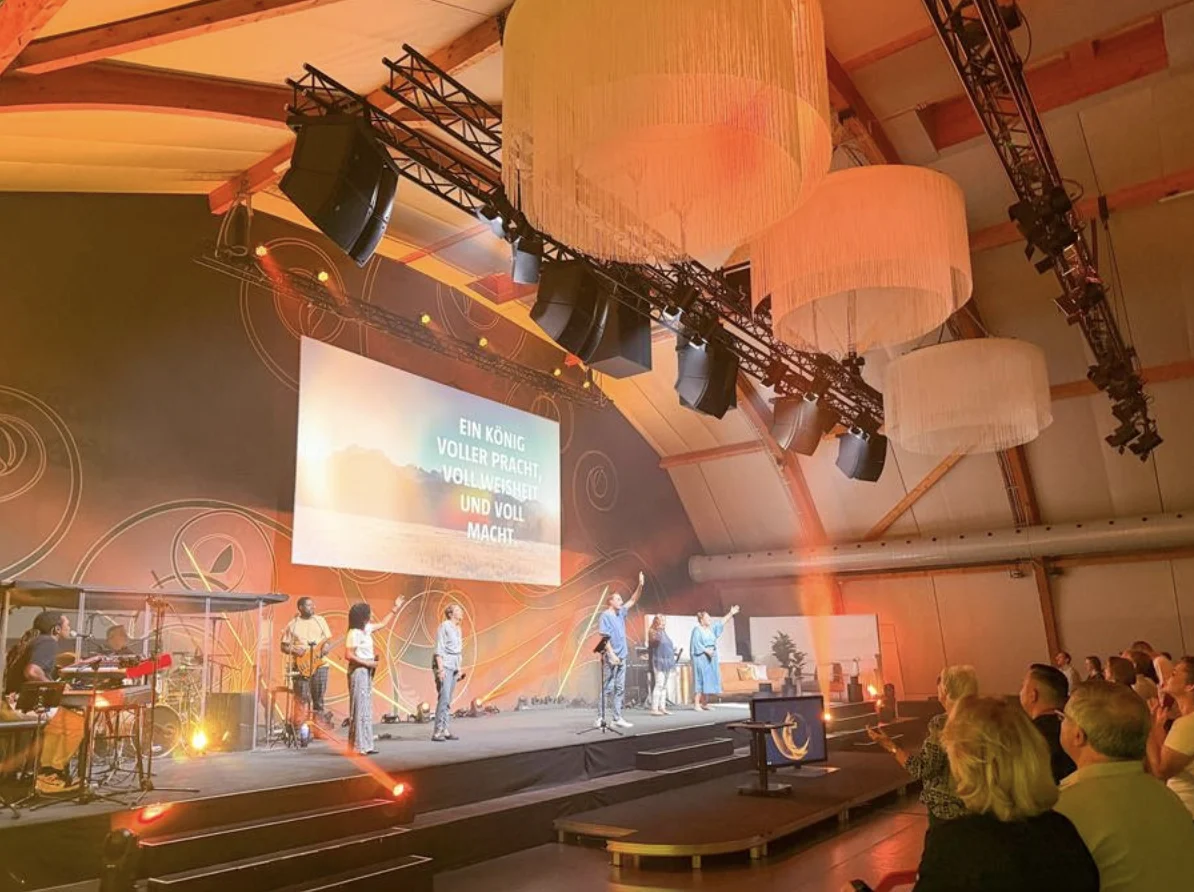
In the rolling landscape of the Zürcher Oberland in Switzerland, a quiet architectural and acoustic revolution has taken place. Grace Family Church—a vibrant, contemporary congregation led by Senior Pastor Erich Engler, alongside pastors Susanne Engler, Samuel Spörri, and Roberto Vitali—has officially entered a new era of auditory excellence. The church has become the very first house of worship in Europe to install an L-Acoustics L-ISA spatial audio system.
Replacing a legacy sound system that was approaching two decades of continuous service and had long reached the end of its operational life, the new deployment represents a massive technological leap forward. The sophisticated setup features the cutting-edge L-ISA spatial audio platform working in tandem with A15i Wide and A15i Focus loudspeakers, KS21i subwoofers, X8 fills, an L-ISA Processor II, and advanced LA7.16i amplification.
This ambitious audio overhaul fundamentally transforms how the congregation experiences Sunday services and high-energy Worship Nights. Rather than wrestling with the traditional limitations of standard left/right stereo loudspeaker configurations, the engineering team has implemented a fully immersive spatial environment. Voices and musical instruments are now precisely localized, allowing congregants to hear sounds originating directly from their actual physical positions on the stage. This creates a deeply intimate, transparent, and natural listening experience that bridges the gap between the performers and the up to 350-strong congregation filling the hall each week.
Chronology of the Project: From Concept to Concert
The journey toward transforming the acoustic profile of Grace Family Church’s unique sanctuary was neither straightforward nor rushed. It required careful planning, rigorous on-site testing, and tight collaboration between the church leadership, acoustical consultants, system integrators, and manufacturer representatives.
Phase 1: The Initial Inquiry and Site Assessment
The project was originally set into motion when church leadership approached SDS, the official Swiss distributor for L-Acoustics. At the outset, the church was simply looking for a straightforward, like-for-like replacement of their aging 20-year-old sound system—essentially a traditional single loudspeaker mounted on each side of the platform.
However, everything changed when representatives from SDS and acoustical consultancy Soundrig AG conducted a thorough site visit. Upon examining the physical dimensions and acoustic properties of the room, the specialists quickly realized that a standard left/right stereo pair could not deliver the precise imaging and coverage the church required for modern speech and dynamic musical performances. Furthermore, because the mounting positions needed to be altered anyway, the technical team recognized there was no operational or structural reason to constrain the architectural design to just two traditional enclosures.
Phase 2: Demonstrations and Spatial Discovery
To help the church understand the immense potential of a multi-channel spatial configuration, Soundrig AG organized an initial listening session at the SDS Auditorium in Winterther. During this session, church stakeholders experienced the capabilities of L-ISA technology firsthand, focusing heavily on localization—the ability to map audio objects across a soundstage so that the audience hears sound coming precisely from where the artist or speaker is standing.
Convinced by the potential, but eager to experience the technology in their own unique room, a second demonstration was organized directly inside the church’s sanctuary. The technical team set up a 1:1 scale test configuration of the proposed L-ISA design. This allowed the pastoral team, audio operators, and key congregation members to hear how the system interacted with the specific acoustic reflections, dome shape, and volume of their own building before making a final financial and operational commitment.
Phase 3: Acoustic Modeling and System Design
With the concept approved, the engineering team turned to advanced simulation tools. L-Acoustics Soundvision software was deployed to meticulously model acoustic coverage, Sound Pressure Level (SPL) distribution, and exact loudspeaker placement within the complex architecture of the venue.
The finalized design moved away from a bulky, visually intrusive line array setup in favor of a distributed spatial configuration. The system design accounted for structural hurdles, such as a striking central chandelier and front-stage lighting and projection equipment, ensuring that audio performance and visual aesthetics harmonized seamlessly.
Phase 4: Integration, Network Overhaul, and Tight Execution
Executing the physical installation required military-like precision. Because the church maintains a busy weekly schedule filled with rehearsals, community gatherings, and services, the window for retrofitting the entire system was vanishingly small.
Work commenced on a Sunday evening immediately following the final worship service. The grueling installation, cabling, and rigging process—managed by Roger Sommer and the team from Soundrig AG—was completed by Friday evening just in time for the week’s scheduled Worship Night, which included necessary technical rehearsals.
Simultaneously, Michael Graf, an experienced L-ISA user and systems engineer at integrator Impact Atelier, spearheaded a comprehensive upgrade of the venue’s audio network. Graf managed the intricate integration of the Yamaha Rivage mixing console, routing audio over MADI to the L-ISA Processor II, and utilizing high-speed Milan-AVB networking to carry the digital signal flawlessly to the LA7.16i amplified controllers driving all 16 discrete enclosures.
Architectural and Technical Specifications
Understanding the success of this installation requires a close examination of the venue’s unique physical architecture and the sophisticated hardware deployed within it.
The Venue: The "Church Dome"
The sanctuary itself is an architectural marvel known affectionately by the congregation as the "Church Dome." The building features an innovative tensile fabric membrane structure that rises in a smooth, rounded, vaulted profile from a 24 by 26-meter floor plan to a soaring central height of eight meters.
While aesthetically breathtaking and spiritually uplifting, this domed geometry presented distinct acoustic challenges. Vaulted tensile structures are notorious for focusing sound reflections, creating flutter echoes, and causing uneven bass distributions if not treated and engineered correctly. Furthermore, the presence of a prominent central chandelier and fixed front-projection screens meant that loudspeaker placement had to be strategically calculated to avoid visual obstruction while optimizing acoustic dispersion.
The Hardware Ecosystem
To conquer these architectural constraints while delivering pristine audio fidelity, the deployment relies on a meticulously selected inventory of L-Acoustics hardware:
- Main Spatial Hangs: The front soundstage utilizes five distinct vertical hangs distributed across the width of the platform. Each hang consists of one A15i Wide and one A15i Focus loudspeaker. This multi-hang array is the backbone of the L-ISA spatial processing, allowing sound mixers to place individual instruments and vocalists across a wide panoramic stage rather than collapsing them into two hard left/right points.
- Low-Frequency Extension: Low-end frequencies are managed by two central-flown hangs, each containing two KS21i subwoofers. Flying the subwoofers in the center of the array ensures even, coherent bass dispersion throughout the dome, preventing the acoustic buildup or cancellation dead-zones typically associated with floor-stacked subwoofers in rounded rooms.
- Front Fills: To ensure that audience members seated in the extreme lateral areas at the very front of the room receive direct, intelligible coverage, a pair of compact X8 loudspeakers was deployed on the left and right flanks.
- Processing and Amplification: At the heart of the system sits an L-ISA Processor II, which handles advanced multi-object spatial audio processing. Powering the entire system is a single LA7.16i amplified controller, which efficiently drives all 16 discrete loudspeaker enclosures with immense clarity and headroom.
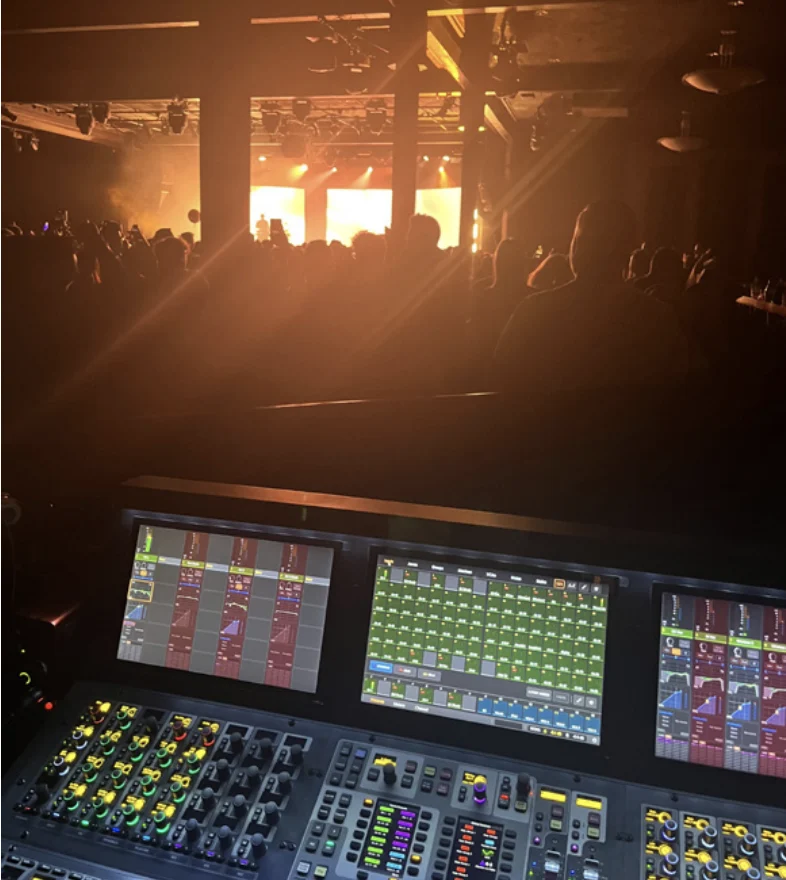
- Network Infrastructure: Audio routing is anchored by a Yamaha Rivage mixing console communicating via MADI protocol directly to the L-ISA Processor II, with ultra-reliable Milan-AVB networking transporting audio signals to the amplification racks.
Official Responses and Stakeholder Perspectives
The successful rollout of Europe’s first L-ISA house of worship installation has generated significant excitement throughout the professional audio and religious communities. Key stakeholders shared their insights on the challenges overcome and the remarkable results achieved.
Roger Sommer, owner of Soundrig AG, reflected on the unique visual and spatial demands of the project:
"The domed roof and a striking chandelier were certainly a standout feature that made the installation and design unique. We also had to design the L-ISA configuration around the front lighting and front projection. By utilizing Soundvision software and working closely with our distribution partners, we were able to deliver a system that respects the architecture while completely redefining the acoustic experience."
Patric Schafroth, sales and application engineer at SDS, praised the collaborative spirit of the team:
"The support from Christian Schmid and the L-ISA application team was great from day one. From our initial distributor conversations to the listening sessions in Winterthur and the final on-site demonstration in the Church Dome, everyone involved shared a commitment to pushing the boundaries of what is possible in a house of worship."
For the operational team at Grace Family Church, usability was just as important as sonic perfection. Because the church relies heavily on a dedicated team of semi-professional volunteers rather than a full-time, dedicated professional audio staff, workflow simplicity was paramount.
This Hochstrasser, head of audio at Grace Church, discussed how the technology bridges the gap between high-end capability and everyday volunteer operation:
"Set against the almost endless possibilities the system offers, the basic functions are kept as clear as possible, so getting started isn’t overly difficult. It integrates very well into the building and is visually a win compared to a classic line array hang. Feedback from every side has been enormously positive."
Implications and Future Outlook
The implementation of L-Acoustics L-ISA spatial audio at Grace Family Church carries profound implications not only for this specific congregation, but for houses of worship and multi-purpose performance venues across Europe.
Redefining the House of Worship Audio Standard
Historically, houses of worship have lagged behind high-end commercial touring acts and elite theater venues in adopting advanced multi-channel spatial audio systems. Many churches have relied on traditional, high-output stereo line arrays that, while powerful, often result in aggressive sound pressure levels near the front rows, poor vocal intelligibility in reverberant rooms, and a total lack of acoustic localization.
By proving that spatial audio can be successfully integrated into a challenging, non-traditional architectural space—and operated smoothly by a team of trained volunteers—Grace Family Church has established a new benchmark. Congregations across Europe are taking note, realizing that immersive audio is no longer reserved exclusively for massive arena tours or custom architectural installations like the Las Vegas Sphere, but is a viable, transformative tool for community-focused spaces.
Operational Versatility and Community Rental Potential
Beyond enhancing regular Sunday morning services and high-energy Worship Nights, the new audio infrastructure unlocks exciting commercial and cultural opportunities for the Zürcher Oberland sanctuary.
Stagelight and church leadership have emphasized that the venue is now comprehensively "future-proofed." With a world-class spatial sound reinforcement system in place, the Church Dome is ideally equipped to host a wide variety of external events, guest musical acts, conferences, and community gatherings. The flexibility of the L-ISA platform means that engineers can easily adapt the acoustic profile of the room to suit everything from an intimate spoken-word seminar to a full contemporary Christian rock band or an acoustic ensemble.
Furthermore, the aesthetic triumph of replacing an obtrusive, industrial-looking stereo line array with sleek, distributed A15i elements preserves the clean, welcoming visual lines of the tensile membrane architecture. This ensures that the building remains visually appealing for weddings, cultural events, and corporate rentals.
As the echoes of the first few weeks of spatial worship settle under the vaulted dome of the Zürcher Oberland, one thing is abundantly clear: Grace Family Church has not merely upgraded its sound system. They have redefined the sensory dimensions of gathering, listening, and sharing community in a modern house of worship.