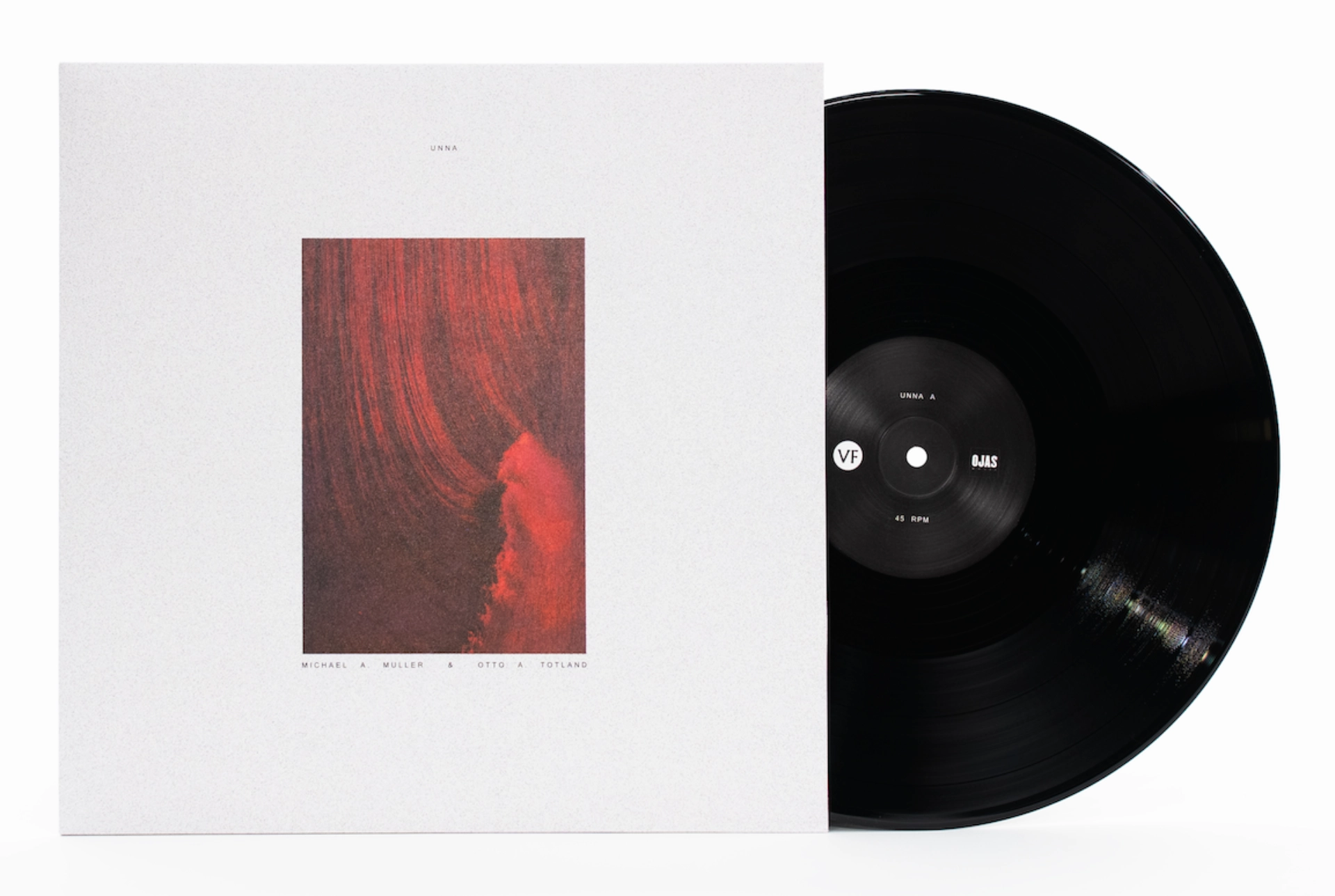
In an era where digital saturation often strips music of its physical presence, the intersection of high-fidelity audio engineering and minimalist composition has found a new sanctuary. Ojas Music, the nascent record label spearheaded by Devon Turnbull—the visionary mind behind the cult-status audio, hi-fi, and design brand Ojas—has officially inaugurated its discography. In a strategic partnership with The Vinyl Factory, the label has released Unna, a breathtaking collaborative EP by two titans of the contemporary ambient landscape: Michael A. Muller and Otto A. Totland.
The Intersection of Craft and Composition
The launch of Unna is not merely the release of a new record; it is a manifesto for the Ojas brand. Turnbull, whose work has long focused on the sanctity of the listening experience, has transitioned from designing bespoke speakers and listening installations to curating a sonic catalog that demands the same level of reverence as his hardware.
Unna, which translates from Norwegian to "away," serves as the perfect inaugural release. It is a work that exists in the liminal spaces between silence and sound, distance and intimacy. The collaboration bridges the gap between Muller’s atmospheric, cinematic textures and Totland’s stark, emotive piano phrasing. The result is an expansive soundscape that feels both immediate and infinite, inviting the listener to step "away" from the noise of the contemporary world.
Chronology of a Collaboration: Two Paths Converging
To understand the weight of Unna, one must look at the individual trajectories of its architects. Both Muller and Totland have spent decades refining a specific aesthetic language—one that prioritizes restraint, space, and the emotional resonance of the note over the complexity of the arrangement.
The Evolution of Michael A. Muller
Michael A. Muller is perhaps best known as a co-founder of the minimalist instrumental duo Balmorhea. Over the years, his output has traced a trajectory from neoclassical roots toward a more abstract, textural exploration of sound. His solo work has flourished under the prestigious umbrella of Deutsche Grammophon, positioning him at the vanguard of the modern ambient-classical movement. Beyond his solo recordings, Muller has cultivated a prolific career as a film composer, a discipline that has undeniably informed the narrative arc of his work. His collaborative history—which includes luminaries such as Hania Rani, Alva Noto, Víkingur Ólafsson, The Album Leaf, and Douglas McCombs of Tortoise—highlights a musician who thrives on dialogue and cross-pollination.
The Minimalist Purity of Otto A. Totland
Otto A. Totland’s reputation is built on the foundation of the Norwegian experimental/ambient duo Deaf Center. Alongside Erik Skodvin, Totland’s releases on the seminal Type Records and Sonic Pieces labels were instrumental in shaping the "minimalist revival" of the late 2000s and early 2010s. His work with Deaf Center explored the intersection of post-rock, drone, and neoclassical piano, often shrouded in a thick, melancholic atmosphere. However, it was his subsequent solo piano trilogy—produced by the visionary Nils Frahm—that cemented his status as a master of the keys. By stripping away the electronics and focusing on the tactile mechanics of the piano, Totland achieved a level of vulnerability that few in the ambient space have matched.
The Genesis of Unna
The collaboration was born out of a mutual desire to explore the distance between their respective homes and studios. The title Unna serves as a poignant double entendre: it acknowledges the physical thousands of miles separating Muller and Totland, while simultaneously referencing the "inward pull" of the creative flow state. In this state, the collaborators found, the linear perception of time begins to recede, allowing for a deeper, more meditative attention to the texture of each note.
Supporting Data: The Anatomy of the EP
The musicality of Unna is characterized by a deliberate, almost microscopic attention to detail. It is a marriage of organic instrumentation and carefully curated textural counterpoints.

- The Piano: At the heart of the project lies Totland’s close-miked piano. By placing the microphones inches from the hammers and strings, the listener is invited into the mechanical reality of the instrument—the breath of the keys, the slight creak of the sustain pedal, and the felt-dampened strike of the hammer.
- The Textures: Muller provides the atmospheric scaffolding. Utilizing a double bass for low-end resonance, a glockenspiel for crystalline high-frequency transients, and the classic, warm analog hues of the Mellotron and Rhodes, Muller creates a sonic bed that allows Totland’s piano to bloom.
- Production Philosophy: True to the Ojas ethos, the production of Unna is clean, uncompressed, and remarkably spatial. It is music designed to be played through a high-end system, where the air between the instruments is as important as the instruments themselves.
Official Responses and the Ojas Vision
Devon Turnbull’s entry into the record label space is a natural evolution of his broader project. His HiFi Listening Room Dream No. 1, a permanent installation at 180 Studios, is perhaps the most visible expression of his philosophy. By providing an environment where the acoustics are as carefully engineered as the speakers themselves, Turnbull has created a space that demands active listening.
"We are building a culture of focus," Turnbull has remarked in previous discussions regarding his work. By releasing Unna as the first project on Ojas Music, he is signaling that the label is not interested in trend-chasing, but in building a catalog of "high-fidelity soul."
The partnership with The Vinyl Factory—an organization known for its commitment to the art of the physical record—further underscores the intent. Unna is not a disposable digital file; it is a 180g vinyl object. Limited to 500 copies, the record serves as a tactile artifact of the collaboration, intended to be handled, placed on a turntable, and experienced in real-time.
Implications for the Ambient and Hi-Fi Communities
The release of Unna signals a potential shift in how ambient music is marketed and consumed. By aligning the music directly with the hardware used to play it, Ojas is attempting to bridge the gap between the "audiophile" world—often criticized for its preoccupation with gear over substance—and the "ambient" world, which is often relegated to the background of streaming playlists.
A Return to Intentionality
In a streaming-dominated market, albums are often treated as collections of background noise. By limiting Unna to a physical release and associating it with a high-end listening environment, Muller, Totland, and Turnbull are reclaiming the concept of "active listening." The record demands time. It requires the listener to sit, to pay attention to the subtle shifts in frequency, and to engage with the silence as much as the sound.
The Future of Ojas Music
If Unna is the benchmark, the future of Ojas Music looks to be one of quiet authority. The label is positioned to become a lighthouse for artists who value sonic fidelity and emotional depth. By fostering a roster that bridges the gap between experimental sound design and traditional musicality, Turnbull is creating a space that could define the next decade of ambient music.
For the collectors and the audiophiles, Unna is a necessary acquisition. For the casual listener, it is an invitation to slow down. As the music unfolds through the visualiser for "Rolig," one is reminded that in an increasingly fast-paced world, the most radical thing one can do is to stop, listen, and drift away.
Unna is available now via The Vinyl Factory. For those who wish to experience the music as the artists intended, visiting the HiFi Listening Room at 180 Studios remains the definitive point of entry into the Ojas universe.