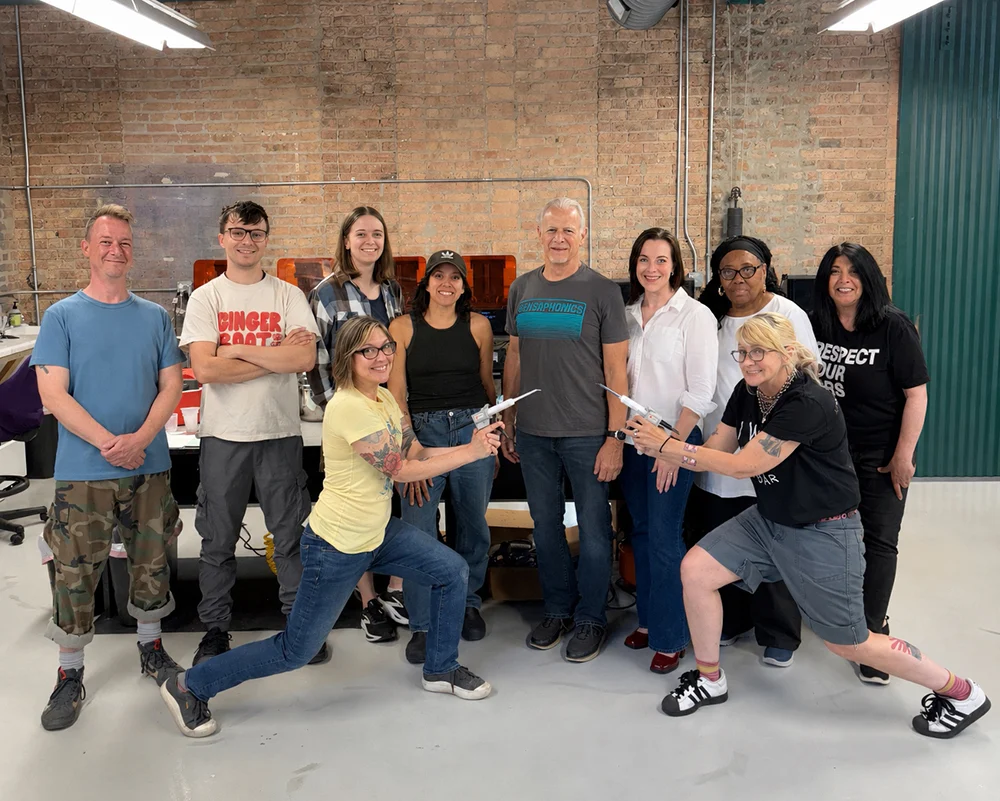
CHICAGO, IL – In a move that signals both a commitment to the local community and a significant scaling of its global operations, Sensaphonics—the renowned leader in hearing conservation and custom-fit in-ear monitoring technology—has officially relocated its headquarters and clinical operations. The company has moved into a newly designed, expansive facility in Chicago’s vibrant Lincoln Park neighborhood.
This transition marks a pivotal chapter for the organization, which has long served as a bridge between the clinical world of audiology and the high-decibel demands of the professional audio industry. By integrating advanced manufacturing, research laboratories, and state-of-the-art clinical spaces under one roof, Sensaphonics is positioning itself to address the growing need for specialized hearing health services in an era where sound exposure remains a primary concern for touring artists, sound engineers, and casual listeners alike.
The Core Facts: A Hub for Innovation and Care
The new Lincoln Park facility is not merely a change of address; it is a meticulously engineered environment designed to optimize three specific pillars of the company’s business model: production capacity, clinical excellence, and research-driven innovation.
For industry professionals, the most immediate benefit of the new location is its accessibility and layout. Located in a transit-friendly corridor, the facility is now more accessible to touring musicians and audio engineers passing through Chicago. The interior has been reconfigured to foster a more "unified" workflow, where the distance between the laboratory bench and the audiology exam room has been shortened—both physically and philosophically.
Key features of the new space include:
- Enhanced Clinical Suites: Expanded rooms equipped with the latest diagnostic technology for high-fidelity hearing evaluations.
- Advanced Production Labs: Upgraded manufacturing stations that allow for faster turnaround on custom-molded in-ear monitors (IEMs) and earplugs.
- Immersive Demo Areas: Dedicated spaces where clients can experience the nuances of Sensaphonics’ product line in a controlled, acoustically treated environment.
- Virtual Integration: A robust digital infrastructure designed to support remote audiology consultations, ensuring that international clients can receive professional guidance regardless of their physical location.
A Chronology of Growth: From Niche Expert to Industry Standard
To understand the significance of this move, one must look at the trajectory of Sensaphonics. Founded by Dr. Michael Santucci, Au.D., the company began with a singular, radical mission: to prove that professional audio excellence and hearing health were not mutually exclusive.
- The Early Years (1985–1995): Dr. Santucci began his work by identifying the critical lack of hearing protection among working musicians. During this period, Sensaphonics focused on creating the first truly comfortable, high-fidelity silicone earplugs that allowed musicians to perform without sacrificing tonal accuracy.
- The Technological Pivot (1996–2005): As in-ear monitors became the standard for live performance, the company shifted its focus toward the development of soft-silicone IEMs. This decade was defined by the realization that the material of the ear mold was just as important as the drivers inside the shell.
- The Era of Advocacy (2006–2015): Sensaphonics transitioned from a product manufacturer to a thought leader. The company pioneered the "Musicians’ Hearing Clinic" model, establishing a gold standard for how audiologists should interact with the pro-audio community.
- Scaling and Education (2016–2025): With the rise of portable digital audio and a global increase in noise-induced hearing loss (NIHL), Sensaphonics expanded its educational outreach, training audiologists globally on the specific needs of musicians.
- The 2026 Expansion: The move to the Lincoln Park facility represents the culmination of these decades of growth, providing the physical infrastructure necessary to scale operations to meet the demands of a global client base.
Supporting Data: The Growing Need for Hearing Conservation
The decision to expand is supported by a sobering reality in the medical and audio industries: noise-induced hearing loss is on the rise. Data from the World Health Organization (WHO) and the National Institute on Deafness and Other Communication Disorders (NIDCD) suggest that nearly 40 million adults in the United States suffer from some form of hearing impairment.

Within the music industry, the statistics are even more concerning. A significant portion of professional musicians report symptoms of tinnitus or hyperacusis before the age of 40. Sensaphonics’ expansion directly addresses this data gap by increasing their ability to perform high-precision fit testing. By providing better access to "Gold Circle" audiologists—a network of professionals trained specifically by Sensaphonics—the company is effectively lowering the barrier to entry for protective technology.
Furthermore, the increased production capacity at the new Chicago site comes at a time when the "custom-fit" market is seeing a surge in demand. As consumer-grade audio continues to improve, the expectation for professional-grade fit and isolation has filtered down to even the casual listener, leading to a massive increase in demand for the company’s product line.
Official Responses: A Vision for the Future
During the ribbon-cutting ceremony at the new headquarters, Dr. Michael Santucci emphasized that the facility serves as a testament to the company’s ongoing dedication to the "science of sound."
"This move represents more than just a change of address," said Dr. Santucci. "It’s an investment in the future of hearing health. Our expanded facility allows us to push further into research, education, and product development, while continuing to provide the personalized, high-quality care our clients rely on. We’re creating an environment where innovation and clinical expertise can work even more closely together."
Industry partners have lauded the move as a necessary step for the health of the professional music scene. "Sensaphonics has always been the standard-bearer for protecting the tools of our trade—our ears," said one veteran touring sound engineer. "Having a facility that can handle the volume of work they see while maintaining that level of medical precision is a win for every touring professional in the country."
Implications: The Future of Auditory Health
The implications of this relocation extend far beyond the Chicago city limits. By consolidating their operations, Sensaphonics is setting a new benchmark for how hearing health companies should operate.
1. The Integration of Lab and Clinic
Historically, the laboratory (where the product is made) and the clinic (where the patient is evaluated) have been siloed. By placing them in the same building, Sensaphonics is creating a feedback loop. When a clinician identifies a recurring fit issue or a specific patient comfort concern, they can walk mere steps to the lab to discuss design adjustments with the production team. This iterative process is expected to lead to faster product refinements and a higher success rate for custom fittings.

2. Education as a Core Competency
The new space includes dedicated training areas for audiologists. As the field of "Musicians’ Audiology" becomes a more recognized specialty, Sensaphonics is positioning itself as the primary academic hub for this discipline. By hosting seminars and certification programs, the company is ensuring that the standards of care they have established will be maintained by a new generation of practitioners across the globe.
3. Pro-Audio Advocacy
The proximity to major transit hubs and Chicago’s rich cultural scene ensures that the facility remains an accessible touchstone for artists. In an industry that often overlooks the long-term health consequences of loud environments, Sensaphonics is utilizing their physical footprint to keep the conversation about hearing conservation in the spotlight.
4. A Model for Sustainable Growth
By investing in a facility that balances high-tech production with human-centric care, Sensaphonics is providing a template for how companies in the boutique medical-device space can scale without losing their artisanal touch. The move suggests that the company is prepared for the next 20 years of technological advancement, including the integration of AI-driven hearing diagnostics and further advancements in material science for ear molds.
Conclusion: Securing the Sound of Tomorrow
As the professional audio industry continues to evolve, the importance of hearing conservation cannot be overstated. Sensaphonics’ move to their new Lincoln Park home is a clear signal that the company is not resting on its legacy. By bridging the gap between clinical audiology and professional audio production, they are ensuring that the artists and engineers of the future can continue to create and enjoy music without compromising their ability to hear it.
With this expansion, Sensaphonics has solidified its role not just as a manufacturer of gear, but as an essential guardian of the auditory health of the professional music world. As the doors open at the new facility, the message is clear: the future of sound is safe, and it is being carefully nurtured in the heart of Chicago.