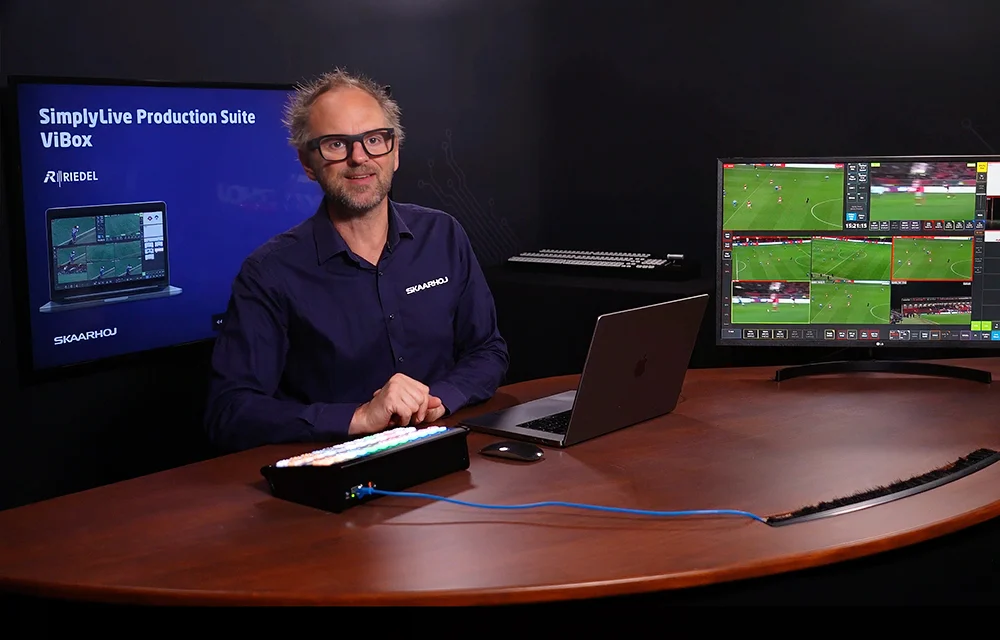
In the fast-paced world of modern broadcast, the line between software flexibility and hardware reliability is blurring. Riedel Communications, a global leader in real-time video, audio, and data networks, has taken a significant step toward bridging this divide. With the release of the SimplyLive 2.1 software update, Riedel has announced a strategic integration with SKAARHOJ, a renowned manufacturer of broadcast hardware control surfaces. This collaboration introduces a robust, tactile control layer to the SimplyLive Production Suite, offering operators the physical precision that touchscreens often lack in high-pressure live environments.
Main Facts: Bringing Tactile Control to the Virtual Suite
The integration, facilitated through the SimplyLive 2.1 release, enables users to connect SKAARHOJ’s sophisticated hardware panels directly to the SimplyLive ViBox production ecosystem. Historically, the SimplyLive Production Suite has relied heavily on its intuitive touchscreen interface and existing Remote Control Unit (RCU) workflows. While these digital interfaces offer immense versatility, professional broadcast engineers and operators have long requested the tactile feedback of physical buttons, faders, and knobs.
This new integration provides granular control over essential production functions, including:
- Source Switching: Seamless transition between camera inputs and video feeds.
- Program Output Management: Direct control over the final broadcast signal.
- Transitions and Keying: Precise management of wipes, dissolves, and graphics overlays.
- Auxiliary Outputs and Macros: Streamlined execution of complex, multi-step production sequences with the touch of a button.
By leveraging a gRPC API, SimplyLive 2.1 establishes a high-speed, responsive communication bridge between the ViBox application and the SKAARHOJ hardware, ensuring that commands are executed with near-zero latency—a critical requirement for live sports and news broadcasts.
Chronology of Collaboration
The journey toward this integration is part of a broader, ongoing partnership between Riedel and SKAARHOJ. Their relationship has evolved significantly over the past few years, moving from individual product compatibility to deep, systemic integration.

- Initial Synergy: The partnership began with integrations involving Riedel’s SmartPanel and MediorNet platforms. These early projects established a foundation of trust and technical compatibility between the two engineering teams.
- Customer Demand: As Riedel’s SimplyLive suite gained traction in the market, feedback from the field was consistent: operators loved the software’s power but wanted a physical surface to complement it.
- Development Phase: Engineering teams from both companies worked in tandem to ensure the software API would support the specific hardware requirements of SKAARHOJ’s diverse panel catalog.
- The 2.1 Release (July 2026): The official rollout of SimplyLive 2.1 marked the culmination of this development, moving the integration from beta testing to full production availability.
- Future-Proofing: With the launch of this integration, the companies have set the stage for further enhancements, utilizing the flexible gRPC API architecture for future hardware support.
Supporting Data: Why Hardware Matters in a Software-Defined World
The rise of software-defined production (SDP) has been driven by the need for scalability and cost-efficiency. However, research into operator ergonomics suggests that "all-digital" workflows can lead to fatigue and an increased risk of error during high-intensity segments.
The SKAARHOJ integration addresses several key operational metrics:
- Reduced Response Times: Physical tactile feedback allows operators to develop "muscle memory," enabling them to switch sources without needing to visually confirm a cursor location on a screen.
- Operator Confidence: In live sports, a missed transition can ruin a highlight. Tactile buttons provide a definitive "click" sensation, confirming that a command has been registered.
- Scalability: While the integration is optimized for the SKAARHOJ Master Key 48, the open nature of the integration means that production houses can scale their hardware requirements. A smaller, simpler project might use a compact panel, while a large-scale stadium production can utilize a full-sized master controller, all running on the same SimplyLive backend.
Official Responses and Industry Vision
The leadership at both Riedel and SKAARHOJ views this integration as a benchmark for future broadcast equipment interoperability.
Paul Macklin, Senior Product Manager for SimplyLive at Riedel Communications, emphasized the human-centric design approach taken during development. "SKAARHOJ was the obvious partner for this integration because of their strong reputation for high-quality products designed with the user in mind," Macklin stated. "Their collaborative approach allowed us to tailor the solution around the specific needs of SimplyLive operators, especially in single-operator environments where speed, confidence, and ergonomics are essential."
Kasper Skårhøj, CEO of SKAARHOJ, echoed these sentiments, highlighting the strategic alignment of the two firms. "Having previously integrated with Riedel SmartPanels and MediorNet, this is another great example of how our technologies can come together to create new and flexible workflows," he noted. "While the solution is tailored for the Master Key 48, users can choose any SKAARHOJ panel that best fits their production needs, ensuring the technology serves the operator, not the other way around."

Implications for the Future of Broadcast Production
The integration of SimplyLive 2.1 and SKAARHOJ hardware is more than just a feature update; it signals a shift in how production environments are being architected.
The Rise of the "Flex" Workflow
The SimplyLive 2.1 update also introduces the new "Venue Gateway" license for Production Suite Flex customers. This allows the same server hardware to handle multiple roles—All-in-One, Replay, Ingest, and Review—simultaneously. When combined with the SKAARHOJ control panels, a single operator can effectively manage an entire multi-camera production from a single, ergonomically optimized desk. This is a game-changer for mid-market broadcasters and event production companies who need to maximize their hardware utilization.
Lowering the Barrier to Entry
By providing curated starting configurations via the MyRiedel portal, the companies are lowering the technical hurdle for deployment. Instead of spending days programming custom macros, production teams can use Riedel’s pre-configured templates as a starting point. This "plug-and-play" capability allows smaller teams to achieve the production values of major networks with significantly less overhead.
The API Economy
The reliance on a gRPC API for this integration highlights the importance of open standards in the broadcast industry. As workflows become increasingly cloud-based and virtualized, the ability for disparate systems to communicate efficiently will define the next generation of broadcast infrastructure. Riedel’s commitment to this open-API approach suggests that we may see further third-party hardware integrations in the near future.
Conclusion
The collaboration between Riedel Communications and SKAARHOJ represents a mature approach to modern broadcasting. By listening to the demands of the operators—who crave the tactile reliability of traditional switchers—and combining that with the agility of the SimplyLive software, the companies have created a solution that is both sophisticated and accessible.

As the industry continues to move toward remote and decentralized production models, the value of robust, responsive, and ergonomic hardware cannot be overstated. With SimplyLive 2.1, Riedel has successfully demonstrated that innovation doesn’t always mean moving away from the past; sometimes, it means bringing the best of the past into a digital, software-defined future.
For those looking to implement these changes, comprehensive resources are available through the MyRiedel portal, and technical guidance is clearly outlined in the SimplyLive 2.1 user guide. As we look toward the remainder of 2026, it is clear that the integration of hardware and software will remain the central theme in the evolution of professional live production.