In a move that promises to redefine the boundaries of modern music production, Waves Audio has officially announced the launch of "Mix Unlock," a groundbreaking feature integrated directly into their StudioVerse ecosystem. By leveraging advanced artificial intelligence to perform real-time stem separation on finished stereo files, Waves is effectively dismantling the "black box" of the mixed track. For producers, remixers, and sound designers, this technological leap signals the end of the era where the original multitrack session was the absolute gatekeeper of creative flexibility.
The Core Innovation: Breaking the Stereo Barrier
For decades, the standard paradigm of audio engineering has been clear: if you wanted to change the volume of a snare drum or isolate a vocal line from a finished song, you needed the original multitrack recording (stems). Without access to those raw files, producers were often left at the mercy of the final stereo master, forced to rely on heavy-handed EQ or compression to mask unwanted elements.
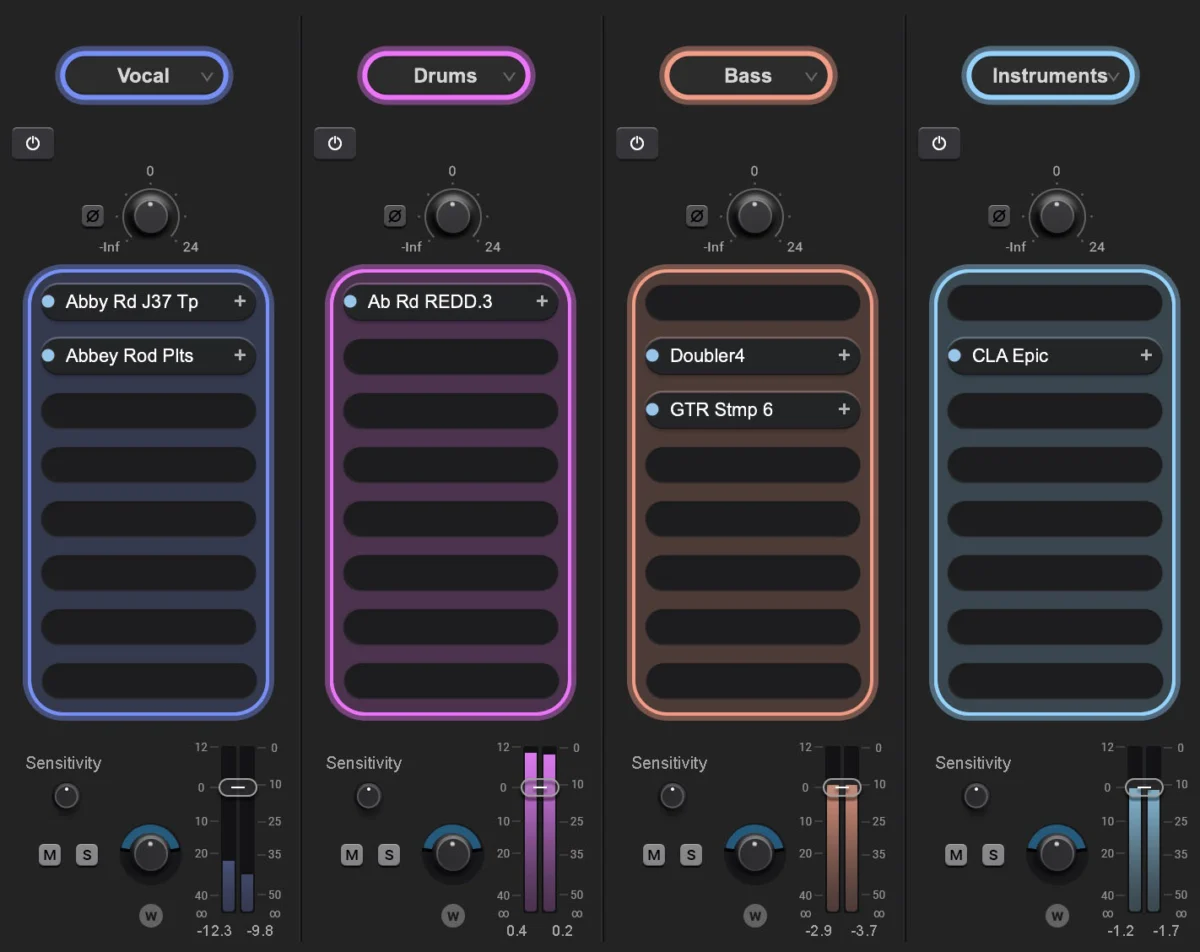
Mix Unlock fundamentally shifts this power dynamic. Integrated seamlessly into the StudioVerse platform, this feature allows users to ingest any stereo audio file—be it a legacy recording, a loop, or a master track—and instantly separate it into four distinct channels: Vocals, Drums, Bass, and Instruments.
Unlike external AI separation tools that often force the user to leave their Digital Audio Workstation (DAW), export a file, process it in a browser, and re-import the results, Mix Unlock operates as a native component of the production environment. This "in-the-box" capability preserves the sanctity of the creative flow, allowing producers to audition, tweak, and re-process audio elements while the track continues to play.
Chronology of Development: From Concept to StudioVerse Integration
The introduction of Mix Unlock follows a long period of rapid development within the AI-assisted audio sector. While stem separation technology has existed in academic and research circles for several years, it has historically been plagued by artifacts, phase issues, and high latency—making it unsuitable for professional production.

The trajectory toward this release began with Waves’ broader push into the StudioVerse ecosystem, an online library of audio and instrument chains designed to provide intelligent, context-aware processing. By 2024, Waves had begun layering machine learning algorithms into their plugin chains, effectively teaching their software to recognize the frequency signatures of various instruments.
By early 2026, the company successfully bridged the gap between raw source separation and their proprietary plugin architecture. With the release of their V17 plugin update, Waves officially rolled out Mix Unlock as a flagship premium feature. The development reflects a strategic shift at Waves Audio, moving away from simple signal processing tools toward an "intelligent assistant" model that anticipates the user’s needs before they even reach for an EQ knob.
Technical Implications: How It Changes the Workflow
The technical implications for the studio environment are profound. By utilizing AI-powered source separation, Mix Unlock removes the "creative ceiling" that exists when working with samples or archival audio.
Real-Time Auditioning
Perhaps the most significant technical achievement is the real-time nature of the processing. In traditional workflows, stem separation is a destructive, time-consuming process. With Mix Unlock, producers can manipulate the balance of a mix on the fly. If a drum loop is too aggressive for a project, the producer can isolate the drum component and use StudioVerse’s AI search to find a compressor or transient shaper designed specifically for drum bus processing, applying it only to the isolated drum stem.
Sample-Based Production
For hip-hop, electronic, and pop producers who rely heavily on platforms like Splice or archival samples, the feature is a game-changer. Often, a perfect loop might contain an unwanted instrument that clashes with a new arrangement. Mix Unlock allows the user to surgically remove that element without the need for manual spectral editing, which is often tedious and prone to artifacts. This essentially turns every existing stereo sample into a multitrack playground.

Restoration and Archival Work
Beyond creative production, the technology holds significant promise for restoration engineers. By isolating elements, engineers can perform surgical noise reduction on a vocal take without affecting the instrumental backing, or vice versa. This provides a level of forensic audio control that was previously only accessible to major labels with access to high-end, dedicated restoration facilities.
Official Commentary: Bridging Creative Intent and Technical Capability
The industry reception to the announcement has been overwhelmingly positive, underscored by the perspective of those steering the development. Shai Fishman, Product Manager at Waves Audio, highlights the philosophy behind the feature:
"Mix Unlock fundamentally changes what producers can do with stereo audio," says Fishman. "By combining real-time source separation with StudioVerse’s vast ecosystem of intelligent preset chains, we’re giving creators the ability to reshape finished mixes, loops, and samples in a way that is more organic to their real-time DAW workflow. It’s about removing creative limitations and giving users the freedom to make any audio source work for their project."
Fishman’s statement points to a recurring theme in modern music technology: the transition from "tools that process" to "tools that understand." By embedding this intelligence into the DAW, Waves is not just providing a utility; they are providing a creative partner that removes the logistical hurdles of file management and multitrack dependency.
Industry Implications and Future Outlook
The arrival of Mix Unlock signals a significant shift in the competitive landscape of professional audio software. As AI continues to permeate the studio, the value proposition is moving away from basic EQ and compression toward high-level signal manipulation.

The Death of "Finality"
One of the most profound philosophical shifts introduced by this technology is the concept of "finality." In the traditional sense, a "final mix" was exactly that—final. With tools like Mix Unlock, the master file becomes a living, malleable source. This raises interesting questions about copyright, remixing, and the future of collaborative music production. If every listener and producer has the ability to "remix" a track on the fly, the role of the original mix engineer becomes even more crucial, as their work now serves as a foundation for future creative interpretations.
Integration with the Waves V17 Ecosystem
The release of Mix Unlock is tethered to the launch of the Waves V17 plugin suite. This ensures that the separation technology is not an isolated utility but part of a larger, unified workflow. By bundling the license with new purchases of V17, Waves is clearly incentivizing their existing user base to upgrade, effectively making Mix Unlock a cornerstone of the modern Waves workflow.
Accessibility and Pricing
Waves has structured the release to be accessible across different user tiers. While it is a premium feature, its inclusion in the "Waves Creative Access" subscription model makes it available to hobbyists and professionals alike without the barrier of a massive upfront investment. For the independent producer working in a home studio, this level of power—which would have cost thousands of dollars in high-end restoration services just five years ago—is now available for the price of a standard plugin suite.
Conclusion: A New Frontier for Creative Freedom
As the music industry continues to evolve, the distinction between "sound design" and "mixing" is becoming increasingly blurred. With the introduction of Mix Unlock, Waves Audio has provided a powerful catalyst for this change. By enabling real-time, high-quality stem separation within the DAW, they have empowered creators to look at stereo audio not as a static object, but as a flexible, interactive medium.
Whether it is for the remix artist looking to strip a track to its bare essentials, or the producer looking to clean up a vintage sample, Mix Unlock removes the technical roadblocks that have long stifled creative spontaneity. As this technology matures, we can expect to see a new wave of music production that thrives on the ability to take the past, disassemble it, and re-imagine it for the future.

The era of the "unbreakable" stereo file has officially ended. In its place, Waves Audio has ushered in an era of total sonic transparency and infinite possibility. For the modern producer, the studio has never been a more open, or more exciting, place to work.