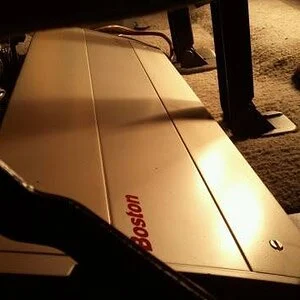
The pursuit of high-fidelity audio in the automotive world is a balancing act of physics, engineering, and personal lifestyle requirements. Recently, the CarAudio.com community witnessed a masterclass in this balancing act when a long-time member, returning to the hobby after a 15-year hiatus, sought advice on optimizing the sound system in their 5th Generation Toyota 4Runner. The resulting dialogue serves as a microcosm for the current state of car audio: a blend of high-end component selection, spatial efficiency, and the perennial debate between compact convenience and raw acoustic performance.
The Genesis: A Return to Form
The project began on July 10, 2026, when user "YzFool78" initiated a thread on the forum. After a decade and a half away from the enthusiast scene, the user returned with a specific mission: to elevate the factory audio experience of their 5th Gen 4Runner without compromising the vehicle’s utility as an off-road machine.
The user’s existing setup already demonstrated a sophisticated approach to sound quality (SQ). By installing CDT Audio Wideband Unity 7.5 units in the dash, complemented by CDT HD-690CFS 6×9-inch speakers in the front doors and Hertz DCX 1653 6.5-inch coaxial speakers in the rear, the owner established a formidable front stage. The entire system is powered by a CDT ACD 5-channel amplifier, which provides the necessary headroom to bring these components to life.
However, the missing piece of the puzzle was the low end. The user’s request was clear: an 8-inch subwoofer capable of performing in a sealed enclosure with a maximum power handling of 400 watts. The goal was not "purse SPL" (Sound Pressure Level)—a term used to describe excessive, booming bass—but rather a balanced, SQ-oriented response that could still reach "low" frequencies when required. Crucially, the owner emphasized the need to preserve cargo space for off-roading gear.

Chronology of the Consultation
The thread quickly evolved into a collaborative troubleshooting session, drawing expertise from seasoned veterans of the car audio community.
- 1:05 AM: YzFool78 posts the initial inquiry, outlining the build specs and the constraint of maintaining cargo space.
- 1:30 AM: CarAudio.com moderator "Hal" provides a comprehensive list of market-proven 8-inch subwoofers, including the Rockford Fosgate P3SD8 and the JL Audio 8W3v3-4, highlighting their suitability for small sealed enclosures.
- 1:42 AM: Community member "Doxquzme" pivots the conversation, suggesting that given the physical footprint of the front 6x9s, the owner might actually benefit more from a 10-inch or even a 12-inch sub, provided the enclosure is designed efficiently.
- 1:58 AM – 2:24 AM: A technical exchange ensues regarding the merits of different brands (Crescendo, DD Audio, Dayton Audio) and the viability of fender-well enclosures to meet the owner’s 0.4–0.5 cubic foot volume target.
Supporting Data: The Physics of Small-Enclosure Bass
The core of this technical debate rests on the relationship between cone surface area, enclosure volume, and frequency extension.
The Argument for 8-inch Drivers
For many off-road enthusiasts, the 8-inch subwoofer is the "goldilocks" solution. It offers a punchy, tight response—often described as "transient accuracy"—that makes it ideal for genres like rock, jazz, or acoustic music.
- JL Audio 8W3v3-4: Widely cited in the thread as a benchmark, this driver is engineered specifically for small, sealed environments. Its efficiency allows it to reach deep frequencies while remaining well within the 300W RMS range specified by the user.
- Rockford Fosgate P3SD8: As a shallow-mount option, this driver solves the mechanical installation depth issue common in modern vehicle panels, allowing for a much slimmer custom box.
The Case for "Moving Up" to 12-inch Subwoofers
The counter-argument, championed by Doxquzme, relies on the principle that "there is no replacement for displacement." Modern engineering has allowed 12-inch subwoofers to operate efficiently in very small sealed enclosures—some as small as 0.5 cubic feet. By opting for a high-excursion 12-inch driver, a user can achieve the same "low" frequency extension as an 8-inch unit but with significantly less stress on the cone and a higher overall output potential at lower power levels.

Official Perspectives and Industry Trends
Industry experts have noted a marked shift in consumer behavior over the last 15 years. Whereas the early 2010s were dominated by massive, ported boxes that consumed entire trunks, the 2026 market favors "stealth" installs.
Manufacturers are now focusing on:
- High-Efficiency Motor Structures: Using neodymium magnets and advanced cooling to shrink the physical footprint of the sub without sacrificing magnetic flux.
- Fiber-Reinforced Cones: Materials like Kevlar and carbon fiber are becoming standard, allowing for lighter, stiffer cones that can handle higher power in smaller boxes without warping.
- Prefabricated "Vehicle-Specific" Enclosures: Companies are now producing drop-in boxes that utilize the dead space behind wheel wells, a point that YzFool78 specifically identified as a potential solution for their 4Runner.
Implications for the Modern Enthusiast
The exchange between these forum users highlights three major implications for the future of DIY car audio:
1. The Death of the "Boring Build"
There is no such thing as a "boring build" in 2026. The proliferation of high-end component sets—like the CDT Unity wideband drivers—means that even a simple system can now achieve a level of clarity and soundstage imaging that would have required a professional competition budget in the mid-2000s.

2. The Importance of Enclosure Design
The consensus among the experts was that the subwoofer is only as good as the box it sits in. Whether the user chooses an 8, 10, or 12-inch driver, the success of the project relies on a custom-built enclosure that adheres to the specific Thiele/Small parameters of the chosen driver. The suggestion to use a 0.5 cubic foot space along the fender well is a sophisticated approach to maximize utility without sacrificing the "SQ" sound quality the user craves.
3. The Shift to "Value-Engineered" High-End
The recommendation of brands like Dayton Audio indicates a change in how enthusiasts perceive quality. High-performance, high-fidelity drivers are no longer exclusively tied to "name-brand" marketing; data-driven, direct-to-consumer models are allowing enthusiasts to build world-class systems on a fraction of the budget of previous generations.
Conclusion: Bridging the Gap
The journey of YzFool78 is reflective of a wider trend in the automotive community: the desire for an integrated, high-fidelity experience that does not interfere with the primary function of the vehicle. By moving from a simple request for an 8-inch sub to a more nuanced consideration of a 10 or 12-inch driver in a space-saving, fender-well-mounted enclosure, the owner is moving toward a more professional, highly optimized solution.
As the thread continues, it serves as a reminder that the car audio hobby is not just about the equipment—it is about the collaborative pursuit of the perfect sonic environment. Whether the final decision results in a precision-tuned 8-inch setup or a powerful 12-inch stealth install, the end result will undoubtedly redefine the acoustic landscape of that 5th Gen 4Runner, proving that with enough community wisdom and modern engineering, you really can have it all.