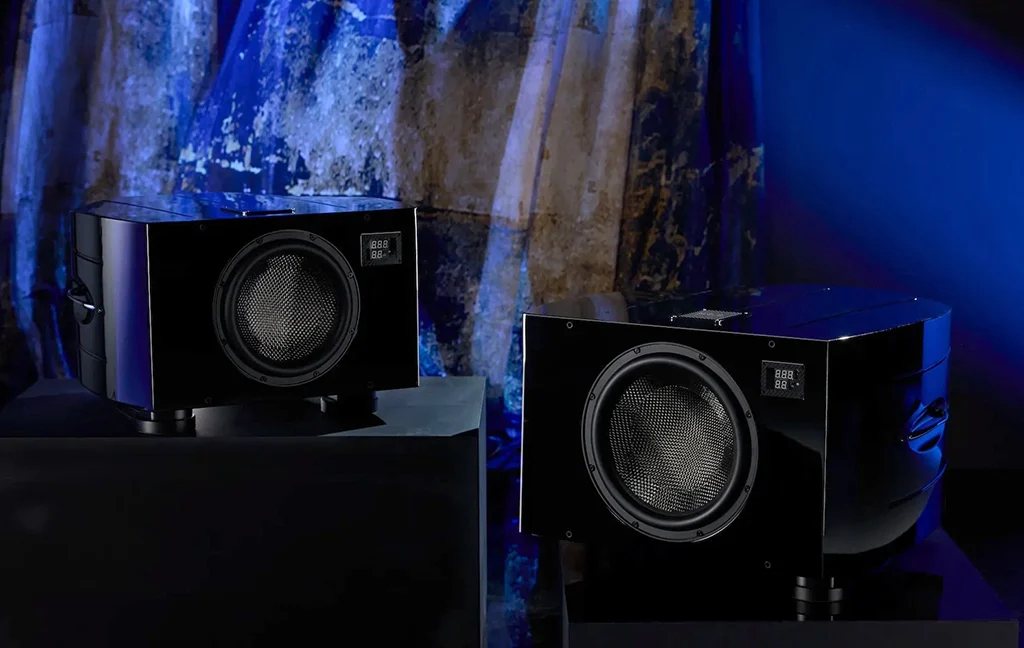
SAN JUAN CAPISTRANO, CA — Four years after disrupting the high-end audio landscape with the introduction of the acclaimed No.31 and No.32 Reference subwoofers, REL Acoustics is once again pushing the boundaries of low-frequency reproduction. The company has officially announced its latest flagship offerings: the REL No.35 and REL No.36 Reference Subwoofers.
Priced at $10,000 USD and $12,000 USD respectively, these new iterations are not mere incremental updates. They represent a fundamental rethinking of how extreme acoustic power, lightning-fast transient response, and musical nuance can coexist within a single enclosure. Engineered to partner with the world’s finest ultra-high-end loudspeaker systems, the No.35 and No.36 are available immediately through REL’s global network of authorized Reference dealers.
Main Facts: What Sets the No.35 and No.36 Apart?
At the core of the REL design philosophy lies a stubborn refusal to let measurements dictate the final product. While laboratory metrics are vital tools during development, REL’s engineering team operates under a singular guiding principle: “We don’t stop when the measurements are perfect, we stop when the music is.”
The No.35 and No.36 models incorporate several major technological leaps over their predecessors, focusing primarily on driver composition, power delivery, and cabinet dynamics:
- Next-Generation Pure Carbon Fibre Drivers: Both subwoofers utilize newly engineered carbon-fiber cones designed to handle the massive output demands of REL’s upgraded Class AB/D hybrid amplification platforms.
- Refined Weave and Suspension Geometry: The legendary 15-inch driver of the larger No.36 has been upgraded to a finer, highly optimized 12k carbon fiber weave. This features a heavily reinforced cone structure and a completely revised suspension system, allowing for significantly greater linear excursion (travel) and absolute control.
- Extended Linear Travel: The No.35 driver receives parallel structural upgrades, boasting an impressive additional 12mm of travel in each direction. This mechanical enhancement yields a profound increase in dynamic scale, physical impact, and spatial depth.
- Pricing and Availability: The compact yet thunderous No.35 is priced at $10,000, while the commanding, large-scale No.36 commands $12,000. Both units are shipping now.
Chronology of Innovation: The Path to the No.35 and No.36
To understand the magnitude of the No.35 and No.36 releases, it is helpful to look back at the historical trajectory of REL’s Reference line and the milestones that paved the way.
The Foundation of Speed (Early History)
Long before the inception of the No.31 and No.32, REL carved out a unique niche in the audiophile world. While mainstream home theater subwoofers prioritized cinematic "boom"—often at the expense of pitch definition—REL championed high-level connection and ultra-fast transient response. Their subwoofers were designed not just to shake floors during movie explosions, but to seamlessly blend with electrostatic panels, planar magnetics, and ultra-fast dynamic monitor speakers without smearing the lower midrange.
The 2022 Paradigm Shift: The No.31 and No.32
Four years ago, REL shocked the industry with the No.31 and No.32. These models proved that a massive subwoofer could possess the agility of a lightweight monitor. They introduced massive pure carbon-fiber cones and robust amplification, setting a gold standard for reference-grade low-frequency reproduction in multi-million-dollar two-channel and multichannel systems.
The Four-Year R&D Cycle (2022–2026)
Rather than rushing a successor to market, REL’s engineering team—led by principal designer John Hunter—embarked on a meticulous four-year research and development cycle. The goal was to solve the remaining bottlenecks in ultra-low frequency reproduction: eliminating thermal compression under extreme stress, refining cone breakup modes at high velocities, and extracting even finer harmonic details from complex musical passages.
The Official Announcement (September 2026)
Following extensive prototype testing and fine-tuning by ear, REL officially unveiled the No.35 and No.36. Audio journalists and key industry partners have been invited to REL headquarters for rigorous, side-by-side listening demonstrations comparing the previous generation directly against the new flagships, validating the substantial performance gains achieved.
Supporting Data and Technical Architecture
Achieving transparency and brute force simultaneously is one of electro-acoustics’ greatest challenges. As low-frequency drivers push harder, distortion, nonlinear behavior, and thermal compression typically rise. REL’s engineering documents for the No.35 and No.36 highlight how these obstacles were systematically dismantled.
1. The 12k Carbon Fibre Weave (No.36)
The No.36’s 15-inch driver utilizes an advanced 12k carbon-fiber weave. Carbon fiber is chosen for its exceptional stiffness-to-weight ratio. By transitioning to a finer 12k matrix, REL increased the structural rigidity of the cone while reducing its overall mass. This prevents the cone from flexing or "tinfoiling" under extreme acceleration, ensuring that every transient—from a sudden orchestral timpani strike to the deep resonance of a synthesizer—is rendered with absolute fidelity.
2. Suspension and Linear Excursion
Driver excursion (how far the cone can move forward and backward) is directly related to the maximum volume and bass extension a subwoofer can achieve. However, as a driver moves further from its resting point, maintaining magnetic and mechanical linearity becomes difficult.
- The No.35 introduces an extra 12mm of travel in each direction, a massive mechanical expansion for a cabinet of its footprint.
- The No.36 features a completely re-engineered surround and spider assembly, allowing its 15-inch driver to maintain absolute voice-coil alignment even when driven to extreme sound pressure levels (SPLs).
3. Amplification and Power Delivery
Both models utilize REL’s proprietary Class AB/D hybrid amplifier topologies. Class AB provides the instantaneous, delicate micro-dynamics and harmonic richness required for acoustic music, while the Class D output stage delivers massive reservoirs of sustained current when the music demands room-shaking subterranean power.
| Model | Driver Size | Key Architectural Upgrades | Retail Price (USD) |
|---|---|---|---|
| REL No.35 | Proprietary Reference | +12mm linear travel per direction, refined carbon cone | $10,000 |
| REL No.36 | 15-inch Reference | 12k finer carbon weave, reinforced suspension geometry | $12,000 |
Official Responses and Industry Insights
The philosophy driving REL’s engineering culture was encapsulated by principal John Hunter during the run-up to the launch:
"We don’t stop when the measurements are perfect, we stop when the music is."
This sentiment underlines REL’s reliance on human listening panels alongside advanced computer-aided engineering (CAD) and laser interferometry. While anechoic chamber tests ensure that frequency responses are flat and distortion floors are exceptionally low, the final voicing of the No.35 and No.36 was tuned using acoustic reference tracks ranging from sparse classical string quartets to complex electronic music and large-scale cinematic scores.
Early feedback from dealers participating in the upcoming side-by-side demonstrations suggests that the new generation delivers a vastly expanded soundstage. Listeners have noted that the subwoofers effectively "disappear" from the room to an even greater degree than their predecessors, leaving behind only the acoustic environment of the original recording space.
Implications for the Ultra-High-End Audio Market
The release of the REL No.35 and No.36 has immediate ripple effects across the high-end audio landscape, influencing consumer expectations, system integration practices, and competitive positioning.
1. Redefining the Role of Subwoofers in Two-Channel Audio
For decades, traditional audiophiles resisted adding subwoofers to high-end stereo setups, fearing they would muddy the midrange or slow down the musical pacing. REL has spent years changing this narrative. With the introduction of the No.35 and No.36, the argument that subwoofers compromise musicality is thoroughly dismantled. These products prove that low-frequency transducers can actually enhance the openness, air, and staging of high-end bookshelf and floorstanding speakers.
2. Setting a New Benchmark at the $10k–$12k Price Point
At $10,000 and $12,000, the No.35 and No.36 occupy an elite stratum of the audio market. Competitors in the ultra-high-end tier will be forced to respond to the technological benchmarks set by REL’s advanced carbon-fiber weaving and extended-excursion geometry. For elite systems utilizing monoblock amplifiers and six-figure loudspeakers, these subwoofers offer a matching level of refinement.
3. The Power of Line-Array Scalability
While a single No.35 or No.36 provides world-class performance, REL’s reference architecture is famously designed for scalability. Enthusiasts frequently employ multiple units in stacked line-array configurations (often using REL’s "Tower of Power" setup). The mechanical improvements in the No.35 and No.36—particularly their enhanced suspension control and greater travel—mean that stacked arrays will produce even more staggering scale, weight, and effortless dynamic headroom.
Conclusion
The launch of the REL No.35 and No.36 Reference Subwoofers marks a significant chapter in the evolution of low-frequency sound reproduction. By refusing to rest on the laurels of the celebrated No.31 and No.32, REL Acoustics has demonstrated a relentless commitment to sonic perfection.
For audiophiles and home theater enthusiasts seeking the ultimate expression of depth, speed, and musical truth, the No.35 ($10,000) and No.36 ($12,000) are available now through authorized REL Reference dealers worldwide. As listening sessions commence across the globe, one thing is certain: the standard for reference bass has officially been raised.