Introduction and Main Facts
In the rarefied world of ultra-high-end analog audio, a price tag approaching $20,000 usually signals the arrival of a complex, highly demanding piece of engineering. Audiophiles accustomed to the upper echelons of vinyl playback expect ritualistic setup procedures: massive, multi-tiered chassis requiring isolation platforms, pneumatic feet, intricate suspension tuning, outboard motor pods with multi-belt drive systems, and hours spent dialing in azimuth, VTA (Vertical Tracking Angle), and anti-skate using microscopes and digital gauges.
Enter the Rega Naia.
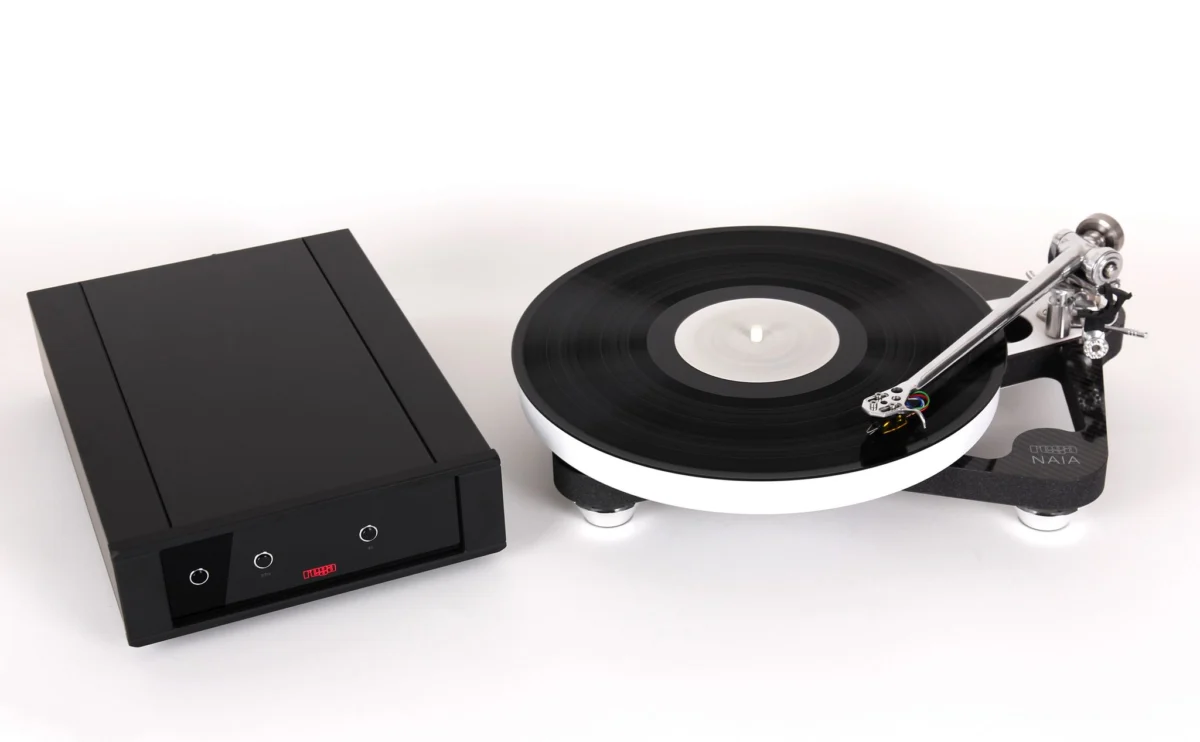
Priced at approximately $19,000—or around $23,000 when paired with its factory-matched Aphelion 2 moving coil (MC) cartridge—the Naia challenges every convention of the ultra-luxury turntable market. Rather than demanding a degree in mechanical engineering to operate, the Naia arrives with a radically different value proposition: it delivers the uncompromised sonic performance of a $50,000 reference system, yet features a "fiddliness factor of zero."
Main facts surrounding the Rega Naia evaluation:
- The Hardware: The Naia represents the commercial evolution of Rega’s legendary, ultra-exclusive Naiad prototype project, serving as the brand’s premier flagship production turntable.
- The Setup Paradox: Despite its stratospheric positioning and elite componentry, the Naia can be unboxed, fitted with its tracking force, and put straight to work with minimal friction—a plug-and-play reality unheard of in the ultra-high-end tier.
- The Cartridge Pairing: Tested alongside Rega’s top-tier Aphelion 2 MC cartridge, reviewers note a substantial sonic leap over the previous-generation Apheta 3, offering heightened refinement, tonal weight, and expanded dynamic range.
- Aesthetic Stealth: Sharing a visual lineage with Rega’s celebrated Planar 8 and Planar 10 models, the Naia’s unassuming form factor provides a unique "stealth" advantage for domestic harmony—looking deceptively modest while housing state-of-the-art materials science.
- Industry Lineage: The publication’s publisher witnessed the original Naiad prototype hanging on designer Roy Gandy’s listening room wall two decades ago, marking the commercial realization of a twenty-year engineering crusade.
Chronology of an Audio Milestone: From Prototype to Production
To truly understand the significance of the Rega Naia, one must trace a timeline that spans more than two decades of meticulous research, acoustic experimentation, and materials engineering.
The Genesis: The Naiad Dream (Early 2000s)
Roughly twenty years ago, Rega founder and chief designer Roy Gandy conceptualized a radical departure from traditional turntable manufacturing. In his private listening room, the early blueprint of the "Naiad" hung on the wall—a conceptual exercise in exploring just how far analog playback could be pushed if weight, resonance, and energy transfer were addressed at a molecular level. For years, the Naiad remained an elusive unicorn, eventually materializing as an ultra-limited-edition run that was priced beyond the reach of all but the most ardent collectors.
The Trickle-Down Evolution (2018–2023)
Rega did not let the research gathered during the Naiad project go to waste. Over the subsequent years, the British manufacturer methodically trickled down the exotic materials and design philosophies of the prototype into more accessible models. The introduction of the Planar 8 and subsequently the Planar 10 brought skeleton plinth designs, ceramic braces, and advanced hub bearings to the high-end market. These models established a visual and structural template, proving that low mass and high rigidity could outperform traditional, heavy-plinth philosophies.
The Arrival of the Naia (2026)
Following months of high anticipation within the global audiophile community, a review sample of the Rega Naia—courtesy of U.S. distributor The Sound Organisation—arrived at testing facilities. Paired with the Aphelion 2 MC cartridge, the hardware immediately entered a rigorous evaluation period. While long-term listening tests and comparative benchmarks are still actively underway, the initial two-week deployment has confirmed that the Naia is not merely an incremental update to the P10, but a wholesale reinvention of Rega’s manufacturing capabilities.
Supporting Data and Technical Architecture
What justifies a $19,000 price tag for a turntable that looks deceptively similar to its lesser siblings? The answer lies entirely in materials science, vibration control, and engineering execution. While the untrained eye might mistake the Naia for a Planar 8 or 10 due to its minimalist skeleton plinth, every single molecule and sub-assembly has been completely re-engineered.
Structural Integrity: Graphene and Carbon-Impregnated Core
Traditional turntables attempt to combat unwanted vibration by adding massive amounts of weight to absorb energy. Rega has long championed the opposite philosophy: energy must not be absorbed and stored within the structure (where it eventually bleeds back into the stylus as coloration), but rather channeled away rapidly.
The Naia utilizes an advanced graphene-impregnated high-modulus carbon skeleton plinth. Graphene, known for its extraordinary strength-to-weight ratio, provides unprecedented rigidity while maintaining an ultralight mass. This ensures that motor vibrations and vinyl surface friction are managed with surgical precision, resulting in a pitch-black background against which musical details emerge.
The Bearing and Sub-Platter Assembly
At the heart of the Naia is a custom-designed ceramic oxide bearing and spindle assembly. Ceramic materials offer exceptional hardness and dimensional stability, drastically reducing friction and rotational micro-jitter. When combined with Rega’s reference-grade drive belt system and precision-tuned power supply, speed stability is pushed to theoretical limits, ensuring that piano notes, sustained strings, and complex orchestral passages remain anchored without pitch wavering.
The Aphelion 2 MC Cartridge: A Masterclass in Transducer Design
While buyers have the option of purchasing the Naia unequipped to save roughly $4,000, industry experts strongly advise against doing so. The Aphelion 2 Moving Coil cartridge is custom-tailored to the Naia’s arm and plinth architecture.
- Cantilever System: Utilizes a boron rod coupled with a vital-profile diamond stylus.
- Generator: Features a hand-wound, micro-cross armature that is significantly smaller than conventional designs, reducing moving mass and dramatically improving tracking ability and high-frequency transient response.
- Sonic Impact: Compared directly to its predecessor (the Apheta 3 found on the P10), the Aphelion 2 introduces a profound sense of tonal body, removing any lingering clinical edge and replacing it with organic warmth, effortless micro-dynamics, and a cavernous soundstage.
Official Responses and Industry Perspectives
The high-end audio community has responded to the Naia with a mixture of awe and professional validation. Reviewers and distributors alike have highlighted how the table bridges the gap between ultra-performance and domestic usability.
“$19k for a Rega? Don’t think about it that way. Think of it as a $50k table that you don’t need to fuss with—ever.”
— Tone Publications Editorial Board
This sentiment encapsulates the primary engineering triumph of the Naia. In the upper echelons of high-fidelity audio, gear ownership often feels like maintaining a high-performance sports car: it requires constant tuning, specialist tools, and meticulous environmental control. Rega has engineered a product that bypasses this barrier to entry.
Furthermore, industry distribution partners have emphasized the cultural milestone the Naia represents. Representatives from The Sound Organisation noted that shipping the flagship unit marks the culmination of decades of acoustic research by Roy Gandy’s team. By taking the lessons learned from the unobtainable, limited-edition Naiad and refining them into a commercially viable production model, Rega has democratized ultra-reference analog playback—at least for those operating within the luxury budget tier.
Implications for the Audiophile Market and Future Outlook
The introduction of the Rega Naia sends ripples through the high-end audio landscape, carrying several profound implications for manufacturers, retailers, and vinyl enthusiasts alike.
1. Challenging the "Mass Equals Quality" Paradigm
For decades, high-end turntable design has been dominated by massive aluminum, acrylic, and wood plinths weighing upwards of 100 pounds. The Naia proves definitively that extreme mass is not a prerequisite for reference-level isolation and bass articulation. By relying on advanced composites like graphene-infused carbon fiber, Rega demonstrates that future high-end audio engineering will likely lean heavier on materials science and structural physics than sheer physical weight.
2. The Value Proposition in Ultra-High-End Audio
In a market where flagship turntables frequently scale past the $50,000 to $100,000 mark, a $19,000 price point—while undeniably expensive—occupies a disruptive sweet spot. When paired with the factory-matched Aphelion 2 cartridge and factored against the total elimination of aftermarket tonearm matching, calibration equipment, and setup frustration, the Naia offers a compelling cost-to-performance ratio for elite collectors who value their time as much as their sound quality.
3. Domestic Harmony and the "Stealth" Factor
Audio enthusiasts frequently face a perennial domestic hurdle: the intrusion of massive, industrial-looking audio gear into shared living spaces. Because the Naia retains the sleek, low-profile aesthetic of the P8 and P10, it flies under the radar of casual observers. As the publication jokingly noted, for audiophiles upgrading from a lower-tier Rega model, the Naia offers an unprecedented advantage: the ability to upgrade to world-class sound without alerting household co-habitants to a major financial investment.
Conclusion
As full, formal reviews and deep-dive comparative listening sessions loom on the horizon, the Rega Naia has already cemented its status as a landmark release. It honors the twenty-year legacy of Roy Gandy’s original vision while pushing the boundaries of what is possible in modern vinyl reproduction. For those seeking the absolute pinnacle of analog clarity without the headache of complex mechanical calibration, the Naia stands alone at the summit.