September 25, 2026
By ProSoundWeb Staff
Main Facts
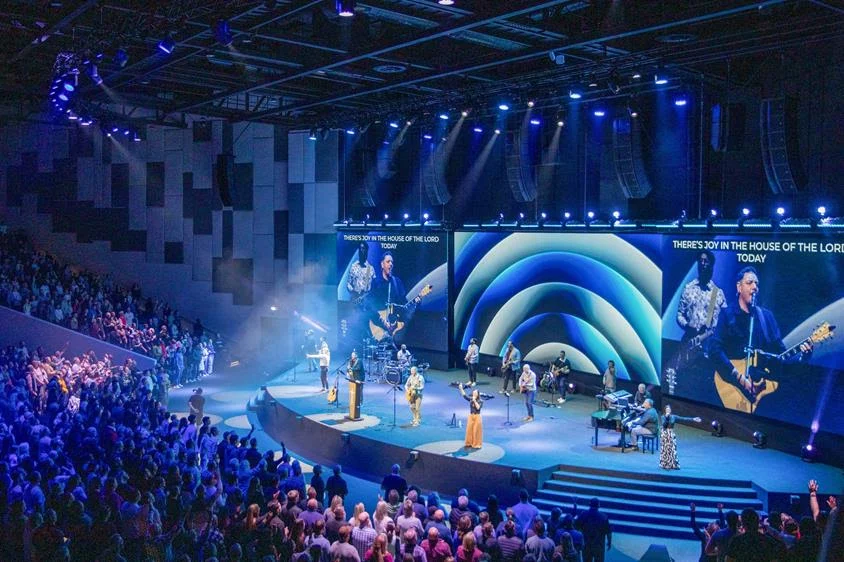
Every live sound engineer working in houses of worship has experienced that sinking, stomach-churning moment: the band sounded incredible during the sound check, every instrument sat perfectly in the pocket, and the vocal clarity was pristine. But the exact second the congregation files in, the doors close, and the service officially begins, that hard-earned mix completely falls apart. Suddenly, the guitars are burying the vocals, the low end is muddy, and the acoustic dynamics of the room have completely shifted.
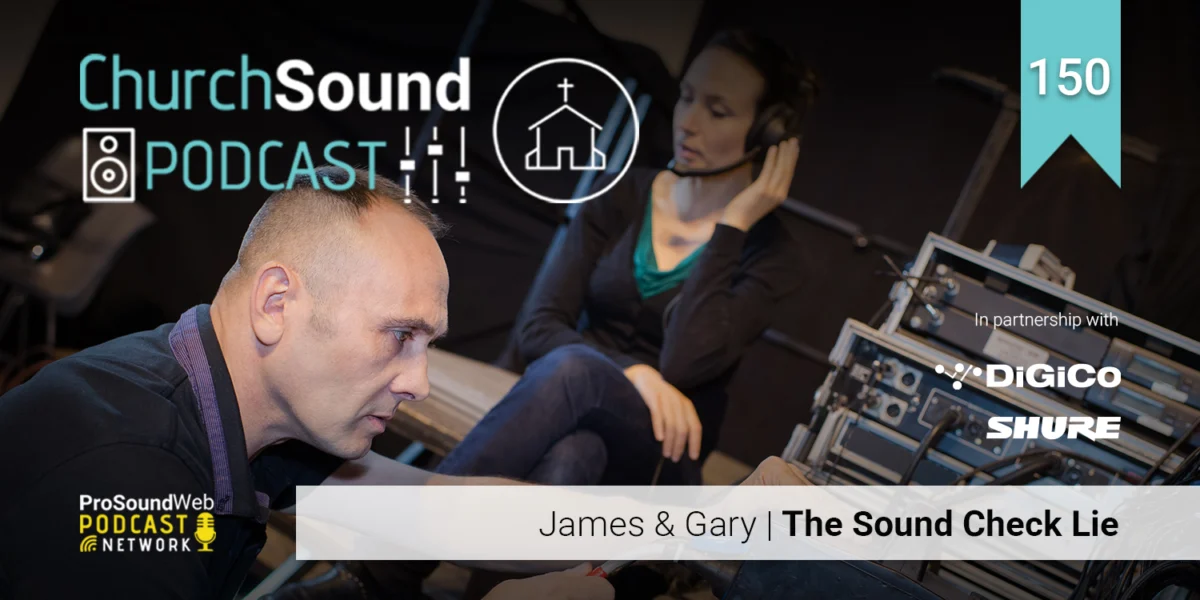
This phenomenon—often referred to in audio engineering circles as "The Sound Check Lie"—is the central focus of Episode 150 of the Church Sound Podcast. Hosted by industry veterans James Attaway and Gary Zandstra, and proudly supported by industry leaders DiGiCo and Shure, the milestone episode dives deep into the disconnect between pre-service preparation and live-service reality.

The episode tackles critical questions facing church tech teams every week:
- What causes the drastic shift between an empty room sound check and a full room service?
- How can audio technicians re-engineer their preparation process to anticipate these acoustical and psychological changes?
- What warning signs should engineers look out for leading up to the downbeat of the first song?
Chronology and Evolution of the Live Audio Workflow
To understand why mixes routinely deceive engineers, the podcast hosts trace the typical timeline of a Sunday morning production workflow and pinpoint where standard practices often fail.
Phase 1: Mid-Week Preparation and Virtual Sound Checks
For modern church audio technicians, the workflow increasingly begins days before Sunday. Utilizing advanced digital consoles—such as those from DiGiCo—teams frequently employ virtual sound checks, tracking multi-track recordings from previous services to build and refine baseline mixes.

While virtual sound checks are an invaluable tool for leveling and rough-in EQ, the hosts note that they create a false sense of security. A virtual playback assumes static conditions: the same instruments, the same player intensity, and, crucially, an empty room.
Phase 2: The Rehearsal and Sound Check Window
On Sunday morning, the band arrives, and the live sound check takes place. This is where the primary deception occurs. During rehearsal, the room is typically empty, acoustically reflective, and devoid of thousands of human bodies that act as natural sound absorbers. Furthermore, musicians often play with slightly different dynamics during a casual run-through compared to the emotional and spiritual height of a live worship service. Engineers frequently dial in a mix that sounds stellar in an empty auditorium, failing to calculate how the environment will transform in 60 minutes.
Phase 3: The Service Downbeat and Room Transformation
The moment the congregation enters, three major variables change instantaneously:

- Acoustic Absorption: Human bodies absorb high and mid-frequency reflections, deadening the room’s natural reverberation and fundamentally altering how direct-to-reverberant sound ratios are perceived.
- Ambient Noise Floor: The baseline noise floor of the room drastically rises with shuffling feet, whispered greetings, rustling bulletins, and, most importantly, congregational singing.
- Musician Performance Energy: Musicians and vocalists inevitably perform with greater energy and intensity during the actual service, driving higher volumes through microphones and instrument inputs.
When an engineer fails to anticipate these shifts during the sound check phase, the mix collapses under real-world conditions.
Supporting Data, Insights, and Expert Resources
Addressing these systemic workflow issues requires more than just reactive knob-twiddling on Sunday morning; it demands structural changes in team training and mixing philosophy. Episode 150 highlights several specialized resources developed by co-host James Attaway to help bridge the gap between rehearsal and reality.
- Leadership and Targets: Attaway emphasizes that technicians cannot hit a target if they do not know what the target looks like. His free guide, “How to Lead Your Church Sound Team,” helps technical directors establish clear, objective benchmarks for a winning mix.
- Mastering Virtual Sound Checks: To combat the complacency associated with line checks, Attaway developed the “Virtual Sound Check Challenge,” providing a step-by-step walkthrough for engineers looking to maximize console simulation features effectively.
- Foundational Audio Skills: For volunteers struggling with the fundamentals of processing, Attaway authored the Live Mixing Field Guide, a quick-start manual covering essential EQ, compression, and effects techniques. Additional tutorials are readily available via the Attaway Audio YouTube Channel and AttawayAudio.com.
Meanwhile, co-host Gary Zandstra brings over 35 years of invaluable perspective to the table. Drawing on decades of experience as both an AV systems integrator and a manufacturer’s representative, Zandstra provides architectural and hardware-based insights into how physical room design and microphone selection—such as industry-standard wireless systems from Shure—interact with shifting crowd sizes. Listeners can explore Zandstra’s extensive archive of educational articles directly on ProSoundWeb.

Official Industry Perspectives and Professional Commentary
The debate over sound check reliability underscores a broader maturity within the house of worship audio community. Professional engineers increasingly recognize that church sound is fundamentally different from secular concert touring; it requires a unique blend of technical precision, pastoral sensitivity, and psychological awareness.
Industry supporters like DiGiCo and Shure have continually invested in technologies designed to mitigate these exact challenges. Modern digital mixing platforms offer snapshot automation, advanced dynamic EQ, and flexible routing that allow engineers to quickly recall and adapt settings between rehearsal modes and live-service execution. Similarly, Shure’s advancements in wireless microphone reliability and frequency management ensure that vocal clarity remains uncompromised, even as stage energy and ambient room noise fluctuate.
According to the podcast hosts, the key takeaway for church audio engineers is the adoption of an "anticipatory mindset." Rather than mixing for the room as it sounds at 8:30 AM during a quiet rehearsal, engineers must mix with a mental blueprint of how the space will breathe, absorb, and project once filled with worshippers.

Implications for House of Worship Audio Teams
The lessons of Episode 150 extend far beyond a single Sunday morning mishap. They point toward a necessary evolution in how volunteer and staff audio teams are trained, equipped, and mentored.
- Shift from Reactive to Proactive Training: Sound teams must be trained to recognize environmental variables. Teaching volunteers why a mix changes when bodies enter the room is far more effective than simply telling them to push up faders.
- Embracing Intentional Sound Checks: Engineers should simulate service conditions wherever possible—encouraging musicians to play at true performance volumes during sound check, and utilizing pink noise or reference tracks to test how the room’s low-end response handles acoustic loading.
- Standardizing Mix Objectives: By implementing clear team guidelines—such as those outlined in Attaway’s leadership resources—churches can establish consistency across multiple services and varying engineering rotations, ensuring that the congregation experiences an engaging, distraction-free worship environment every single week.
To listen to Episode 150 in its entirety, access previous episodes, or explore the full catalog of educational resources, visit the official Church Sound Podcast archive on ProSoundWeb.