Executive Summary: A Quarter of Managed Retrenchment
Lucid Motors has reported a challenging third quarter for 2026, characterized by a significant scaling back of its manufacturing operations. The luxury electric vehicle (EV) maker produced 2,954 vehicles during the three-month period, representing a stark 54% decline compared to the same quarter last year. While the optics of such a drop might suggest operational failure, company leadership maintains that the reduction is a deliberate, strategic maneuver intended to better align production volumes with actual consumer demand.
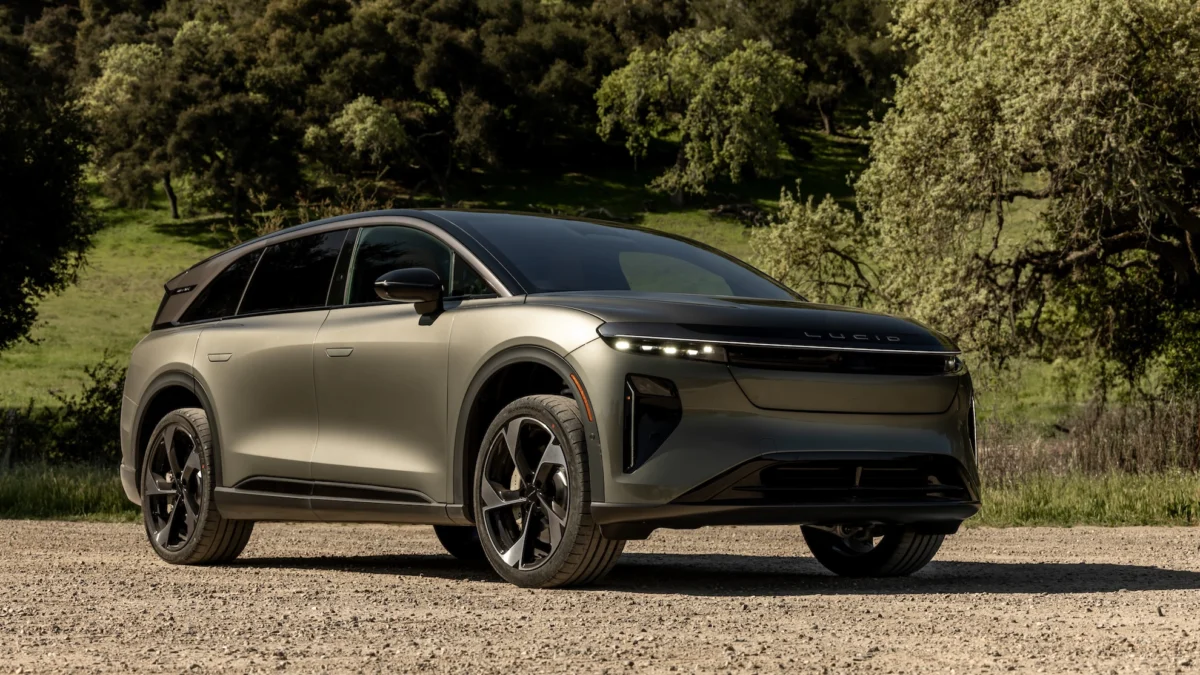
This latest report marks the third consecutive quarter of declining output for the California-based automaker. It represents the lowest quarterly production figure since the first quarter of 2025, a period immediately following the high-profile launch of the Gravity SUV. As Lucid attempts to navigate a transition toward a more streamlined business model, it faces mounting pressure to convert its high-end technology into sustainable market share.
The Chronology of a Slowdown
To understand the current state of Lucid Motors, one must look at the trajectory of the last eighteen months. Following the initial excitement surrounding the Gravity SUV, the company hit a wall of macroeconomic headwinds and internal inefficiencies.
The decline in production is not merely a recent phenomenon; it is the culmination of a broader strategic shift initiated under new CEO Silvio Napoli. Appointed to steer the company through its most turbulent phase, Napoli has spent the last several months spearheading an aggressive "simplification" initiative. This effort has included a workforce reduction of approximately 1,500 employees, a total reorganization of the executive leadership team, and the decommissioning of a second manufacturing shift at the company’s Arizona facility.
These cuts were not arbitrary. They are tied to a broader, $1.4 billion cost-saving mandate designed to provide the company with the liquidity necessary to weather the "EV winter" currently affecting many startups. Central to this narrative is the fate of the "Cosmos," Lucid’s highly anticipated, mass-market EV. Originally slated for an earlier debut, the Cosmos—intended to enter the market with a sub-$50,000 price tag—has been indefinitely delayed as management prioritizes quality control and operational stability over speed-to-market.
Supporting Data: Production vs. Reality
The gap between the assembly line and the showroom floor remains a persistent thorn in Lucid’s side. In the third quarter of 2026, the company delivered 3,806 vehicles. While this figure remained largely flat compared to the second quarter, it reflects a 200-unit decline year-over-year.
The data reveals a concerning trend in inventory management: in five of the last six quarters, Lucid has manufactured more vehicles than it has successfully delivered to customers. This inventory overhang is a luxury a cash-burning startup can ill afford. When viewed against the company’s ambitious 2021 projections, the current reality is sobering. Upon its SPAC merger, Lucid signaled to investors that it could produce and ship as many as 90,000 EVs in 2024 alone. The actual performance in the years since has fallen far short of these optimistic forecasts, underscoring the difficulties of scaling luxury automotive production in a crowded, high-interest-rate environment.
The Competitive Landscape: The Rivian Contrast
The divergence in fortunes between Lucid and its rival, Rivian, has never been more apparent. While Lucid retreated to reorganize, Rivian recently announced its most successful quarter on record. Driven by the strong market reception of the R2—its own take on an affordable, mass-market SUV—Rivian shipped nearly 20,000 vehicles in the third quarter of 2026.
This represents a significant leap from the 12,194 vehicles delivered in the second quarter. The comparison is instructive: where Lucid is currently "resetting" its manufacturing footprint, Rivian is leveraging its new product line to capture the middle-market segment. For investors, the contrast serves as a reminder that the EV market is not monolithic; companies that successfully bridge the gap between niche luxury and accessible utility are currently reaping the rewards, while those still optimizing their core business models face a more precarious path.
Official Responses: Acknowledging Past Failures
During the company’s second-quarter earnings call, CEO Silvio Napoli offered a candid assessment of why Lucid has struggled to gain traction. Napoli’s rhetoric signaled a departure from the "growth at all costs" mentality that defined the company’s early public tenure.
"While there is no question that Lucid brought leading innovations and outstanding products to the market, we have disappointed on several fronts, and for far too long," Napoli stated. He went on to outline a series of systematic failures: inconsistent execution, the premature launch of products before they were fully matured, a lack of investment in the service infrastructure required for premium ownership, and a sluggish response to quality control issues.
Napoli also addressed the complex internal structure that plagued the company’s decision-making process. By "simplifying" the company, he aims to break the bureaucratic inertia that allowed these issues to fester. Regarding the future of the Cosmos, Napoli was firm in his commitment to a disciplined rollout. "We will not repeat the mistakes of the past by bringing a product to market before it is ready," he emphasized, signaling that the company would rather risk missing a deadline than risk the brand damage associated with another flawed launch.
Implications for the Future
The implications for Lucid Motors are significant. The company’s survival is no longer about proving that its battery technology or luxury design is superior; the engineering excellence is widely acknowledged. Instead, the challenge is purely operational and financial.
The $1.4 billion savings plan is designed to provide enough runway for the company to refine its manufacturing processes and, eventually, introduce the Cosmos. However, the clock is ticking. As traditional automakers and established EV players continue to refine their own offerings, the window for a niche, high-end player to pivot to a mass-market strategy is narrowing.
Investors are now looking for proof that the "simplification" efforts translate into tangible gross margin improvements. Without a clear path to profitability, Lucid remains vulnerable to market volatility. The decision to suppress production is a gamble: it preserves cash today, but it risks losing the "mind share" of potential buyers who may move to competitors like Rivian, Tesla, or legacy automakers who are increasingly filling the gaps in the EV segment.
Ultimately, the next twelve months will be a definitive test for Silvio Napoli’s leadership. If the company can successfully navigate its current contraction and emerge with a stable, high-quality production cycle for its upcoming models, it may yet secure its place in the automotive hierarchy. If not, the legacy of Lucid may be that of a brilliant technological pioneer that failed to master the brutal logistics of mass-market manufacturing.
Disclaimer: This report is for informational purposes and does not constitute financial advice. When you purchase through links in our articles, we may earn a small commission, which helps support our independent journalism.