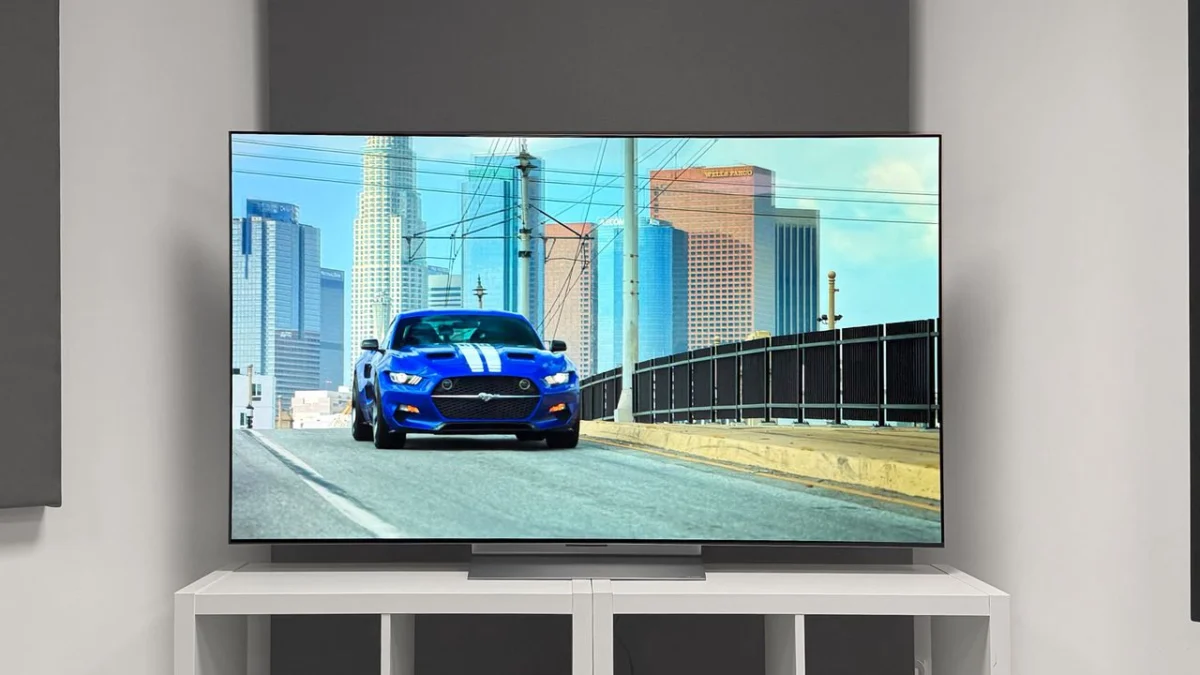
LG Electronics has announced the introduction of a new, proprietary television picture setting named the Creator Original Picture Mode. Positioned as an industry-first picture setting tailored specifically for streaming content, this mode represents a significant technological leap beyond the widely adopted Filmmaker Mode. Rather than simply disabling a television’s internal processing suites, Creator Original Picture Mode grants directors and colorists direct, dynamic control over how their content is rendered on consumer screens, adjusting key picture parameters on a title-by-title basis.
At launch, the feature is highly exclusive, rolling out on LG’s upcoming 2026 OLED evo TV lineup and debuting in partnership with Amazon Prime Video. As the home entertainment landscape continues to shift from physical media to bit-rate-compressed streaming, this feature aims to bridge the gap between studio master monitors and consumer living rooms.
Main Facts: What is Creator Original Picture Mode?
The Creator Original Picture Mode is designed to address a persistent issue in modern home theater setups: the discrepancy between the creative intent of filmmakers and the out-of-the-box settings of consumer televisions. While most premium TVs feature highly capable processors designed to sharpen images, smooth motion, and boost brightness, these enhancements often distort the original aesthetic of a film or television show.
+-----------------------------------------------------------------------------+
|                         PICTURE MODE COMPARISON                             |
+-----------------------------------+-----------------------------------------+
|          Filmmaker Mode           |      Creator Original Picture Mode      |
+-----------------------------------+-----------------------------------------+
| • Disables motion smoothing       | • Dynamically adjusts shadow detail     |
| • Sets D65 color temperature      | • Tailors noise reduction per scene     |
| • Preserves original aspect ratio | • Fine-tunes motion handling parameters |
| • Static, global system preset    | • Custom metadata per streaming title   |
+-----------------------------------+-----------------------------------------+
Unlike Filmmaker Mode—which acts as a "nuclear option" by turning off post-processing features globally—Creator Original Picture Mode functions as a precision tool. It allows content creators to embed specific metadata instructions within the streaming signal. These instructions tell the LG television exactly how to configure its hardware for a given title, adjusting parameters including:
- Shadow Detail & Gamma Curves: Ensuring dark scenes preserve shadow detail without suffering from "black crush" or artificial graying.
- Color Balance & Saturation: Maintaining the precise color grading established in the grading suite.
- Noise Reduction: Applying specific levels of grain management so that film grain is preserved while digital compression artifacts are minimized.
- Motion Handling: Tailoring motion interpolation to prevent the notorious "soap opera effect" while avoiding excessive judder in fast-moving scenes.
Hardware and Software Compatibility
At launch, the Creator Original Picture Mode will be exclusive to LG’s premium 2026 OLED evo television lineup. This includes the following flagship series:
- LG W6 Series: The ultra-premium, design-focused "wallpaper" or wireless OLED models.
- LG G6 Series: The gallery-design flagship utilizing Micro Lens Array (MLA) technology.
- LG C6 Series: The mainstream premium OLED series, traditionally the brand’s most popular performance-to-value model.
In addition to hardware requirements, the feature is deeply integrated with LG’s smart TV platform, webOS. In a unique promotional tie-in, users watching the launch title—the reboot of Masters of the Universe on Prime Video—can activate the show and the corresponding picture mode simply by speaking the phrase "I have the power" into their LG Magic Remote. This voice-activation feature is compatible with LG TVs running webOS 23 or later.
Chronology: The Journey to Cinematic Fidelity
To understand the significance of LG’s new picture mode, it is necessary to examine the historical trajectory of television picture processing and the industry’s ongoing efforts to preserve creative intent.
   [ Early 2000s - 2010s ]
   The Rise of "Vivid" and "Store" Modes
   (High brightness, heavy motion smoothing, oversaturated colors)
             │
             ▼
   [ 2019 - 2020 ]
   Introduction of Filmmaker Mode
   (UHD Alliance standardizes a one-touch button to disable processing)
             │
             ▼
   [ 2020 - 2025 ]
   The Streaming Boom & Smart TV Evolution
   (HDR10+, Dolby Vision IQ, and webOS integration mature)
             │
             ▼
   [ 2026 ]
   Launch of Creator Original Picture Mode
   (Dynamic, creator-defined metadata applied per-title over streaming)
1. The Era of Over-Processing (Early 2000s–2010s)
With the transition from CRT to LCD and LED televisions, manufacturers competed fiercely on retail store shelves. To stand out under harsh retail lighting, TVs were shipped with "Vivid" or "Store" modes enabled by default. These settings pushed brightness to its absolute limits, oversaturated colors, and introduced heavy motion interpolation (motion smoothing).
While effective in a bright retail environment, these settings ruined the viewing experience at home, leading to the "soap opera effect" and heavily distorted color reproduction.
2. The Birth of Filmmaker Mode (2019–2020)
In response to growing frustration from prominent Hollywood directors—including Christopher Nolan, Martin Scorsese, and Rian Johnson—the UHD Alliance introduced Filmmaker Mode in late 2019.
This industry-standard preset allowed consumers to disable motion smoothing, preserve original aspect ratios, lock the frame rate to 24p, and set the color temperature to the industry-standard D65 with a single button press. LG was one of the earliest and most enthusiastic adopters of this standard, integrating automatic detection for compatible Prime Video content.
3. The Shift to Stream-Specific Calibration (2026)
While Filmmaker Mode successfully stripped away unwanted processing, it remained a static, one-size-fits-all solution. It could not account for the varying compression qualities of different streaming platforms or the specific artistic choices of individual films (such as intentional film grain or stylized color grading).
Recognizing these limitations, LG developed the Creator Original Picture Mode for its 2026 TV lineup, transitioning from a passive system of disabling features to an active, metadata-driven system of customized optimization.
Supporting Data: The Technical and Critical Context
The implementation of Creator Original Picture Mode relies on the advanced hardware capabilities of LG’s OLED evo panels. These displays utilize self-lit pixels, allowing for infinite contrast ratios and pixel-level dimming.
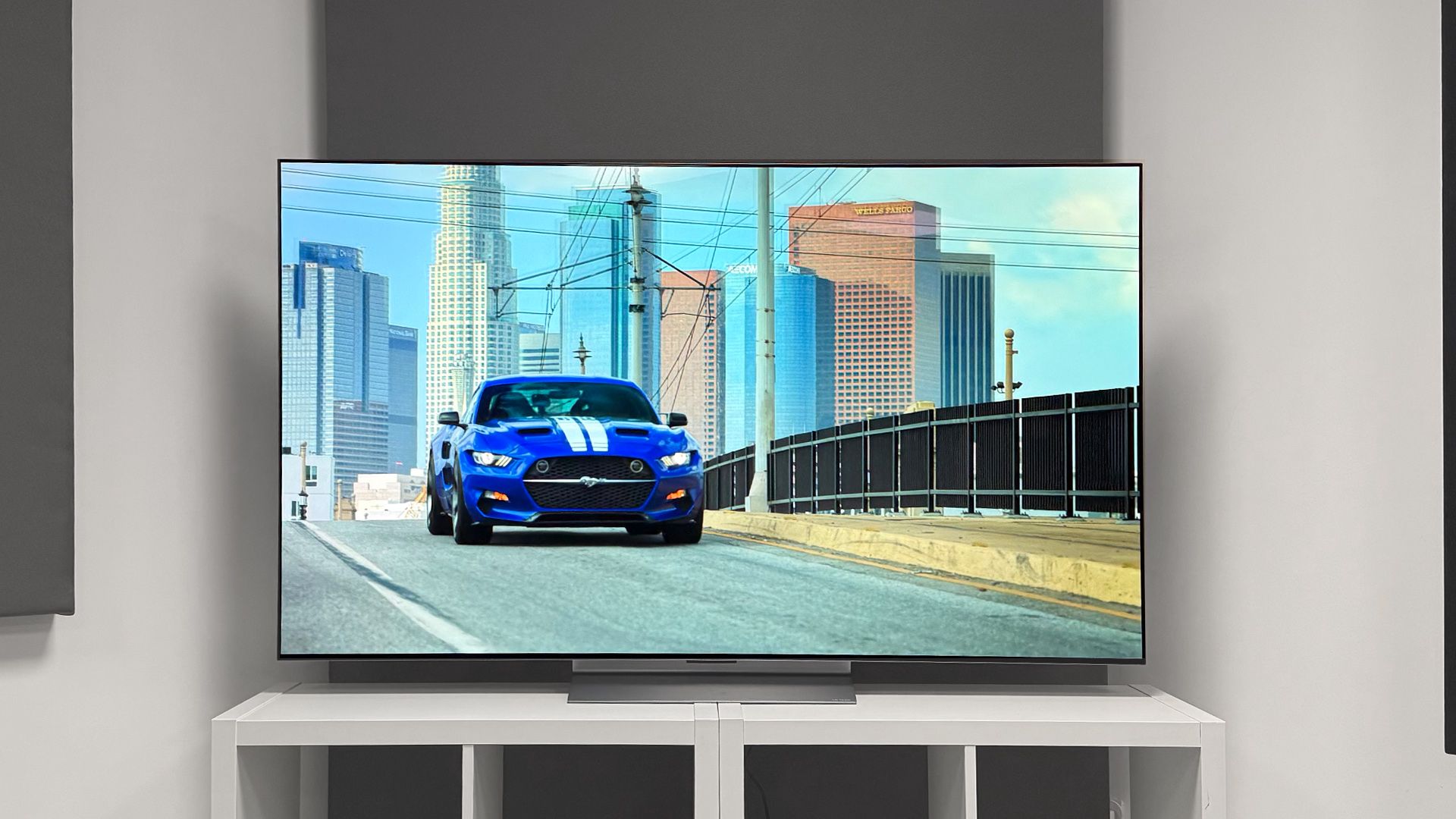
On models like the G6, the inclusion of Micro Lens Array (MLA) technology pushes peak brightness levels significantly higher than standard OLEDs. This extra luminance headroom gives the Creator Original Picture Mode more flexibility to map high-dynamic-range (HDR) highlights precisely as the creator intended.
The choice of launch content also provides interesting context:
+-----------------------------------------------------------------------------+
|                        LAUNCH TITLE PROFILE & METRICS                       |
+-----------------------------------+-----------------------------------------+
| Title                             | Masters of the Universe (Reboot)        |
+-----------------------------------+-----------------------------------------+
| Platform                          | Amazon Prime Video                      |
+-----------------------------------+-----------------------------------------+
| Critical Reception                | 67% on Rotten Tomatoes                  |
+-----------------------------------+-----------------------------------------+
| Audio/Video Formats Supported     | 4K UHD, HDR10+, Dolby Vision, Atmos     |
+-----------------------------------+-----------------------------------------+
| Voice Trigger Activation          | "I have the power" (webOS 23+)          |
+-----------------------------------+-----------------------------------------+
While Masters of the Universe may not be a traditional Oscar-contending cinematic masterpiece, its heavy reliance on CGI, high-contrast fantasy environments, and complex digital effects makes it an ideal stress test for streaming picture quality.
Streaming high-bandwidth HDR content often introduces color banding in dark scenes and compression artifacts in fast-moving action sequences. By utilizing Creator Original Picture Mode, the streaming bitrate and the TV’s decompression algorithms can be optimized in tandem to preserve the integrity of the special effects.
Official Responses and Unresolved Technical Questions
LG has officially framed the Creator Original Picture Mode as a major milestone for home cinema enthusiasts, calling it an "industry-first picture setting for streaming." By collaborating directly with Amazon Prime Video, LG aims to position its OLED evo TVs as the definitive hardware for streaming premium content.
However, the announcement has raised several technical questions within the AV journalism community. LG has been contacted for clarification on several key points, with updates expected as the 2026 TV lineup nears retail launch:
- Title and Platform Universality: Is this mode permanently exclusive to Amazon Prime Video, or will it expand to other major streaming platforms like Netflix, Disney+, and Apple TV+? Furthermore, is the mode currently hardcoded only for Masters of the Universe, or is there an active pipeline of upcoming titles that will support this metadata?
- Technical Delivery Mechanism: How is this metadata transmitted? Does it operate as an extension of existing dynamic HDR formats (such as Dolby Vision or HDR10+), or is it a proprietary metadata layer transmitted via the webOS application layer directly to the TV’s Alpha-series processor?
- User Control and Override: To what extent can the user modify settings once Creator Original Picture Mode is active? If a viewer finds a creator-approved dark scene too dim for a brightly lit living room, will the TV allow manual brightness overrides, or will the settings be locked to preserve the creator’s intent?
- Backward Compatibility: While the voice-activation shortcut works on webOS 23 and later, the picture mode itself is billed as exclusive to 2026 OLED evo models (W6, G6, C6). Will older hardware platforms (such as the C5 or G5 series) receive a firmware update to support the basic metadata processing of this mode, even if they lack the raw luminance capabilities of the 2026 panels?
Implications for the Home Cinema and Streaming Industries
The introduction of Creator Original Picture Mode has wide-ranging implications for manufacturers, content creators, and consumers alike.
The Battle for Creative Control
For decades, a philosophical battle has raged between TV manufacturers and filmmakers. Manufacturers want to showcase the raw power of their hardware—often resulting in oversaturated, ultra-smooth images that look impressive on a showroom floor. Filmmakers, conversely, want their work viewed in a dark room with settings that mimic a commercial movie theater.
By allowing filmmakers to directly program the parameters of the TV, LG is effectively yielding control of the display hardware to the content creator. This represents a paradigm shift in how consumer electronics brands approach picture processing.
Industry Fragmentation vs. Standardization
A potential risk of this technology is industry fragmentation. If LG’s Creator Original Picture Mode remains proprietary, rival manufacturers like Samsung, Sony, and Hisense may develop their own competing standards (e.g., a "Sony Pictures Core Creator Mode" or a "Samsung Director’s Cut Mode").
For streaming services and film studios, mastering content for multiple proprietary manufacturer modes could prove cost-prohibitive. To succeed long-term, this technology may eventually need to be standardized under an organization like the UHD Alliance or the Society of Motion Picture and Television Engineers (SMPTE).
Energy Consumption and Sustainability
An interesting secondary benefit of highly calibrated picture modes is energy efficiency. Standard and Vivid modes push backlights and OLED pixels to their maximum voltage, consuming significant amounts of electricity.
In contrast, calibrated modes—such as Filmmaker Mode and, by extension, Creator Original Picture Mode—typically operate at more modest, highly targeted luminance levels. By optimizing light output on a frame-by-frame basis based on creator metadata, these TVs can deliver high-impact HDR highlights without wasting energy on unnecessary full-field brightness. This alignment of cinematic accuracy and environmental sustainability is becoming an increasingly important selling point in the European and North American markets.
As LG prepares to launch its 2026 OLED evo lineup, the integration of the Creator Original Picture Mode marks a bold experiment in streaming fidelity. Whether it becomes a new industry standard or remains a niche feature for select blockbusters will depend heavily on industry adoption and how much control consumers are willing to surrender to the creators behind the camera.