By Editorial Staff
The legendary rock outfit Journey faced a harrowing moment on Thursday night (Oct. 8) when longtime drummer Deen Castronovo was forced to exit the stage mid-performance at the BOK Center in Tulsa, Oklahoma. The incident, which occurred just two songs into the band’s set, halted the concert and prompted an outpouring of concern from fans and fellow bandmates alike as the veteran percussionist was rushed to a local medical facility for emergency care.
The sudden turn of events has cast a shadow over the band’s high-profile "Final Frontier" North American tour, a massive undertaking that has served as a victory lap for the group’s 50-year legacy. While the show ultimately resumed, the health status of the 62-year-old drummer remains the primary focus for the band’s organization and their global fanbase.
The Tulsa Incident: A Night of Uncertainty
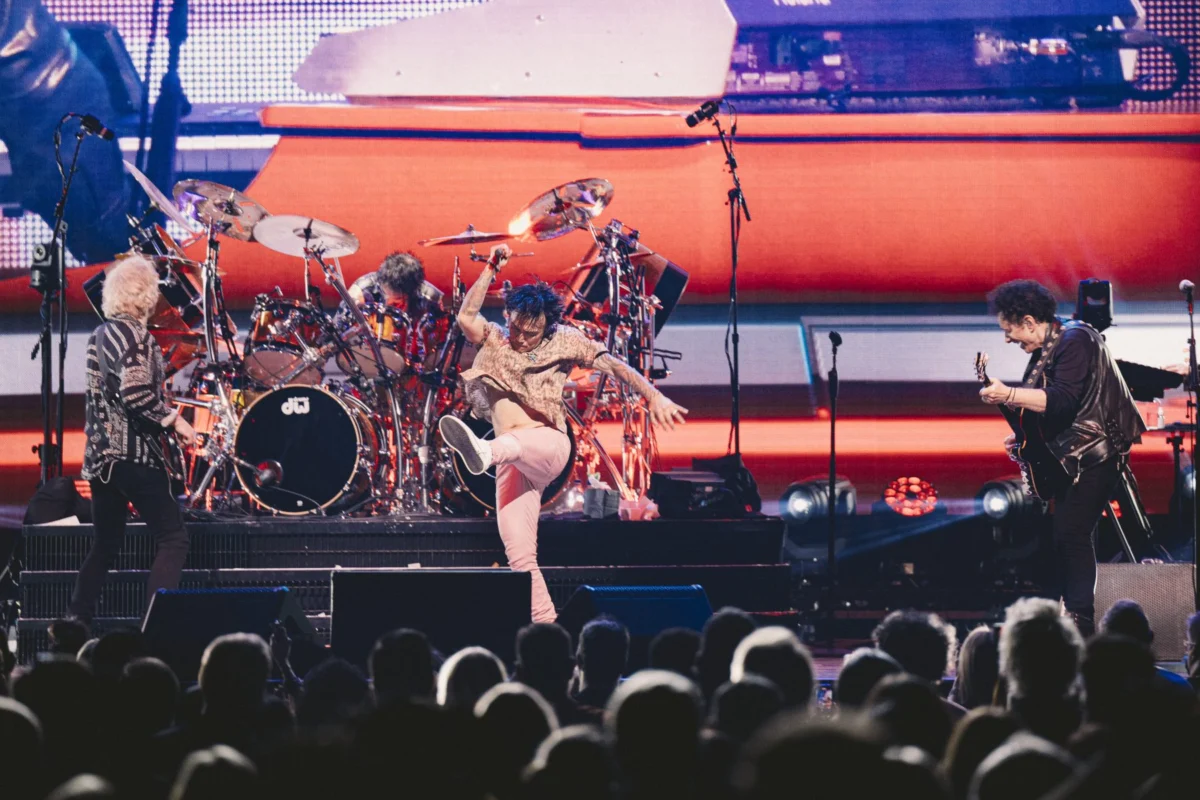
The disruption began shortly after the opening numbers of the Tulsa performance. According to witnesses at the venue, including sports reporter Eric Bailey, it became immediately apparent that Castronovo was struggling. Following the conclusion of the second song, the drummer was assisted off the stage by crew members, leaving the remaining band members—Neal Schon, Jonathan Cain, and vocalist Arnel Pineda—to address the stunned audience.
In a moment captured on video by attendees, keyboardist Jonathan Cain stepped to the microphone, his tone somber but steady, asking the audience for their support. "Have your prayers ready. Have your prayers ready for Deen Castronovo, everybody. Thank you," Cain told the crowd.
The atmosphere inside the BOK Center shifted instantly from the high-energy celebration characteristic of a classic rock stadium show to a tense, expectant silence. The band immediately went on a 20-minute hiatus to assess the situation and coordinate a path forward. During this time, co-founder and lead guitarist Neal Schon addressed the arena, confirming that Castronovo had been transported to a hospital. In an effort to keep the show on the road, Schon informed the crowd that the band’s dedicated drum tech, Steve Toomey, would step behind the kit to complete the remainder of the set.
A Legacy Defined by Resilience
Deen Castronovo’s role in Journey is multifaceted, bridging the gap between the band’s historic roots and their modern-day iteration. Having first joined the ranks in 1998, his tenure has been marked by both exceptional technical prowess and a deep emotional connection to the music. His departure from the band in 2015 and his subsequent return was widely celebrated by fans who consider his signature drumming style essential to the "Journey sound."
Beyond his work with the band, Castronovo possesses a resume that reads like a history of modern rock. His contributions to acts such as Bad English and Hardline, coupled with his high-profile work alongside heavyweights like Ozzy Osbourne, Steve Vai, and the legendary Geezer Butler, have solidified his status as one of rock’s most reliable and versatile drummers.
The irony of the current situation is not lost on followers of the band, who recall that this is not the first time Castronovo has dealt with a harrowing experience on stage. Just last year, during a performance at NRG Stadium in Houston, the drummer found himself in a precarious position when a fire broke out beneath the stage directly under his drum riser.
"I was literally on fire for four and a half songs," Castronovo later wrote in a viral Instagram post, describing the incident as an "act of God." That the band is now navigating a medical emergency following such a literal "baptism by fire" has only heightened the protective sentiment surrounding the musician.
The Show Must Go On: A Dedicated Performance
Despite the initial shock, the decision to proceed with the concert was met with a mix of relief and reverence. After the 20-minute delay and the transition to drum tech Steve Toomey, the band returned to the stage to finish the set. The remainder of the performance served as a tribute, with Schon dedicating the night’s music to his bandmate.

"This concert’s for Deen tonight," Schon told the audience, according to reports from Ultimate Classic Rock. "I’d love you all to pray for him. Everybody’s been going through a lot. I think he’s going to be fine."
The ability to pivot during a crisis is a hallmark of bands that have survived for five decades. Journey, which has weathered numerous lineup changes and personal trials over the years, demonstrated the professional rigor that has allowed them to maintain their position as one of the most commercially successful touring acts in history.
The State of the "Final Frontier" Tour
The medical emergency arrives at a pivotal moment for Journey. The "Final Frontier" tour, which has been performing to sold-out arenas across the continent, is currently in the midst of an ambitious expansion. Following a successful run of shows, the band announced an additional 40 dates earlier this year, signaling their intent to keep the momentum going well into the future.
The band’s next scheduled appearance is at the Frost Bank Center in San Antonio, Texas, on October 10. As of this writing, there has been no official word from the band’s management or representatives regarding whether that show will proceed as planned or if the tour will face a temporary postponement to allow for further evaluation of Castronovo’s condition.
The band’s current lineup—featuring the core creative team of Schon and Cain, alongside the long-tenured Arnel Pineda—has been praised for its chemistry. Pineda, who stepped into the nearly impossible role of replacing original frontman Steve Perry in 2007, has become a symbol of the band’s endurance, and the loss of Castronovo, even temporarily, represents a significant gap in the ensemble’s rhythmic foundation.
Cultural Impact and Recent Resurgence
The urgency of this situation is amplified by the fact that Journey is currently experiencing a massive cultural resurgence. The band’s signature anthem, "Don’t Stop Believin’," recently re-entered the Billboard Hot 100 for the first time since 1997. The song, which has transcended its 1981 origins to become a universal cultural touchstone, saw a spike in popularity following its use during the U.S. Men’s National Team’s FIFA World Cup match against Australia in June.
The track re-charted at No. 35, proving that the band’s music remains as relevant today as it was at the height of the arena rock era. This continued commercial vitality makes the stability of the band’s live performance even more critical. Fans across the globe are currently monitoring social media and official channels for any updates on the drummer, whose health is now the primary concern of a community that spans generations.
Implications for the Band and the Industry
The hospitalization of a high-profile musician during a major tour highlights the often-overlooked physical toll that the "road life" takes on even the most seasoned performers. At 62, Castronovo is performing at a level that requires significant physical endurance. The medical emergency serves as a stark reminder of the vulnerability of aging rock icons who continue to push the boundaries of live performance.
For the music industry, the incident is a reminder of the logistics behind the curtain. The preparedness of a drum tech like Steve Toomey, who was able to step in and keep the show moving, underscores the importance of the technical crew in the success of a tour. Without such contingency plans, the impact on the tour’s bottom line and the potential for disappointed ticket holders would be far more severe.
As of the current moment, the music world holds its breath. While the initial reports from Schon suggested optimism, the lack of a specific medical diagnosis or a clear timeline for Castronovo’s return has left a vacuum of information. The coming days will be crucial in determining the path forward for the "Final Frontier" tour.
Whether the tour continues in San Antonio or takes a brief pause to regroup, the primary narrative surrounding Journey this week has shifted from the power of their music to the humanity of the individuals who create it. For now, the sentiment shared by Jonathan Cain on that stage in Tulsa remains the prevailing mood: Keep the faith, and keep the prayers coming.