The home cinema market has long been a battleground for brands attempting to balance high-fidelity performance with living-room-friendly aesthetics and accessible pricing. Q Acoustics, a brand renowned for punches-above-its-weight acoustic engineering, has officially returned to the testing arena with its highly anticipated 3050c 5.1 speaker package.
Built around components from the newly introduced, entry-level 3000c series, this surround sound system promises to democratize premium audio by inheriting crucial driver technologies and structural design philosophies from Q Acoustics’ higher-end, award-winning speaker lines. However, translating top-tier engineering into mid-range components is a delicate balancing act. While the 3050c 5.1 system delivers an incredibly agile, energetic, and bass-heavy performance, it faces stiff competition and is held back by a crucial weak link in its front soundstage.
1. Main Facts: The Core Proposition, Pricing, and Competitors
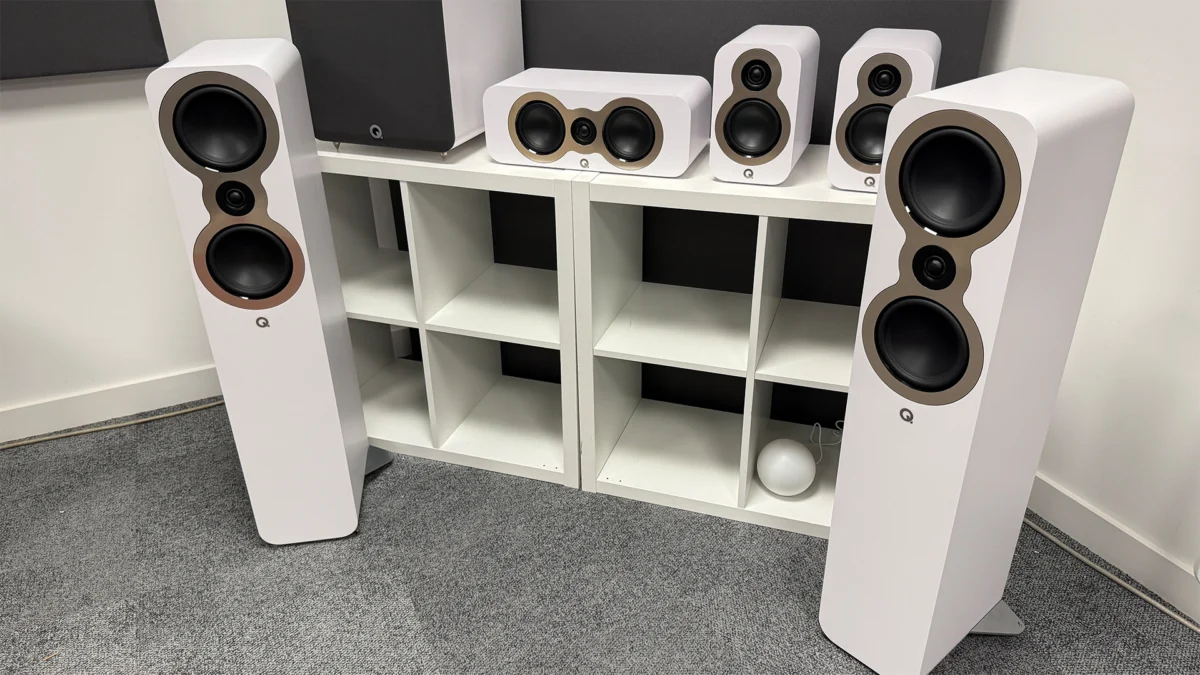
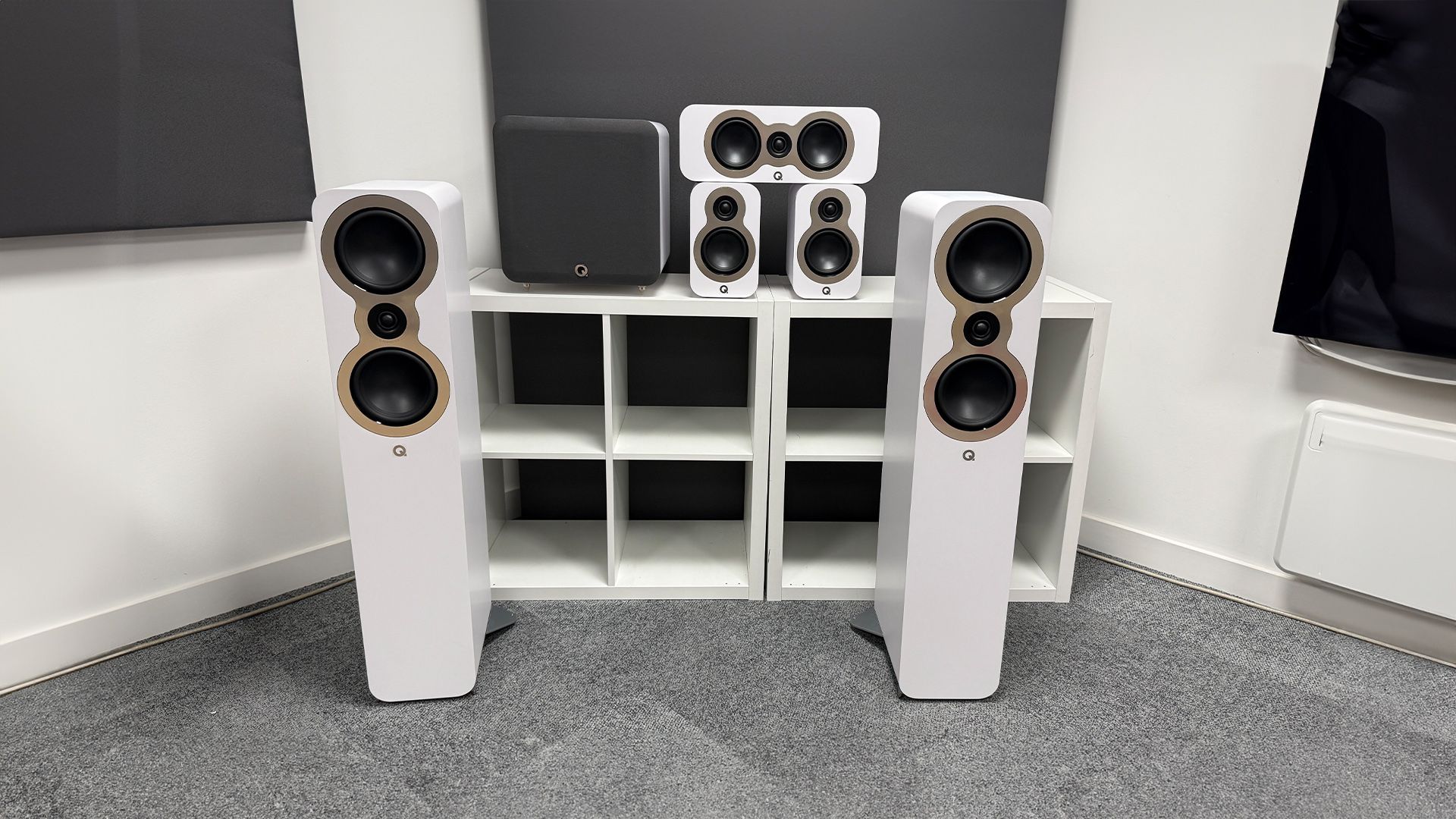
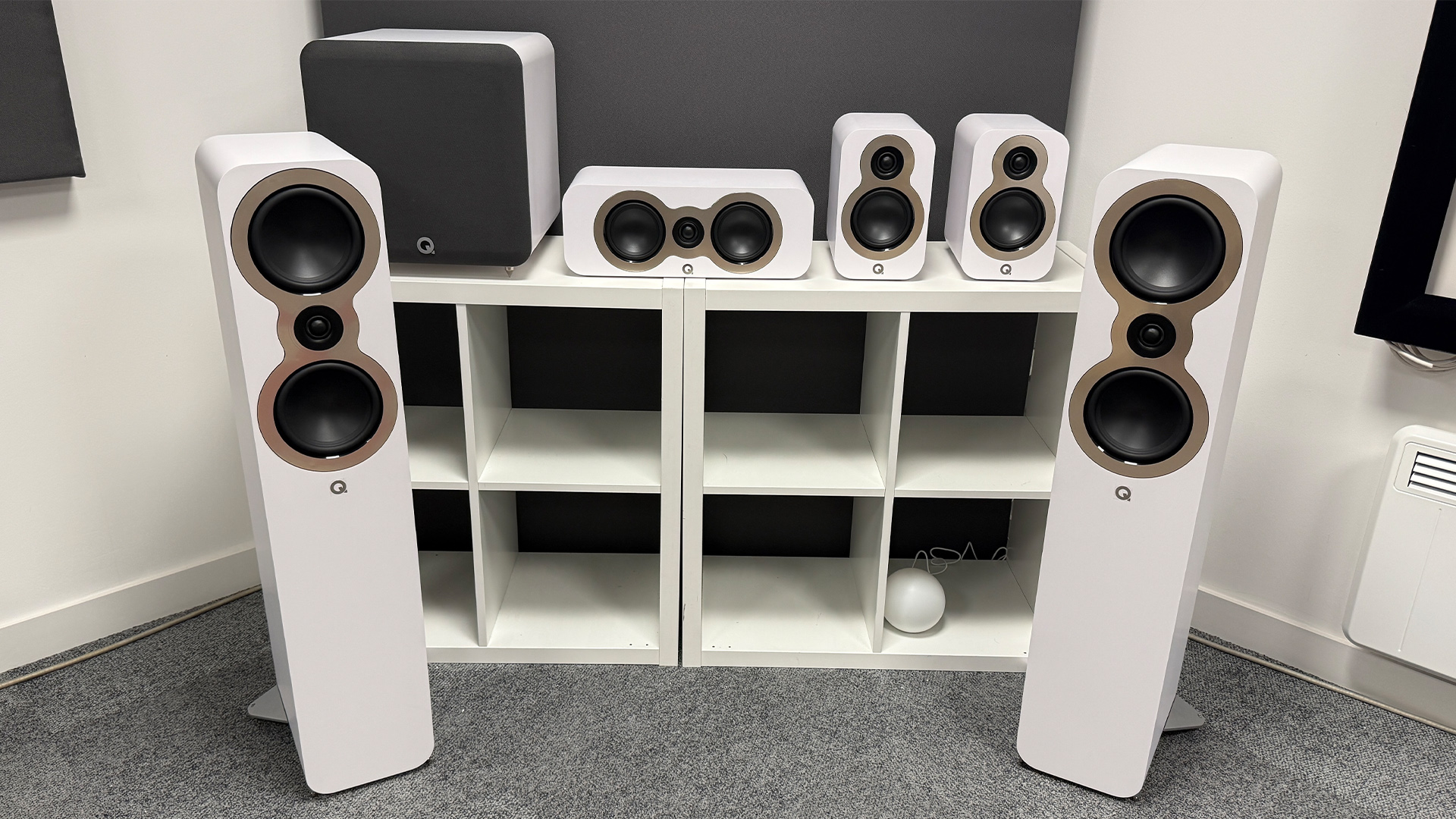
The Q Acoustics 3050c 5.1 package is not sold as a single, pre-packaged bundle in the exact configuration reviewed here, though Q Acoustics provides a combined system price of £1,896 / $3,506. This bespoke review configuration consists of:
- 3050c Floorstanders: £749 / $1,349 per pair
- 3010c Bookshelf Surrounds: £249 / $479 per pair
- 3090c Centre Channel: £229 / $399
- Q SUB100 Active Subwoofer: £699 / $1,199
The Subwoofer Discrepancy
Potential buyers should note a crucial retail distinction: Q Acoustics sells an identically named "3050c 5.1" package on its official website and through major retailers for £1,626 in the UK. However, that retail bundle swaps out the high-performance Q SUB100 active subwoofer for the slimmer, less powerful 3060S subwoofer. Because the subwoofer is the foundational anchor of any 5.1 home cinema system, the performance of the retail bundle is expected to differ significantly from the high-power system analyzed in this review.
The Competitive Landscape
At this price point, the Q Acoustics 3050c 5.1 faces fierce competition. Its most direct rival is the reigning, multi-Award-winning Bowers & Wilkins 606/607 S3 speaker package, which currently retails for around £1,950 (discounted from its launch price of £2,496). Other notable alternatives in this price bracket include the Fyne Audio F500E AV Pack 2 and the budget-friendly Wharfedale Diamond 12.1 Home Cinema Pack, both of which offer distinct tonal balances and aesthetic options for home cinema enthusiasts.
2. Chronology: Heritage, Development, and the B&W Rematch
The release of the 3000c series represents a pivotal moment in Q Acoustics’ product timeline. To understand its design philosophy, one must look back to the launch of the premium 5000 series and its standout floorstander, the 5040. The 5040 introduced the audio world to Q Acoustics’ proprietary C3 Continuous Curved Cone driver design, which won widespread critical acclaim and industry awards.
[5000 Series Launch] ---> [C3 Driver Technology Proven] ---> [3000c Entry-Level Series Developed] ---> [3050c 5.1 Package Released]In 2023, Q Acoustics’ premium 5040 5.1 package narrowly missed out on top honors at the annual industry awards, edged out by the exceptionally balanced Bowers & Wilkins 606/607 S3 system. The development of the 3000c series was fast-tracked to bring that same award-winning 5000-series driver technology down to a more aggressive, entry-level price point. This review of the 3050c 5.1 package represents a highly anticipated rematch between Q Acoustics’ trickle-down engineering and Bowers & Wilkins’ established mid-range dominance.
3. Supporting Data: Technical Specifications and Performance Testing
To evaluate the system’s capabilities, we subjected the Q Acoustics 3050c 5.1 package to rigorous testing in a dedicated acoustic environment.
Technical Specifications Table
| Component | Dimensions (H x W x D) | Weight (Each) | Driver Configuration | Key Technologies |
|---|---|---|---|---|
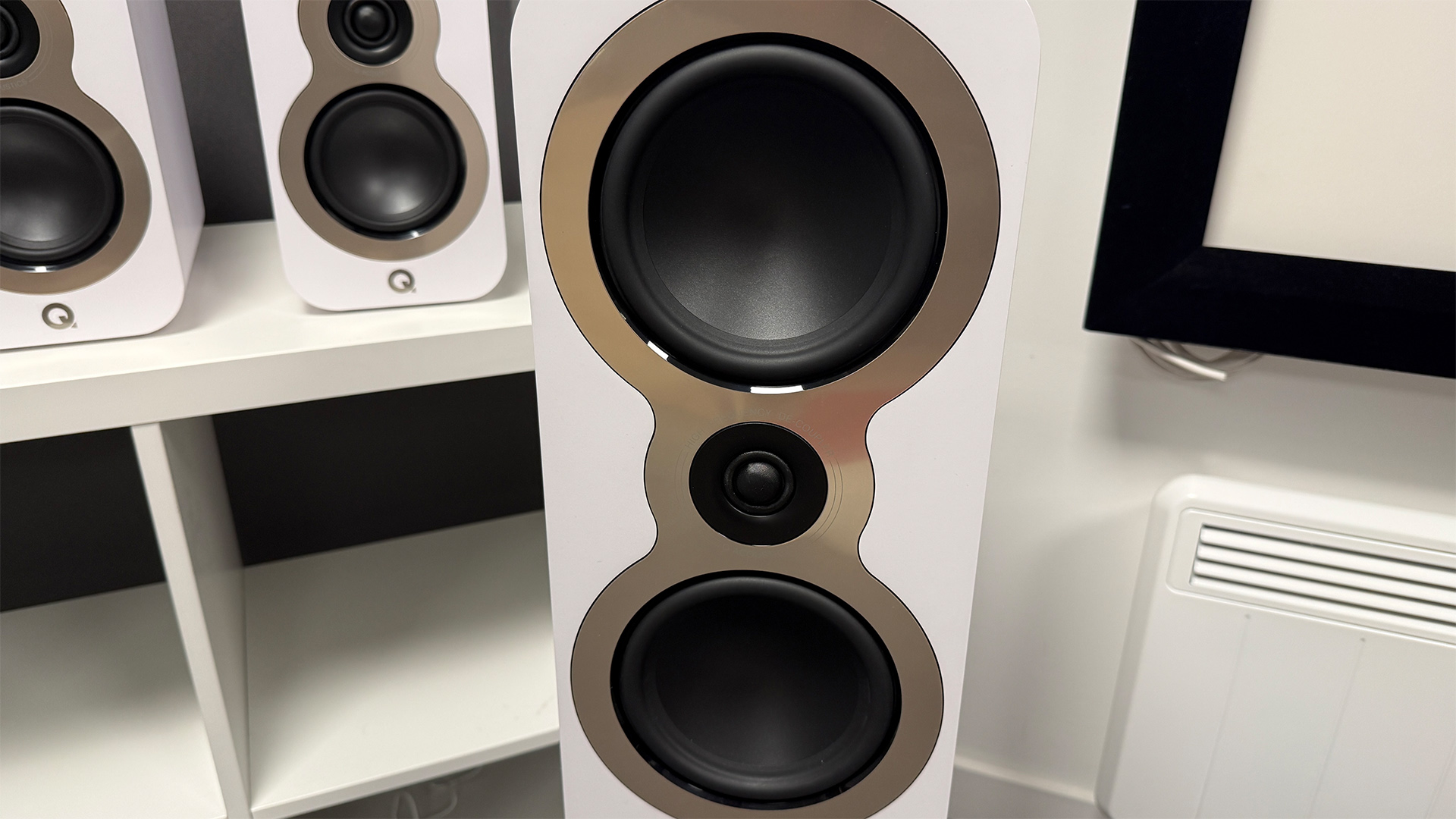
| 3050c Fronts | 102 x 32 x 32 cm | 18.0 kg | 22mm Tweeter, Dual 14cm Mid/Bass | C3 Cone, HPE Tubes, P2P Bracing |
| 3010c Surrounds | 25 x 16 x 25 cm | 4.4 kg | 22mm Tweeter, Single 10cm Mid/Bass | C3 Cone, P2P Bracing |
| 3090c Centre | 16 x 43 x 22 cm | 6.5 kg | 22mm Tweeter, Symmetrical Dual 10cm | C3 Cone, Symmetrical Layout |
| Q SUB100 Sub | 35 x 35 x 38 cm | 17.0 kg | 25cm (10-inch) Woofer | 500W Peak Amp, Source Detection |
The Testing Environment
The speaker package was set up in a dedicated, acoustically treated testing room and paired with the premium Marantz Cinema 30 AV receiver. While the Cinema 30 is admittedly priced well above what most buyers would pair with a speaker package of this tier, its transparent, high-current amplification ensured that the speakers were driven to their absolute limits, exposing every strength and weakness of the driver array without amplification bottlenecks.
Real-World Performance Analysis
1. Cinematic Agility and Spatial Cohesion (F1: The Movie)
Testing began with the high-octane racing sequences of F1: The Movie, specifically the tense, rain-slicked Daytona 24-hour race.
- The Positives: The 3050c floorstanders and 3010c surrounds immediately established a seamless, highly cohesive soundfield. Sound pans—such as a race car screaming from the front-left to the rear-right channel—were executed with flawless transitions.
- Height and Scale: Despite lacking dedicated Dolby Atmos upward-firing drivers, the system managed to convey an impressive sense of vertical scale. The overhead commentary from the race announcers sounded realistically elevated, suspended high above the roaring engine noises in the lower half of the soundstage.
2. Low-Frequency Control and Texture (Dune: Part One)
Next, we loaded the desert flight sequence from Denis Villeneuve’s Dune: Part One.
- Subwoofer Performance: The Q SUB100 active subwoofer proved to be a powerhouse, outperforming the older Q12 subwoofer found in the more expensive 5040 package. When the massive thrum of the Ornithopter wings filled the room, the sub delivered deep, room-shaking bass with excellent transient response.
- Tonal Definition: Rather than producing a generic, mono-tonal rumble, the Q SUB100 demonstrated superb pitch definition, resolving the distinct textures and rhythmic complexities of Hans Zimmer’s tribal, percussion-heavy soundtrack.
[Engine Roar / Low Bass] ---> [Q SUB100 Subwoofer] ---> High Transient Speed & Deep Tonal Variety
[Ambient Sound / Effects] ---> [3050c & 3010c]      ---> Seamless Channel Panning & Vertical Height
[Dialogue / Center Mix]  ---> [3090c Centre]        ---> Boxed-in Sound & Flat Tonality (Weak Link)
3. The Centre Channel Compromise (Thunderbolts)
Switching to Marvel’s Thunderbolts, we evaluated a complex action sequence involving a desert facility escape, gun battles, and large-scale explosions. While the surrounds and subwoofer kept the adrenaline high, this scene highlighted the system’s primary flaw: the 3090c centre speaker.
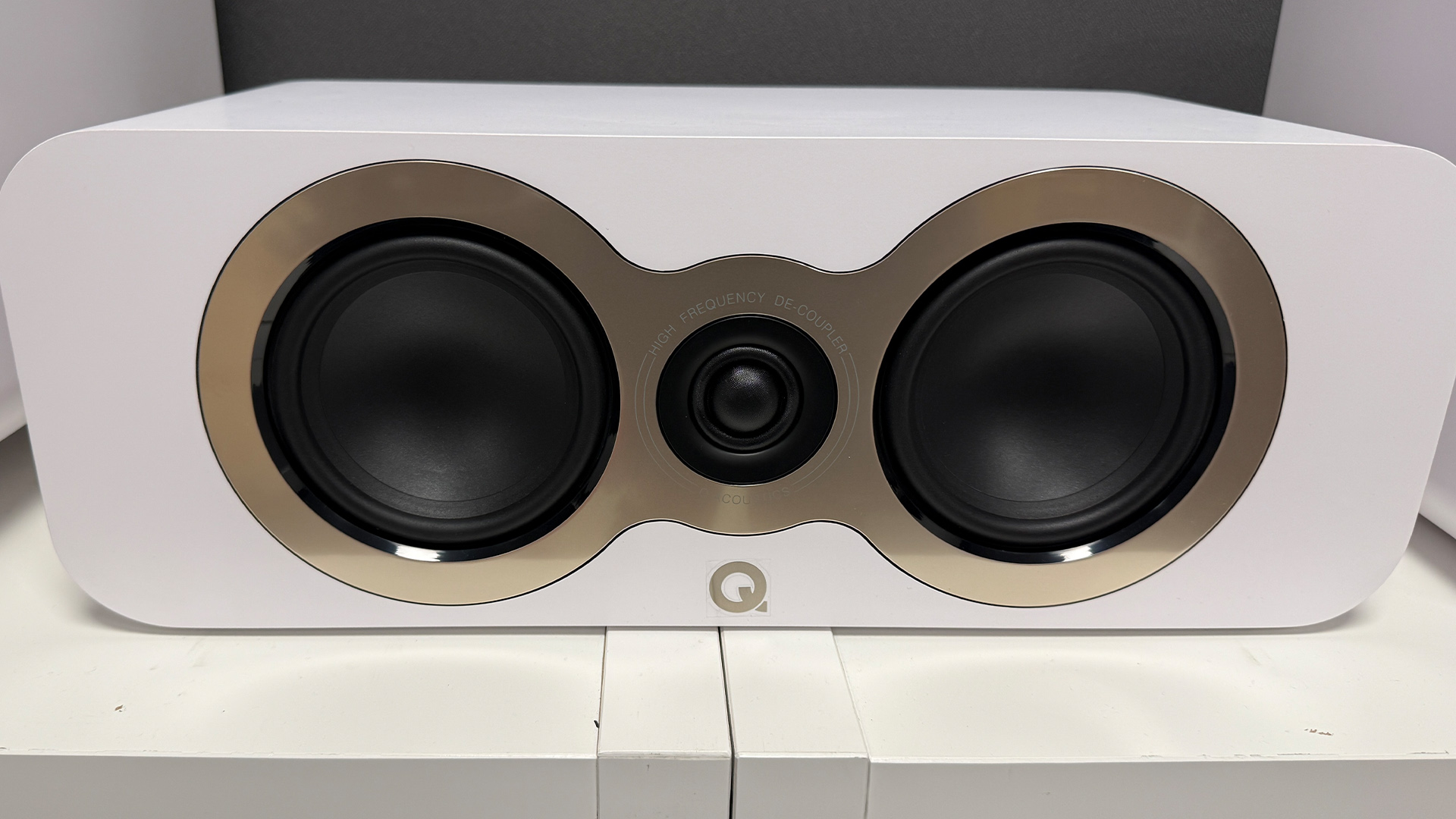
- Acoustic Boxiness: Because of its remarkably compact physical footprint (just 16 cm tall), the 3090c sounds physically constrained. Dialogue sounded boxed-in and narrow, drawing the listener’s attention directly to the physical location of the speaker rather than allowing voices to float naturally within the front soundstage.
- Flat Dynamics: The snide, fast-paced dialogue exchanges between characters lost their emotional weight. The centre channel lacked the mid-range warmth and micro-dynamic expression needed to convey sarcasm, tension, and vocal character.
4. Stereo Music Performance
To test the system’s musicality, we switched the Marantz Cinema 30 to Pure Direct mode, running the 3050c floorstanders as a stereo pair without subwoofer reinforcement. We streamed a variety of high-resolution vocal tracks, including Maggie Rogers’ Dog Years, Bon Iver’s There’s A Rhythm, and Phoebe Bridgers’ Lost Boys.
- Detail and Timing: The 3050c floorstanders excelled at timing and transient detail. Acoustic guitar plucks and percussion hits were rendered with razor-sharp precision.
- Tonal Balance: However, the speakers exhibited a distinctly lean tonal balance. Lacking mid-bass warmth, softer acoustic tracks began to sound slightly "shouty" and forward when pushed to higher volumes, lacking the natural, organic warmth of their Bowers & Wilkins rivals.
4. Official Responses: Q Acoustics’ Engineering and Acoustic Claims
Q Acoustics has positioned the 3000c series as a technological marvel for its price point, heavily marketing several key innovations designed to combat cabinet coloration and driver distortion.
The C3 Continuous Curved Cone
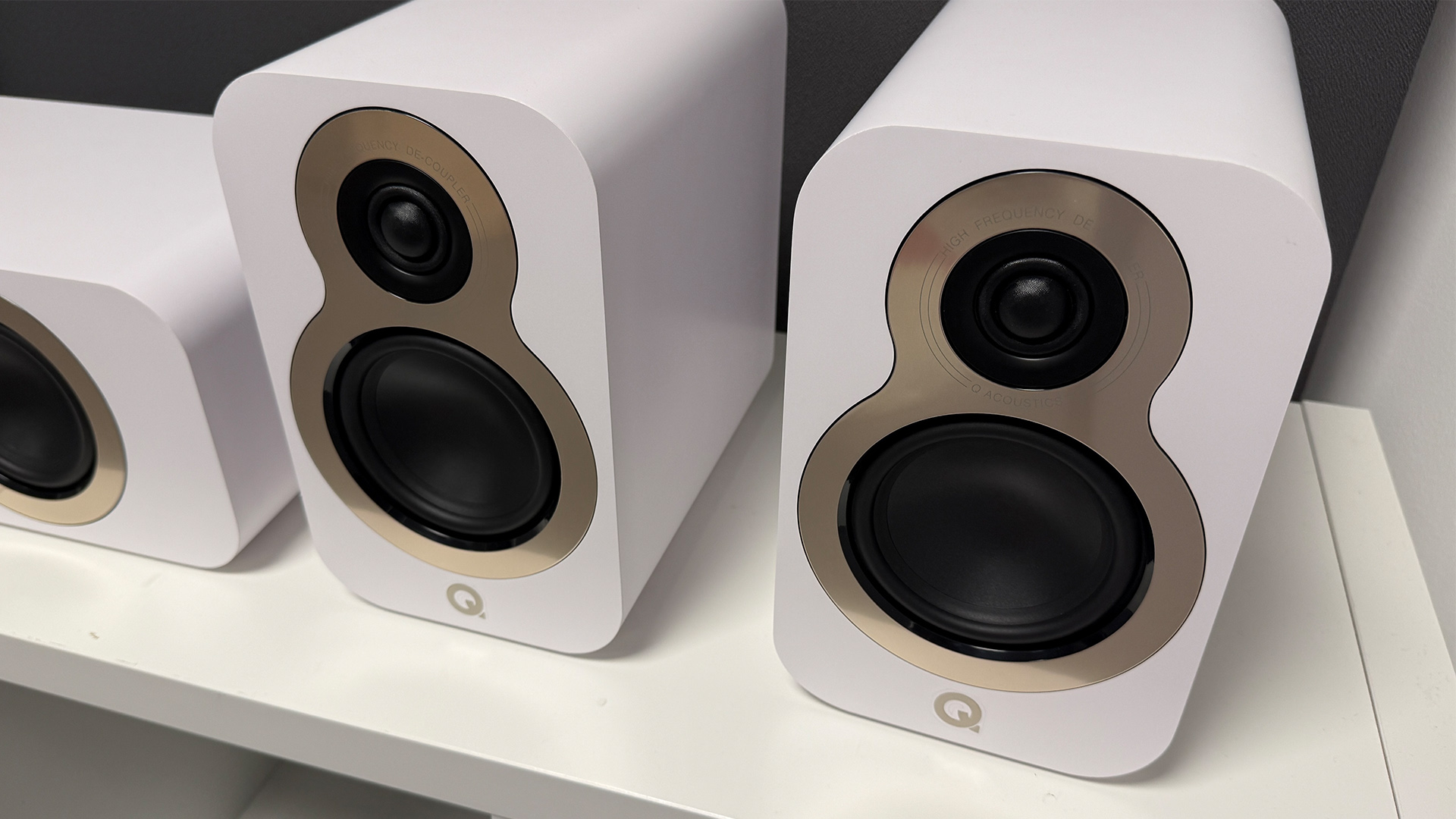
The cornerstone of the 3000c series is the C3 (Continuous Concept Curve) profile in the mid/bass drivers. Traditionally, speaker designers have had to choose between:
- Straight Conic Cones: Excellent for bass dynamics and punch, but prone to high-frequency breakup and poor dispersion.
- Flared Cones: Excellent for high-frequency control and midrange dispersion, but lacking in low-frequency authority.
Q Acoustics claims the C3 profile mathematically bridges this gap, offering the deep bass performance of a straight cone alongside the smooth midrange integration of a flared cone.
Traditional Straight Cone (Bass Punch)
                                        ===> C3 Continuous Curved Cone (Best of Both Worlds)
Traditional Flared Cone (Midrange Control) /
Helmholtz Pressure Equaliser (HPE) Tubes
Taller cabinet designs are inherently susceptible to internal standing waves, which can color the midrange and muddy the bass response. To combat this in the 3050c floorstanders, Q Acoustics implemented internal HPE (Helmholtz Pressure Equaliser) tubes. These tubes are specifically tuned to convert internal pressure fluctuations into heat, neutralizing cabinet resonances and smoothing out the overall frequency response.
Point-to-Point (P2P) Bracing
To ensure the cabinet remains as acoustically inert as possible, Q Acoustics utilizes proprietary P2P (Point-to-Point) bracing across the entire 3000c range. By using computer-aided analysis to apply internal bracing only to the specific areas of the cabinet prone to flex, Q Acoustics claims to have significantly reduced cabinet coloration, thereby improving stereo imaging and soundstage accuracy.
5. Implications: Market Positioning, Setup Advice, and Buyer Recommendations
The Q Acoustics 3050c 5.1 package is an incredibly stylish, well-built, and thrilling speaker system that brings a massive dose of cinematic energy to the living room. However, its lean tonal balance and flawed centre channel carry significant implications for potential buyers.
               [Q Acoustics 3050c 5.1 System]
                            |
         ---------------------------------------
        |                                       |
   [PROS / STRENGTHS]                      [CONS / WEAKNESSES]
   - Thrilling, agile sound                - Lean, forward tonal balance
   - Excellent spatial cohesion            - Boxed-in, flat centre channel
   - Powerful, textured subwoofer          - Can sound "shouty" with music
The Rematch Verdict
When compared directly to the Bowers & Wilkins 606/607 S3 package, the Q Acoustics system falls slightly short of a total victory. While the Q Acoustics package matches the B&W system in terms of sheer speed, agility, and low-frequency power (thanks to the superb Q SUB100), it cannot match the natural warmth, vocal richness, and musical cohesion of the B&W array. The B&W system remains the more versatile choice for those who split their time equally between movies and stereo music.
System Matching and Setup Recommendations
For consumers who decide to purchase the 3050c 5.1 package, careful system matching is highly recommended:
- Amplifier Selection: Avoid pairing these speakers with lean, analytical, or overly bright AV receivers. Instead, opt for receivers known for their warm, robust, and muscular sound signatures—such as mid-to-high-end models from Denon or Marantz—to offset the speakers’ natural tendency toward leanness.
- Centre Channel Placement: Given the compact, boxed-in nature of the 3090c centre speaker, it should be placed in an open shelf or mounted directly on a wall, away from enclosed cabinet cavities that could further exaggerate its boomy, restricted lower-midrange response.
- Subwoofer Upgrade: Ensure you are purchasing the package containing the Q SUB100 rather than the slimmer 3060S if you have a medium-to-large room, as the extra power is vital to anchoring the system’s energetic top end.
Ultimately, if you prioritize home cinema thrill, speed, and deep bass over musical warmth and vocal depth, the Q Acoustics 3050c 5.1 package stands as an exceptionally strong, beautifully designed contender in the sub-£2,000 surround sound market.