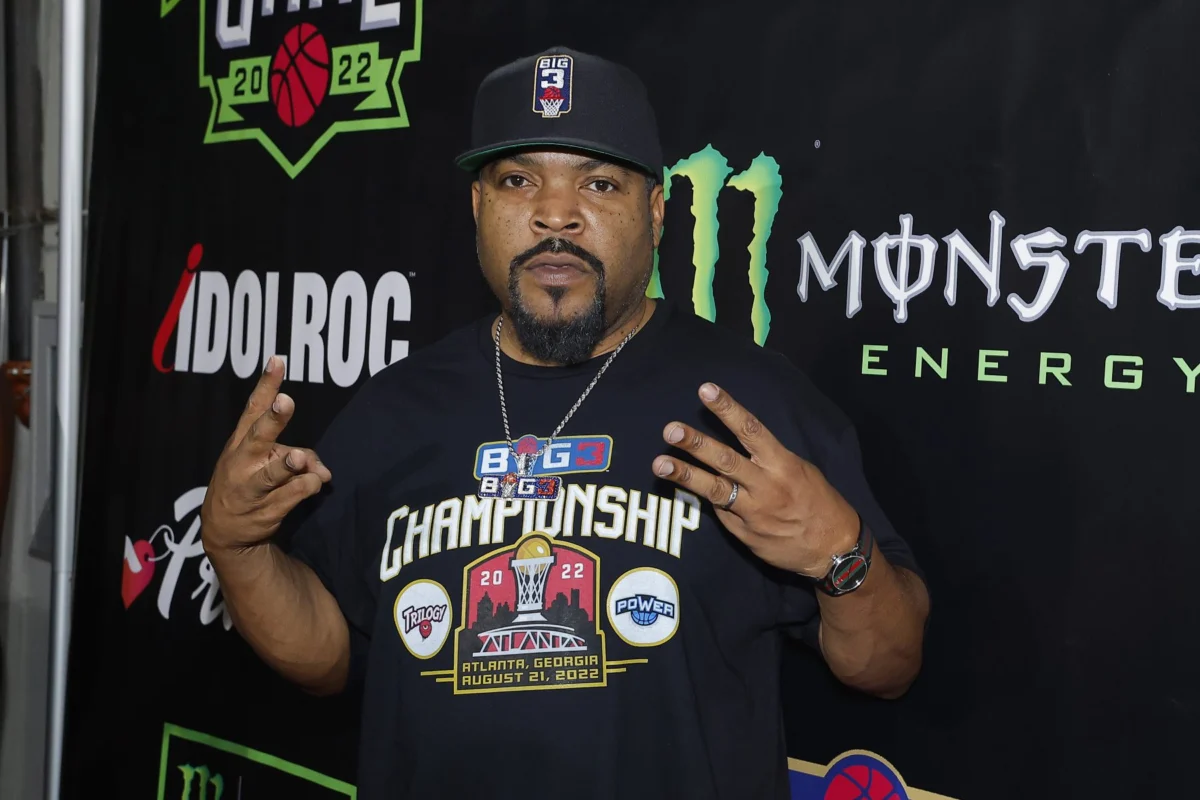
In a landmark development that blurs the lines between professional athletics, entertainment, and the financial markets, Ice Cube’s three-on-three basketball league, the BIG3, has announced a definitive agreement to go public. This move, finalized through a business combination with the special purpose acquisition company (SPAC) Graf Global Corp., marks a historic milestone: the BIG3 will officially become the first professional sports league in the United States to be publicly traded.
The announcement, delivered by the rapper-turned-entrepreneur on Friday, June 12, serves as a capstone to nearly a decade of rapid growth for the league. With a projected valuation of $290 million, the transition to the public market is designed to provide the capital necessary for aggressive international expansion and a significant increase in the league’s operational footprint.
The Financial Framework of the Deal
The deal with Graf Global Corp. represents a strategic pivot for the league. By opting for a SPAC merger—a popular vehicle for companies looking to bypass the traditional and often grueling initial public offering (IPO) process—the BIG3 is positioning itself for rapid liquidity and market exposure.
The financial metrics disclosed in the press release suggest a robust confidence in the league’s future. The $290 million valuation reflects not only the tangible assets of the eight-team league but also the significant intangible value of its brand, broadcast rights, and its unique cultural intersection with hip-hop and urban lifestyle.
Investors and fans alike are keeping a close eye on the fourth quarter of this year, which is the targeted timeframe for when shares will officially be available for public purchase on the New York Stock Exchange. The league has opted for the ticker symbol "TONT," a nod to the core premise of the game: three-on-three basketball.
A Chronology of the BIG3: From Concept to Public Entity
To understand the magnitude of this news, one must look at the meteoric rise of the BIG3 since its inception.
- 2017: The Inception: Ice Cube and entertainment executive Jeff Kwatinetz launched the BIG3 in 2017. The concept was simple yet radical: bring together retired NBA stars and high-level basketball talent to play a faster, more physical, and more accessible version of the game.
- 2018–2020: Building the Foundation: The league quickly gained traction by tapping into nostalgia, featuring fan-favorite players like Kenyon Martin, Stephen Jackson, and Amar’e Stoudemire. Despite the global disruption of the COVID-19 pandemic, the league demonstrated resilience by implementing the "BIG3 Bubble," ensuring the sport remained visible.
- 2021–2023: Cultural Integration: The league began to evolve beyond just basketball. By emphasizing a festival-like atmosphere at arenas and leveraging Ice Cube’s massive cultural influence, the BIG3 solidified itself as a premier summer entertainment product.
- 2024–2025: Regulatory and Expansion Planning: Behind the scenes, the league transitioned from a private entity toward corporate governance, preparing its books and structure for the rigorous demands of the SEC and the NYSE.
- June 2026: The Public Announcement: The formal announcement of the Graf Global Corp. merger serves as the culmination of these efforts, setting the stage for the league’s ninth season, which tips off on June 20.
Supporting Data and Market Potential
The BIG3 is currently comprised of eight teams, anchored in major metropolitan hubs including Houston, Chicago, Los Angeles, Miami, Detroit, Boston, Dallas, and the DMV (D.C.-Maryland-Virginia) area. However, the scalability of the model is what has attracted the interest of institutional investors.
Unlike traditional five-on-five basketball, the three-on-three format is significantly less expensive to produce and operate, requiring fewer players and smaller, more flexible venue requirements. As Ice Cube noted in his recent interview with Bloomberg, the current eight-team model is merely the starting point. The goal is to scale to 12, 16, and eventually 20 teams.

The potential for international expansion is equally compelling. Three-on-three basketball has seen a surge in global popularity, particularly since its inclusion in the Olympic Games. By leveraging a public balance sheet, the BIG3 intends to capitalize on this global interest, potentially launching international divisions or exhibition tours that were previously capital-prohibitive.
Official Statements and Leadership Vision
The transition is being spearheaded by Ice Cube, who has consistently positioned himself as more than just a figurehead. His role as CEO of the BIG3 involves heavy lifting in business development, sponsorship acquisition, and brand strategy.
"We are excited for BIG3 to be the first publicly traded professional sports league in the US," Cube stated following the announcement. "Leading a new generation of emerging sports, BIG3 connects basketball to culture, fans, and our team communities. Going public is our next step. This lifts us to a bigger stage, accelerates our international potential and gives our fans a way to grow with us, support us and participate in our success."
The sentiment is clear: this is a democratization of sports ownership. For decades, the barrier to entry for owning a piece of a professional sports league was reserved for billionaire owners and private equity syndicates. The "TONT" ticker changes that paradigm, theoretically allowing the average fan to own a stake in the very league they watch.
In his Bloomberg interview, Cube was defiant and confident regarding the skeptics of his business model. "If you looked at my whole career from music to movies and now sports, please believe it and bet on Cube," he asserted. "At the end of the day, I’ll take you to the promised land."
The Implications: What This Means for the Sports Industry
The implications of the BIG3 going public are far-reaching and could trigger a shift in how professional sports organizations view their capital structures.
1. Transparency and Accountability
By going public, the BIG3 will be required to file quarterly and annual financial reports with the SEC. This transparency will provide the public with a rare look at the inner workings of a sports league, including revenue streams from broadcast rights, sponsorship deals, and ticket sales. While some critics argue this could strip away the "mystique" of league operations, proponents believe it will foster greater trust and long-term stability.
2. Fan Engagement as Shareholder Value
There is a unique psychological shift that occurs when a fan becomes a shareholder. The "buy-in" extends beyond the emotional investment in a team winning a game; it becomes a financial interest in the league’s success. This could revolutionize how the BIG3 markets its games, turning every fan into a brand ambassador with a vested interest in increasing the league’s valuation.
3. A New Template for Niche Leagues
The success or failure of the BIG3 as a public company will serve as a bellwether for other niche or emerging sports leagues. From pickleball associations to burgeoning combat sports organizations, smaller leagues looking for a way to compete with the dominance of the NFL or NBA may now see a viable roadmap toward institutional funding and public market validation.
4. Regulatory Scrutiny
Operating as a publicly traded company subjects the league to significantly more regulatory oversight. Any future rule changes, player contract disputes, or expansion decisions must now be considered through the lens of fiduciary duty to shareholders. This is a massive leap for a league that was, until very recently, managed with the agility of a private startup.
Challenges Ahead
Despite the optimism, the road to the NYSE is not without its hurdles. The sports industry is notoriously volatile, and the BIG3 will need to prove that its revenue model is sustainable during the off-season. Furthermore, the reliance on the "Ice Cube" brand is a significant asset but also a potential point of fragility. As the league grows, it will need to ensure that its institutional processes can support the organization independently of its founder’s public image.
Additionally, the competition for viewership remains fierce. The BIG3 must continue to differentiate itself from the NBA and the G-League, focusing on the high-intensity, "streetball" aesthetic that earned it a loyal following in the first place.
Conclusion: The "TONT" Era
As the June 20th season opener approaches, the atmosphere surrounding the BIG3 is electric. The transition to a publicly traded company is not just a financial transaction; it is a bold statement of intent. By choosing to list on the New York Stock Exchange, Ice Cube is signaling that the BIG3 has graduated from a niche passion project to a mainstream, institutionalized pillar of the American sports landscape.
Whether this move will lead to the "promised land" that Ice Cube describes remains to be seen. However, for investors, sports fans, and industry analysts, the launch of "TONT" is undeniably one of the most significant developments in the business of sports this decade. As the league prepares to expand its footprint, one thing is certain: the world of sports business will be watching, and the game has fundamentally changed.