In the world of touring, where the logistics of sound often devolve into compromises between portability and performance, the Willie Nelson organization stands as an anomaly. By prioritizing sonic integrity over the convenience of a single-vendor contract, Nelson’s team has cultivated a touring audio ecosystem that remains a benchmark for concert production. Through a sophisticated hybrid of Showco’s legendary speaker technology and Innovative Audio’s bespoke, transformerless electronic front-end, the production team has successfully bridged the gap between intimate club performances and massive, 50,000-capacity outdoor venues.
The Philosophy of "The Best"
For Mike Garvey, Willie Nelson’s house mix engineer, the mandate was simple but ambitious: deliver the highest fidelity possible, regardless of the logistical hurdles. Unlike many high-profile acts that rely on a single, one-stop-shop vendor, Garvey opted for a bifurcated approach.

"It’s not as if I have a blank check, but I was given the authority to go with the best," Garvey explains. This led to a strategic partnership with Innovative Audio for consoles and monitoring, while retaining Showco for the primary house speaker system. While some in the industry view the splitting of vendors as a headache, Garvey views it as a necessity for maintaining a specific, uncompromising standard of audio quality. "I could not find everything I wanted from one company. It is an unfortunate situation to split it up, but I have a commitment to Willie to give him the best I can find."
Chronology of an Elite Sound Setup
The setup process for a Willie Nelson show is a study in precision and efficiency. Despite the technical complexity of the rig, the crew operates with a rhythm that belies the magnitude of the production.
- Pre-Show Rigging: The process begins hours before the doors open. By 2:00 PM, the crew initiates the rigging points for the Showco pyramid system.
- System Calibration: Once the speakers are flown, the team utilizes the integrated spectrum analyzers within the Gamble consoles to calibrate the room. The inclusion of built-in pink noise generators and visual response ladders allows the team to skip traditional, time-consuming sound checks, favoring a highly accurate system-wide diagnostic.
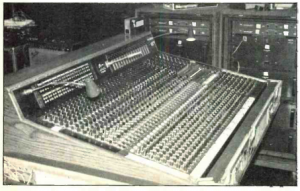
- The Mix Execution: During the performance, Garvey’s approach is notably "straight-ahead." Utilizing a Gamble HC40-24 console, he employs a minimalist signal chain, eschewing complex pitch shifters or excessive outboard processing in favor of the console’s native transparency and high-quality reverb, ensuring that Nelson’s vocal clarity—a hallmark of his performances—remains front and center.
Supporting Data: The Technical Edge
The secret to the "Willie Nelson sound" lies in the proprietary modifications made by Innovative Audio, particularly the work of Dirk Schubert.
The Transformerless Revolution
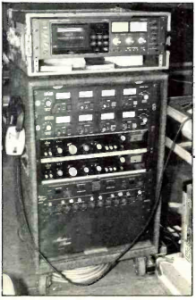
The most significant technical departure in this rig is the commitment to a fully transformerless, DC-coupled PA system. By eliminating audio transformers throughout the signal chain—relying instead on proprietary BIFET active-balanced circuits—the system achieves a phase distortion rate of less than 5%. In contrast, standard industry setups often see phase distortion ranging between 5% and 40%.
"We use more chips, more integrated circuit amplifiers, than any other company would use transformers," explains Innovative Audio’s David Morgan. This allows for a signal-to-noise ratio of -130 dBv, providing a noise floor that is virtually silent, save for the intended audio signal.
The Gamble Console Advantage
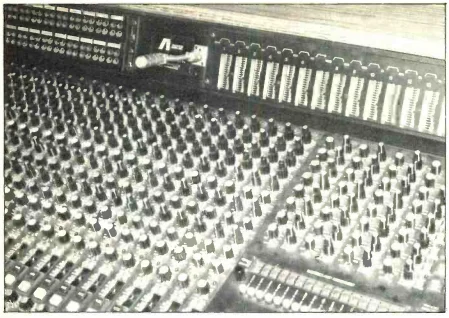
The centerpiece of this architecture is the Jim Gamble-built console. Beyond its reliability—boasting over 1,500 shows with minimal downtime—the console is prized for its "fast" and "bright" sonic character. The onboard third-octave graphics are not merely utilitarian; they are precision tools. As Jim Gamble notes, the cascading group architecture allows for 12 dB of gain per slider, providing immense headroom that requires careful handling by the operator.
Stage and Monitor Infrastructure
The monitor system, mixed by Pete Stauber, is equally sophisticated. Utilizing a Gamble SC32-16 console with true parametric EQ on every input and output, the system eliminates the need for external graphic equalizers. The monitor signal path is routed through a switching matrix that allows for rapid re-assignment of monitor slants, ensuring that the band’s needs are met instantly without requiring the monitor engineer to leave the console.
Official Perspectives: A Culture of Excellence
A common concern in professional audio is the potential for friction when multiple vendors are involved. However, the atmosphere surrounding the Nelson tour is described as a "personality tour," where mutual respect and technical competence override corporate rivalries.

"This really is like a family," says "Little Joe," the Showco representative responsible for the house speaker arrays. This sentiment is echoed by Mike Garvey, who emphasizes that the crew’s attitude is just as critical as the hardware. By focusing on the goal—ensuring the audience in the back row hears the lyrics with the same clarity as the front row—the disparate teams from Showco and Innovative Audio have forged a unified front.
Implications for Live Sound Engineering
The Willie Nelson tour serves as a masterclass in modular, high-fidelity sound reinforcement. Several key takeaways emerge from their production model:
- Transparency as a Priority: The success of the "transformerless" signal path challenges the industry-standard reliance on transformers, suggesting that active-balanced circuitry, when designed correctly, offers a superior level of clarity and phase coherence.
- The Power of Simplicity: Garvey’s refusal to "clutter" the mix with excessive signal processing highlights a fundamental truth: a great source signal, amplified by a transparent system, will always outperform a complex mix delivered through an inferior chain.
- Modular Reliability: The decision to use field-serviceable, modular components—often utilizing high-tolerance parts found in standard electronics supply chains—ensures that the system can be repaired on the road, minimizing downtime.
- Acoustic Adaptability: By using the Showco pyramid speaker system, which excels in both short-throw club environments and long-throw arena settings, the team proves that a versatile speaker design can negate the need for multiple, venue-specific systems.
Conclusion: The Legacy of the Sound
Ultimately, the technology serves the performer. Mike Garvey is quick to note that while the gear is exceptional, the primary factor in the show’s success is Nelson himself. "Willie would sound good singing in a bathtub," Garvey remarks. "He has a very clear voice that always carries well anywhere."
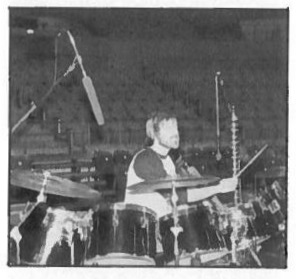
The engineering choices—from the 14-microphone drum setup to the stereo-picked Martin guitar running through a modified Baldwin amplifier—are designed to capture that natural power and present it to the audience without coloration. By combining the legendary projection of the Showco pyramid boxes with the pristine, noise-free amplification of Innovative Audio’s electronics, the Willie Nelson tour continues to demonstrate that in the world of professional audio, there is no substitute for precision, preparation, and an unwavering commitment to the integrity of the sound. This production remains a testament to an era where the focus was on the "transparency of the chain," a philosophy that continues to inform and inspire the professional audio community today.