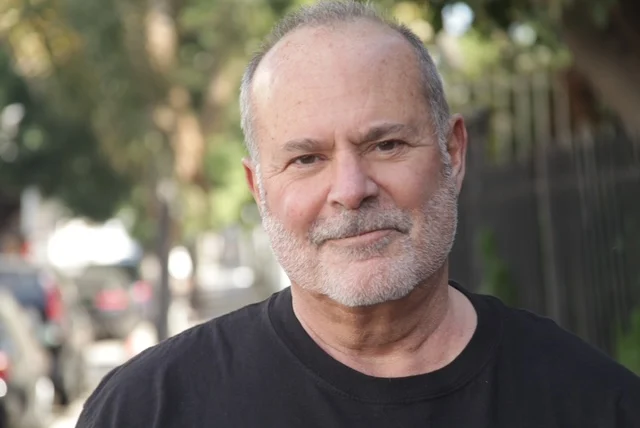
In the high-stakes world of startup incubation, few founders possess a resume as paradoxical as Richard Bronson’s. A man who once stood at the pinnacle of 1980s financial excess, Bronson spent his formative career years inside the orbit of Stratton Oakmont—the infamous, corruption-riddled brokerage firm immortalized in the cultural consciousness by the film The Wolf of Wall Street. Today, however, Bronson is leveraging his past not to secure venture capital for a traditional fintech play, but to solve one of society’s most persistent failures: the successful reintegration of formerly incarcerated individuals.
His new venture, Commissary Club, is an AI-driven social platform designed to navigate the labyrinthine challenges of post-prison life. By blending the community-building aspects of social media with the cold utility of job-placement software, Bronson is attempting to turn the “radioactive” stigma of a criminal record into a manageable, and perhaps even addressable, professional hurdle.
The Chronology of a Fall and a Pivot
The Stratton Oakmont Era
To understand the mission of Commissary Club, one must first look at the trajectory of its founder. In the 1980s, Richard Bronson was an insider at Stratton Oakmont, the firm run by Jordan Belfort that became synonymous with “pump and dump” schemes and aggressive, unethical sales tactics. While the firm’s collapse in the mid-1990s is well-documented, Bronson’s own path was initially one of outward success.
After leaving Stratton Oakmont, he founded his own brokerage firm in South Florida, successfully taking small-cap companies public. At his peak, he managed a $100 million enterprise. But the foundation of that success was built on a disregard for securities law. As Bronson openly admits, the collapse was inevitable. "I built a $100 million business… some of the success, however, came through breaking the law—securities laws—and ultimately, as I knew inevitably would happen, I had to pay the price."
The Price of Freedom
The consequences were total. Bronson lost his business, his reputation, and ultimately, his freedom. He served a multi-year sentence in federal prison—an experience that stripped away his professional identity.
Upon his release, the true depth of his mistake became clear. Despite his prior business acumen, his education, and his deep experience in capital markets, he found himself effectively unemployable. "Nobody would hire me… I was like completely radioactive," he recounted. This period of isolation and professional rejection became the catalyst for his future work. He saw firsthand that if a man with his background struggled to re-enter society, the prospects for those with less education, fewer resources, and no social safety net were virtually non-existent.
The Genesis of Commissary Club
Identifying the Gap
Commissary Club—a name derived from the essential, often overpriced stores within correctional facilities—is designed to bridge the gap between incarceration and stability. Bronson noted that while the prison system provides basic survival needs, it offers almost nothing in terms of structured reintegration into the labor market.
The platform is not merely a job board. It is a comprehensive digital ecosystem that utilizes artificial intelligence to assist users with the specific, often bureaucratic, challenges of reentry. From navigating housing applications to identifying employers who are "second-chance friendly," the platform serves as a digital navigator for those who have been left behind by traditional support systems.
A Technological Partnership
Bronson recognizes that his strength lies in vision and lived experience, but he has bolstered the technical rigor of the startup by bringing in Roman Kissin as a co-founder. Kissin, who serves as the project’s “brains,” brings a pedigree of institutional-grade engineering, having previously held roles at eBay and IBM. Most recently, he served as the CTO of LexisNexis from 2022 to 2025. This technical leadership is critical for a platform that relies on AI to filter opportunities, match users with compatible housing, and facilitate secure communication in a way that is sensitive to the unique data privacy needs of formerly incarcerated individuals.
Supporting Data and The Business Model
The Economics of Reentry
The market for reentry services is vast and, by most metrics, severely underserved. There are millions of individuals in the United States currently navigating the reentry process, a demographic that suffers from historically high unemployment rates and a lack of centralized, effective technology to assist them.
Commissary Club operates on a hybrid model that balances its mission with a for-profit structure. The site offers free initial access, but moves to a paid tier for continued service. Users receive their first 10 job applications for free; subsequent applications are priced at $14.99 each, or in a bundle of 10 for $149.
While some critics might question the optics of charging formerly incarcerated individuals for job placement, Bronson is firm in his conviction that a for-profit model is the only way to build a sustainable, scalable solution. "People immediately assume, ‘Oh, is this a nonprofit?’ And the answer is no," he stated. "There’s a strong mission component, certainly, and I have devoted my life… to helping my brothers and sisters with records."
The Social Component: A Digital Support Network
Beyond employment and housing, Commissary Club emphasizes the psychological aspect of reentry. Prison is an inherently isolating environment, and the transition to the outside world often triggers a sense of alienation. By incorporating social media elements—similar to a niche version of Facebook—the platform allows users to find community, support, and even romantic connections among peers who understand the unique psychological weight of their experiences.
Implications and Future Outlook
Challenging the AI Narrative
While much of the current public discourse regarding AI centers on the technology’s potential to displace workers and automate existing jobs out of existence, Bronson flips the script. He envisions AI as a tool for economic inclusion rather than exclusion. "We’re building AI that creates employment for people that society left behind," he asserts. By using machine learning to parse thousands of job postings and cross-reference them with background-check policies, the platform can efficiently match individuals with companies that are willing to overlook or understand a criminal record, thereby bypassing the initial bias that so often leads to automated rejection.
The Road Ahead
The startup’s selection for the TechCrunch Startup Battlefield 200 is a significant milestone, signaling interest from the broader tech community in the viability of social-impact startups. However, the path forward remains challenging. The startup must prove that its model can scale effectively without losing the trust of the community it serves.
For Bronson, the work is deeply personal. He describes his ongoing commitment to the platform as a form of restitution for his own past transgressions. "I still wake up every day regretting choices I made," he says. That regret, however, is now transmuted into a business that views the formerly incarcerated not as liabilities, but as an untapped workforce that has been systematically ignored by both the public and private sectors.
As Commissary Club grows, it stands as a unique test case for the tech industry: can an entrepreneur with a checkered past build a platform that genuinely shifts the paradigm for those with similar histories? If successful, the company may prove that the most effective advocates for a broken system are those who have seen its inner workings from the inside out.
For now, the team of two continues to refine their AI, expand their database of second-chance employers, and build a digital home for a population that, for too long, has been told they have no place in the modern economy.