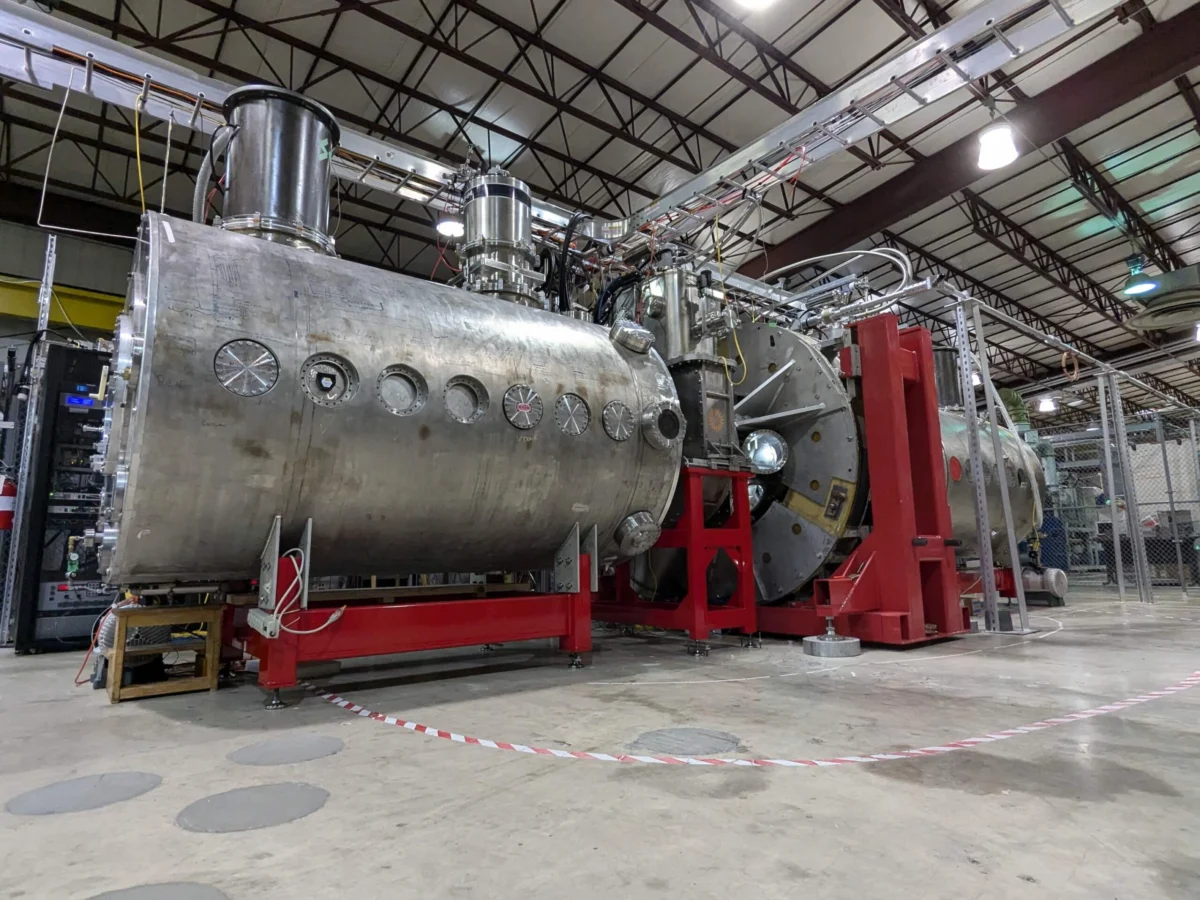
In an era defined by the frantic search for clean, scalable, and near-infinite energy, the industrial landscape of the American Midwest is undergoing a radical transformation. Nowhere is this more apparent than at the former Oscar Mayer factory in Madison, Wisconsin. Once a sprawling symbol of 20th-century food processing, the site is being reimagined as "Forge"—a state-of-the-art research and development facility for Realta Fusion.
This transition, which CEO Kieran Furlong describes with a wry chuckle as a move "from sausages to fusion," is more than a mere repurposing of industrial real estate. It marks a pivotal moment in the domestic energy race, signaling a shift where localized bipartisan policy and academic synergy are outpacing traditional coastal tech hubs.
The Genesis of Forge: A New Era for Wisconsin
Realta Fusion’s decision to plant its roots in Madison is the culmination of a two-year search for a facility capable of hosting complex plasma physics experiments. The company, which recently achieved a technical breakthrough by demonstrating the direct conversion of fusion energy into electricity—a potential “holy grail” for the industry—needed more than just square footage. It required robust electrical infrastructure and a proximity to human capital.
The Oscar Mayer site offered both. Its existing power grid infrastructure is uniquely suited to the heavy energy demands of fusion research. However, the decision to remain in Madison was not purely logistical. It was a strategic bet on the state’s political climate. While other startups in the sector have gravitated toward national laboratories or the tech-heavy corridors of California and Massachusetts, Realta Fusion chose to lean into its status as a "state champion."
Chronology of a Fusion Renaissance
The journey to this moment did not happen overnight. It is the result of a deliberate alignment between academia, the private sector, and state government.
- The Academic Foundation: Realta Fusion traces its lineage to the University of Wisconsin-Madison, an institution renowned for its plasma physics research. The company’s core technology was spun out of an experimental setup at the university that made waves in 2024 by setting new records for magnet strength.
- The Legislative Pivot: In April 2024, the Wisconsin state government passed a landmark piece of legislation. Recognizing the potential for a burgeoning fusion industry, both Republican and Democratic lawmakers united to pass a sales tax exemption specifically for the fusion sector. This policy move proved to be a watershed moment, signaling to investors that Wisconsin was "open for business" in the high-stakes energy market.
- The Site Selection: Over the past 24 months, Realta evaluated various national locations. While other states offered competitive incentive packages, the combination of existing infrastructure at the Oscar Mayer site and the legislative support in Wisconsin created a compelling, low-risk environment for long-term development.
- The Roadmap to 2029: With the site secured, the company has set an ambitious internal timeline. The Forge facility is slated to generate its first plasma in 2029, a critical milestone that will bridge the gap between bench-top physics experiments and a functional, commercial-grade pilot plant.
The Economic and Data-Driven Case for Fusion
The surge in interest surrounding Realta Fusion occurs against the backdrop of a global energy crisis. As the transition to an electrified economy accelerates—driven by the rise of artificial intelligence, which demands unprecedented amounts of power for data centers—the limitations of the current grid have become painfully clear.
The Financial Landscape
Investors are taking notice. In 2026 alone, fusion startups globally have attracted over $1.5 billion in funding. This capital infusion is not just speculative; it is a response to the clear, unmet demand for reliable, carbon-free baseload power. Realta Fusion, supported by a $55 million incentive package, is positioned to utilize this capital to move from the R&D phase to full-scale engineering.
The Incentive Breakdown
The financial support package is a masterclass in regional economic development:
- Sales Tax Exemption: The centerpiece of the legislative support, estimated to save the company $37.5 million.
- Enterprise Zone Tax Credits: $15 million earmarked to encourage high-tech job creation in the region.
- City of Madison Financing: $2.8 million provided through tax increment financing, demonstrating strong local municipal buy-in.
Official Responses and Strategic Implications
The political response in Wisconsin has been characterized by an unusual degree of harmony. Governor and legislative leaders have framed the investment not as a gamble, but as a calculated effort to secure Wisconsin’s place in the future of the global energy economy.
Kieran Furlong, in discussions regarding the company’s expansion, highlighted the "intangible benefits" of the region. "It’s advantageous to be the state champion," Furlong stated. "We get the attention of people who matter, who can help us, who want to see Realta succeed and want to see Wisconsin be a major hub for fusion."
This sentiment contrasts sharply with the trajectory of other firms. Type One Energy, another Wisconsin-grown fusion startup, famously moved its operations to Tennessee in 2024. That departure served as a wake-up call for Wisconsin policymakers, who realized that in the global race for climate tech, proximity to talent is only half the battle; the other half is a supportive, nimble regulatory environment.
The Broader Implications for the Fusion Industry
The story of Realta Fusion and the Forge facility holds several key lessons for the future of the clean energy industry.
1. The Decentralization of Innovation
For decades, the "coastal dominance" model dictated that tech innovation must happen near Silicon Valley or the Route 128 corridor. Realta’s success suggests a shift toward a decentralized model, where companies are increasingly choosing locations based on lower operational costs, specialized local talent pools (in this case, the graduates from UW-Madison), and direct government partnership.
2. The Role of "Fusion Clusters"
The proximity of other firms, such as Shine, creates a "fusion cluster" in the Madison area. This clustering effect is vital for building a supply chain. As these companies grow, they demand specialized parts, software, and engineering services, which in turn spurs secondary and tertiary job growth in the region.
3. The Power of Bipartisanship in Climate Tech
Perhaps the most significant takeaway is the role of political unity. Climate change and energy independence are often treated as polarized political issues. However, the Wisconsin experience shows that when the economic potential of a new technology is clearly articulated, it can bridge partisan divides. The fusion industry provides a rare example of a technology that is viewed simultaneously as an environmental necessity and a massive economic engine.
Conclusion: Looking Toward 2029
The transformation of the old Oscar Mayer factory from a site of food production to a hub of nuclear physics is a powerful metaphor for the broader industrial pivot required to meet the challenges of the 21st century.
As Realta Fusion moves closer to its 2029 target, the world will be watching. If the company succeeds in scaling its direct-to-electricity conversion technology, it will not only solidify Wisconsin’s place as a global leader in energy innovation but also prove that the path to a sustainable future may be found in the heartland of America.
With the right mix of academic rigor, strategic tax policy, and a commitment to regional development, the fusion age may arrive sooner than many skeptics anticipated. For the residents of Madison, the future is no longer just about the food they produce, but the power they hope to bring to the world.