The $995 FiiO K17 is more than just a DAC; it’s a comprehensive digital audio solution that punches far above its weight class, offering exceptional performance, remarkable versatility, and an unparalleled value proposition for audiophiles at all levels.
In the ever-evolving landscape of high-fidelity audio, where price tags can often soar into the stratosphere, the FiiO K17 emerges as a beacon of accessible excellence. This compact device, retailing for a mere $995, defies conventional wisdom by delivering a sonic experience and feature set typically found in components costing many times its price. From its robust digital-to-analog conversion and streaming capabilities to its potent headphone amplification and sophisticated preamplification functions, the K17 has proven itself to be a truly transformative piece of audio hardware. This review delves into the K17’s multifaceted performance, its impressive engineering, and its significant implications for the audiophile community.
A Sonic Revelation in a Compact Form
The initial impression of the FiiO K17 is one of sheer disbelief. Positioned alongside the venerable Klipschorns, a staple in many audiophile setups, the K17 serves as the digital front-end for a ROON-driven playback of "Paranormal" by The Art of Noise. The ensuing soundstage, characterized by deep, textured bass, natural and clean midrange, and a well-defined treble, consistently astonishes visiting audiophile friends. This is not merely a DAC; it’s a fully integrated streamer, preamplifier (though tested here primarily as a DAC/streamer), and a formidable headphone amplifier, all bolstered by a built-in 31-band digital parametric EQ.
The K17’s sonic signature is one of remarkable balance and clarity. The low frequencies exhibit an impressive extension, defined textures, and a satisfying fullness that grounds the musical experience. The midrange is rendered with a natural purity, free from artificial coloration, allowing vocals and instrumental timbres to shine through with authentic realism. While the treble, when critically compared to significantly more expensive components, might reveal a subtle grain, it remains entirely listenable and well-resolved, especially considering the K17’s price point. This slight edginess, if it can be called that, is further softened by the inherent characteristics of speakers like the Klipschorns, which themselves possess a forward treble response. The K17’s ability to convey the intricate details and nuanced textures of Tom Waits’ "What’s He Building?" is a testament to its sophisticated digital front-end. Subsequent playback of Lou Reed’s "Vanishing Act" and Allan Taylor’s rendition of "Tennessee Waltz" further solidifies the K17’s capability to extract profound depth and subtle sonic information from digital sources.
Challenging the High-End Paradigm: Value and Performance
In an era where YouTube forums and audio discussion boards frequently lament the escalating costs of high-end audio equipment, the FiiO K17 stands as a compelling counter-argument. To truly appreciate the K17’s significance, it’s crucial to contextualize its performance against top-tier systems. The reviewer, who possesses a dCS Vivaldi ONE (currently undergoing an APEX upgrade, representing an investment of approximately $100,000), can attest to the K17’s extraordinary value. This comparison is not intended as a boast, but rather to underscore the K17’s ability to deliver exceptional performance that rivals, and in some aspects surpasses, far more expensive components. At $995, the K17 represents not only a tremendous financial value but also a gateway to high-fidelity audio for aspiring enthusiasts and an exceptional anchor for those building a high-performance system without requiring a second mortgage. For seasoned audiophiles, it serves as an ideal foundation for secondary or even tertiary systems.
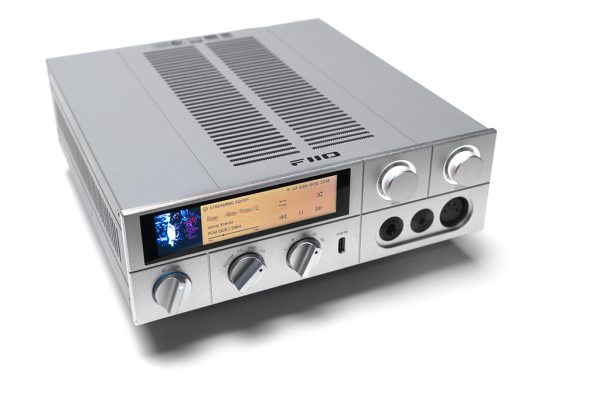
The K17’s integration with a vintage Proceed PDT CD transport and streaming through ROON, Qobuz, and Tidal creates a digital music hub that is nothing short of extraordinary. The device’s compact dimensions, approximately 8" x 8" x 2", belie the advanced circuit design and engineering prowess packed within. This miniaturization is a testament to FiiO’s mastery of execution, transforming what could have been a mere gadget into a sophisticated audiophile component.
Engineering Marvel: Miniaturization and User Interface
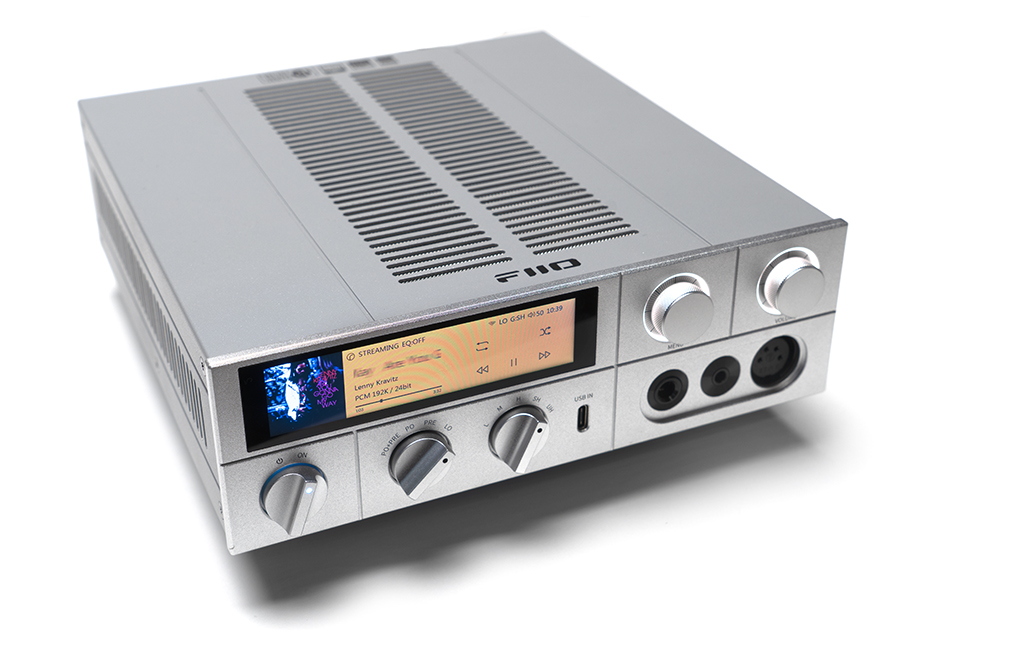
A closer examination of the FiiO website reveals the astonishing array of technology integrated into the K17’s remarkably small chassis. The device is a true masterpiece of miniaturization, with no wasted space. The front panel features a vibrant 3.93-inch high-resolution touchscreen, providing intuitive control over all functions and clear visualization of playback information. The aesthetic design strikes a pleasing balance between modern functionality and a subtle, retro charm, reminiscent of early Mark Levinson designs, albeit in a significantly more compact form factor.
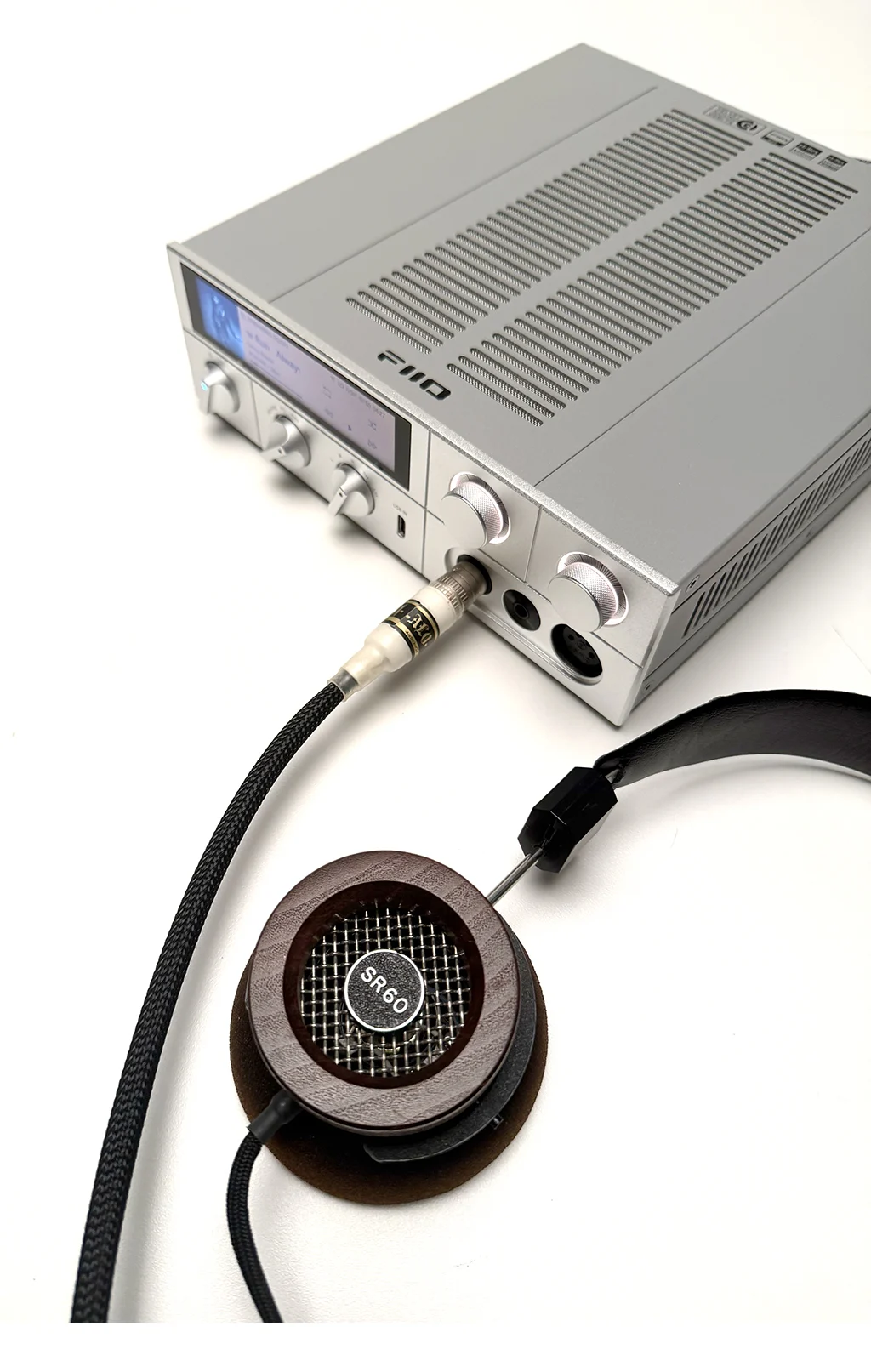
Beyond the essential volume and menu controls, the K17 offers three distinct headphone jacks and multiple selectors for power, function, and gain adjustments. The review unit arrived in a silver finish with black lettering, which, while attractive, presented a slight legibility challenge due to the small font size. Opting for the black variant is recommended for enhanced readability, a minor quibble in an otherwise impeccably designed unit.
As a DAC/Streamer: The Digital Heartbeat
The true depth of the K17’s capabilities unfolds when exploring its functionality as a DAC and streamer. Primarily utilized as a ROON endpoint in this review, its performance was nothing short of revelatory. The K17 boasts both RCA and balanced XLR analog outputs, confirming its fully balanced design. While the reviewer’s existing amplifier setup necessitated the use of the RCA outputs, the inherent quality of the balanced architecture is evident in the sonic output.
The rear panel is replete with connectivity options, ensuring compatibility with virtually any digital source. Digital inputs include coaxial SPDIF, optical, and USB, providing a comprehensive solution for digital audio integration. The K17’s ability to stream from any source, anywhere, underscores its exceptional flexibility. It even decodes MQA files, a feature that, while perhaps less prominent now, adds to its future-proofing. Bluetooth playback, facilitated by Spotify streaming from an iPhone, proved to be exceptionally good, further highlighting the K17’s versatility.
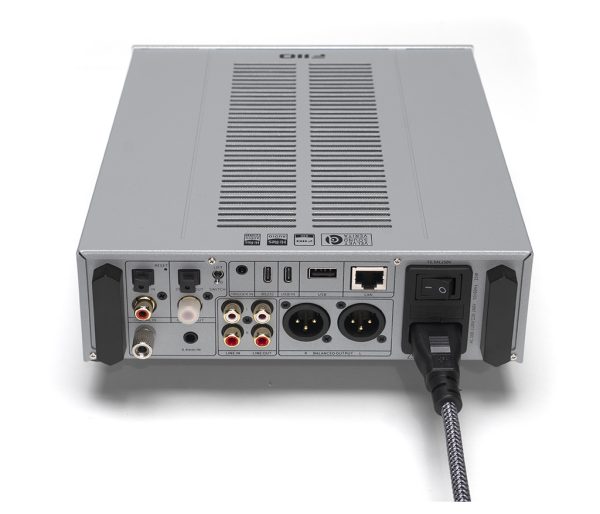
The K17’s decoding prowess is comprehensive; it effortlessly handles every file format encountered in the reviewer’s library. Its seamless integration as a DAC with a vintage Proceed transport, playing CDs via the coax SPDIF input, revitalizes older digital sources, breathing new life and functionality into them. This makes the K17 an ideal upgrade path for those with perfectly functional but technologically dated CD players.
As a Headphone Amplifier and Preamplifier: Unlocking Sonic Potential
While not an avid headphone user, the reviewer maintains a collection of high-quality headphones for critical listening. Engaging the K17 solely as a headphone amplifier quickly confirmed its value proposition, demonstrating that even this single function justifies its asking price. FiiO claims an impressive 4 watts of output power, supported by discrete output devices within the headphone amplifier section. Listening sessions with the Focal Clear MG, original Audeze 2s, and a pair of Grados revealed a musically engaging and dynamic performance across all headphone pairings.
The integrated 31-band digital parametric EQ is a particularly noteworthy feature, especially for headphone enthusiasts who understand the inherent variability in how different headphones interact with various amplifiers. The ability to fine-tune the frequency response across such a broad range is invaluable for optimizing the listening experience. Crucially, these adjustments can be made effortlessly via a smartphone or tablet using FiiO’s companion app, which also provides control over all other K17 functions.
This EQ capability extends beyond headphones, proving immensely useful for room correction. In a less-than-ideal acoustic environment, the ability to surgically attenuate problematic bass frequencies or gently boost recessed upper-midrange tones can dramatically enhance listenability. While this might raise eyebrows among purists, the practical benefit of tailoring the sound to the room and the recording is undeniable. Not all recordings are created equal, and the K17 provides the tools to mitigate their sonic imperfections.
The K17’s fully balanced design facilitates flexible placement within a listening space. Long balanced interconnects can be utilized to connect to a power amplifier and speakers located elsewhere in the room. In one instance, the K17 was connected via a 6-meter pair of balanced XLR cables to a Pass Labs XA30.8 power amplifier. While the K17 functions as a dedicated DAC in the studio setup, its potential as a preamplifier is equally impressive. The front panel offers the choice between fixed and variable outputs, and a conveniently placed USB-C port, along with a ground lift switch on the rear, ensures effortless system integration. FiiO has meticulously considered every detail to ensure the K17 is easily incorporated into any audio system.
Using the K17 as a line-level preamplifier, directly connected to a power amplifier, proved to be a highly effective solution. This transforms the K17 into an exceptional building block for a modest, yet high-performance, two-channel system. The single analog input simplifies the integration of a turntable, enabling the addition of vinyl playback. The combination of the K17 with a Hagerman Trumpet MC phono preamplifier, a vintage Technics SL-1100 turntable, a Vera-Fi A40 Class A/B power amplifier, and vintage Acoustat 2+2 speakers delivered a truly remarkable listening experience. The absence of discernible information loss at low volumes suggests that FiiO has implemented the volume control in the analog output stage, a crucial detail for maintaining sonic integrity.
The "$100k Question": Contextualizing the K17’s Performance
So, does the FiiO K17 stand toe-to-toe with a dCS Vivaldi ONE? The honest answer is no, it does not. However, this comparison is inherently unfair, akin to pitting a finely tuned sports car against a Formula 1 racing machine. The K17’s core sonic characteristics are undeniably excellent, and the level of sonic refinement it offers far exceeds expectations for its $995 price point. In direct comparisons with players from brands like Advance Paris, Naim, and Marantz, priced at nearly double the K17’s cost, the FiiO component holds its own with remarkable composure.
Where the K17 truly shines is in its unique combination of features and its ability to outperform comparable devices at more than double its price. This represents outstanding value. While it may not be a dCS Vivaldi or an Esoteric Grandioso, it was never intended to be. The K17’s true strength lies in its ability to elevate systems costing between $3,000 and $10,000+, delivering a sonic experience that will undoubtedly thrill discerning listeners. The reviewer’s own enthusiasm for the K17 is a testament to its profound impact.
Conclusion: An Exceptional Value Award Recipient
At $995, the FiiO K17 stands as one of the most exceptional value propositions encountered in the high-end audio market in recent memory. It more than justifies its asking price, even when considered as a standalone preamplifier, headphone amplifier, DAC, or streamer. The fact that all four of these sophisticated functionalities are seamlessly integrated into a single, elegantly executed component is truly remarkable.
In recognition of its groundbreaking performance, unparalleled versatility, and extraordinary value, the FiiO K17 is awarded our first Exceptional Value Award of 2026. Regardless of your current stage in the audiophile journey, the K17 is an essential audition. The review sample has been retained, and further insights will be shared on YouTube in the coming weeks.
Peripherals Used in Review:
- Digital Source (Transport): Madrigal Proceed PDT
- Analog Source: Technics SL-1100 with SME 3009 tonearm and Denon DL-103r cartridge
- Phono Preamplifier: Hagerman Trumpet MC
- Power Amplifiers: Pass XA30.8, VeraFi A40
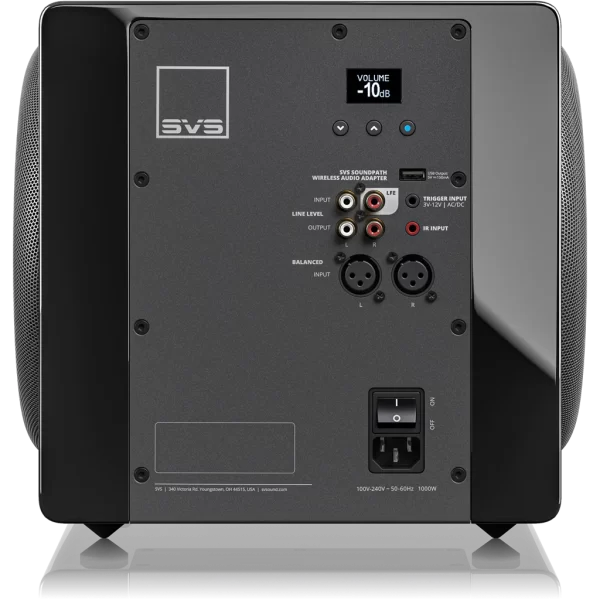
- Speakers: Klipsch AK7 Klipschorns with SVS 5000 subwoofer
- Cables: Ranger signal and power cables