Introduction: A Night of Transition at Mercedes-Benz Stadium
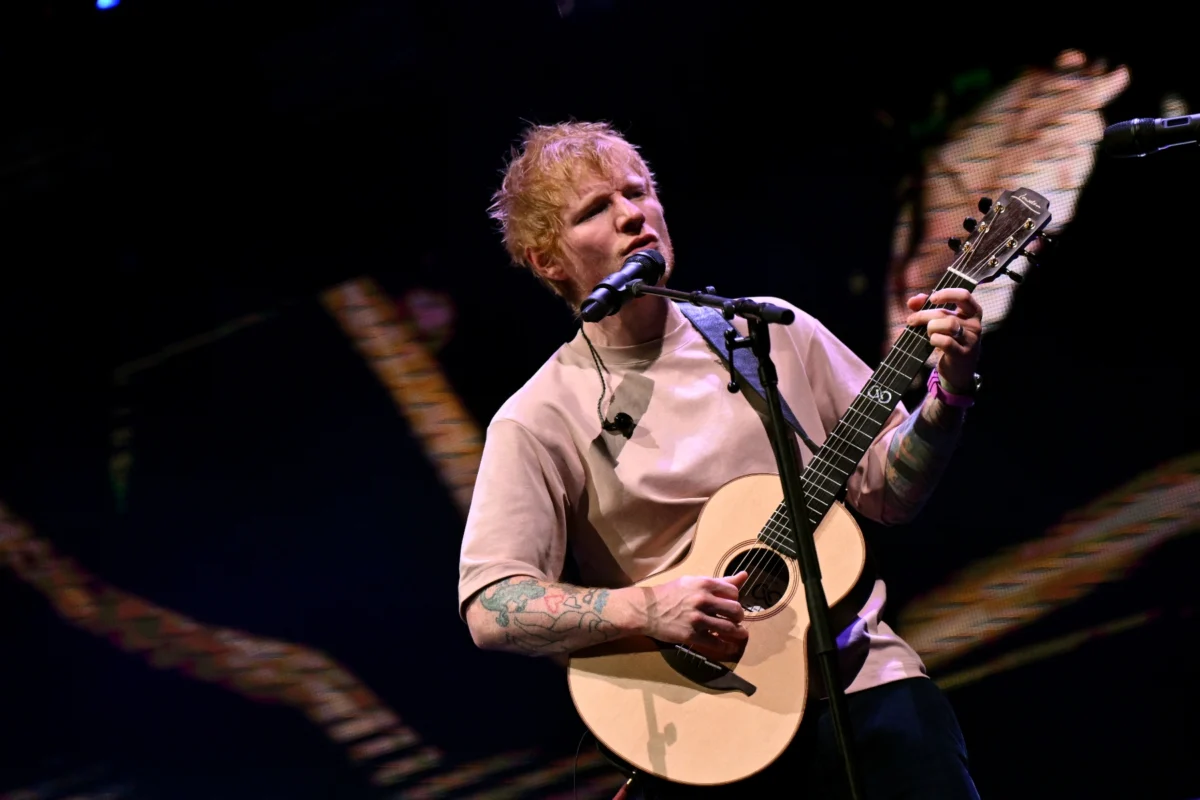
On Saturday, October 3, the atmosphere inside Atlanta’s Mercedes-Benz Stadium was charged with a unique energy. As Ed Sheeran’s record-breaking "Loop Tour" rolled into the Georgia capital, the massive arena—typically a sanctuary for pop anthems and intricate stage production—became the site of a profound, albeit subtle, pivot in the tour’s narrative. Following a period of intense public scrutiny and administrative upheaval regarding his support lineup, Sheeran introduced a familiar face to the stage: Isaac Slade, the former frontman of the chart-topping rock band The Fray.
The appearance was more than just a musical interlude; it served as a deliberate attempt to redirect the discourse surrounding the tour back to themes of connection and common ground. As the industry watches the ongoing ripple effects of the tour’s recent personnel changes, the Atlanta stop stands as a critical case study in how major artists navigate the intersection of global politics, venue management, and the preservation of their artistic vision.
The Chronology of Change: From Macklemore to The Fray
To understand the significance of the October 3 performance, one must first look at the sequence of events that led to the tour’s current status. The controversy began to boil over during the tour’s U.S. leg, specifically following performances at New Jersey’s MetLife Stadium on September 4 and 5.
Macklemore, the Seattle-based rapper known for his socially conscious lyrics, utilized his platform during these opening sets to perform his track "Hind’s Hall" and explicitly call for a "Free Palestine." The move was met with immediate, polarized reactions from the public and, more importantly, from venue management.
According to official reports and statements released by Sheeran, the decision to remove Macklemore from the remainder of the tour was not an internal artistic choice but a mandate handed down by tour promoters and venue operators. Faced with the prospect of cancelled shows or venues refusing to host the tour with Macklemore on the bill, the decision was made to sever ties. The fallout was swift: in a show of solidarity, other scheduled supporting acts—including Aaron Rowe, Finneas, and Lukas Graham—withdrew from the tour, as did Sheeran’s backing band, Beoga.
This left Sheeran in a precarious position. By the time he reached Philadelphia for his September 19 performance, he was operating without an opening act. During that concert, Sheeran took a moment to address the audience directly, emphasizing that he envisioned his performances as spaces for "love, hope and unity." He acknowledged the immense suffering occurring in both Israel and Gaza, attempting to position his stage as a neutral ground for shared human experience.
The appointment of Isaac Slade as the surprise opener in Atlanta was, therefore, a strategic effort to stabilize the tour’s atmosphere. The two artists have a documented history, having performed together in Toronto in August, where Sheeran shared with the audience that Slade’s songwriting had been a foundational influence during his own teenage years.
The Message from the Stage: Isaac Slade’s Call for Equilibrium
Isaac Slade’s set in Atlanta was concise but impactful. He performed quintessential hits like "How to Save a Life" and "You Found Me," tracks that carry a nostalgic resonance for a generation of music fans. However, it was his spoken commentary that dominated the conversation following the show.
In fan-captured video footage that has since circulated widely on social media, Slade took a direct stance on the polarization surrounding the conflict in Gaza. Moving away from the absolutist rhetoric that has defined much of the public discourse, Slade urged the stadium crowd to seek a "middle place."
"Everybody seems to be taking sides in this world and that’s good," Slade stated from the stage. "What’s happening over there is wrong, but if we’re going to get through it, we’re going to need people to step into that middle place, that common ground."
Slade’s monologue was marked by a desire to redefine peace. He argued that peace is not merely a "lack of conflict" or a "blank canvas" that requires polite silence to maintain. Instead, he framed peace as a complex state of existence—one that acknowledges tragedy, sorrow, and joy simultaneously. "If we learn how to integrate it and hold each other in balance," he told the crowd, "we will find a way through this together."

Supporting Data and Context: The Impact of Tour Disruptions
The logistical and financial implications of the "Loop Tour" turmoil are significant. The departure of an act like Macklemore, who commands a massive, dedicated following, inevitably alters the ticket-buying demographic and the overall production flow of the tour.
The rapid success of Macklemore’s independently launched "Free Palestine Tour"—which saw dates sell out almost immediately—serves as a quantitative measure of the intensity of the current political sentiment. While Sheeran’s tour remains one of the highest-grossing in recent years, the administrative decision to drop Macklemore has invited criticism regarding artistic freedom and the role of corporate entities in policing the speech of performers.
Furthermore, the withdrawal of high-profile acts like Finneas and Lukas Graham has forced the tour to rely on more spontaneous, guest-heavy configurations. This shift, while logistically challenging, has resulted in a more intimate, albeit unpredictable, experience for concertgoers. The use of "surprise guests" allows Sheeran to maintain the momentum of the tour while carefully selecting performers whose public personas align with the "unity" message he has been championing since the Philadelphia show.
Official Responses and Industry Implications
The music industry has been closely watching the "Loop Tour" situation, as it highlights a growing tension between the responsibilities of artists and the safety/commercial concerns of stadium owners.
Sheeran’s camp has been careful to frame the removal of Macklemore as a consequence of external pressure rather than a personal dispute. By consistently returning to the theme of "love, hope and unity," Sheeran is attempting to insulate his brand from the toxicity of the current political climate. This strategy is standard for global pop stars, but the complexity of the ongoing conflict in the Middle East has made such "neutrality" increasingly difficult to maintain without drawing criticism from both sides of the aisle.
Industry experts note that the "Loop Tour" precedent could influence how promoters draft contracts for future large-scale stadium tours. Clauses related to political speech, performer conduct, and the right of venues to censor or remove artists are likely to become more rigid in the coming years.
Implications: The Future of the "Loop Tour"
As Ed Sheeran continues his trek across the country, the question remains: can a major, multinational stadium tour effectively serve as a forum for political neutrality?
The Atlanta performance suggests that the answer lies in the curation of the opening acts. By selecting someone like Isaac Slade, who speaks in the language of bridge-building and emotional resilience rather than specific political policy, Sheeran is testing a model where the concert acts as a temporary "safe space" from the digital and social polarization of the outside world.
However, the shadow of the recent controversy is unlikely to fade quickly. The departure of key team members, including his backing band Beoga, marks a fundamental change in the sonic and professional architecture of the tour. Fans are now witnessing a "leaner" and perhaps more personal version of the "Loop Tour," one that prioritizes Sheeran’s singular vision over the collaborative, multi-act spectacle that defined the tour’s earlier stages.
Ultimately, the Atlanta show was a microcosm of the modern pop star’s dilemma: how to remain a global unifier in an era that demands constant, decisive, and often divisive takes on global affairs. For now, Sheeran is betting that his audience is looking for a reprieve—a place where, as Slade put it, they can hold their sorrow and joy in balance, even if only for the duration of a two-hour set. Whether this approach will satisfy both the industry stakeholders and the diverse, politically engaged fanbase remains to be seen as the tour moves toward its next destination.