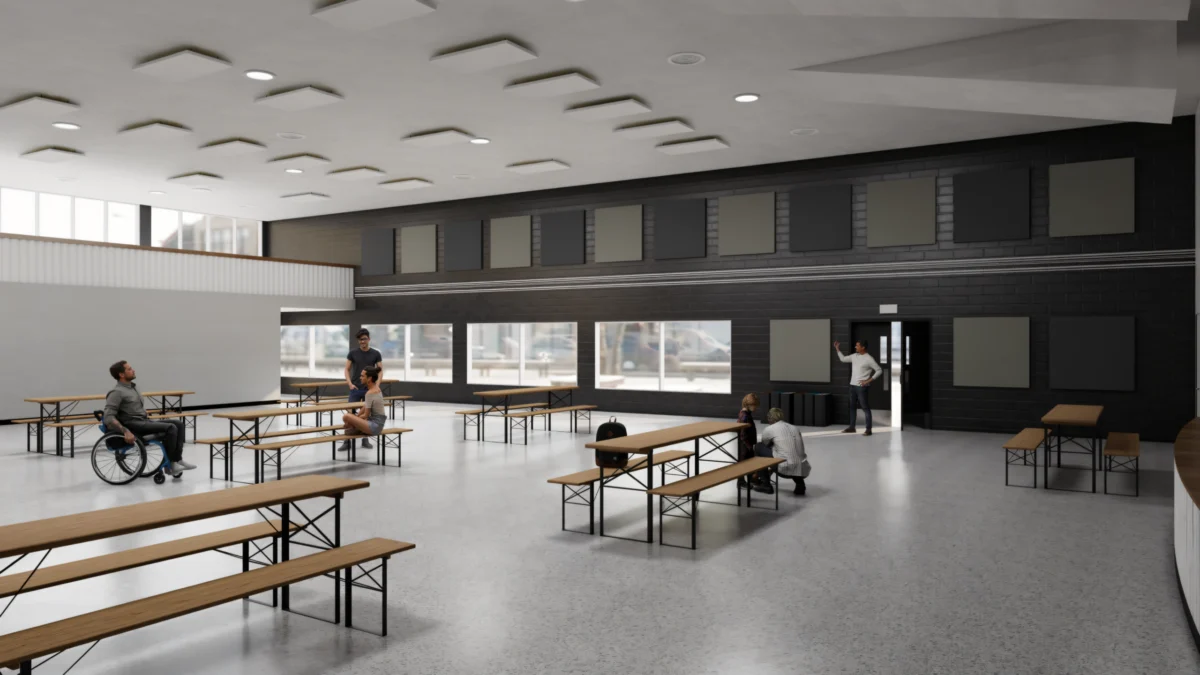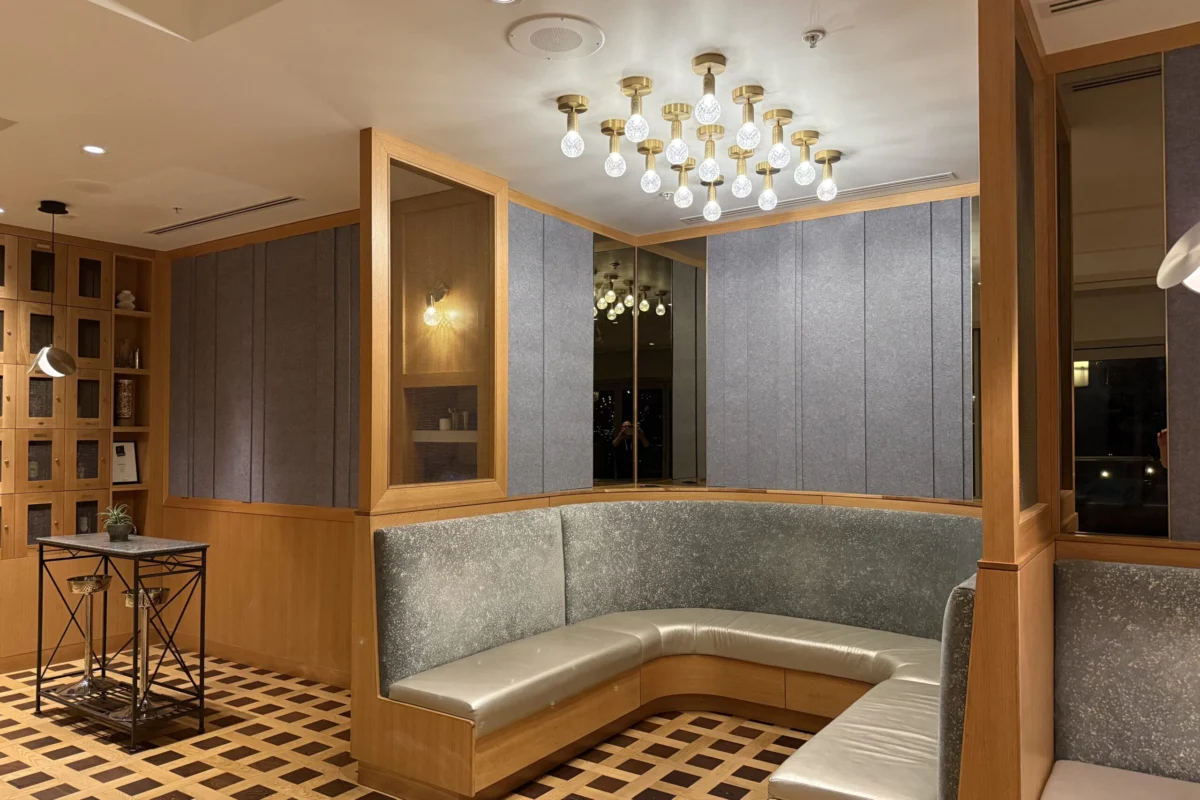
GLOBAL EDUCATION REPORT — Modern educational architecture has undergone a radical transformation. Gone are the days of rigid rows of desks facing a chalkboard inside a sound-trapping box of cinderblock and linoleum. Today’s universities, K-12 schools, libraries, and multi-use commons areas are increasingly designed as dynamic, flexible, multi-purpose spaces intended to foster collaboration, communication, and shared learning experiences.
However, as these environments evolve structurally, a critical architectural component is frequently overlooked: acoustic design. While visual aesthetics, ergonomic seating, and advanced lighting regularly take center stage, the invisible architecture of sound dictates whether these state-of-the-art spaces succeed or fail. In modern educational facilities—ranging from cavernous open-plan student hubs to traditional lecture halls—sound management is no longer an afterthought. It is the fundamental baseline that determines whether an environment is truly comfortable and conducive to effective teaching and learning.

Main Facts: The Invisible Barrier to Comprehension
The core issue facing modern educational spaces lies in a fundamental conflict between contemporary interior design trends and human auditory processing. Over the past decade, minimalist architecture has favored hard, highly reflective surfaces. Glass curtain walls, steel accents, granite countertops, and polished tiled floors have become staples of modern institutional design.
While these materials create sleek, bright, and visually appealing spaces, they act as acoustic mirrors. Sound waves bounce endlessly off these hard boundaries, creating a chaotic environment defined by reverberation, echoes, and overlapping reflections.

This acoustic turbulence directly sabotages the primary function of a school: communication. When background noise, HVAC hums, and bouncing sound waves collide, the resulting acoustic clutter makes it extraordinarily difficult for students to hear and comprehend instructors. Consequently, learners miss crucial vocabulary, instructions, and conceptual breakdowns.
According to cognitive research, this acoustic friction forces the human brain to work overtime. Students are constantly expending mental energy just to filter out ambient noise and decipher speech—a phenomenon directly illuminated by Cognitive Load Theory. When working memory capacity is drained by the exhausting task of listening through noise, students are left with significantly less mental bandwidth to process, analyze, and retain new information.

Chronology: The Evolution of the Classroom Soundscape
To understand how modern learning spaces reached this acoustic crossroads, it is helpful to trace the evolution of educational architecture over the past century:
- The Mid-20th Century (Traditional Era): Classrooms were designed as isolated, box-like enclosures. While construction materials like plaster and concrete naturally absorbed some sound, these spaces were plagued by poor ventilation noise and a rigid, one-way transmission of instruction that ignored collaborative needs.
- The Late 20th Century (Industrial Standardization): The mass construction of schools led to utilitarian design philosophies. Drop-ceilings utilizing standard, porous acoustic tiles became the norm. While functional, these tiles were frequently prone to sagging, staining, and visual degradation over time, offering minimal aesthetic appeal or true acoustic calibration.
- The Early 2000s (The Open-Plan Movement): Inspired by corporate office design, architects began tearing down walls to create open-concept collaborative hubs, flexible commons areas, and expansive multi-purpose spaces. Unfortunately, acoustic planning often failed to scale alongside these sweeping spatial changes.
- The Present Day (Integrated Acoustic Engineering): Driven by mounting scientific data regarding cognitive load and speech intelligibility, institutions are shifting toward purposeful, high-performance acoustic design. Modern interventions now utilize advanced materials—such as specialized glass wool panels, custom ceiling clouds, and targeted baffles—that merge seamlessly with contemporary architecture without sacrificing visual sophistication.
Supporting Data: The Science of Sound and Speech Intelligibility
The impact of poor room acoustics on academic performance is not merely a matter of comfort; it is quantifiable by strict scientific and architectural metrics.

The Reverberation Time Benchmark
In professional acoustic terms, room reflectivity is measured by RT60—the time it takes for sound to decay by 60 decibels after the source has stopped. In untreated spaces featuring hard architectural surfaces, the RT60 can spike as high as 1.9 seconds. For optimal learning environments, international building standards recommend an RT60 of no more than 0.7 seconds. When reverberation lingers past this threshold, every spoken syllable bleeds into the next, creating a muddy wall of sound.
The Cost of Missing Words
Hearing speech is fundamentally different from understanding it. In untreated, reverberant rooms, transient high-frequency sounds—specifically consonant endings such as f, p, s, and t—are completely obscured.

Extensive educational research reveals that students in acoustically poor environments can miss up to 1 in every 4 words spoken by an instructor. This deficit is exacerbated exponentially for students seated toward the back of large lecture halls or elementary assembly spaces, as sound naturally loses energy and clarity the farther it travels from the source. Furthermore, this dynamic triggers the Lombard Effect: as ambient background noise rises, speakers unconsciously raise their voices to compensate, which in turn drives background noise levels even higher in an escalating cycle of institutional cacophony.
Official Responses and Industry Insights: Shifting the Paradigm
Acoustic manufacturers, interior architects, and educational facility planners are increasingly speaking out against the legacy of "one-size-fits-all" utilitarian noise fixes. Industry leaders emphasize that effective acoustic design is never about deadening a room into an unnatural, oppressive silence; rather, it is about balance, localized absorption, and speech clarity.

The Myth of Sound Reinforcement
A common misconception among facility managers is that installing expensive sound reinforcement systems—such as microphones and loudspeakers—can single-handedly solve intelligibility issues in large lecture halls or multi-purpose rooms. Acoustic engineers note that without proper sound absorption, amplification simply feeds more energy into the room, exacerbating reflections, echoing, and reverberation. True speech clarity requires a symbiotic relationship between balanced amplification and strategic surface absorption.
Targeted Mitigation Strategies
Modern acoustic design addresses specific architectural pressure points through localized interventions:

- Ceiling Clouds and Baffles: Suspended horizontally or vertically overhead, these elements intercept vertical sound reflections in high-ceilinged atriums and collaborative commons before they can travel across zones.
- Broadband Absorption Panels: Utilizing high-density glass wool—traditionally reserved for professional recording studios and performing arts centers—these panels provide balanced absorption across the entire frequency spectrum.
- Mobile Isolation Units: In modern media-rich environments where students record presentations, stream lectures, or collaborate on digital content, reconfigurable acoustic shields provide localized control over unwanted ambient noise.
Implications: Long-Term Benefits for Students and Institutions
The implications of integrating sophisticated acoustic design into educational spaces extend far beyond immediate comfort. By intentionally lowering ambient noise levels and optimizing speech intelligibility, institutions unlock profound benefits for both students and educators.
Enhanced Focus and Extended Attention Spans
When auditory distractions are minimized, classrooms experience a dramatic reduction in cognitive fatigue. Students spend less energy decoding distorted speech, leaving them with greater mental endurance to engage with complex, abstract concepts. This sonic calm directly correlates with improvements in student behavior, longer attention spans, and higher rates of classroom participation.

Health and Wellbeing for Educators
Teachers suffer disproportionately from vocal strain and occupational fatigue caused by shouting over persistent background noise and reverberation. Upgrading a school’s acoustic profile protects the vocal health of educators, reducing sick leave and burnout while creating a more sustainable, welcoming workplace.
Aesthetic and Functional Longevity
Modern architectural acoustic solutions—such as Primacoustic’s advanced product lines, including Broadway panels, TelaScapes fabric-wrapped systems, Archadia line, EcoScapes sound control systems, and GridWay ceiling grids—prove that acoustic treatment no longer requires ugly, sagging industrial tiles. Today’s systems enhance interior architecture while offering durable, high-performance acoustic control that withstands the heavy wear-and-tear of daily institutional life.

Ultimately, asking whether a room can make you smarter misses the point: while a well-designed room cannot manufacture intelligence, an improperly designed room can actively impede it. By treating sound as a vital architectural asset, schools and universities can build environments where communication flows freely, concentration thrives, and every student is given an unobstructed path to success.