Main Facts
Released on September 16, 1996, through the legendary independent label Mo’ Wax, Endtroducing….. by DJ Shadow (born Josh Davis) stands as a monumental shift in contemporary music. Certified by the Guinness Book of World Records as the first-ever album composed entirely of sampled sounds, the record fundamentally challenged prevailing notions of what hip-hop could be.
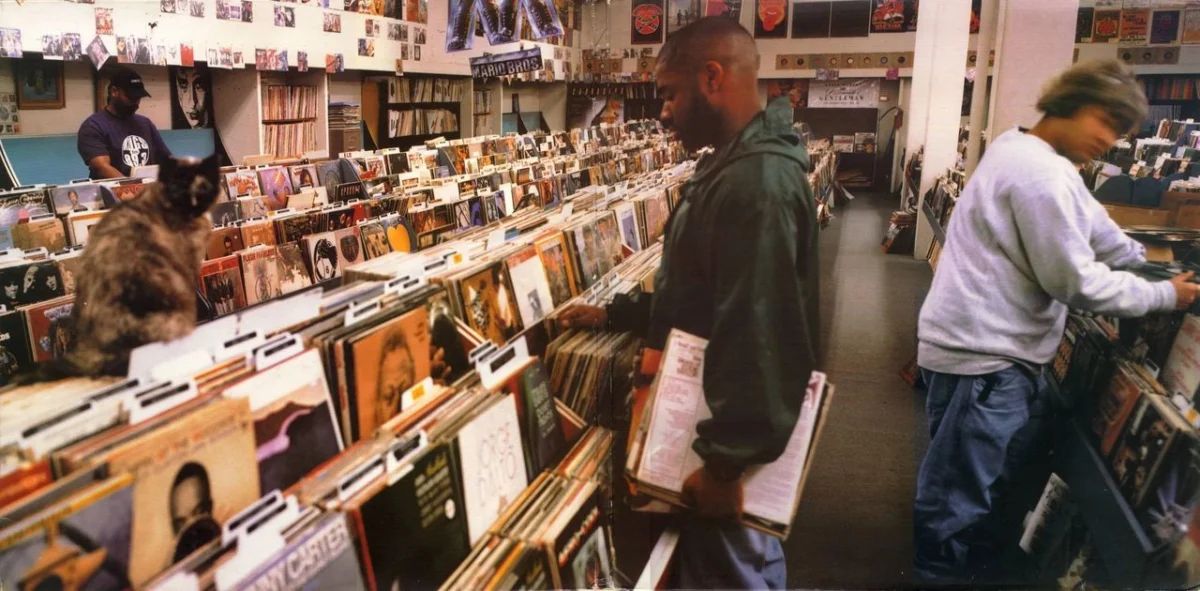
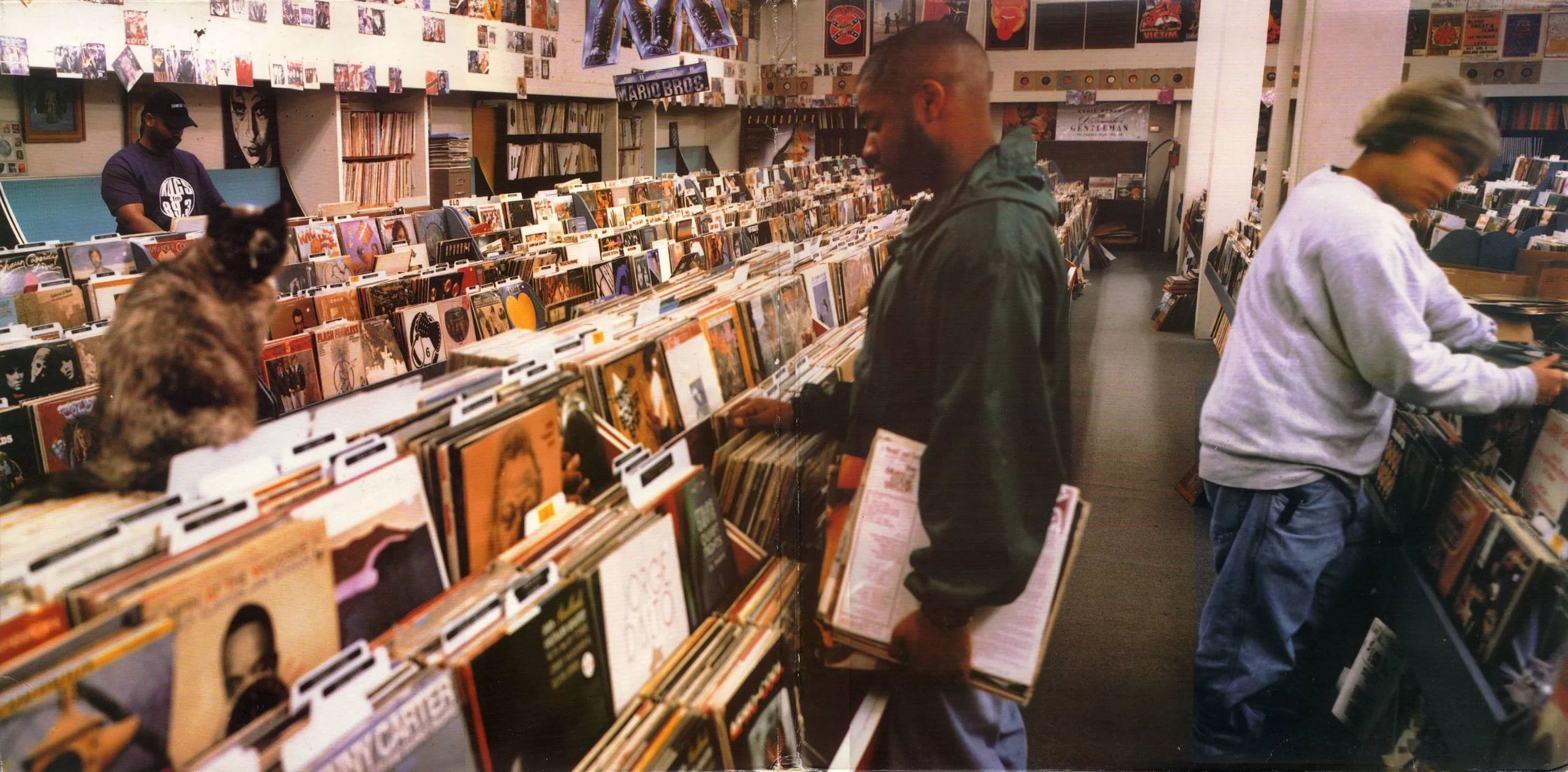
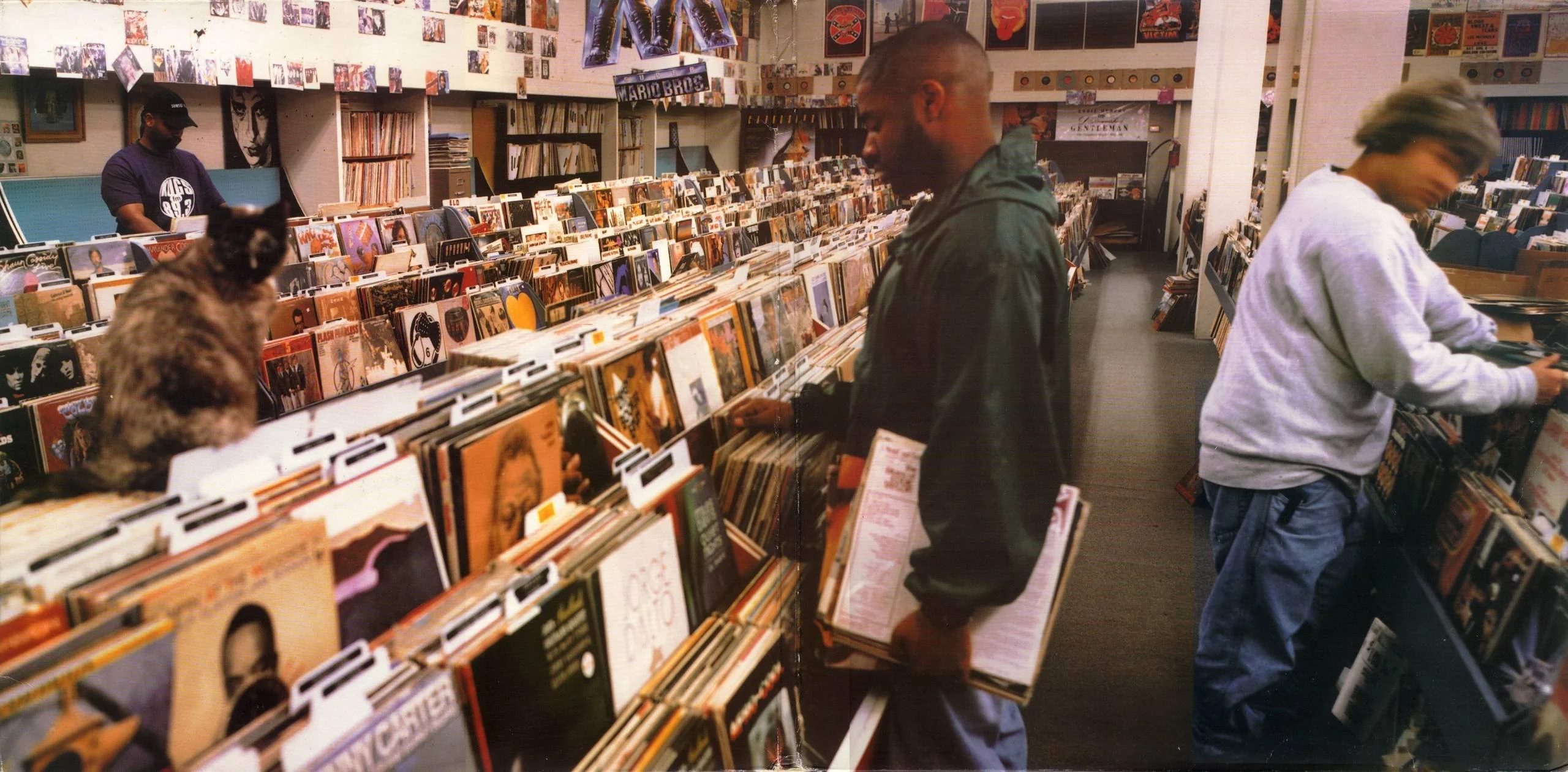
Crafted almost exclusively using an Akai MPC60 MKII sampler, the album sidestepped traditional live instrumentation, vocal verses, and standard production formulas. Instead, Davis scoured the physical vinyl bins of second-hand record stores—most notably Sacramento’s Rare Records, immortalized on the album’s gatefold cover—to compile an eclectic sonic tapestry. The resulting masterpiece seamlessly weaves together fragments of dialogue, obscure 1970s soul records, progressive rock icons like Pink Floyd and Metallica, and avant-garde jazz, creating a cohesive, cinematic experience that remains a gold standard for testing high-fidelity audio equipment.
Chronology: The Summer and Fall of 1996
The historical backdrop of Endtroducing….. is inextricably linked to a turbulent era in modern music history.
- September 13, 1996: Tupac Shakur passes away in Las Vegas after succumbing to gunshot wounds sustained in a drive-by shooting three days prior. The tragedy sends shockwaves through the global music community, highlighting the deadly real-world consequences of the hyper-violent gangsta rap narratives dominating the charts at the time.
- Mid-September 1996: While mainstream hip-hop reels from the loss of one of its brightest stars and law enforcement begins a protracted search for answers, the genre’s cultural bandwidth is entirely consumed by the East Coast-West Coast rivalry.
- September 16, 1996: Amid this tense climate, Mo’ Wax releases Endtroducing…... Rather than offering another contribution to the dominant hardcore gangsta rap or polished commercial pop-rap cycles, the album arrives as an atmospheric, introspective, and entirely instrumental counter-narrative. It proves that hip-hop production can exist as a high-art form removed from traditional lyrical sparring.
- Post-1996 to Present: The album steadily ascends from a critical darling into a universally acknowledged masterpiece, inspiring generations of electronic producers, trip-hop artists, and crate-diggers while permanently embedding itself into audiophile culture.
Supporting Data and the Art of Crate-Digging
To understand the sheer magnitude of Endtroducing….., one must examine the raw materials and hardware behind its creation. Davis’s personal record collection has long been rumored to exceed 60,000 vinyl LPs—a number that has likely grown exponentially over the decades.
The production process relied heavily on the Akai MPC60 MKII, a machine celebrated for its warm analog-to-digital converters and tactile workflow. Using this sampler, Davis meticulously chopped, pitched, filtered, and arranged fragments from two distinct worlds: recognizable mainstream music and deeply obscure vinyl cuts.
The Auditory Blueprint: High-Profile vs. Obscure Samples
- The Mainstream Icons: Davis draws upon heavyweights like Metallica (utilizing Orion from Master of Puppets), Pink Floyd (incorporating On the Run from studio footage in the theatrical cut of Live at Pompeii), and Björk (sampling Possibly Maybe from her sophomore album, Post).
- The Deep Cuts: Obscure finds form the emotional and rhythmic core of the record. Building Steam With a Grain of Salt features piano motifs from Jeremy Storch’s 1970s track I Feel a New Shadow—an artist so niche he lacks even a dedicated Wikipedia page. Meanwhile, Organ Donor reimagines Giorgio Moroder’s deep cut Tears, transforming it into a high-octane rhythmic groove.
Audiophile Breakdown: Putting Hi-Fi Systems Through Their Paces
For audio enthusiasts, Endtroducing….. functions as a rigorous diagnostic tool for home sound systems. Poorly calibrated setups or entry-level gear reduce the album’s complex arrangements to a muddy jumble of noise, whereas high-end hi-fi systems reveal startling depth:
- "The Number Song": Features a deeply resonant, droning bassline that demands precise low-end control before lively, dynamic brass instrumentation cuts through the mix.
- "What Does Your Soul Look Like, Pt. 4": Tests upper-register clarity, requiring gently insistent cymbals to slice through dense layers of mournful brass, understated piano, and twinkling percussion.
- "Midnight in a Perfect World": Serving as the album’s emotional epicenter, this track pulls a melancholic yet hopeful piano loop from David Axelrod’s The Human Abstract, blending it with woozy synthesizers and vintage vocal fragments to construct an expansive, atmospheric soundscape.
Industry and Critical Reception
Upon its release, Endtroducing….. caught the music industry largely by surprise. Mainstream critics accustomed to traditional song structures were forced to evaluate a record that relied entirely on mood, texture, and rhythmic ingenuity.
Labels and producers took note of how a single artist working in a bedroom studio could harness the history of recorded music to forge something entirely new. Mo’ Wax label head James Lavelle championed Davis’s vision, positioning the label at the vanguard of the burgeoning trip-hop and instrumental hip-hop movements alongside acts like DJ Krush and UNKLE.
Retrospective reviews have been universally glowing. Music publications routinely place Endtroducing….. near the top of lists detailing the greatest albums of the 1990s, the finest electronic records of all time, and essential listening guides for audiophiles testing high-end speakers and turntables.
Implications for Modern Music and Sample Clearance Culture
The legacy of Endtroducing….. extends far beyond its initial commercial and critical footprint; it serves as both a blueprint and a cautionary tale for modern music production.
The Evolution of Electronic and Instrumental Hip-Hop
By proving that instrumental hip-hop could sustain a full-length album format without losing the listener’s attention, DJ Shadow paved the way for the instrumental beat scene. Producers working in lo-fi hip-hop, ambient electronica, and modern abstract beat-making owe a debt to the structural fluidity and cinematic scope of tracks like Stem/Long Stem and Changeling.
The Legal and Economic Realities of Sampling
Perhaps the most significant implication of Endtroducing….. relates to the changing economics of sample clearance. The album was assembled during a golden window in the mid-1990s when independent producers could pull from thousands of obscure, copyright-unmonitored vinyl records with relative impunity.
In today’s hyper-litigated music industry, recreating an album of this magnitude would be financially and logistically prohibitive. Modern digital streaming platforms, automated copyright detection algorithms, and aggressive publishing legal teams have made extensive, unauthorized multi-source sampling nearly impossible for independent artists. Endtroducing….. thus remains a glorious historical anomaly—a miraculous lightning-in-a-bottle moment that could likely never be made in the exact same way again.
Reflecting on the title Endtroducing, Davis intended it as a playful nod to signing off on his early formative years as a producer. Instead, it became an enduring introduction to a limitless sonic universe, forever altering how we listen to records, test our sound systems, and understand the infinite possibilities of recorded music.