By Tom Parsons
Published: November 2024
Main Facts
Apple has officially broken a long-standing limitation in its home entertainment ecosystem, announcing that its latest hardware iteration can finally support multi-speaker configurations exceeding the traditional two-speaker cap.
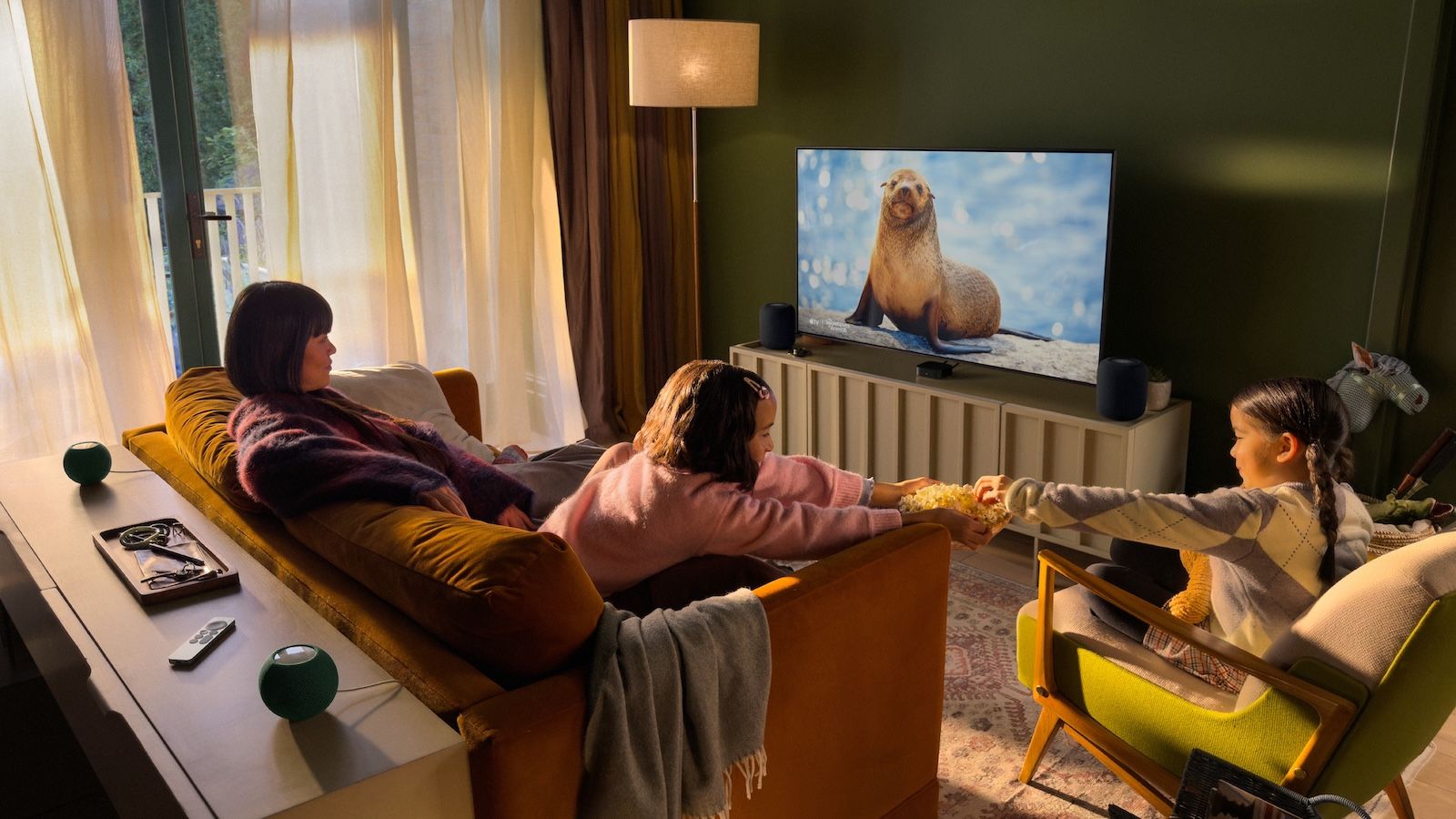
The newly unveiled Apple TV 4K, powered by a high-performance A19 chip, introduces native support for up to four wireless audio units. Users can now pair the streaming box with four full-sized HomePod (2nd Generation) units, four of the newly announced HomePod Mini 2 speakers, or any combination of two front-facing main speakers and two rear surrounds.
Coupled with HDMI eARC (Enhanced Audio Return Channel) capabilities, this layout allows the system to process multi-channel audio not only from native streaming apps on the Apple TV 4K itself, but also from external legacy hardware such as Ultra HD Blu-ray players and next-generation gaming consoles connected directly to the television.
Despite the high-end configuration—which can total nearly $1,700 depending on the exact mix of hardware—Apple is preserving its trademark plug-and-play simplicity. The setup process completely bypasses manual distance measuring or acoustic tuning. Instead, an array of integrated microphones automatically assesses the physical layout of the room, dynamically calibrating the sound profile to fit the architectural quirks of the environment.
The system is scheduled to go on retail shelves on November 13, carrying a starting price tag of $299 / £299 / AU$449 for the Apple TV 4K alone, with individual HomePod 2 units retailing for $349 / £349 / AU$549 each.
Chronology: The Evolution of Apple’s Living Room Ambitions
To understand the significance of this release, one must look back at how Apple’s audio and television strategies have intertwined over the years.
The Early Days: AirPlay and Standalone Airplay 2 (Pre-2018)
For years, Apple treated television audio as an afterthought. While the Apple TV functioned as a premier streaming hub, serious home theater enthusiasts relied on traditional AV receivers or soundbars from dedicated audio brands like Sonos, Bose, and Sony. HomePods were initially marketed purely as smart speakers for music playback and Siri queries rather than serious television companions.
The Stereo Pair Breakthrough (2020–2023)
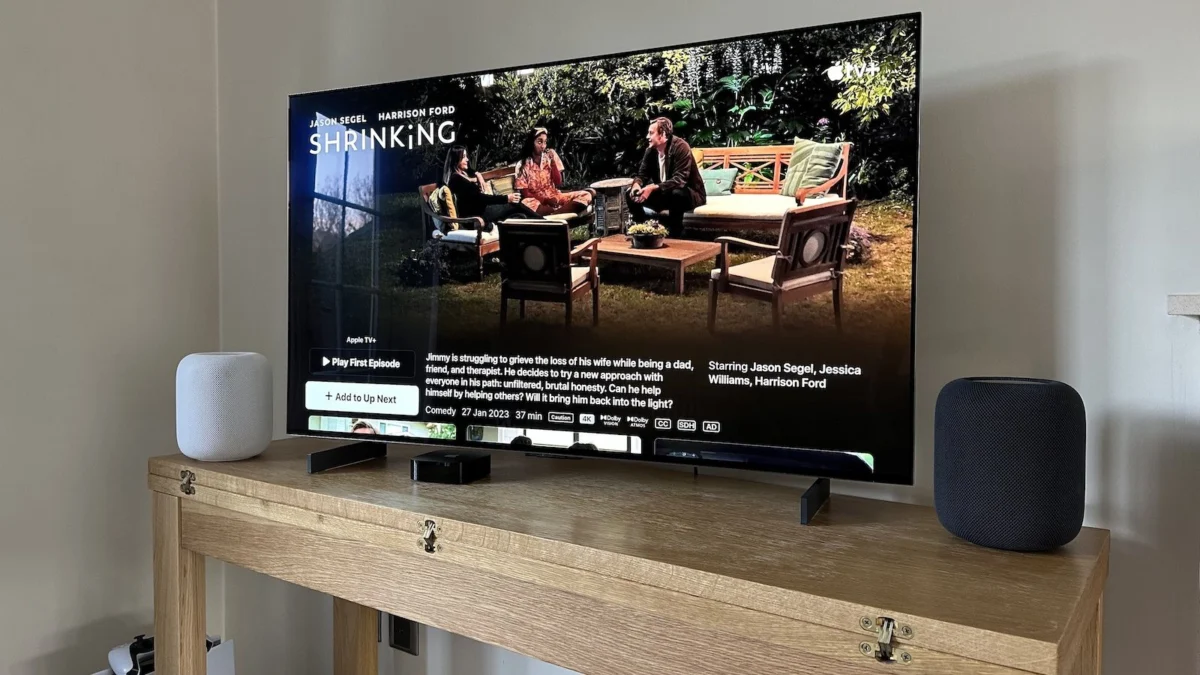
A major shift occurred when Apple introduced the ability to pair two HomePod speakers together with an Apple TV 4K to create a pseudo-surround and Dolby Atmos-capable front soundstage. For many casual users—and even some critics—this setup proved surprisingly effective. Replacing bulky soundbars with two neat, minimalist cylinders delivered clean dialog and convincing spatial audio without cluttering the living room.
However, a strict technical ceiling remained. Users were limited to a maximum of two speakers. There was no native way to incorporate dedicated rear surround channels, leaving a glaring hole for audiophiles seeking true, all-encompassing surround sound. Consequently, many reviewers and consumers who initially experimented with dual HomePods eventually drifted back toward traditional setups or specialized wireless surround systems like the Sony HT-A9.
The A19 Breakthrough and Quad-Speaker Support (Late 2024)
With the introduction of the A19-powered Apple TV 4K, Apple has finally dismantled that ceiling. By leveraging increased processing power and improved wireless communication protocols, the new box can seamlessly manage, sync, and process multi-channel audio streams across four discrete wireless nodes simultaneously. Alongside concurrent hardware announcements—including the HomePod Mini 2—Apple has transformed its smart speaker lineup into a legitimate, modular home cinema ecosystem.
Supporting Data: Cost Analysis and Competitive Landscape
When Apple first revealed the pricing for its new ecosystem, the sticker shock was immediate. However, a closer look at the competitive landscape reveals that Apple’s pricing strategy is carefully calculated to target the premium wireless home theater market.
System Cost Breakdown
- Apple TV 4K (New Model): $299 / £299 / AU$449
- HomePod 2 (Per Unit): $349 / £349 / AU$549
- HomePod Mini 2 (Estimated/Standard Range): ~$99 / £99 / AU$149
Total Investment Scenarios:
- Full Premium Setup (1x Apple TV 4K + 4x HomePod 2): $1,695 / £1,695 / AU$2,645
- Hybrid Setup (1x Apple TV 4K + 2x HomePod 2 + 2x HomePod Mini 2): Significantly lower, offering an accessible entry point for rear surround duties without paying top dollar for four full-sized woofers.
Market Comparison
How does this stack up against established heavyweights in the wireless home cinema space?
- Sony HT-A9 System: Historically priced right around the $1,700 mark, the Apple quad-HomePod configuration directly challenges Sony’s famous phantom-speaker system.
- Sony Bravia Theatre Quad: Retailing at an eye-watering $2,500 / £2,499 / AU$3,699, Sony’s flagship modular surround system makes Apple’s high-end offering look moderately competitive by comparison.
- Sonos Arc Ultra + Era 300 Surrounds: A premium Sonos configuration featuring their flagship soundbar paired with two Era 300 spatial audio speakers totals roughly $2,002 / £1,797 / AU$3,232.
When placed in this company, Apple’s entry into the multi-speaker surround market is surprisingly well-aligned with existing high-end solutions, offering design-conscious consumers an alternative that doubles as a smart home hub and music streamer.
Official Responses and Ecosystem Reactions
While official press statements from Apple have emphasized the seamless synergy of their hardware ecosystem, industry reactions have been a mix of cautious optimism and practical skepticism.
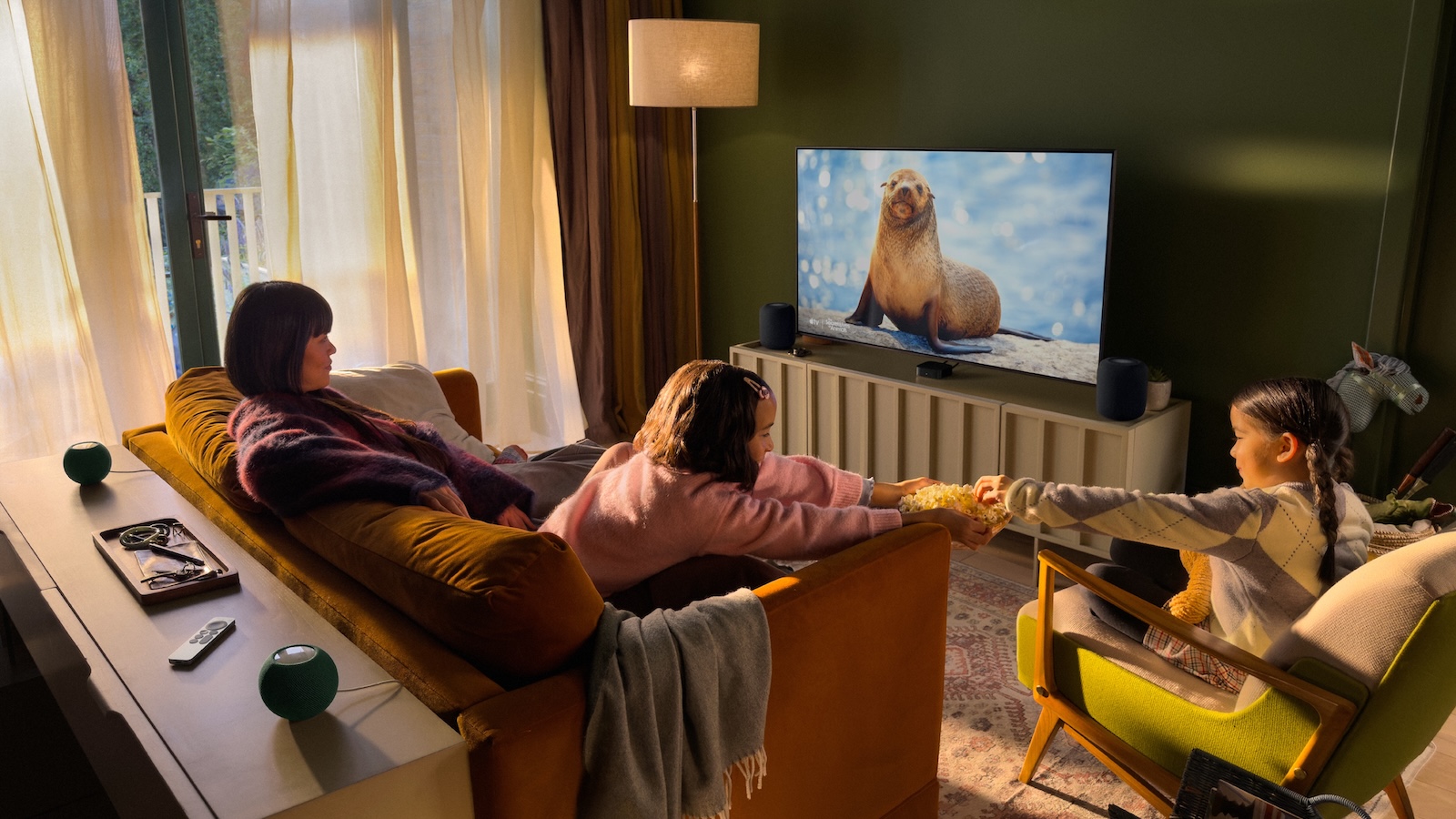
The Appeal of Hands-Free Siri and AV1 Support
Beyond the audio improvements, industry analysts have highlighted other crucial upgrades packed into the new Apple TV 4K:
- AV1 Codec Support: A massive win for future-proofing video streaming quality, enabling more efficient compression and higher fidelity playback across major streaming platforms.
- Far-Field Microphones: Allowing totally hands-free operation via Siri, provided the assistant can cleanly interface across all third-party streaming apps without friction.
- Audible "Find My" Remote Integration: A minor quality-of-life feature that addresses a universal consumer pain point—losing the ultra-slim Siri Remote down the couch cushions.
Criticisms and Ergonomic Challenges
Despite the excitement, audio engineers and consumer advocates point out notable hurdles. The requirement to plug each individual HomePod into a wall outlet means that while the speakers are "wireless" in terms of audio transmission, managing four power cords across a living room can quickly reintroduce the cable clutter that wireless systems are meant to eliminate.
Furthermore, purists remain skeptical about whether computational audio and automated spatial mapping can truly replicate the precision of physical, discrete multi-channel wired systems or high-end AV receivers with dedicated calibration microphones like Audyssey or Dirac Live.
Implications for the Home Entertainment Market
The release of a quad-capable Apple TV 4K sends ripples across several distinct consumer technology sectors.
1. Pressure on Traditional Soundbar Manufacturers
For years, companies like Sonos, Bose, and Samsung have dominated the living room audio space. By turning its existing standalone smart speaker lineup into a modular home theater system, Apple is offering a compelling alternative. Consumers no longer have to buy a dedicated soundbar; they can buy smart speakers for music listening around the house and temporarily or permanently group them into a cinema configuration. This versatility poses a unique competitive threat to traditional audio brands.
2. The Maturation of Computational Audio
Apple’s heavy reliance on automated, microphone-driven acoustic calibration underscores a broader industry trend: hardware intelligence is replacing manual setup. By removing graphic equalizers, distance settings, and crossover adjustments from the user experience, Apple is betting that mainstream consumers prefer convenience paired with "good enough" high-end performance over complex, enthusiast-grade menus. If the system succeeds, expect other competitors to further streamline their own calibration suites.
3. The Ultimate Verdict Awaits
Specs, pricing charts, and architectural diagrams only tell half the story. The ultimate test will arrive on November 13, when reviewers and early adopters put the new multi-speaker setup through its paces with demanding cinematic soundtracks, dynamic gaming audio, and critical music listening tests.
Can four networked smart speakers genuinely deliver the enveloping, subterranean bass and pinpoint spatial accuracy required to rival dedicated AV systems? The answer to that question will determine whether Apple’s bold new home cinema venture becomes a revolutionary lifestyle choice or an expensive niche experiment for dedicated brand loyalists.