In the ecosystem of modern indie-pop, few proving grounds are as daunting or as prestigious as triple j’s Like A Version. For years, the segment has served as a cultural barometer for emerging Australian talent, demanding that artists balance reverence for the past with the unique sonic signatures that define their own burgeoning careers. This week, the stakes were raised significantly as rising indie-pop quartet The Tullamarines stepped into the studio, choosing to tackle one of the most protected and revered compositions in rock history: Fleetwood Mac’s “The Chain.”
The Main Facts: A Bold Interpretation
The Tullamarines—comprising vocalists Angus Purvis and Lucinda Machin, alongside members Josh and Benny—delivered a performance that has quickly become one of the most discussed segments of the year. Their rendition of “The Chain” was not merely a carbon copy of the 1977 classic; it was a structural reimagining that leaned heavily into the song’s inherent, brooding tension.
The arrangement saw the band navigating the track’s famous atmospheric build-up, utilizing their signature four-part vocal harmonies to breathe new life into the iconic, sparse verses. By the time the song reached its climactic, bass-driven breakdown, the group had successfully established a bridge between the classic rock roots of the original and their own modern, synth-forward indie sensibilities. The performance was rounded out by a rendition of their own original track, “Running On Empty,” grounding their technical proficiency in the songwriting that has propelled their rapid ascent in the Australian independent scene.
A Chronology of the Cover’s Genesis
The path to this performance was paved with hesitation. For an indie band, covering a track as culturally ubiquitous as “The Chain” is often viewed as a "no-win" scenario—the original is so deeply embedded in the public consciousness that any deviation risks alienating purists, while too much loyalty risks sounding like a glorified karaoke act.
According to the band, the decision-making process was lengthy and fraught with anxiety. In the weeks leading up to the session, the group workshopped several potential tracks, but kept circling back to the Rumours staple. “We had a lot of songs that we were thinking about. ‘The Chain’ came up as an option, and we were very, very scared,” vocalist Angus Purvis admitted during their post-performance interview with triple j.
The band spent days dissecting the track’s architecture. The primary challenge was the infamous, frantic outro, a section that requires immense precision and rhythmic synchronization. As the rehearsal sessions progressed, the initial fear transformed into a challenge of musicianship. By the time they arrived at the studio, they had settled on a strategy: lean into the "angst" that defines the original lyrics and let the interplay between the four band members carry the narrative weight of the song.
Supporting Data: The Legacy of ‘The Chain’
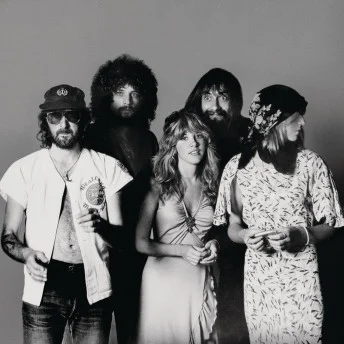
To understand why The Tullamarines felt such apprehension, one must look at the monumental legacy of the source material. “The Chain” is the crown jewel of Fleetwood Mac’s 1977 masterpiece Rumours.
The album itself is a titan of the recording industry. It spent 31 weeks at No. 1 on the Billboard 200, a record that has stood as a benchmark for commercial and critical longevity for nearly five decades. With over 40 million copies sold worldwide, Rumours is not just an album; it is a cultural artifact.
While “The Chain” was never released as a traditional radio single, its evolution into a pop-culture monolith is undeniable. From its use in high-stakes sports broadcasting to its pivotal role in cinematic scores, the song’s distinct bass line and harmonic shifts are universally recognized. For a young band like The Tullamarines to step into that shadow is a testament to their growing confidence. The song’s construction—which was famously pieced together from several different aborted song ideas—demands a level of cohesion that is rare, making the band’s successful delivery of it a significant notch in their professional belt.

Official Responses and Creative Intent
The band’s internal dialogue reveals a group that is deeply conscious of their place in the musical landscape. Multi-instrumentalist Lucinda Machin noted that the decision to commit to the song was ultimately a leap of faith. “We decided to give it a go, see what happens,” she said, describing the song’s lyrical themes as “very angsty.”
The band’s interpretation was less about “fixing” the original and more about highlighting the timelessness of the composition. As Purvis remarked, “The Chain” feels as though it has been around “forever.” By stripping back the production in the verses to focus on their own vocal blend, The Tullamarines managed to inject a sense of intimacy that contrasted sharply with the explosive, thunderous nature of the final act. This creative decision highlights the band’s maturity; they understood that to honor a song as big as “The Chain,” they had to focus on the human element—the voices—rather than just the pyrotechnics of the production.
Implications: The Trajectory of The Tullamarines
The successful reception of this cover comes at a pivotal moment for The Tullamarines. The band has been on a relentless upward trajectory for the past 18 months, characterized by a series of sold-out headline shows and a growing presence on the festival circuit.
Their recent work, particularly their 2025 sophomore EP Safety Blanket, has solidified their reputation as a band to watch. The EP has earned a nomination for Best Independent Pop Album or EP at the upcoming AIR Awards, an honor that places them in the company of the industry’s most respected independent acts. The ceremony, scheduled for July 30 at the Adelaide Town Hall, will serve as a bellwether for their standing in the Australian music industry.
Beyond the awards, the band’s recent touring history speaks volumes about their current momentum. By supporting internationally acclaimed acts like The Vaccines and Everything Everything, The Tullamarines have been forced to refine their live show for larger stages and more critical audiences. This experience was clearly visible in their triple j appearance; there was no sign of the "scared" band Purvis mentioned in the interview. Instead, they projected the poise of a group that has spent hundreds of hours honing their craft.
The implications of this cover extend beyond a single viral moment. In an era where streaming algorithms often prioritize "mood" over musicality, The Tullamarines have reminded listeners of the power of a well-executed, high-energy live performance. Their ability to take a piece of classic rock history and weave it into the fabric of a modern indie-pop aesthetic suggests that they are not just interested in chasing trends, but in building a body of work that can endure.
As the music industry looks toward the latter half of 2026, The Tullamarines have positioned themselves as a force capable of bridging generational divides. Whether they continue to lean into the classic songbook or double down on the introspective indie-pop found on Safety Blanket, their ability to handle the "fear" of the unknown—and the weight of the past—suggests that they are a band built for the long haul.
For now, the cover of “The Chain” serves as both a daring tribute and a bold declaration of intent. The Tullamarines have proven they can hold their own against the giants of music history; the next step will be proving that they have the staying power to become giants themselves.