CINCINNATI, OHIO — In the world of professional sports and premier tennis tournaments, the standard for a world-class venue extends far beyond the baseline. While spectators once measured a tournament’s success solely by the quality of the matches, modern sports entertainment demands an immersive, multi-sensory environment. Crisp audio coverage, reliable emergency communications, seamless broadcast distribution, and pristine background music are now essential elements of the live sports experience.
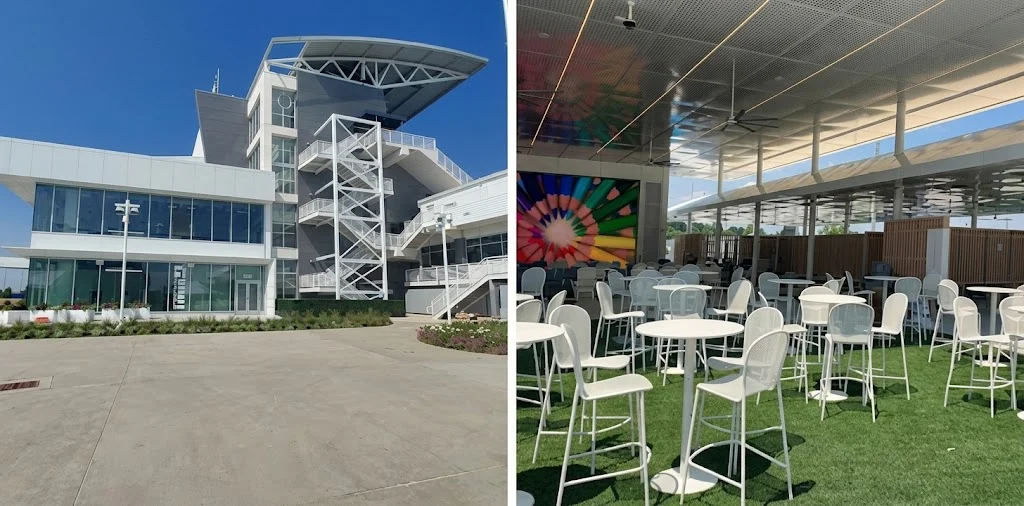
Meeting these rigorous modern standards, the historic Cincinnati Open recently completed a massive, campus-wide transformation that more than doubled its physical footprint. To power the complex audio requirements of this expanded facility, venue leadership enlisted the expertise of Industrial Communication & Sound (ICS). Drawing on advanced networked audio technology, ICS deployed a robust infrastructure anchored by Dante-enabled Connect Series amplifiers from LEA Professional. Spanning 54 distinct audio zones, this newly minted system successfully bridges the gap between massive public spaces, intimate hospitality areas, high-stakes match courts, and year-round indoor facilities.
Main Facts: The Scope and Scale of the Cincinnati Open Overhaul
The recent capital improvement project at the Cincinnati Open represents one of the most ambitious facility expansions in professional tennis history. By more than doubling the tournament’s footprint, the venue has cemented its status as a premier global destination for players, fans, and media alike.
To support this expanded footprint, the facility required a sophisticated, enterprise-grade audio network capable of unified operations across an expansive landscape. The newly designed system covers an impressive inventory of athletic and public infrastructure, including:
- 10 Match Courts: Requiring high-clarity audio for referee microphones, player introductions, and crowd engagement.
- 21 Practice Courts: Needing localized paging and entertainment audio without bleeding into adjacent playing areas.
- Five New Buildings: Featuring multi-functional indoor spaces, premium suites, and modern architecture.
- Renovated Facilities & Common Areas: Spanning concourses, plazas, and open-air promenades designed for heavy foot traffic.
The audio architecture goes far beyond basic public address capabilities. It serves as the acoustic nervous system for the entire tournament, managing a diverse array of mission-critical tasks:
- Match-Court Audio: Delivering balanced, intelligible sound for announcements and officiating.
- Site-Wide Paging: Ensuring clear communication across massive open-air environments, even amidst high ambient crowd noise.
- Background Music (BGM): Providing consistent, high-fidelity indoor and outdoor entertainment across public gathering zones.
- Broadcast Audio Distribution: Feeding pristine audio signals to media outlets and broadcast trucks.
- Hawk-Eye Officiating Integration: Interfacing seamlessly with electronic line-calling and review technologies.
- Emergency Paging & Prerecorded Messaging: Acting as a reliable life-safety network capable of instant override in the event of an emergency.
- Zoned & All-Call Communications: Allowing operators to target specific hospitality lounges, concourses, or broadcast globally across the entire campus.
- Centralized Volume and Routing Control: Giving technicians the power to manage dynamic sound levels from a centralized hub.
To execute this complex audio vision, the venue turned to Industrial Communication & Sound (ICS), a trusted AV integration partner with a long-standing history of supporting the facility.
Chronology: From Concept to Tournament-Ready in Record Time
Executing a multi-zone, campus-wide AV overhaul is a massive undertaking under any circumstances. Doing so within the strict, unforgiving deadlines of a professional sports calendar is an extraordinary feat of engineering, logistics, and project management.
Phase 1: Design and Engineering (The 60-Day Window)
When ICS was awarded the contract to design the expanded audio system, the timeline was already compressed. The integration team was given approximately 60 days to conceptualize, design, and engineer an audio network that could handle the immense scale of the newly doubled campus.
During this phase, ICS engineers mapped out the facility’s topography, determined acoustic load requirements, and selected hardware that could deliver uncompromised performance across both low-impedance (Lo-Z) and high-impedance (Hi-Z 70V/100V) loudspeaker lines. After evaluating various industry options, the team standardized on LEA Professional’s Connect Series, recognizing that the platform’s combination of DSP power, Dante connectivity, and robust form factor would streamline the design process.
Phase 2: Installation, Pre-Staging, and Programming (The Five-Month Buildout)
With the design approved, ICS faced a tight five-month window to complete the physical installation, wiring, testing, balancing, programming, and troubleshooting before the tournament gates swung open to the public.
To accelerate the deployment, ICS leveraged SharkWare—LEA Professional’s comprehensive configuration and monitoring software. Using the software’s offline system design capabilities, the team pre-configured the amplifiers before stepping foot on-site. This allowed engineers to establish amplifier groupings, configure input parameters, set up crossovers, and dial in graphical equalizers ahead of time.
Once on-site, the physical installation was significantly streamlined by the hardware’s smart engineering. Thanks to their compact, single-rack-space (1U) designs, the LEA amplifiers were integrated directly into existing network switch racks rather than requiring dedicated, bulky amplifier rooms. This saved valuable floor space and simplified cable management across the five new buildings and numerous court control stations.
Phase 3: Commissioning, Tuning, and the Live Debut
The final weeks leading up to the tournament were dedicated to rigorous commissioning, system tuning, and load monitoring. Engineers utilized SharkWare’s real-time network monitoring tools to verify channel settings, test emergency paging overrides, and balance audio zones ranging from quiet VIP hospitality lounges to roaring match courts.
When the tournament finally commenced, the system performed flawlessly, handling the relentless demands of live sports broadcasting, daily crowds, and VIP entertainment without a single hitch.
Supporting Data: The Hardware and Software Ecosystem
The success of the Cincinnati Open installation relies on a carefully curated selection of hardware and software components designed for high-availability commercial environments.
The LEA Professional Connect Series Advantage
ICS deployed Dante-enabled Connect Series amplifiers across the facility’s 54 audio zones. The deployment utilized a versatile range of models tailored to the specific power demands of each zone:
- Low-Power/Distributed Zones: Four-channel, 80-watt-per-channel units were deployed for smaller ancillary spaces, back-of-house areas, and localized paging zones requiring distributed 70V/100V lines.
- High-Demand/High-Output Zones: Four-channel amplifiers capable of delivering up to 1,500 watts per channel were assigned to high-impact match courts and large public plazas where high SPL (Sound Pressure Level) and absolute clarity are required to cut through crowd noise.
Flexible Operating Modes and Advanced DSP
The amplifiers offer exceptional flexibility, featuring selectable Hi-Z (70V/100V) and Lo-Z operation on a channel-by-channel basis. This dual capability allowed ICS to mix and match speaker types across the sprawling campus without needing separate hardware platforms.
Furthermore, the integration of native 96 kHz DSP (Digital Signal Processing) ensures ultra-low latency and pristine audio fidelity. Every channel benefits from built-in input configuration, signal generation, sophisticated limiting, and continuous load monitoring, protecting expensive loudspeakers from thermal or mechanical overload.
Network Flexibility via Dante and AES67
The inclusion of Dante and AES67 connectivity transforms the amplifier pool into a fully distributed, IP-based audio network. Audio sources—ranging from referee microphones and emergency announcement stations to live musical acts performing in hospitality areas—can be instantly routed via the network to any of the 54 zones. This eliminates the need for cumbersome analog snake cables and provides infinite routing flexibility.
SharkWare: Power at the Fingertips
Configuration and management of the sprawling amplifier fleet are handled through LEA Professional’s proprietary SharkWare software. The platform provides technicians with a comprehensive graphical interface that includes:
- Offline System Design: Enabling pre-configuration and template creation before deployment.
- User Access Controls: Securing critical system parameters against unauthorized tampering.
- Speaker Tuning Protection: Locking in equalization and limiter settings to safeguard acoustic components.
- Real-Time Network Monitoring: Giving technicians instant visibility into amplifier health, thermal status, and channel output levels from a centralized control station.
Cloud Connectivity and Remote Management
A standout feature of the LEA Professional ecosystem is its cloud connectivity. The Cincinnati Open’s AV team and ICS integrators can securely monitor and control the amplifiers remotely. Whether adjusting background music levels in a newly opened restaurant space or running diagnostics on a remote practice court amplifier, technicians can manage the system via cloud infrastructure, significantly reducing the need for on-site troubleshooting.
Official Responses: Insights from the Integration Team
The decision to standardize on LEA Professional was driven by years of trusted collaboration and a proven track record of field reliability.
Carl Heck, Business Development Specialist at Industrial Communication & Sound, reflected on the partnership and the unique demands of the Cincinnati Open project:
"We started using LEA amplifiers about five years ago, and we haven’t looked back," says Heck. "We knew they’d be an ideal platform for a world-class tournament environment, given their product catalog, combined with their competitive pricing and robust long-term reliability."
Heck emphasized that in a high-profile sports environment, equipment failure is simply not an option. The combination of LEA’s rugged build quality, intuitive cloud-monitoring tools, and flexible power options ensured that the ICS team could deliver a rock-solid infrastructure under intense deadline pressure.
Reflecting on the final public and professional reception of the upgraded facility, Heck noted:
"By all accounts from the attendee experience, the player experience, and media response, the Cincinnati Open is now widely considered one of the premier tennis facilities in the world. That’s definitely in part thanks to LEA amplifiers. We can’t say enough good things about them."
Implications: Setting a New Benchmark for Sports Venue AV
The successful deployment of LEA Professional amplifiers across the Cincinnati Open’s expanded campus has significant implications not only for the tournament organizers, but for the broader sports entertainment and AV integration industries.
1. The Shift Toward Decentralized, IP-Based Audio
The project highlights the undeniable advantages of networked audio protocols like Dante and AES67 in large-scale outdoor venues. By utilizing IP transport, the Cincinnati Open eliminated the signal degradation, high installation costs, and inflexibility associated with traditional copper-heavy analog distribution. As sports venues continue to grow in physical size and architectural complexity, IP-native amplification will become the mandatory baseline for modern stadium design.
2. Operational Efficiency Through Cloud Management
For venue operators, managing dozens of amplifiers spread across a massive campus historically required physical inspections of equipment racks distributed across distant buildings. The cloud connectivity built into the LEA Connect Series transforms this paradigm. Facility staff can now monitor system health, check load impedances, and make adjustments remotely from a tablet or central control room. This dramatically reduces maintenance overhead and ensures lightning-fast response times should an issue arise during a live event.
3. Elevating Fan and Player Expectations
In modern sports entertainment, sound quality directly impacts the perceived value of the ticket. Fans expect the clarity of a home theater combined with the visceral energy of a live concert, even when sitting in the upper rows of an open-air stadium. Simultaneously, players and officials rely on pinpoint audio systems for fair play and clear communication. By investing in an enterprise-grade audio foundation, the Cincinnati Open has raised the bar for what athletes and spectators should expect from a world-class sporting facility.
Conclusion
The transformation of the Cincinnati Open is a masterclass in how visionary architecture, expert AV integration, and cutting-edge audio technology can converge to create something extraordinary. Through the meticulous planning of Industrial Communication & Sound and the reliable power of LEA Professional’s Connect Series amplifiers, the tournament has secured its acoustic future. As fans fill the stands, players battle on the courts, and broadcasters beam the action worldwide, every word, note, and announcement will be delivered with crystal-clear precision—proving once again that when it comes to world-class sports venues, sound matters.