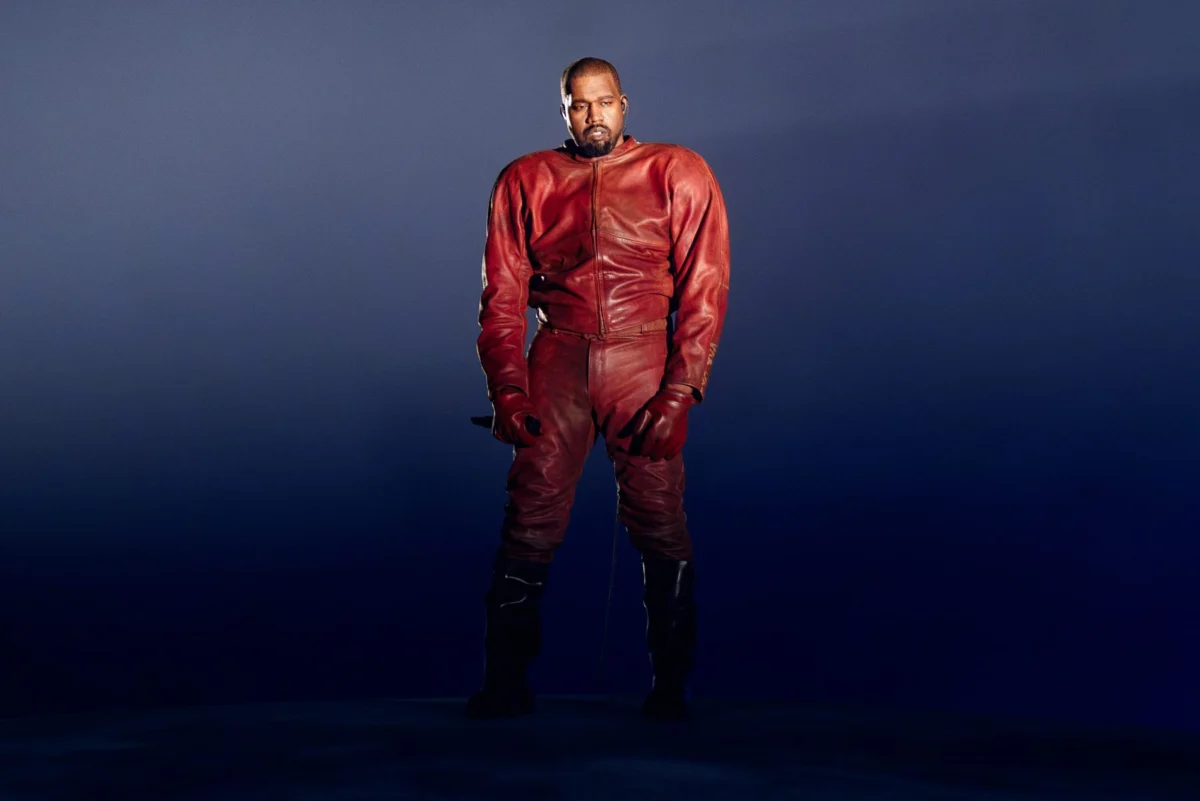
A pivotal legal battle between German singer-songwriter Alice Merton and the artist formerly known as Kanye West, Ye, has reached a significant milestone. A federal court has issued a ruling that could fundamentally alter the trajectory of a copyright infringement lawsuit, permitting the plaintiff to introduce sensitive biographical and character-based evidence.
On Thursday, October 8, Judge Fernando L. Aenlle-Rocha denied a motion filed by Ye’s legal team, which had sought to strike references to the rapper’s history of antisemitic rhetoric and Merton’s own family ties to the Holocaust from the ongoing litigation. The court’s decision establishes that these highly personal and inflammatory details are not merely "scandalous" background noise, but potentially essential elements for a jury to understand the core of the dispute: why a songwriter would flatly refuse to allow her work to be sampled by a global superstar.
The Core of the Dispute: A Disputed Sample
The lawsuit, which was originally filed in 2025, centers on Ye’s 2024 track "Gun to My Head." Merton alleges that the song features an unauthorized sample of her 2017 track "Blindside." According to court documents, Merton’s team had received a formal request to license the sample for use on a digital deluxe version of Ye’s Vultures 2 project.
Merton, a prominent German artist, reportedly denied the request outright. Her refusal was not based on financial terms or creative differences regarding the music itself, but on moral and ideological grounds. As a direct descendant of Holocaust survivors, Merton stated she could not, in good conscience, authorize her intellectual property to be utilized by an artist whose public platform has been defined by antisemitic vitriol and praise for Adolf Hitler. Despite this clear denial, the track appeared on the album, leading to the current legal claim of copyright infringement.
Chronology of a High-Stakes Legal Conflict
The conflict between Merton and Ye is the latest in a long string of legal challenges faced by the rapper regarding his sampling practices.
- 2022: Following a series of public antisemitic remarks, Ye faces massive backlash, including the loss of high-profile brand partnerships and widespread public condemnation.
- Early 2024: Ye reaches out to Alice Merton’s camp, requesting clearance for the "Blindside" sample. Merton formally denies the request.
- Mid-2024: "Gun to My Head" is released on the digital deluxe version of Vultures 2, featuring the sample despite the prior refusal.
- 2025: Alice Merton officially files a copyright infringement lawsuit against Ye in federal court.
- May 2026: In a separate, unrelated case, a jury finds Ye liable for infringing on an instrumental track during the production of his 2021 album Donda, marking the first time the artist has lost a copyright trial of this nature.
- October 8, 2026: Judge Aenlle-Rocha rules that the history of Ye’s antisemitism and the plaintiff’s familial background are admissible as evidence in the Merton case.
- March 2027 (Scheduled): A jury trial is set to commence unless a settlement is reached between the two parties.
The Judicial Reasoning: Why History Matters
Ye’s legal counsel had argued that the mentions of the Holocaust and his own controversial past were "immaterial, impertinent, and scandalous," designed only to prejudice a jury against their client. However, Judge Aenlle-Rocha disagreed.

In his written order, the judge noted that the allegations were not "unduly prejudicial" to the point of exclusion. Instead, the court recognized that these details are vital to establishing the "rationale for denying Defendants’ use of Plaintiffs’ song." By allowing this context into the courtroom, the judge has effectively signaled that a plaintiff’s moral reasoning for denying a license—particularly when that reasoning is rooted in a fundamental clash of values—may have a legitimate place in copyright litigation.
This is a rare judicial acknowledgment that intellectual property disputes can sometimes transcend the mechanical aspects of music licensing and touch upon the personal integrity of the creator.
Official Responses and Legal Strategy
The reaction from the legal community has been immediate. Dylan Grimes, one of the attorneys representing Alice Merton, expressed satisfaction with the court’s nuanced approach. "We are very pleased with the court’s ruling," Grimes stated following the decision. "We are glad the court has found [Ye’s] antisemitic statements to be relevant."
Conversely, representatives for Ye have remained largely silent, offering no immediate comment on the ruling. This silence reflects the broader strategy the rapper has employed as he attempts to navigate a landscape where his artistic output is increasingly overshadowed by his public conduct.
Broader Implications: The "Ye" Effect on Music Law
This case arrives at a time when Ye’s career is in a state of flux. While he continues to command massive audiences, his live performance schedule has been interrupted by local governments and public pressure. From canceled shows in the U.K. and Poland to a failed lobbying campaign by Senator Rick Scott to prevent a performance in Florida, the artist’s history of hate speech has created a "reputational tax" that is now manifesting in the courtroom.
The Pattern of Infringement
The Merton case is not an isolated incident. Ye has been sued more than a dozen times over the past decade for using unlicensed samples. Historically, his strategy has been to settle these cases quietly, effectively burying the disputes behind non-disclosure agreements and financial payouts. However, the legal landscape has shifted since the Donda verdict in May. Having lost a trial, Ye no longer possesses the aura of legal invincibility he once enjoyed in copyright disputes.

A Test of Moral Rights
In European legal traditions, the concept of "moral rights" (droit moral) allows an author to protect the integrity of their work and prevent its use in contexts they find offensive. While U.S. copyright law is generally more focused on economic rights, this case acts as a bridge between the two. By bringing the Holocaust into the discussion, Merton is effectively arguing that her moral objection to Ye’s ideology is a valid reason to bar him from using her work—a principle that, if upheld by a jury, could set a new precedent for how artists manage their catalogs.
The Path to March 2027
As the discovery process moves forward, both sides are preparing for a trial that promises to be as much about the artist’s character as it is about music theory and licensing protocols. If the case proceeds to a jury, the court will have to navigate the delicate balance between protecting a plaintiff’s right to express their moral objections and ensuring that the trial remains focused on the legal requirements of copyright infringement.
For Ye, a loss in this trial would be another blow to his post-2022 "comeback" narrative. Following his January 2026 apology in the Wall Street Journal—where he blamed his behavior on a 2002 car accident and vowed to embrace accountability—this lawsuit represents a direct challenge to his claims of personal growth.
Ultimately, the case of Merton v. West is a microcosm of a larger cultural debate. It asks whether an artist’s public identity and history of hate speech can or should influence their ability to access the creative works of others. As the music industry watches, the court’s decision to allow the inclusion of these volatile facts ensures that the trial will not just be about a stolen sample, but about the boundaries of artistic association in a polarized world.