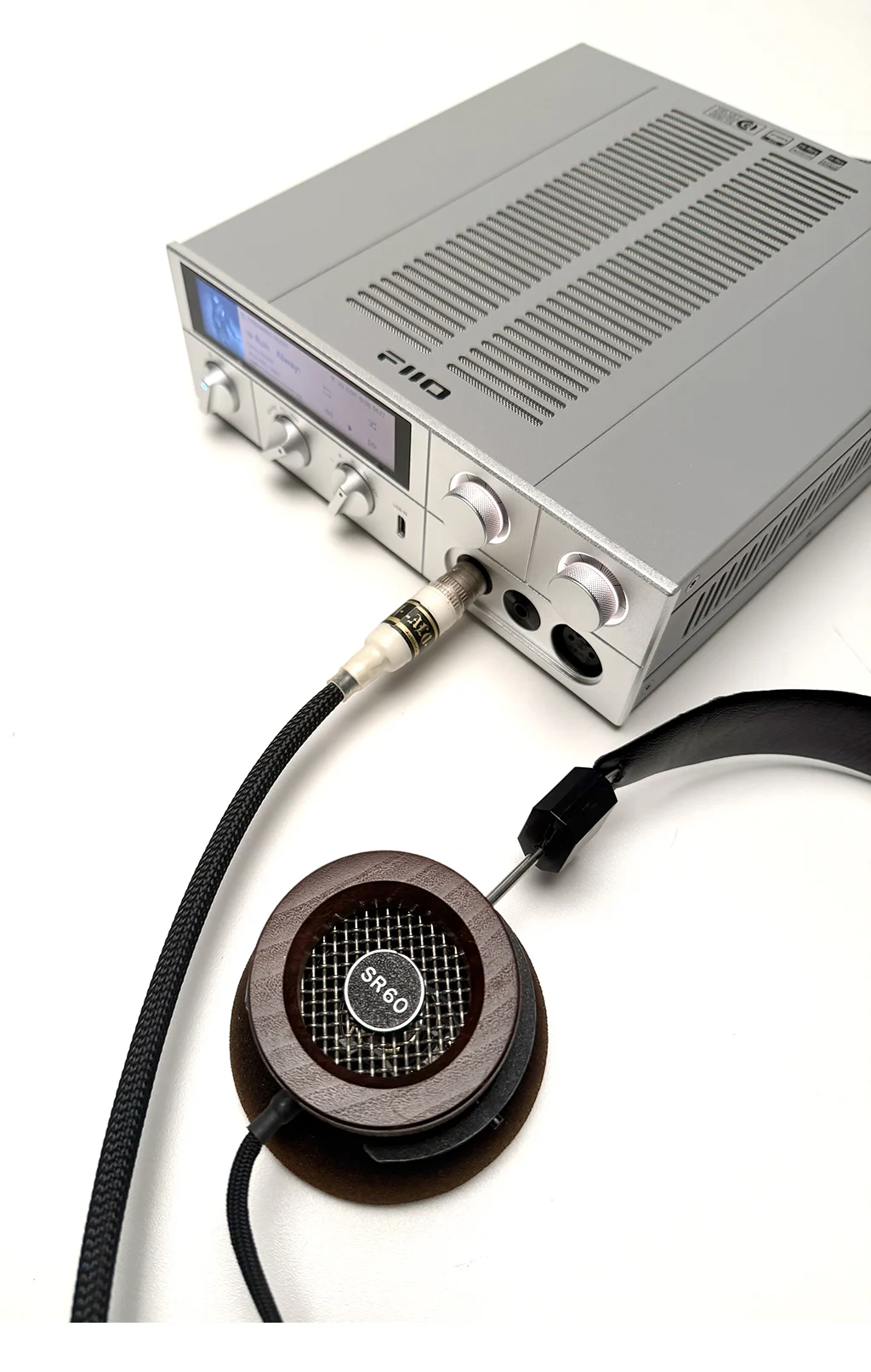
In the perpetually contentious world of high-end audio, the phrase "budget-friendly performance" is often met with justifiable skepticism. Audiophiles have long been conditioned to believe that sonic nirvana requires a five-figure investment, heavy copper chassis, and esoteric power supplies. Yet, every so often, a piece of hardware arrives that disrupts this conventional wisdom entirely.
Enter the FiiO K17, a compact, remarkably versatile digital audio hub priced at a modest $995.00. Despite occupying a physical footprint of roughly 8 by 8 by 2 inches, this diminutive device serves as a high-resolution network streamer, an advanced digital-to-analog converter (DAC), a fully balanced preamplifier, a robust headphone amplifier, and even features a built-in 31-band parametric equalizer.
For industry veterans accustomed to reviewing six-figure flagships—such as the editor’s own dCS Vivaldi ONE—evaluating a sub-$1,000 multi-tool requires a careful recalibration of expectations. However, as extensive real-world testing proves, the K17 doesn’t just punch above its weight class; it completely rewrites the rules of engagement for modern high-fidelity audio systems.
Main Facts: The FiiO K17 at a Glance
The FiiO K17 is engineered as an all-in-one digital command center designed to bridge the gap between legacy audio gear, modern network streaming, and high-performance headphone listening.
- Price: $995.00 USD
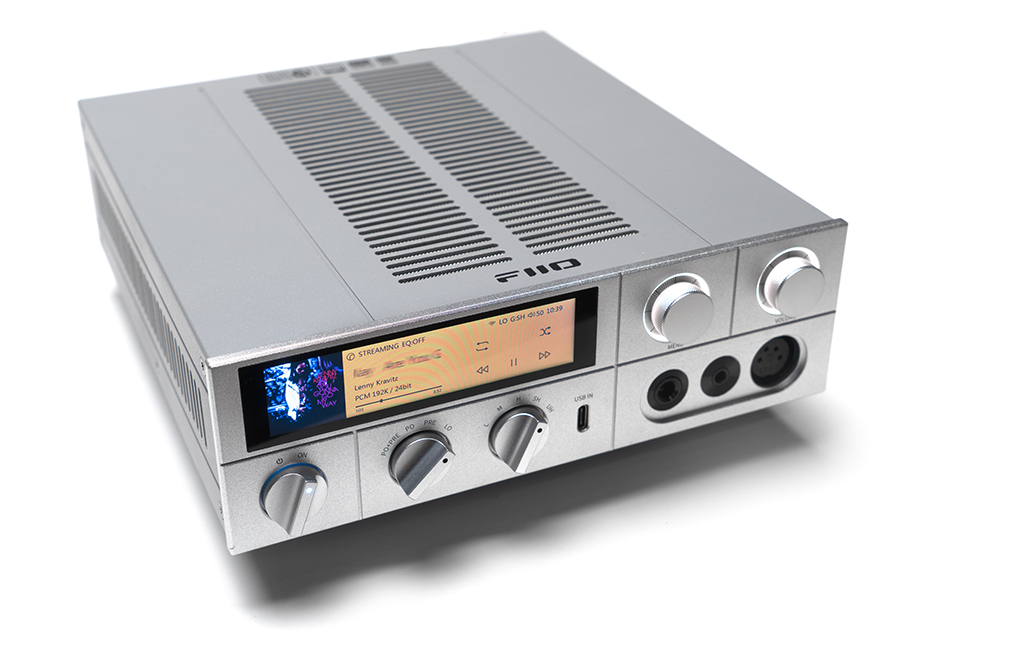
- Dimensions & Design: Compact chassis (approx. 8" x 8" x 2") featuring a retro-inspired aesthetic reminiscent of early Mark Levinson components. Dominated on the front panel by a high-resolution 3.93-inch touchscreen display.
- Core Functionality: Operates simultaneously as a standalone DAC, network streamer, stereo preamplifier, and dedicated headphone amplifier.
- Connectivity: Equipped with comprehensive digital inputs (coaxial SPDIF, optical, USB, Bluetooth with aptX/LDAC support) and analog inputs (single-ended RCA). Outputs include RCA, balanced XLR, and three distinct headphone connections.
- Key Features: Fully balanced internal architecture, discrete headphone output stages capable of delivering up to 4 watts of power, MQA decoding capabilities, and a comprehensive 31-band digital parametric EQ manageable via a companion smartphone or tablet app.
Chronology: Putting the K17 Through Its Paces
To truly understand how the FiiO K17 performs in the wild, it was subjected to an extensive, multi-week evaluation across vastly different acoustic environments—ranging from a meticulously treated reference studio to a notoriously difficult living room space.
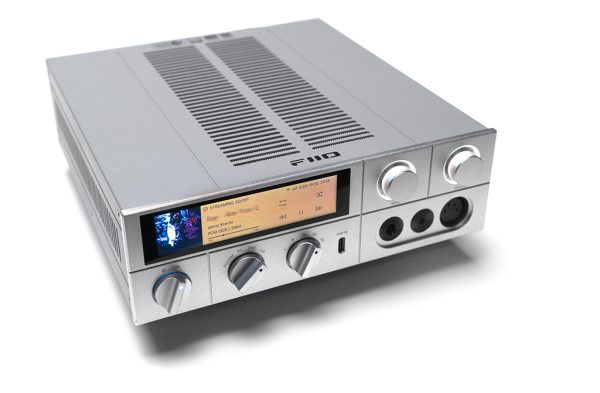
Phase 1: The Reference Studio Setup
The initial listening sessions took place in a high-end reference system centered between mighty Klipschorn loudspeakers and driven by robust reference amplification. Configured strictly as a ROON endpoint and DAC, the K17 was fed via a vintage Madrigal Proceed PDT CD transport and high-res streaming services including Qobuz and Tidal.
Playing tracks like The Art of Noise’s “Paranormal”, the system immediately confounded expectations. The bass output proved thoroughly extended, well-defined, and texturally rich. Midrange frequencies emerged naturally and cleanly, capturing the eerie vocal depth of Tom Waits on “What’s He Building?” and the stark intimacy of Lou Reed’s “Vanishing Act.” While the upper treble exhibited a very minor touch of grain when juxtaposed against systems costing twenty times as much, it remained entirely non-fatiguing and completely livable.
Phase 2: Headphone Evaluations and Room Correction
Moving away from loudspeakers, the K17 was tested strictly as a headphone amplifier and preamplifier. Utilizing demanding reference cans—including the Focal Clear MG, vintage Audeze LCD-2s, and Grado models—the unit’s discrete output stages easily delivered on FiiO’s 4-watt power claims.
Crucially, this phase highlighted the utility of the K17’s onboard 31-band parametric equalizer. In a acoustically challenging living room environment plagued by low-end boom and upper-midrange cloudiness, the app-controlled EQ allowed for surgical acoustic corrections. By deftly taming room modes without sacrificing transient response, the K17 transformed a difficult listening space into a highly engaging, musical room.
Phase 3: Analog Integration and Direct-to-Amp Testing
Finally, the unit was deployed as a line-level preamplifier running straight into a Pass Labs XA30.8 power amplifier via a lengthy 6-meter run of balanced XLR cables. By integrating an analog source—a Technics SL-1100 turntable paired with a Hagerman Trumpet MC phono stage—into the K17’s single analog input, the system drove vintage Acoustat 2+2 electrostatic speakers effortlessly. The volume control demonstrated pristine channel balance and zero information loss even at whisper-quiet levels, confirming a well-executed analog output stage.
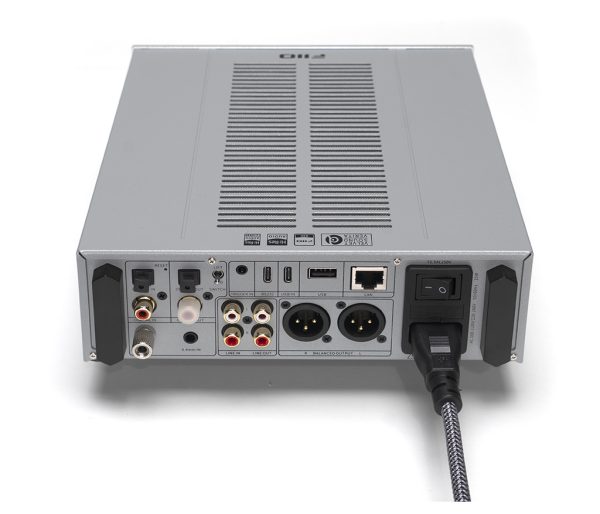
Supporting Data: Engineering and Connectivity
A close inspection of the K17’s internal layout reveals a masterclass in modern electronic miniaturization. FiiO’s engineering team has optimized every square millimeter of interior space without inducing thermal throttling or signal crosstalk.
| Feature Category | Specification / Detail |
|---|---|
| Digital Processing | High-performance DAC architecture supporting up to native DSD and high-bitrate PCM. |
| Headphone Output | Discrete output circuitry; up to 4 watts of clean driving power. |
| Physical Inputs | Coaxial SPDIF, Optical, USB-C (front and rear), Analog RCA, Bluetooth. |
| Physical Outputs | Balanced XLR, Single-ended RCA, 3x Headphone jacks (standard, balanced formats). |
| User Interface | 3.93-inch front-panel high-res touchscreen; full remote control via mobile app. |
Despite its overwhelming strengths, the review process did uncover one minor ergonomic critique: the silver review sample featured black lettering on its front panel that proved somewhat difficult to read due to the exceptionally small font size. For prospective buyers prioritizing ultimate legibility, the black chassis variant is strongly recommended.
Official Responses and Comparative Analysis
In the broader context of the high-end audio market, how does a $995 device stack up against established heavyweights?
When compared directly against dedicated digital players and streamers from brands like Advance Paris, Naim, and Marantz—many carrying price tags nearly double that of the FiiO—the K17 held its ground with remarkable tenacity. It is by no means a "dCS killer"; it cannot match the peerless, micro-dynamic resolution and absolute black backgrounds of a $100,000 dCS Vivaldi system.
However, as industry analysts and reviewers frequently point out, that comparison misses the point entirely. The K17 is not designed to unseat ultra-luxury flagships. Instead, it is built to anchor systems falling within the $3,000 to $10,000+ range. In that specific arena, its dense feature set, robust build quality, and surprisingly refined sonics comfortably outperform almost everything else currently available at twice its asking price.
Implications for the Hi-Fi Industry
The arrival of the FiiO K17 carries significant implications for both manufacturers and consumers within the audiophile community.
For decades, consumer electronics trends dictated that feature bloat—packing a DAC, streamer, preamp, and headphone amp into one box—inevitably resulted in sonic compromise. The K17 shatters this paradigm, proving that modern surface-mount engineering and advanced circuit topology can achieve reference-grade performance in a micro-chassis.
Furthermore, the K17 addresses a growing demographic of modern music lovers who feel alienated by spiraling hifi inflation. For the budding enthusiast, it represents an ultimate, future-proof jumping-off point that avoids the need for expensive component matching. For the seasoned audiophile with a massive primary rig, it serves as an economically viable, high-performance building block for a secondary or tertiary listening room.
Verdict and Award
Reflecting its sheer disruptive value, exceptional versatility, and musical integrity, the FiiO K17 is proudly awarded TONEAudio’s First Exceptional Value Award of 2026. Whether utilized purely as a network streamer, a desktop headphone station, or the core preamplifier of a minimalist two-channel speaker system, it is an absolute triumph of modern audio engineering—and easily worth keeping as a permanent fixture in the reference lineup.