NEW YORK, NY – The evolution of live entertainment continues at a breakneck pace. As audiences increasingly demand sensory-rich, hyper-realistic experiences, the infrastructure required to support these spectacles is becoming as sophisticated as the content itself. This week, a significant milestone in audio engineering was reached as Italian power amplifier specialist Powersoft announced a major partnership with German immersive audio pioneer Holoplot.
The agreement, valued at €6 million, marks a deepening of a strategic collaboration between the two European manufacturers. The primary objective: to supply the power and processing backbone for a highly advanced, yet currently undisclosed, immersive entertainment venue.
Main Facts: A Partnership of Audio Titans
The core of the announcement centers on a supply chain agreement that will span the entirety of 2027. Powersoft, a global leader in high-efficiency, high-power-density amplification, will deliver specialized technology to Holoplot in scheduled intervals. This synchronization is critical, as it allows Holoplot to integrate these components directly into the manufacturing cycle of their proprietary audio systems.
The technology being supplied is no ordinary rack gear. Powersoft will provide its high-efficiency 16-channel amplifiers, alongside its patented IPAL (Integrated Powered Adaptive Loudspeaker) technology. This system is the secret sauce behind the industry-standard-setting X1 Matrix Array, which has already redefined the acoustic capabilities of modern performance spaces.
While the specific site remains under wraps, the industry is already abuzz with speculation. Given the existing technological synergy between the two companies and their shared history with Sphere Entertainment, this project is widely viewed as a major expansion of the "Sphere Immersive Sound" ecosystem.
Chronology: From Las Vegas to the World
To understand the magnitude of this deal, one must look at the recent history of immersive audio.
- 2022: The Beacon Theatre in New York City became a testbed for early immersive sound concepts, signaling a shift in how MSG Entertainment viewed the acoustic potential of its historic assets.
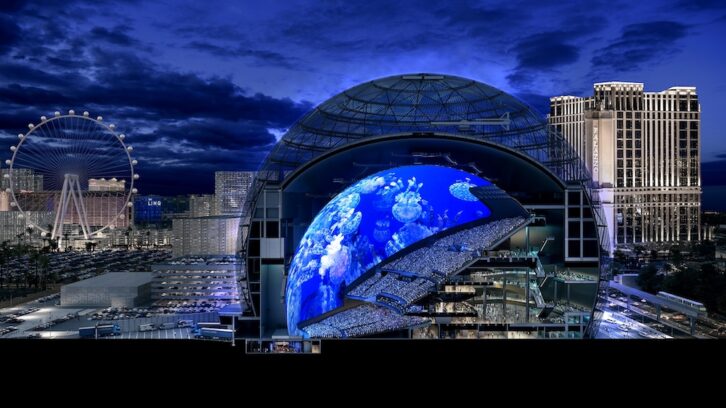
- 2023: The landmark opening of the Sphere in Las Vegas introduced the world to the Holoplot X1 Matrix Array. It was the first time that beamforming and wave-field synthesis were deployed at such a massive scale, allowing for pristine, pinpoint audio delivery to every seat in a 20,000-capacity venue.
- May 2024: Following the immense success of the Las Vegas venue, Sphere Entertainment finalized its outright acquisition of Holoplot. This vertical integration brought the technology in-house, ensuring that the company could control the future of its acoustic signature.
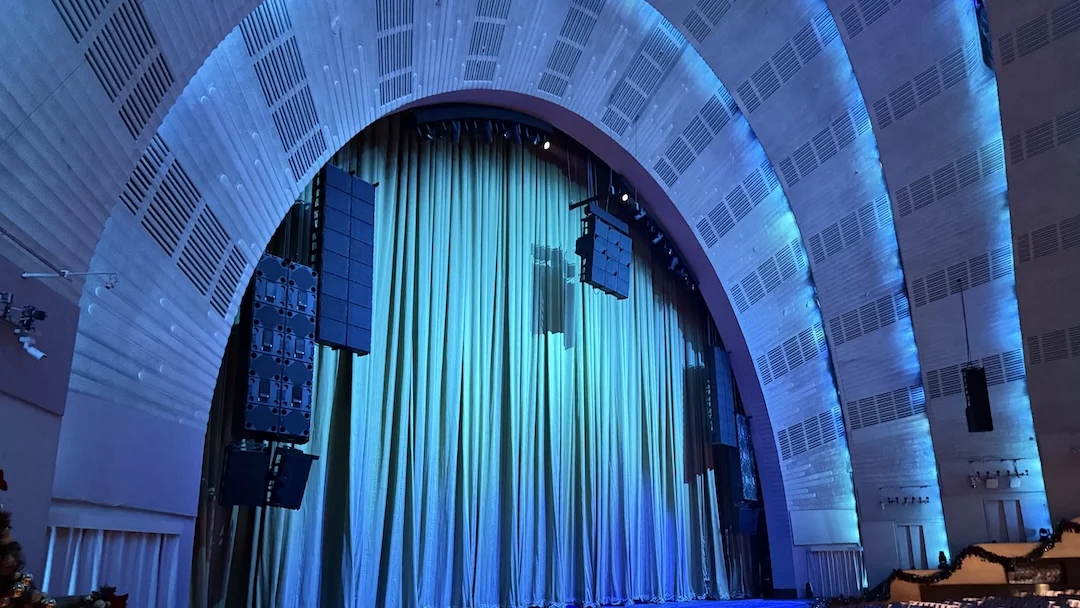
- 2025–2026: Sphere Immersive Sound was retrofitted into Radio City Music Hall, proving that the technology was not merely for new construction but could be integrated into legacy architecture.
- October 2026: The current announcement of the €6 million Powersoft/Holoplot contract signals that the expansion phase is now in full swing, with production schedules set for the 2027 calendar year.
Supporting Data: Why Powersoft and Holoplot?
The collaboration between these two firms is built on a foundation of performance and sustainability.
The Power of IPAL
Powersoft’s IPAL technology is a cornerstone of this agreement. By creating a closed-loop system between the amplifier and the loudspeaker, the technology allows for real-time correction of the driver’s performance. This results in incredibly low distortion, even at extreme output levels—a necessity when filling massive, architecturally complex venues.
Beamforming and Matrix Arrays
Holoplot’s X1 system relies on sophisticated software to control the directionality of sound. Unlike traditional line arrays, which "spray" sound across a room, the X1 uses hundreds of individual drivers to steer sound beams. This allows for:
- Auditory Isolation: Different audience sections can hear different audio feeds simultaneously.
- Architectural Transparency: The audio can be "aimed" to avoid reflective surfaces, preventing the muddy reverberation common in large, circular, or glass-heavy arenas.
- Efficiency: Because the sound is directed precisely, less power is wasted on surfaces that don’t need audio, and the acoustic output is cleaner, requiring less overall volume to achieve high intelligibility.
Official Responses: Aligning for the Future
Luca Giorgi, the Sales Director at Powersoft, provided insight into the strategic intent behind the partnership. In an official statement, he emphasized not only the performance aspects but the broader goal of sustainability.
"We are pleased to once again partner with Holoplot and contribute our expertise to the development of another spectacular venue," Giorgi noted. "For this new high-tech entertainment destination, we will provide a technologically advanced audio system designed to offer audiences the best possible interactive and fully immersive experience, while at the same time delivering considerable energy savings and reducing environmental impact."
The emphasis on sustainability is a major selling point for modern, large-scale venues. As global energy costs rise and ESG (Environmental, Social, and Governance) mandates become standard for new constructions, Powersoft’s focus on high-efficiency power conversion ensures that the venue can achieve earth-shattering volume with a significantly reduced carbon footprint.
Implications: Where Does the Sound Go Next?
The industry is currently analyzing the potential locations for this new technology. There are four primary schools of thought regarding the destination of these components:
1. The Global Sphere Rollout
With the Sphere Abu Dhabi (20,000 capacity) and Sphere National Harbor (6,000 capacity) currently in the development pipeline for 2029 and 2030, the components arriving in 2027 could be the foundational hardware for these massive international projects.

2. Legacy Retrofitting
MSG Entertainment owns a portfolio of iconic venues. If the Radio City Music Hall retrofit was a pilot program, the next logical steps would be Chicago’s Chicago Theatre or perhaps the crown jewel of the company’s portfolio: Madison Square Garden itself. Transforming "The World’s Most Famous Arena" into an immersive audio environment would be a technological feat of the highest order.
3. The Touring Market
Executives at Sphere Entertainment have previously teased the possibility of a "portable" Sphere Immersive Sound system. Should this technology be packaged into modular, road-ready arrays, it would change the live music industry overnight. Artists could bring the "Sphere experience" to stadiums and festivals globally, potentially creating a new revenue stream for the company.
4. Competitive Landscape
The success of this partnership signals a broader industry shift. As traditional audio companies look to compete, they are faced with the challenge of matching Holoplot’s beamforming capability and Powersoft’s power-to-weight ratio. This €6 million deal essentially serves as a "moat," solidifying the technology stack of the world’s most advanced venues against outside competitors.
Conclusion
The partnership between Powersoft and Holoplot is more than just a supply contract; it is a declaration that the "immersive era" of live entertainment is reaching a state of maturity. By combining world-class amplification with cutting-edge wave-field synthesis, the firms are ensuring that the next generation of entertainment venues will not just be places to see a show—they will be places to exist within the sound itself.
As we move through 2027 and the shipments arrive at their destination, the secret of the "undisclosed venue" will eventually emerge. Whether it is a new build in the Middle East, a high-tech overhaul of a historic American theater, or a revolutionary mobile system, one thing is certain: the way we listen to live performances has been permanently altered.