Main Facts: A Symphony of Produce at Abbey Road
In the annals of music history, Abbey Road Studio Two stands as a hallowed space, synonymous with the sonic revolutions of the 1960s. It was here that The Beatles famously tracked "Glass Onion" in 1968, forever cementing the vegetable in the lexicon of rock and roll. Fast forward to October 2026, and the studio has witnessed a surreal, avant-garde sequel: the actual recording of an orchestra composed entirely of fresh produce.
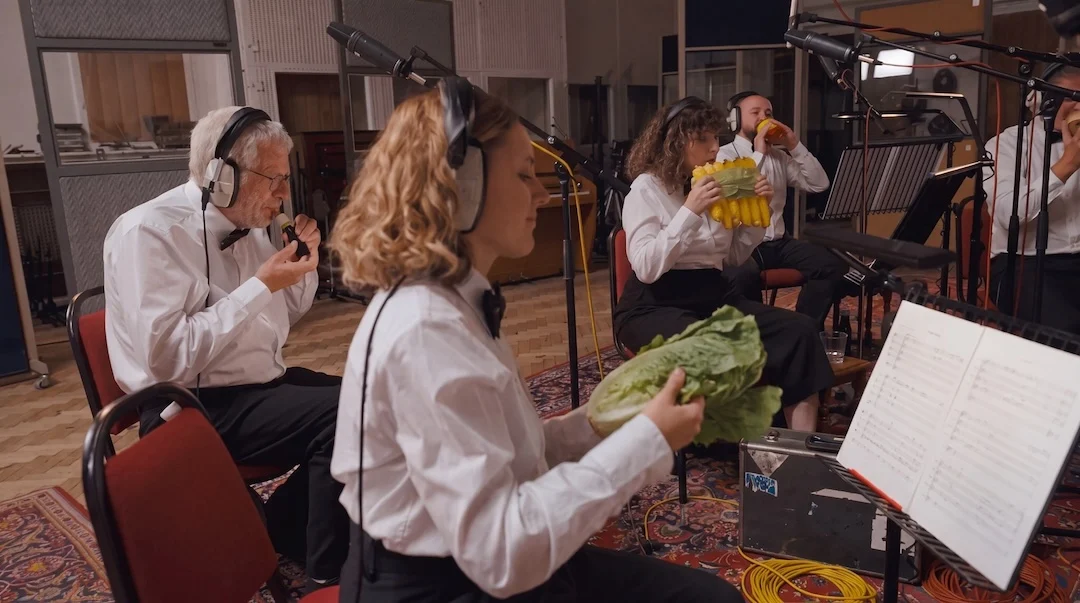
The London Vegetable Orchestra (LVO), a quintet of classically trained virtuosos, descended upon the legendary facility this past August to record "Root Notes," a bespoke composition commissioned by Chipotle. The project serves as the centerpiece for From Ground to Sound, a three-minute documentary released on October 5, 2026, which highlights the organic origins of food—literally turning the ingredients into the instruments that play their own theme song.
Chronology: The Lifecycle of a Vegetable Symphony
The journey from the farm to the mixing console is a logistical feat rarely seen in modern audio production. The project was conceived as a high-concept marketing campaign, yet it required the precision of a master orchestral session.
The Preparation Phase:
In the weeks leading up to the session, the musicians—who have honed their craft since the ensemble’s inception in 2010—began the delicate process of instrument prototyping. Unlike traditional woodwinds or brass, which are designed for longevity, vegetable instruments are ephemeral. Each component, from the corn-cob pan flutes to the avocado-based horns, had to be carved, bored, and tuned within hours of the recording start time to ensure maximum acoustic resonance before the inevitable decay of the raw material.
The Studio Session:
On the day of the recording, the LVO entered the hallowed Studio Two. Under the guidance of composer and producer John Nau, co-founder of the Venice, California-based Beacon Street Studios, the session moved with deliberate speed. The team utilized the studio’s world-renowned custom AMS Neve 88RS console, capturing the unique timbre of jalapeño trumpets and onion-bass strings.
The "Degradation" Deadline:
Unlike a traditional string section that can hold its tuning for the duration of a session, the LVO’s instruments were subject to the rapid effects of oxidation and dehydration. As the vegetables lost moisture, their structural integrity shifted, changing the pitch and tonal characteristics of the instruments. The team was forced to work in a "race against time," capturing the purest possible audio before the instruments effectively "wilted" out of tune.
Supporting Data: The Science of Organic Acoustics
The recording of From Ground to Sound presents a unique case study in organic acoustics. While the film captures the visual spectacle of the orchestra, the audio engineers faced the daunting task of miking instruments that defied traditional acoustic modeling.
The Instrumentarium
- The Corn-Cob Pan Flute: Utilized for high-frequency melodic runs; the natural hollows of the corn stalks provided an airy, flute-like quality.
- Jalapeño and Pepper Horns: These functioned as the brass section. Their varying densities provided a bright, punchy attack, though they were the most susceptible to "tuning drift" due to the acidity of the vegetable matter.
- The Onion Bass: Serving as the rhythmic foundation, the onion bass provided a surprisingly deep, resonant thump, albeit one that required heavy compression to sustain the low-end frequency needed for a modern commercial mix.
Technical Challenges
The production team employed a complex array of close-miking techniques combined with room-filling overheads. Because vegetable instruments produce lower sound pressure levels (SPL) than traditional instruments, the gain staging on the Neve console had to be meticulously calibrated. The goal, as articulated by onion player Patrick Johns, was to avoid "over-processing." Johns noted during the film’s production, "I’d like it to sound as much like vegetables as it can," suggesting that the imperfections—the rustles, the pops, and the organic textures—were intended to be the star of the mix rather than hidden by digital correction.
Official Responses and Industry Context
The release of From Ground to Sound has sparked a conversation regarding the intersection of branding and high-art performance. Chipotle’s initiative to highlight raw ingredients through sound serves as a meta-commentary on the food industry. By utilizing the London Vegetable Orchestra, the brand successfully bridges the gap between culinary quality and musical excellence.
The London Vegetable Orchestra itself is no stranger to high-profile engagements. Founded in 2010 by students at the Royal Academy of Music, the group has successfully transcended the "novelty act" label that often plagues experimental ensembles. Their resume includes appearances on major television networks, commercial campaigns for corporate giants like LG and HelloFresh, and, most notably, a private reception at Windsor Castle in 2025.
Perhaps the most surreal moment in the group’s history—and a testament to their cultural reach—occurred during that Windsor performance, where King Charles III participated in an impromptu duet of "Twinkle Twinkle Little Star" using a lead carrot. This institutional recognition has helped elevate the LVO from a niche curiosity to a respected, if unconventional, musical collective.
Implications: The Future of Experimental Sound
The success of the Abbey Road session raises questions about the future of acoustic exploration in commercial music. Can the "organic sound" movement gain traction beyond marketing campaigns?
1. Acoustic Sustainability
The LVO proves that high-fidelity recordings do not always require million-dollar vintage equipment or synthetic software. By manipulating raw, biological matter, musicians can access textures—"woody," "earthy," or "crisp"—that are difficult to replicate with traditional manufacturing.
2. The Marketing of Soundscapes
For brands, the "From Ground to Sound" approach represents a pivot toward sensory-heavy marketing. By linking the literal sound of a product’s ingredients to the listener’s ear, companies are moving away from traditional jingles toward "experiential audio." This shift suggests that in an era of digital saturation, consumers are increasingly drawn to tactile, "real" sounds that offer a reprieve from the polished, synthesized nature of AI-generated music.
3. Musical Ephemerality
The challenge faced by John Nau and the LVO—the constant decay of their instruments—highlights a profound artistic philosophy: the beauty of the temporary. In a digital world where files are permanent and infinitely replicable, the LVO’s music is literally destined to rot. This adds a layer of "preciousness" to the recording. The listener is not just hearing a melody; they are hearing a moment in time that literally vanished the moment the session concluded.
Conclusion: A Legacy in the Making
As the documentary From Ground to Sound makes its rounds, the legacy of the London Vegetable Orchestra continues to grow. By returning to Abbey Road, the site where the humble "Glass Onion" was transformed into a masterpiece of modern music, the LVO has completed a circle. They have proven that with enough ingenuity, classical training, and a sharp knife, the boundary between the produce aisle and the recording studio is thinner than it seems.
Whether or not the "Root Notes" campaign changes the way we think about fast food, it has undeniably changed the way we think about the violin, the flute, and the onion. As the industry looks toward the next frontier of sonic innovation, it may find that the answer isn’t in the latest software update, but in the soil itself. The LVO reminds us that music is, at its heart, a physical act—and sometimes, it’s best played on a vegetable.