By Marcelo
Published by Headfonics
Main Facts: The FiiO QX11 at a Glance
The portable audio landscape has seen rapid evolution over the past several years, shifting from rudimentary headphone adapters to powerhouse digital-to-analog converters (DACs) that rival traditional desktop setups. FiiO, a brand long recognized for pushing technological boundaries in personal audio, has expanded its hardware lineup with the release of the FiiO QX11.

Priced at $159.99, the QX11 is a feature-rich, USB-powered portable dongle DAC and headphone amplifier designed to bridge the gap between mobile convenience and desktop-grade performance.
Key technical specifications and features of the FiiO QX11 include:

- DAC Architecture: Dual ESS ES9069Q DAC chips configured for high-fidelity conversion.
- Amplification Stage: Dual OPA1692 and quad OPA1622 Texas Instruments operational amplifiers in a parallel architecture, yielding true balanced output.
- Power Output:
- Portable Mode: Up to 360mW + 360mW.
- Desktop Mode (via secondary USB-C port): Up to 800mW + 800mW.
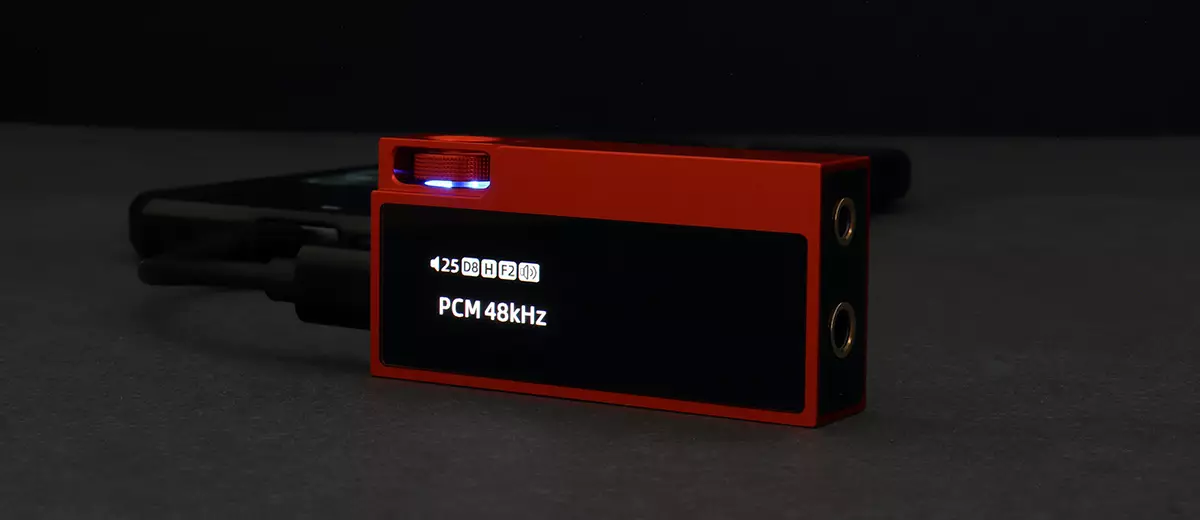
- Display: 1.14-inch IPS LCD screen (135 x 240 resolution) providing real-time data on volume, sample rates, and settings.
- Connectivity & Power Delivery: Dual USB-C ports with support for up to 45W Power Delivery (PD) fast charging.
- Software Integration: Companion mobile app (iOS and Android) and web interface supporting Auto-EQ and granular adjustments.
- Specialized Modes: Dedicated Hi-Fi and Gaming modes (featuring UAC 1.0 support for legacy hardware and consoles, plus AI ENC environmental noise cancellation via an integrated microphone).
(Disclaimer: Headfonics received this review sample in exchange for an honest, independent evaluation. FiiO provided logistical support but exercised no editorial control over the findings.)
Chronology: FiiO’s Evolution in Portable Audio
FiiO’s dominance in the ultra-portable sector did not happen overnight. To understand the significance of the QX11, it helps to examine the historical trajectory of FiiO’s portable hardware innovations.

- The Early Breakthroughs: The reviewer’s journey with FiiO’s compact amplification began with the acquisition of the FiiO KA11, a device praised at the time for packing immense 3.5mm power into a tiny form factor.
- Expanding the Portfolio: Following the success of the KA11, FiiO introduced a steady stream of diverse portable audio solutions, including distinct iterations like the JIEZI and the Melody. Each device targeted different segments of the audiophile market, experimenting with varying sonic signatures and form factors.
- The Arrival of the QX11: Culminating years of acoustic research and miniaturization efforts, FiiO announced the QX11. Positioned at a competitive mid-tier price point ($159.99), the device synthesizes lessons learned from both portable dongles and high-end digital audio players (DAPs) like the M15S and M17.
- Firmware Maturity: By the time review samples hit the market, the QX11 arrived running firmware version V1.5, showcasing a high degree of hardware and software stability right out of the box.
Supporting Data: Design, Engineering, and Architecture
Industrial Design and Build Quality
Aesthetically, the FiiO QX11 moves away from sterile, utilitarian blocks of metal. It features an angular, multifaceted rectangular shape with clean, straight lines that project a futuristic, industrial design language.
The chassis is constructed from precision-milled metal finished with an anodized coating. Review samples are available in a striking green finish as well as a more subdued silver variant, complemented by a subtle carbon-fiber pattern adorning the rear panel.

At the front, a vibrant 1.14-inch IPS LCD screen commands attention. Boasting wide viewing angles and crisp contrast, the display presents crucial telemetry—including volume levels, signal types, sampling rates, and active EQ profiles—without requiring users to constantly unlock their phones.
I/O Layout and Dual USB-C Implementation
The physical arrangement of ports separates the QX11 from standard dongle DACs. While traditional top-mounted USB-C inputs and bottom-mounted 3.5mm single-ended and 4.4mm balanced outputs are present, FiiO integrated a second USB-C port on the left side of the chassis.

This secondary port serves a dual purpose:
- Desktop Mode Activation: Plugging a standard USB-C charger into the side port bypasses standard mobile power constraints, boosting the output from 360mW per channel to a robust 800mW per channel.
- Simultaneous Device Charging: The QX11 supports up to 45W Power Delivery (PD) fast charging, allowing users to power demanding over-ear headphones while simultaneously fast-charging their connected smartphone.
Crucially, thermal management remains exceptional. During extended listening sessions, vigorous walking exercises, and 24-hour burn-in testing, the QX11 chassis remained cool to the touch, ensuring minimal battery drain on host mobile devices.

Hardware Controls and Software Ecosystem
Physical controls are neatly arranged on the right side of the device:
- A tactile, knurled rotary volume knob that also functions as a clickable button for menu navigation.
- A central slide switch for instantly toggling Desktop Mode.
- A bottom push-button switch programmable for multiple shortcuts (e.g., screen rotation, mode switching, or media playback).
For users seeking deeper customization, the FiiO Control App (available on iOS and Android) connects seamlessly via Bluetooth/companion integration. It grants access to advanced parameter tuning, including customized parametric EQ profiles and Auto-EQ presets tailored to specific headphone models.

Official Performance Observations: Sound Impressions
Evaluated across a rigorous testing matrix—including desktop PCs, MacBook Pros, and a OnePlus 13 smartphone acting as the primary digital transport—the QX11 was paired with high-performance IEMs (DUNU Falcon Ultra, Tipsy M5, QoA Martini) and demanding headphones (TangZu OX Demon King, FiiO JadeAudio JT3, and Sennheiser HD 6XX).
Frequency Response and Tonality
- Bass Performance: Unlike some earlier portable adapters that lean heavily into a warm, forgiving coloration, the QX11 breaks mold by delivering a clean, tight, and highly impactful low-end response. Reminiscent of FiiO’s flagship DAPs (such as the M17 and M33 R2R), the bass packs substantial physical presence and punch without artificially muddying the lower mids.
- Midrange and Treble: The midrange and treble maintain an exceptionally neutral stance. While ESS-based DAC implementations occasionally suffer from an exaggerated upper-midrange shout that causes listening fatigue, the QX11 avoids this pitfall. It offers high perceived resolution without sounding sterile, clinical, or fatiguing.
- Subtle Coloration: Critical listening reveals a microscopic energy boost in the upper treble. Rather than an unnatural frequency rise, this translates into sharply focused micro-details, lending extra textural bite and realism to complex instrumental timbres.
Soundstage and Dynamics
In head-to-head comparisons against competing portable DAC amplifiers in its class, the QX11 punches well above its weight. It constructs a wide, transparent, and airy soundstage that easily separates congested mixes. While it may not match the absolute maximal expansiveness of ultra-expensive desktop stacks, its spatial imaging is leagues ahead of typical entry-level dongles.

Driven by its hefty power reserves, the QX11 delivers exceptional dynamic swing. It prevents complex orchestral or fast electronic passages from sounding compressed or lethargic, effortlessly driving both sensitive multi-driver IEMs and power-hungry full-size cans.
Implications: Where the FiiO QX11 Fits in the Market
The introduction of the FiiO QX11 at $159.99 sends a clear signal to the personal audio industry: the boundary lines separating portable dongles from desktop headphone amplifiers are officially blurring.

By integrating dual flagship-tier ESS DACs, parallel TI operational amplifiers, 800mW of desktop-class output power, and modern quality-of-life additions like dual USB-C PD charging and UAC 1.0 gaming compatibility, FiiO has created an exceptionally versatile Swiss Army knife for audio enthusiasts.
Whether deployed as an office desktop hub, a mobile commuting companion, or a high-resolution gaming sound card, the FiiO QX11 proves that consumers no longer need to sacrifice sonic fidelity or raw driving power for the sake of portability.